| Read in browser | ||||||||||||||

Energy demand is already straining power grids, and that’s leading AI players to reimagine the data center from the ground up. Today’s newsletter looks at the efficiency drive aiming to shrink the 30% of power that’s currently not going towards generating AI — and that’s amplifying data centers’ carbon footprint. Meanwhile, a judge preliminarily blocked the dismantling of the National Center for Atmospheric Research in the US. Subscribe to Bloomberg to get unlimited access to all our stories. High-power redesignsBy Emily Forgash and Rachael Dottle A new generation of ever more powerful artificial intelligence chips is pushing data centers to their limits. These “AI factories,” which gobble up enough power to keep the lights on in millions of homes, threaten to put more pressure on electricity prices in the US and expand AI’s carbon footprint. 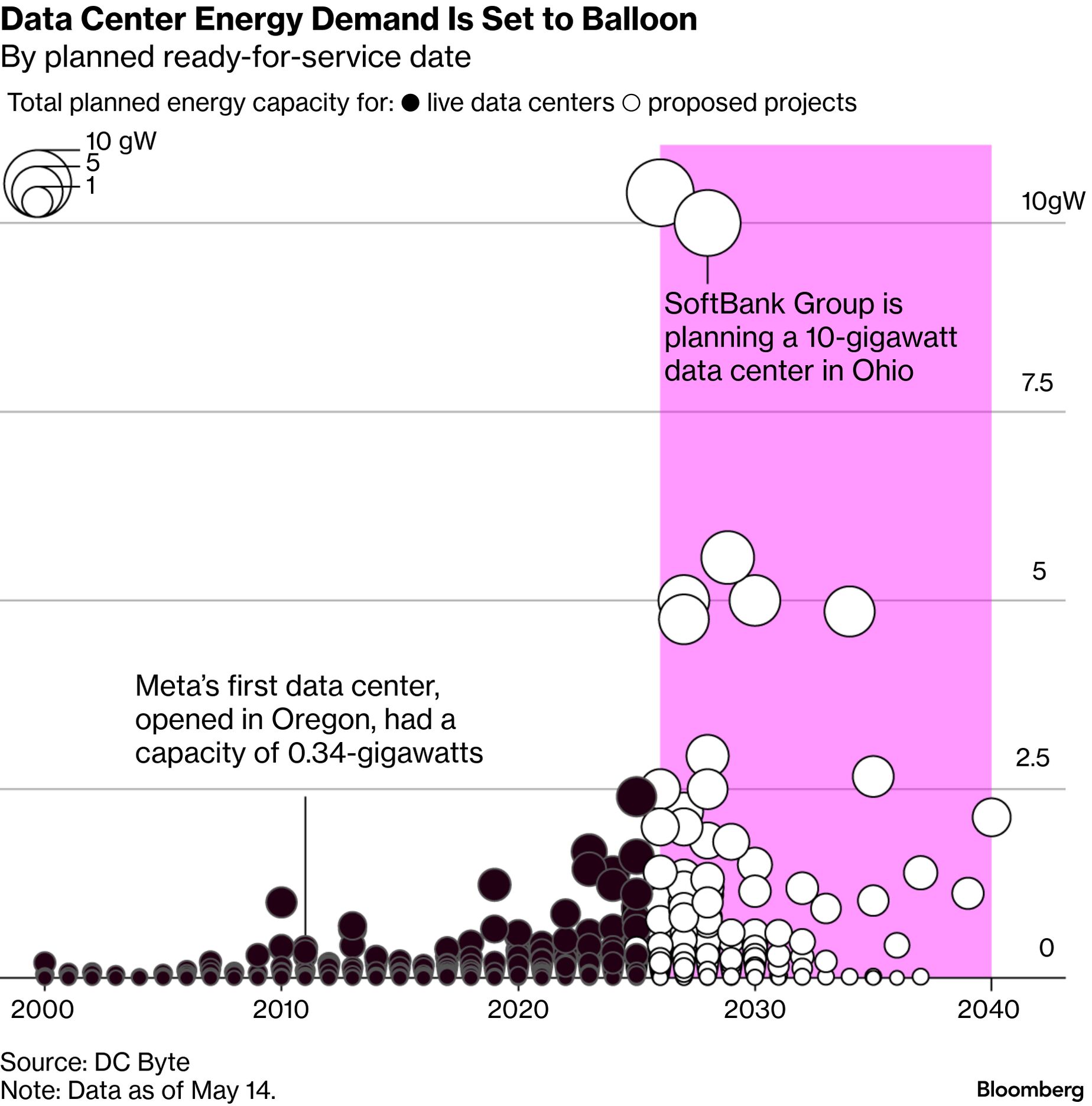
This is forcing a reckoning among AI players, who are now having to reimagine how data centers are designed, built and powered. “This is a constant pursuit of finding every ounce of efficiency that we can sort of squeeze out of that power envelope,” says Dion Harris, Nvidia’s senior director of high performance computing and AI hyperscale infrastructure solutions. 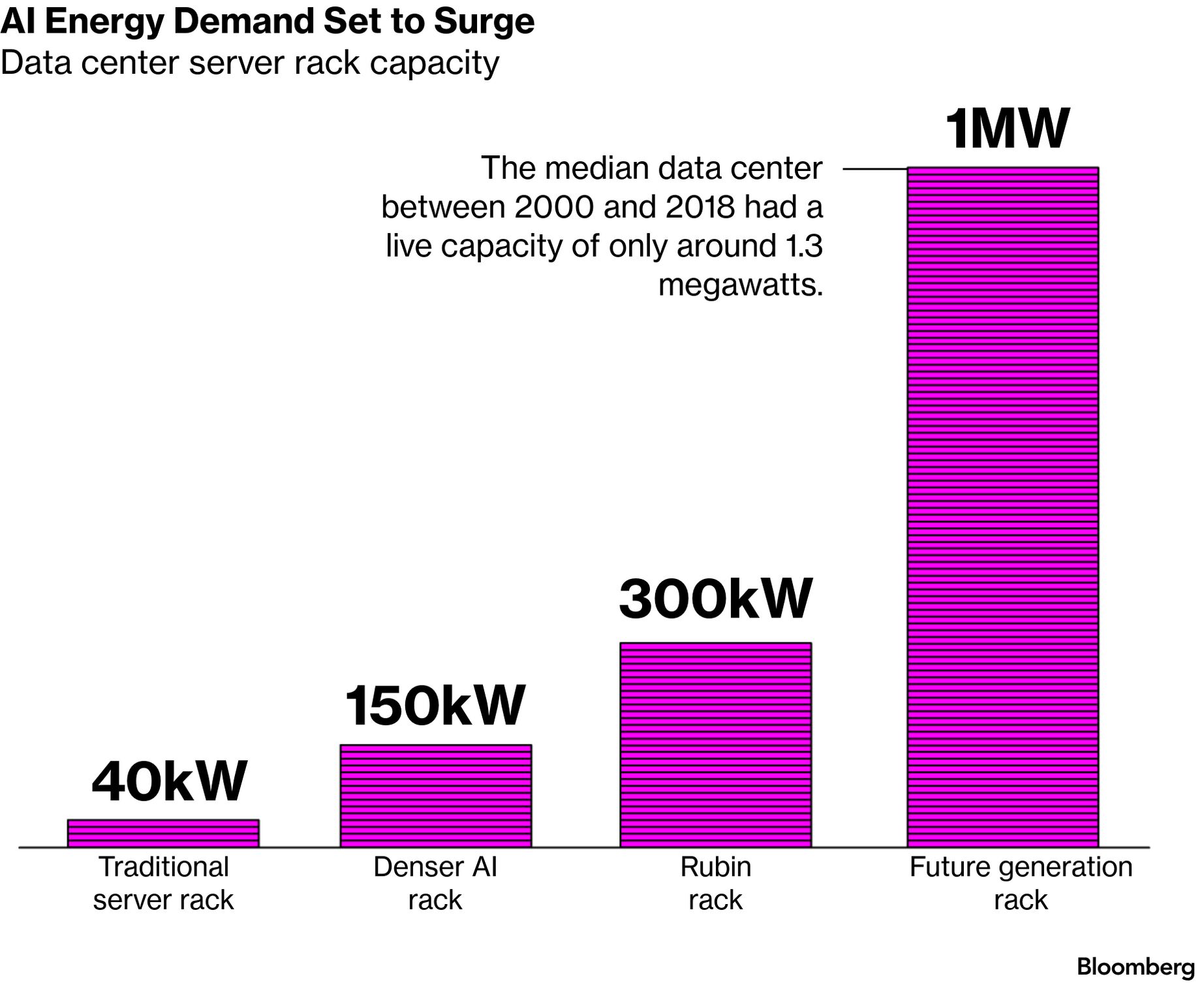
And power demand keeps growing. The industry is bracing for chips that bring racks closer to 1 megawatt — or enough to power 750 US homes on average. Right now, around 30% of the power flowing into data centers is not going towards generating AI – it gets used up by cooling systems that keep servers from overheating and by electricity traveling long distances across sprawling campuses. That is amplifying carbon emissions from data center energy use given operators are increasingly relying on natural gas and coal-fired plants to power their projects. Microsoft Corp., for example, is considering whether to delay or abandon its ambitious clean-energy targets as it tries to remove hurdles that could hold it back in the AI race, people familiar with the matter told Bloomberg last month. Nvidia and others are rolling out new equipment that consolidates the process of converting power from the grid into a usable current to power chips. This saves space and can improve energy efficiency from 20% to 27%, according to advanced manufacturing and AI infrastructure company Flex Ltd. 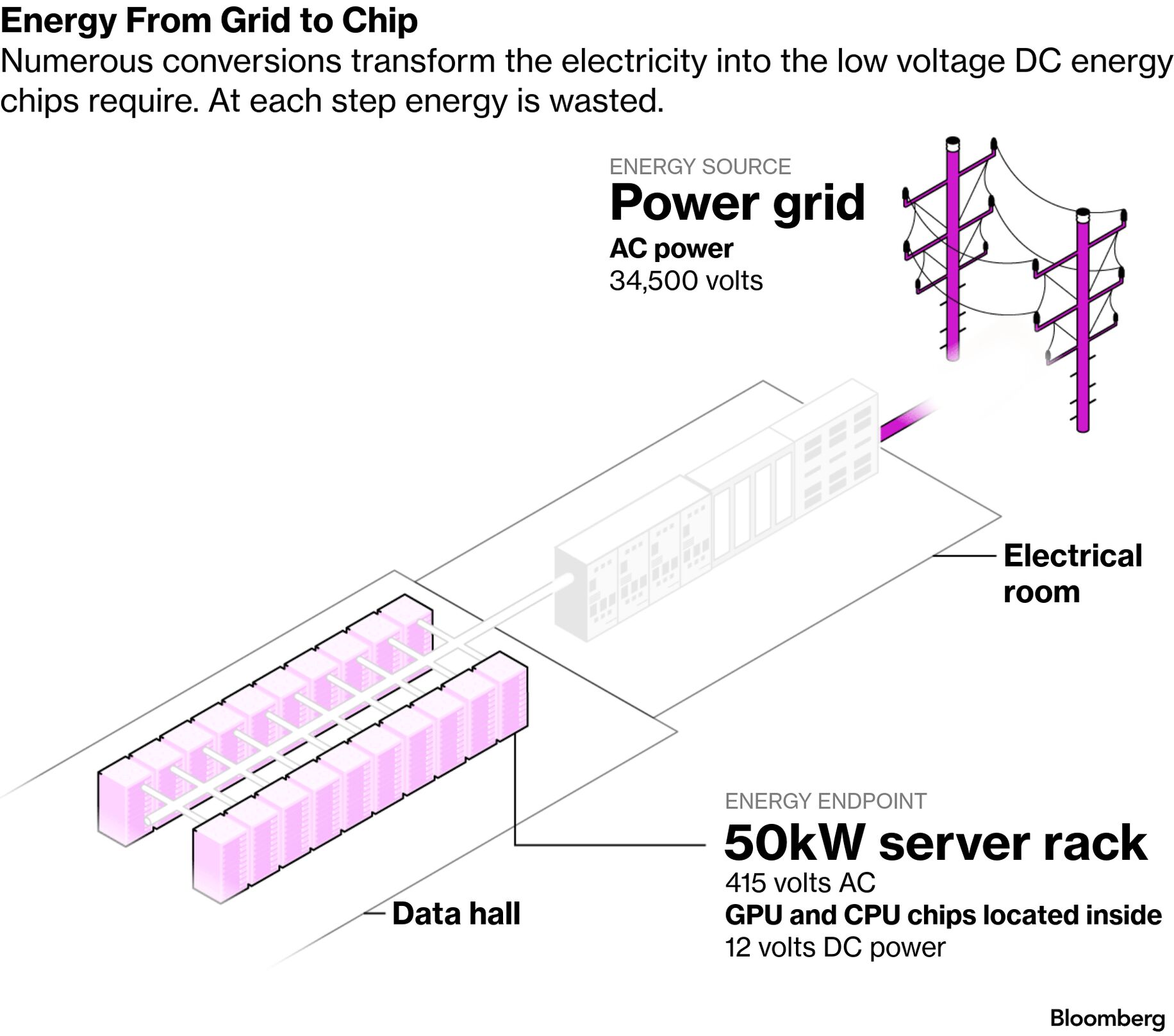
These reimagined power systems can serve as a climate measure, especially when combined with efforts to use cleaner energy sources. Another potential benefit of switching to them is that data centers can more easily be connected to renewable energy. China, for example, already builds data centers in regions generating excess renewable energy. The US is nowhere near having extra renewable energy, but operators are looking to batteries and solar power to help run data centers, even as they still have to rely on gas power to do most of the heavy lifting. Power system upgrades are front of mind for AI players. Nvidia, for one, has promised to release new, more powerful chips about once a year. GE Vernova Inc., which makes data center power equipment, is already seeing strong demand from hyperscalers for 800 volt DC systems. “Everybody is asking us to provide solutions for the next orders to come,” says Philippe Piron, chief executive officer of GE Vernova’s electrification segment.
Read more
Hidden costs2 million tons Amount of cement required for US data centers through 2030, according to environmental nonprofit RMI Shareholder pressure“In the AI race, tech giants risk undermining their climate commitments at precisely the moment disciplined, long-term decision-making matters most” Andrea Ranger Director of shareholder advocacy at Trillium Asset Management Judge blocks NCAR dismantlingBy Eric Roston A judge has temporarily blocked the National Science Foundation from dismantling the National Center for Atmospheric Research, or NCAR, a globally significant weather and climate research center based in Boulder, Colorado. 
The NCAR in Boulder, Colorado.
Photographer: Jen Lobo/iStock Editorial/Getty Images
Senior US District Judge R. Brooke Jackson on Monday granted a preliminary injunction to the University Corporation for Atmospheric Research, a consortium of institutions that manages NCAR. The consortium sued the National Science Foundation in March, after the federal agency — which provides much of NCAR’s budget — announced plans to break apart the center’s functions. The lawsuit specifically challenged plans to remove supercomputer facilities in Wyoming from under the consortium’s management.
Read more
This week’s Zero listenA meeting of ministers and climate envoys in Colombia last month hoped to bring progress to the world’s commitment on transitioning away from fossil fuels. This week on Zero, Tzeporah Berman, chair of the Fossil Fuel Non-Proliferation Treaty Initiative, tells Akshat Rathi what the conference achieved and where it goes next. Listen now, and subscribe on Apple, Spotify or YouTube to get new episodes of Zero every Thursday. Bloomberg OpinionMore from GreenMore from Bloomberg
Explore all Bloomberg newsletters. We’re improving your newsletter experience and we’d love your feedback. If something looks off, help us fine-tune your experience by reporting it here. Follow Us
You received this message because you are subscribed to Bloomberg’s Green Daily newsletter. If a friend forwarded you this message, sign up here to get it in your inbox.
|
Tuesday, June 2, 2026
How to design a monster data center










Subscribe to:
Post Comments (Atom)
AirJoule Technologies: Short Squeeze Setup Amid Rising Risks
Record short interest above 17% sets the stage for a potential squeeze, but AirJoule must overcome cash-burn, dilution, certification, ...

-
Revolutionary Stem Cell & PRP —Start Your Journey Today ...


No comments:
Post a Comment