| Read in browser | ||||||||||||||

Some of the world’s biggest energy companies have pledged to eliminate routine flaring, the burning of unwanted gas to allow oil production to continue unimpeded. In today’s newsletter, an investigation reported in partnership with The Examination, a nonprofit newsroom specializing in global health, shows how flares continue to burn day in, day out from the Niger Delta to West Texas. Elsewhere, global VIPs visited the remote Pacific Ocean nation of Tuvalu to see the impacts of climate change and rising sea levels, as leaders in the region demand stronger commitments at next month’s COP31 talks. And, we look at why orcas and whale sharks are showing up off the coast of Mozambique. Subscribe to Bloomberg.com for unlimited access to all our coverage. Flares keep burningBy Will Evans and Ben Elgin Norma Lopez Cadena tries to keep her granddaughters indoors — out of sight from the 65-foot flare burning excess gas from more than a dozen oil wells. At night, she says, the flare rattles the house from about 500 feet away and wakes her family. When the wind shifts, it smells like burnt rubber. The flare tormenting Lopez Cadena towers over the quiet West Texas neighborhood of South Ranchito, in the heart of the oil-producing Permian Basin, where it dances in the breeze day after day like an oversized lighter. When the gas flow increases, it swells into a thick yellow and sounds like a blowtorch. “Nobody wants to live next to that,” she says. 
A young resident plays basketball as a gas flare burns nearby in the South Ranchito neighborhood just beyond Odessa, Texas, in May.
Photographer: Desiree Rios
Scenes like this were supposed to become increasingly rare. For more than a decade, oil companies have pledged to eventually eliminate what the industry terms “routine flaring” — burning gas because producers consider it too costly or difficult to capture, sell or reinject underground. Sixty companies have signed on to the World Bank’s “Zero Routine Flaring” commitment to eliminate the practice by 2030, making it the primary global effort to stem the widespread problem. And even non-signatories like Diamondback have embraced the voluntary standards. Some who have joined the pact, such as Shell, claim to have already met the target. Others, including ExxonMobil and BP, say they’ve done so in certain regions. The promise to curb routine flaring by 2030 has become a common refrain among companies touting their sustainability efforts. Several oil giants have used it to push governments for more lenient regulations. Those claims mask a voluntary system riddled with loopholes that has made scant progress toward stamping out one of the oil industry’s dirtiest practices. The industry helped shape the initiative, which leaves companies to police themselves. From the Niger Delta to the Omani desert to the arid plains of Patagonia, companies are trumpeting success even as their flares burn day in and day out, an investigation by Bloomberg News and The Examination has found. 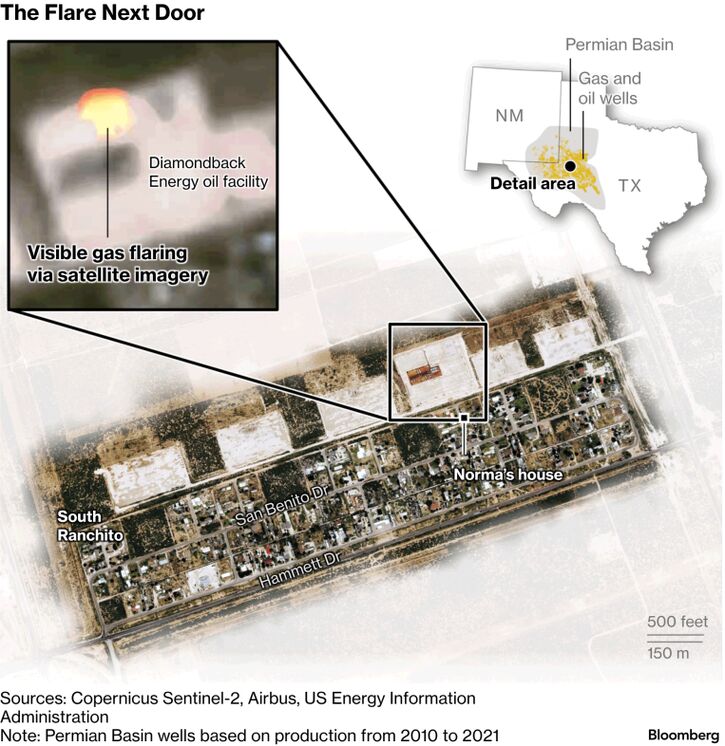
Flares can burn at more than 2,200 degrees Fahrenheit — hotter than flowing lava. That heat allows satellites far above Earth to detect and measure many of them. A review of 2024 satellite data shows some 2,000 flares at oil fields and drilling sites around the globe were burning in more than half of clear satellite observations. Hundreds of them are operated by companies that have signed on to the World Bank’s initiative, including several of the world’s biggest oil companies such as Exxon, Occidental Petroleum and TotalEnergies. Even in some oil fields where companies already claimed to have eliminated the practice, satellite data from 2025 and 2026 show flares still ablaze most of the time, according to the analysis by the two news organizations. In the decade since the initiative launched, World Bank data shows the total amount of gas burned in flares at production sites worldwide has risen 9%. Many leaders in the oil industry portray reducing flaring as one of the easiest steps it can take to help slow the planet’s steadily warming temperatures, whose primary cause is the burning of fossil fuels. A recent United Nations report signaled that global averages will soon pass 1.5C of warming above pre-industrial levels, with a chance to reach roughly 2.6C in the coming decades without changes to current policies. That would unleash increasingly destructive heat, wildfires, floods and extinctions. Flaring is a major contributor to global warming and an example of a business-as-usual practice that would need to change to avert the most dire impacts. Thousands of flames at oil sites worldwide burn enough gas each year to supply about half of Europe’s annual gas consumption. The flares also spew soot, nitrogen oxides and other harmful pollutants. The Zero Routine Flaring initiative is largely funded and steered by the oil industry itself. Internal World Bank documents show officials there privately told Occidental and other oil companies that, essentially, they could keep flaring if it was financially unattractive to stop. Emails between Occidental employees show company officials zeroed in on the initiative’s loopholes before signing on. “It’s a deliberate greenwash that establishes a target that’s meaningless,” says Richard Ward, a former Shell sustainability manager who later collaborated with World Bank staff while working for an environmental group. “Those loopholes are so big that they don’t have to do anything.” Occidental officials declined to be interviewed and didn’t respond to detailed questions about its internal emails. Bamji noted that countries endorsing the Zero Routine Flaring pledge had increased flaring, but at a lower rate than non-endorsing countries. “This shows that commitments can make a difference when backed by effective regulation and adequate investment and infrastructure,” Bamji said. 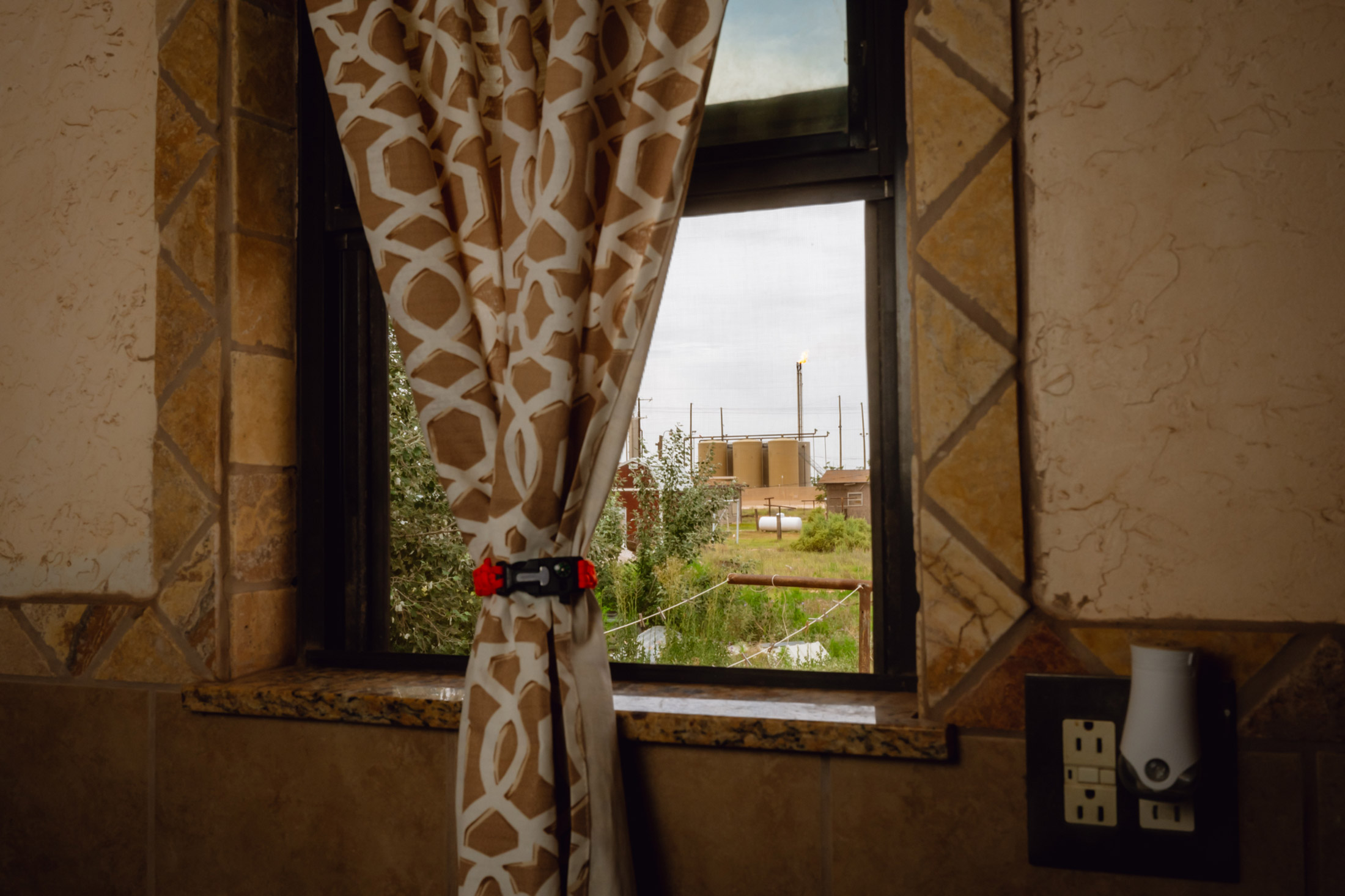
The flare can be seen from a bathroom in South Ranchito.
Photographer: Desiree Rios for Bloomberg
Diamondback’s operations at South Ranchito offer a window into how oil companies can burn gas day after day while saying they have ended routine flaring. The flare there has burned at least 450 days since it started in 2024, according to the company’s filings with Texas regulators. In less than two years, it has incinerated more than 600 million cubic feet of gas — enough gas to power about 3,400 Texas homes over the same time period.
Keep reading
Permission grantedLess than 1% The share of requests by energy companies to carry out flaring rejected by Texas regulators over a recent 40-month period, according to an analysis by environmental group Oilfield Witness. Health risks“The impacts grow exponentially the closer you are to a flare. You definitely wouldn’t want anyone living within a few hundred meters of these.” A professor of civil and environmental engineering at Rice University, who estimates that flares from oil and gas production cause dozens of premature deaths each year in the US. Climate change up closeBy David Stringer and Azman Usmani The archipelago of nine small islands is the world’s second lowest-lying nation and particularly susceptible to the impacts of sea-level rise, suffering frequent flooding that sweeps through homes, infrastructure and even the runway of the international airport. 
Australian Prime Minister Anthony Albanese, center, with other leaders and dignitaries in Tuvalu on Oct. 6.
Photographer: Saeed Khan/Pool/Getty Images via Getty Images AsiaPac
Australia’s Prime Minister Anthony Albanese and Mauritius’ Prime Minister Navinchandra Ramgoolam were among a group of more than a dozen leaders to join the visit Tuesday, part of a wider event hosted by Fiji to prepare for November’s annual United Nations-convened climate talks in Antalya, Turkey. Other attendees to travel to Tuvalu included Nepal’s Foreign Minister Shisir Khanal and the head of the Asian Development Bank. “Climate change isn’t a future challenge for the Pacific, it’s a daily reality,” Albanese said Tuesday in a post on LinkedIn. “And here in Tuvalu, the stakes are higher than any other part of the world.” Sea levels rose by an average of 4.7 millimeters a year in the decade to 2023 and a record 5.9 millimeters in 2024 as a result of melting glaciers and the thermal expansion of oceans triggered by human-induced global warming, the UN said in a report earlier this year. Around the world, nearly 770 million people live in coastal areas that are 5 meters (16.4 feet) or less above the high tide line, putting them at acute risk, the UN said.
Read more
More from GreenYour Zero listenChina is a hotbed of innovation, filling nearly half of the world’s new patents every year. Much of that work is in the world of clean tech and a whole ecosystem is growing to help make these breakthroughs commercial.This week on Zero, Akshat Rathi is joined by Tonny Xie, chairman of Bluetech Clean Air Alliance, a China-based nonprofit organization that’s helping to grow the next era of climate startups. Listen now, and subscribe on Apple, Spotify or YouTube to get new episodes of Zero every Thursday. Listeners’ Choice Calling all fans of Zero! We’re excited to announce that Bloomberg Green’s Zero podcast has been selected as a finalist for the Signal Podcast Awards in the Sustainability & Environment category. Now it’s up to you to help Zero win. Please vote for your favorite podcast by October 15. Photo finish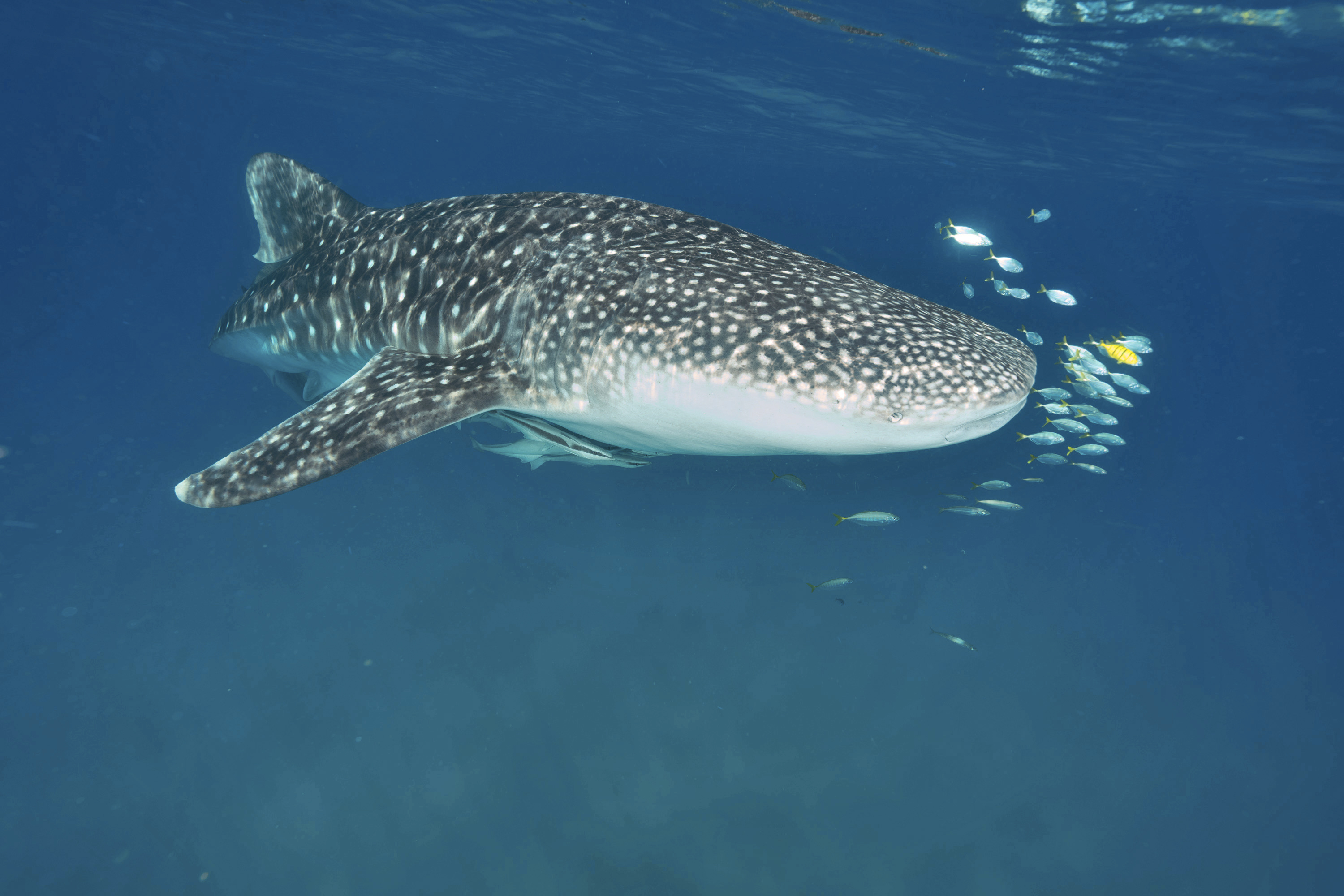
A whale shark in the waters around the Bazaruto archipelago
Photographer: Salvador Colvee/Bazaruto Center for Scientific Studies
Growing numbers of orcas and whale sharks have started appearing off the coast of Mozambique, in an unusual development that’s coincided with the formation of the El Niño weather cycle. Scientists at the Bazaruto Center for Scientific Studies, Africa’s only ocean observatory, say such sightings — once exceedingly rare — have become a common occurrence in recent months.
Read more
More from Bloomberg
Explore all Bloomberg newsletters. We’re improving your newsletter experience and we’d love your feedback. If something looks off, help us fine-tune your experience by reporting it here. Follow Us
You received this message because you are subscribed to Bloomberg’s Green Daily newsletter. If a friend forwarded you this message, sign up here to get it in your inbox.
|
Tuesday, October 6, 2026
Living next to toxic flames








Subscribe to:
Post Comments (Atom)
-
Revolutionary Stem Cell & PRP —Start Your Journey Today ...
-
You’ve shown interest in Regenerative Medicine ...


No comments:
Post a Comment