| The owner of the ship that destroyed Baltimore's Francis Scott Key Bridge, causing the indefinite closure of the port a week ago, is seeking to limit its liability to about $44 million. According to reporting by my Bloomberg News colleagues citing legal experts, the company — Grace Ocean — could face hundreds of millions of dollars in damage claims. On Monday it filed a petition jointly with Synergy Marine, which was operating the Singapore-flagged container ship Dali. They claim the collapse of the bridge was "not due to any fault, neglect, or want of care" of the companies and that they shouldn't be held liable for any loss or damage from the disaster. Among the key legal questions now is whether the ship owners will declare "general average," a centuries-old principle that would spread losses proportionately among cargo owners and other stakeholders. That's what Evergreen Marine did when the container vessel the Ever Forward got stuck in the Chesapeake Bay in 2022 — requiring weeks of dredging and tug services to free it — after departing Baltimore's Seagirt Marine Terminal. As the legal battles get under way, the cleanup work has begun and efforts to minimize the disruptions are gearing up. Demolition teams have started cutting the crumpled steal trusses and salvagers have cleared a small channel for barge traffic to resume. 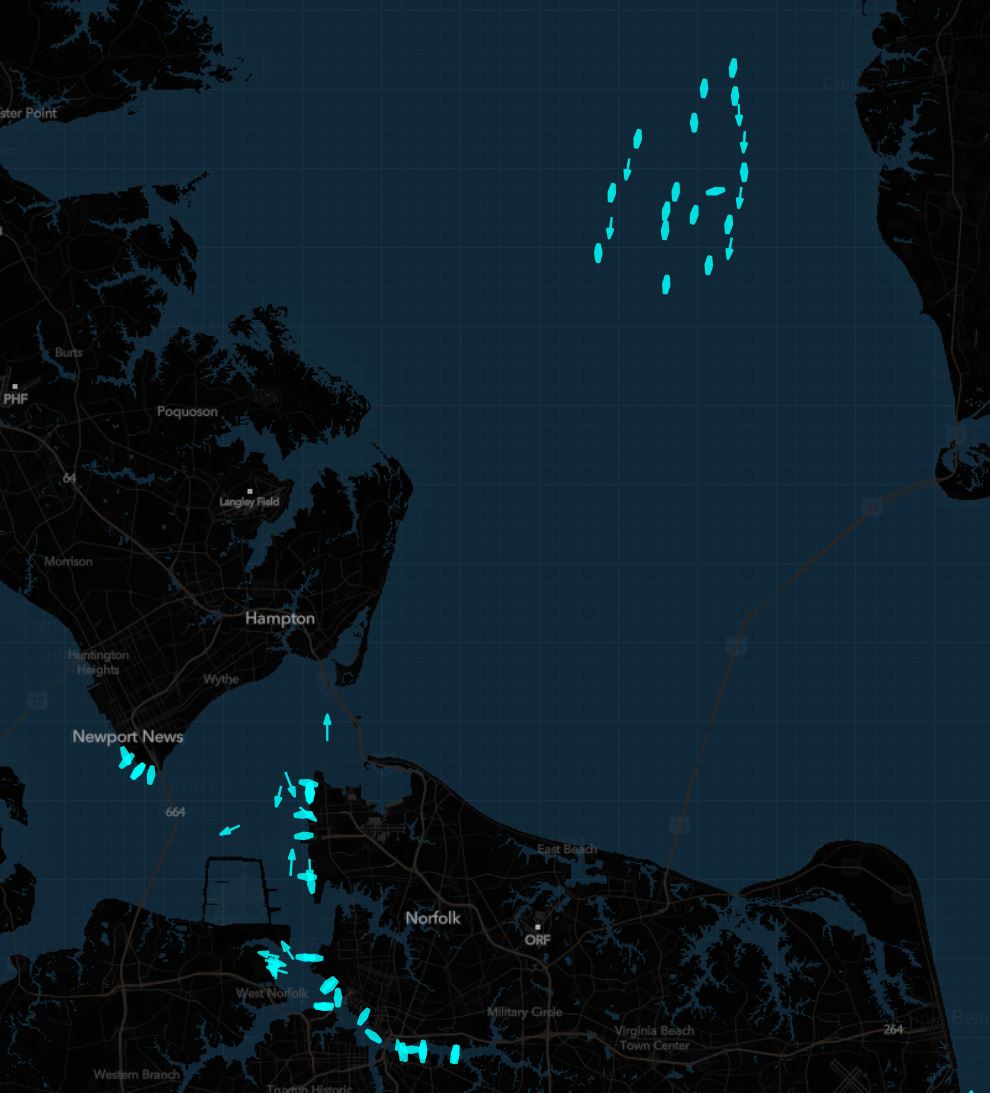 Cargo vessels waiting Tuesday near the Port of Virginia in Norfolk According to ship tracking data on the Bloomberg Terminal, the Port of Virginia looks set to handle much of the diverted shipments. The Small Business Administration is opening a second recovery center locally to provide further federal government support to businesses affected by the tragedy. The Department of Transportation is providing $60 million in immediate funding. President Joe Biden will travel to Baltimore on Friday. Lee Klaskow, senior logistics analyst with Bloomberg Intelligence, said Baltimore-bound cars, farm equipment and construction vehicles will have to be redirected to ports in Philadelphia, the New York area or Norfolk, Virginia. For inbound containers, he said those too should get absorbed pretty easily by gateways in the region. "This is going to be a short-term disturbance until the channel is clear," he said, noting estimates of six to 12 weeks. "I'm a little bit of a pessimist so maybe north of 12 weeks for that to happen," Klaskow said on Bloomberg TV. "And once that happens, freight is going return and the impact is going to be felt on supply chains but it's not going to be a major blow" like the pandemic snarls or the diversions avoid the Red Sea, he said. Latest News: So far there's been hardly a blip in spot container rates from Asia to the US East Coast. According to Freightos data on the Bloomberg Terminal, the cost on that route was $5,301 for a 40-foot container as of March 31, little changed from $5,284 the previous week but the first increase after five weeks of declines. "A short-term shock, a disruption is always a stressful situation for the system but I think overall the supply chains are so strong, connected and reliant that workarounds can be found normally in a relatively short time frame," said Melanie Kreis, chief financial officer at DHL Group, told Bloomberg TV last week. —Brendan Murray in London Click here for more of Bloomberg.com's most-read stories about trade, supply chains and shipping. | 







No comments:
Post a Comment