Friday, July 31, 2026

Pull Up (Nasdaq: MDCX) This Morning Because the FDA Just Authorized Its Lead Study to Begin Dosing Patients


Any content you receive is for information purposes only. Always conduct your own research.

*Disseminated on Behalf of Medicus Pharma Ltd.

Paul Prescott Has Medicus Pharma Ltd. (Nasdaq: MDCX) At The Top Of This Morning’s Watchlist—Friday, July 31, 2026

Don’t Miss Our Next Update—Get Real-Time Alerts Sent Directly To Your Phone. Up To 10X Faster Than Email.

Pull Up MDCX While It’s Still Early…

July 31, 2026

Dear Reader,

How often does a company this size get cleared to run a registrational study?

Not often.

On July 27, Medicus Pharma Ltd. (Nasdaq: MDCX) announced that the FDA had authorized SKNJCT-005.

It is an NDA-enabling registrational Phase 2b study of SkinJect® 200 mcg in patients with Gorlin Syndrome.

Studies at this stage usually belong to much bigger names. This one does not.

The bell rings in about ninety minutes. MDCX is front and center this morning—Friday, July 31, 2026.

Inline Image

As part of its review, the FDA also provided several protocol recommendations.

The agency requested baseline biopsy confirmation of nodular basal cell carcinoma for all enrolled patients, a primary endpoint requiring both clinical and histological clearance, in-person investigator assessments, and follow-up extending from 24 weeks to at least two years.

Medicus accepted each recommendation through a protocol amendment.

At first glance, that list may look like an added hurdle.

In reality, it outlines the type of filing-grade dataset the agency expects to see.

The FDA also made clear that these recommendations did not constitute clinical hold issues.

The program has reached this point because of the data already generated.

In the completed 90-patient SKNJCT-003 study, the 200-mcg arm produced 64% clinical clearance and 55% histological clearance at Day 57. That same dose is now being carried forward into the registrational study.

In March, the study’s principal investigator and key opinion leader, Babar K. Rao, MD, FAAD, reviewed an 80% overall response rate from the Phase 2 dataset.

In May, a pre-specified expanded analysis confirmed a dose-response relationship, with the 200-mcg cohort showing the strongest clinical and safety profile at Day 57.

There is a second clinical asset, and it has been moving as well.

On July 16, Medicus reported positive FDA feedback and central Institutional Review Board approval for an optimized Phase 2 study of Teverelix in acute urinary retention.

Two separate programs picking up fresh regulatory clearance inside a three-week window is an unusual amount of activity for a company carrying roughly 56.7M shares outstanding and a market value in the mid-$20Mn range.

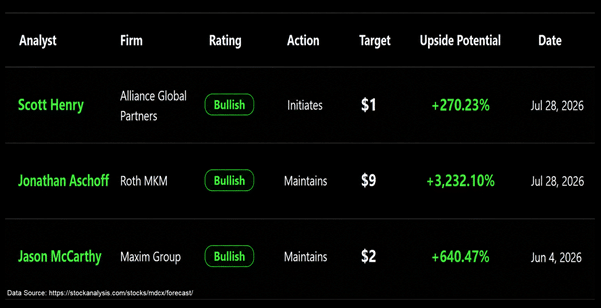
Analyst coverage on MDCX is currently bullish across all three firms tracked by S&P Global. Alliance Global Partners initiated coverage on July 28, one day after the FDA letter was announced, while Roth MKM reaffirmed its bullish stance that same day. Each published 12-month target remains above recent share levels.

Inline Image

Medicus put the funding in place in May with an up to $22Mn non-dilutive structured financing facility.

$12Mn arrived as immediate operating capital and $10Mn went into a collateralized deposit account released progressively against milestones.

With this financing, the company put pro forma cash at approximately $30Mn and projected an operating runway beyond twenty-four months.

The Company Behind SkinJect and Teverelix

Medicus Pharma Ltd. is a Philadelphia-headquartered biotech and life sciences company built around a specific model.

Rather than carrying assets from discovery all the way through commercialization, Medicus acquires clinical-stage candidates and advances them through Phase 2 proof-of-concept and the regulatory inflection points that reduce development risk, then works to license or partner them with established pharmaceutical companies.

The company describes itself as active in multiple countries across three continents.

Inline Image

One of its lead assets is SkinJect, held through wholly owned subsidiary SkinJect Inc. 

SkinJect is a proprietary dissolvable microneedle array that delivers doxorubicin directly into nodular basal cell carcinoma lesions through localized intradermal administration.

The design intent is to concentrate the chemotherapeutic agent at the tumor site while limiting systemic exposure and the toxicities that come with it.

A patient receives a patch rather than an excision, and because the approach is repeatable, it is positioned for people who keep developing new lesions.

The second asset is Teverelix, a next-generation GnRH antagonist in development across three settings: acute urinary retention relapse caused by an enlarged prostate, advanced prostate cancer in patients at high cardiovascular risk, and endometriosis.

Inline Image

In June, Medicus filed a substantial modification through the European Union Clinical Trials Information System supporting a planned Phase 2b study in the high cardiovascular-risk prostate cancer setting, an underserved population the company sizes at roughly $4Bn annually.

The acute urinary retention program addresses a market Medicus places near $2Bn.

Management has also retained Deloitte as exclusive lead financial adviser to pursue an out-licensing transaction covering the doxorubicin microneedle array in basal cell carcinoma, which tells you how the company thinks about the endgame for this asset.

A Common Cancer With an Uncommon Problem

Basal cell carcinoma is the most frequently diagnosed cancer in the world, and its standard treatment has changed remarkably little in decades.

Surgical excision works well, and for a patient with a single lesion that is the end of the matter.

The difficulty arrives with the patient who does not have a single lesion.

Gorlin Syndrome, also called nevoid basal cell carcinoma syndrome, is a rare autosomal dominant disorder driven primarily by mutations affecting the Hedgehog signaling pathway.

Affected individuals begin developing basal cell carcinomas in childhood or early adulthood and may accumulate dozens, and in some cases more than 1,000, over a lifetime.

Each one has historically meant another procedure.

What accumulates alongside the lesions is scarring, functional impairment, and a psychosocial burden that compounds across decades.

The condition is estimated to affect roughly 1 in 30,000 to 60,000 people worldwide, corresponding to an estimated 6,000 to 12,000 patients in the United States and a considerably larger addressable population across major global markets.

Systemic Hedgehog pathway inhibitors are available for advanced disease, but tolerability limits how long many patients are able to stay on them.

That leaves a gap between a scalpel and a systemic agent, and it is precisely where a lesion-directed, repeatable, non-surgical option would sit.

No therapy has been approved specifically for the Gorlin Syndrome population, and nothing has been approved for pediatric patients.

That gap is what makes the commercial story so interesting.

If SkinJect reaches approval, Medicus believes it could become the first FDA-approved lesion-directed therapy developed specifically for patients with Gorlin Syndrome, as well as the first microneedle-based chemotherapy platform designed to produce meaningful visual and histological clearance of basal cell carcinoma lesions.

Being first in a rare-disease category can carry significant weight, which makes the two designation applications now under FDA review an important part of the broader story.

From Submission to Authorization in Eight Weeks

July 27, 2026
FDA issues a "Study May Proceed" letter authorizing SKNJCT-005, the NDA-enabling registrational Phase 2b study of SkinJect 200 mcg in Gorlin Syndrome, with enrollment planned for up to 50 patients.

July 16, 2026
Positive FDA feedback and central IRB approval received for the optimized Phase 2 Teverelix study in acute urinary retention.

June 22, 2026
SkinJect registrational strategy and the Teverelix precision medicine program presented at BIO International 2026.

June 15, 2026
Rare Pediatric Disease Designation request submitted to the FDA for SkinJect in Gorlin Syndrome, following the orphan designation application filed in April.

June 8, 2026
European submission filed, advancing Teverelix toward registrational development in high cardiovascular-risk prostate cancer.

June 3, 2026
Protocol SKNJCT-005 submitted to the FDA, formally moving SkinJect into registrational development for Gorlin Syndrome.

May 28, 2026
Up to $22Mn structured financing announced without equity issuance, lifting pro forma cash to approximately $30Mn with a projected runway beyond 24 months.

May 14, 2026
First quarter 2026 financial results reported alongside a corporate update.

May 6, 2026
Pre-specified expanded Phase 2 SKNJCT-003 analysis demonstrates a positive dose-response, with the 200-mcg arm strongest at Day 57.

MDCX Is Topping Our Watchlist This Morning, And Here Are 7 Reasons Why—Friday, July 31, 2026…

1. Multiple Potential Catalysts: MDCX delivered positive FDA developments for both SkinJect and Teverelix within a three-week period, highlighting activity across two clinical programs.

2. FDA Authorization: MDCX recently received an FDA “Study May Proceed” letter authorizing its NDA-enabling registrational Phase 2b SkinJect study in Gorlin Syndrome.

3. Registrational Path: MDCX has advanced beyond exploratory studies, with its lead program now designed to support a potential regulatory submission.

4. Clinical Data: MDCX reported Phase 2 results that included 64% clinical clearance, 55% histological clearance, and an 80% overall response rate at the selected dose.

5. Strong Balance Sheet: MDCX secured up to $22Mn in structured financing without issuing equity, ending with approximately $30Mn in pro forma cash and a projected runway beyond 24 months.

6. First-Mover Potential: MDCX believes SkinJect could become the first FDA-approved lesion-directed therapy developed specifically for patients with Gorlin Syndrome if it ultimately reaches approval.

7. Bullish Coverage: MDCX is currently covered by three firms tracked by S&P Global, with bullish ratings and published 12-month targets of $1, $2, and $9.

Pull Up MDCX While It’s Still Early…

Inline Image

A lot can change in a few months.

For MDCX, the last several weeks have included FDA authorization for a registrational study, additional FDA activity across a second clinical program, two rare disease designation applications under review, and financing designed to extend its operating runway without equity issuance.

Take a closer look at MDCX while it’s still early, and be sure to watch for my next update, it could be coming very soon.

Sincerely,

Paul Prescott
Co-Founder & Managing Editor
Street Ideas


Street-Ideas.com (“Street-Ideas” or “SI” ) is owned by 147 Media LLC, a single member limited liability company. Data is provided from third-party sources and SI is not responsible for its accuracy. Make sure to always do your own research and due diligence on any day and swing profile SI brings to your attention. Any emojis used do not have a specific defined meaning, and may be used inconsistently. We do not provide personalized in-vest-ment advice, are not in-vest-ment advisors, and any profiles we mention are not suitable for all in-vest-ors.

Pursuant to an agreement between 147 Media LLC and TD Media LLC, 147 Media LLC has been hired for a period beginning on 07/30/2026 and ending on 07/31/2026 to publicly disseminate information about (MDCX:US) via digital communications. Under this agreement, TD Media LLC has paid 147 Media LLC seven thousand five hundred USD (“Funds”). To date, including under the previously described agreement, 147 Media LLC has been paid eighty six thousand three hundred USD (“Funds”). These Funds were part of the forty two thousand five hundred USD funds that TD Media LLC received from a third party named LFG Equities Corp. who did receive the Funds directly or indirectly from the Issuer and does not own stock in the Issuer but the reader should assume that the clients of the third party own shares in the Issuer, which they will liquidate at or near the time you receive this communication and has the potential to hurt share prices.

Neither 147 Media LLC, TD Media LLC and their member own shares of (MDCX:US).

Please see important disclosure information here: https://street-ideas.com/disclosure/mdcx-FULyY/#details

Yet Another Issue for Foreign Oil

Last week, the Houthis warned Saudi vessels to avoid the Red Sea...
 
Not rendering correctly? View this e-mail as a web page here.

Yet Another Issue for Foreign Oil

By Joel Litman, chief investment officer, Altimetry


Saudi Arabia built its East-West pipeline as a backup to keep crude moving...


It has been useful in recent months as the nearby Strait of Hormuz became less dependable, with the Iran war triggering repeated closures and attacks on tankers passing through the strait.

The system carries oil across the country to Yanbu, a major port on the Red Sea. From there, tankers travel south through the Bab al-Mandeb Strait and then east toward Asia.

But now, the Bab al-Mandeb is under pressure...

Last week, the Houthis warned Saudi vessels to avoid the Red Sea and threatened to close the strait. Five tankers reportedly reversed course after the announcement, including one carrying crude from Yanbu to China.

Roughly 6.2 million barrels of oil per day passed through the Bab al-Mandeb over the past month. Saudi shipments accounted for an estimated 2.5 million to 3.5 million barrels of that.

Today, we'll explain why the prolonged instability of foreign oil is increasing the value of domestic energy production... and helping energy remain the market's leading sector.

The big investing trend everyone has been paying attention to is AI...

AI spending and data-center construction have turned tech into the default destination for growth investors. And there are still lots of great opportunities... if you know where to look.

But tech hasn't been the strongest sector so far this year...

The information technology sector is up about 16% year-to-date... And the industrials sector (which is largely tied to building AI infrastructure) is up about 14%... But energy leads the pack with a 31% gain.

The shipping crisis is a big reason for the sector's outperformance.


Recommended Links:

Wall Street to Crown the NEW Magnificent Seven on August 12 – What to BUY Today

With trillions of dollars already flowing out of the Magnificent Seven, investors are looking elsewhere for the biggest gains... but they're all looking in the WRONG place. On August 12, Wall Street legend Joel Litman predicts that the same Wall Street firms that follow his work will make a deliberate, synchronized move to cash out on several of the world's biggest companies... and CASH IN on a new group of winners no one expects – see which stocks to BUY here.


Join Joel and Rob in Las Vegas – LAST DAY FOR DISCOUNTED TICKETS!

Come meet Joel Litman and Rob Spivey this fall at the Stansberry Conference & Alliance Meeting and see them present all of their best ideas and stock picks live onstage. You've got to be there to hear it all first! Click here to secure your seat today before tickets go up in price tomorrow.


Since the U.S.-Iran conflict began, Saudi Arabia has redirected roughly 4 million to 5 million barrels per day to Yanbu since they've been less able to use the Strait of Hormuz. If the Strait of Bab al-Mandeb were to close as well, that would leave Saudi oil facing a long, inefficient route through the Suez Canal and Mediterranean Sea before reaching Asian markets.

Asian refineries account for roughly 60% to 65% of Saudi Arabia's total crude exports, making the Bab al-Mandeb route critical to the bulk of the kingdom's oil trade.

The alternative would consume more time, fuel, tanker capacity, and insurance coverage. Each added complication raises the delivered cost of Middle Eastern crude.

Oil prices had already risen more than $20 per barrel in July, briefly climbing above $95. Analysts cited by CNN estimated that a full blockade of the Bab al-Mandeb could add another $5 to $10 per barrel... pushing crude's price above $100.

Higher international oil prices strengthen the demand for domestic oil...

As prices rise, domestic producers then have more cash to drill and complete new wells. Likewise, it could increase demand for U.S. exports. Before the Iran war began, global liquefied natural gas ("LNG") supply was expected to climb 11% this year thanks to new exports from the U.S. and Canada... Now, it's only expected to grow 1% because lost supply from Qatar and the United Arab Emirates has offset nearly all of that growth.

If this global oil slump drags on, U.S. energy could become even more valuable than it is today.

These two Middle Eastern chokepoints won't prevent domestic barrels from reaching American refiners and Gulf Coast export terminals. This increased value of U.S. oil is part of what's propelling the overall energy sector.

This can lead to a 'rotation' into energy... 

Global buyers now face risk at two pivotal waterways. Normally, the Hormuz handles about 20 million barrels of oil per day, and the Bab al-Mandeb carries another 6.2 million. Disruption at either location creates pressure... Trouble at both straits severely limits the region's ability to reroute supply.

U.S. energy production sits outside of that system.

The longer investors anticipate strain on Middle Eastern energy, the longer we can expect energy prices to remain high.

And more money for the U.S. energy industry means companies have more time to invest in growth.

This rotation into the energy sector comes at a time when folks are starting to second-guess tech stocks... After all, the State Street Technology Select Sector SPDR Fund (XLK) is down 8% in the past month. That leaves even more room for energy to run through the remainder of the year... if not beyond.

Regards,

Joel Litman
July 31, 2026

P.S. Wall Street is rotating out of tech and into energy. And there's more to the story than meets the eye...

Moves like this aren't due to insider information. They're due to sophisticated analysis that Wall Street investors have access to – allowing them to "cash out" before everyday investors.

But you don't have to get left behind. I've found a way to identify these trends early... and follow the flow of institutional money, rather than the after-the-fact headlines. Get the details here.


The age of unstoppable wildfires

How climate change is making megafires more common, with potentially dire economic consequences ‌ ‌ ‌ ‌ ‌ ‌ ‌ ‌ ‌ ‌ ‌ ‌ ‌ ‌ ‌ ‌ ‌ ‌ ‌ ‌ ‌ ‌ ‌ ‌ ‌ ‌ ‌ ‌ ‌ ‌ ‌ ‌ ‌ ‌ ‌ ‌ ‌ ‌ ‌ ‌ ‌ ‌ ‌ ‌ ‌ ‌ ‌ ‌ ‌ ‌ ‌ ‌ ‌ ‌ ‌ ‌ ‌ ‌ ‌ ‌ ‌ ‌ ‌ ‌ ‌ ‌ ‌ ‌ ‌ ‌ ‌ ‌ ‌ ‌ ‌ ‌ ‌ ‌ ‌ ‌ ‌ ‌ ‌ ‌ ‌ ‌ ‌ ‌ ‌ ‌ ‌ ‌ ‌ ‌ ‌ ‌ ‌ ‌ ‌ ‌ ‌ ‌ ‌ ‌ ‌ ‌ ‌ ‌ ‌ ‌ ‌ ‌ ‌ ‌ ‌ ‌ ‌ ‌ ‌ ‌ ‌ ‌ ‌ ‌ ‌ ‌ ‌ ‌ ‌ ‌ ‌ ‌ ‌ ‌ ‌ ‌ ‌ ‌ ‌ ‌ ‌ ‌ ‌ ‌ ‌ ‌ ‌ ‌ ‌ ‌ ‌ ‌ ‌ ‌ ‌ ‌ ‌ ‌ ‌ ‌ ‌ ‌ ‌ ‌ ‌ ‌ ‌ ‌ ‌ ‌ ‌ ‌ ‌ ‌ ‌ ‌ ‌ ‌ ‌ ‌ ‌ ‌ ‌ ‌ ‌ ‌ ‌ ‌ ‌ ‌ ‌ ‌ ‌ ‌ ‌ ‌ ‌ ‌ ‌ ‌ ‌ ‌ ‌ ‌ ‌ ‌ ‌ ‌ ‌ ‌ ‌ ‌ ‌ ‌ ‌ ‌ ‌ ‌ ‌ ‌ ‌ ‌ ‌ ‌ ‌ ‌ ‌ ‌ ‌ ‌ ‌ ‌ ‌ ‌ ‌ ‌ ‌ ‌ ‌ ‌ ‌ ‌ ‌ ‌ ‌ ‌ ‌ ‌ ‌ ‌
Read in browser

Carnage wreaked by Europe’s extreme-heat fueled wildfires is no longer an exception, it’s a reality likely to become increasingly routine for the world’s fastest-warming continent. On the ground in France and Spain, we hear from firefighters, residents and scientists about an era of escalating climate threats.

The continent’s insurers tell us a fundamental shift in catastrophe risks will mean higher premiums and bigger losses. Also, watch Bloomberg Opinion columnist Lara Williams explain how the blazes have exposed Europe’s lack of firefighting resources.

Subscribe to Bloomberg.com for unlimited access to all our coverage of climate change, clean energy and extreme weather.

A megafire era hits Europe

By Nayla Razzouk, Clara Hernanz Lizarraga, Sabrina Nelson Garcinuño, Olivia Rudgard, Joe Wertz, Raeedah Wahid and Vivien Ngo

In a forest near Lège-Cap-Ferret, west of Bordeaux, Matthieu Jomain directs his crews as they fire water jets into the vegetation. Dense gray smoke seeps along the forest floor.

A commander in the Gironde firefighting force, Jomain deployed to the region last week, and quickly realized that this wasn’t a normal fire. It was moving fast, changing in direction and intensity as it spread. On Friday night, as his team traveled between the upscale resort area of Cap Ferret and Bordeaux, they were caught by surprise by a wall of flames and had to fight their way out.

Firefighters fight a wildfire in a forest near El Tiemblo in Spain on July 29.
Photographer: Brais Lorenzo/Bloomberg

“This is war against the wildfires,” he said. “I have been a firefighter for 26 years and I have never seen wildfires of this magnitude.”

The Gironde wildfire began on July 22 and spread with unprecedented speed, ripping through forests and across the countryside, burning roughly 420 square kilometers (162 square miles) and destroying around 200 homes. It is a fire so large that it began to warp the weather around it, generating its own windstorms. More than 220,000 people were evacuated, as firefighters battled to contain the blaze and stop it reaching the western suburbs of Bordeaux.

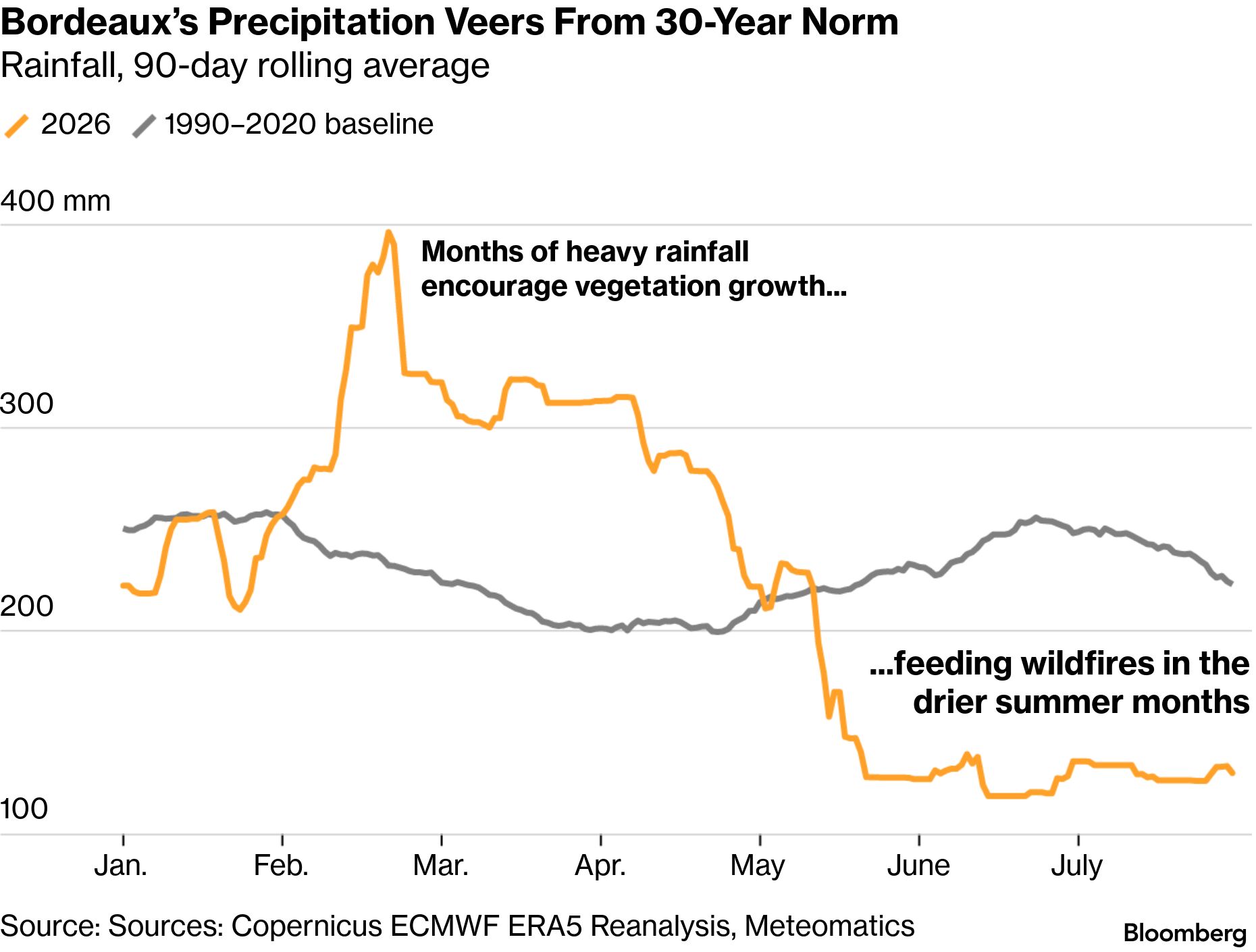
Around the same time that the French fire began, two separate blazes started in rural areas west and southwest of Madrid. They merged last weekend, forcing tens of thousands of people to flee for safety. In the UK, authorities declared a major incident as fire crews fought a wildfire spreading close to the Sizewell B nuclear power station. Greece, Portugal, Italy and Albania are all struggling with blazes too, the consequence of four successive heatwaves across the continent that turned landscapes into tinderboxes, and a confluence of other conditions — heavy rains over the winter that led to an abundance of vegetation, high winds that help fires to spread, and the hollowing out of rural economies that has left fields abandoned.

Another hot spell is building, and meteorologists expect that it’s unlikely that much of Europe will experience relief until the rains of late autumn or early winter. Fire risk is spreading north and east, putting cities — including London and Paris — on alert.

Climate change has made this “fire weather” more common, and more extreme. Europe is warming faster than any other continent, meaning that blazes of the kind that tore across Gironde are likely to become a new normal, pushing the boundaries of firefighters’ ability to stop them, and threatening urban areas and critical infrastructure, with enormous consequences for businesses, societies and economies.
“It’s not a matter of money. It’s not a matter of investment. It’s not a matter of how heroic the firefighters are,” said Raul Cordero Carrasco, a climate researcher at the University of Groningen. “You just cannot stop a fire when the conditions are so extreme as we have seen in recent days in Europe.”
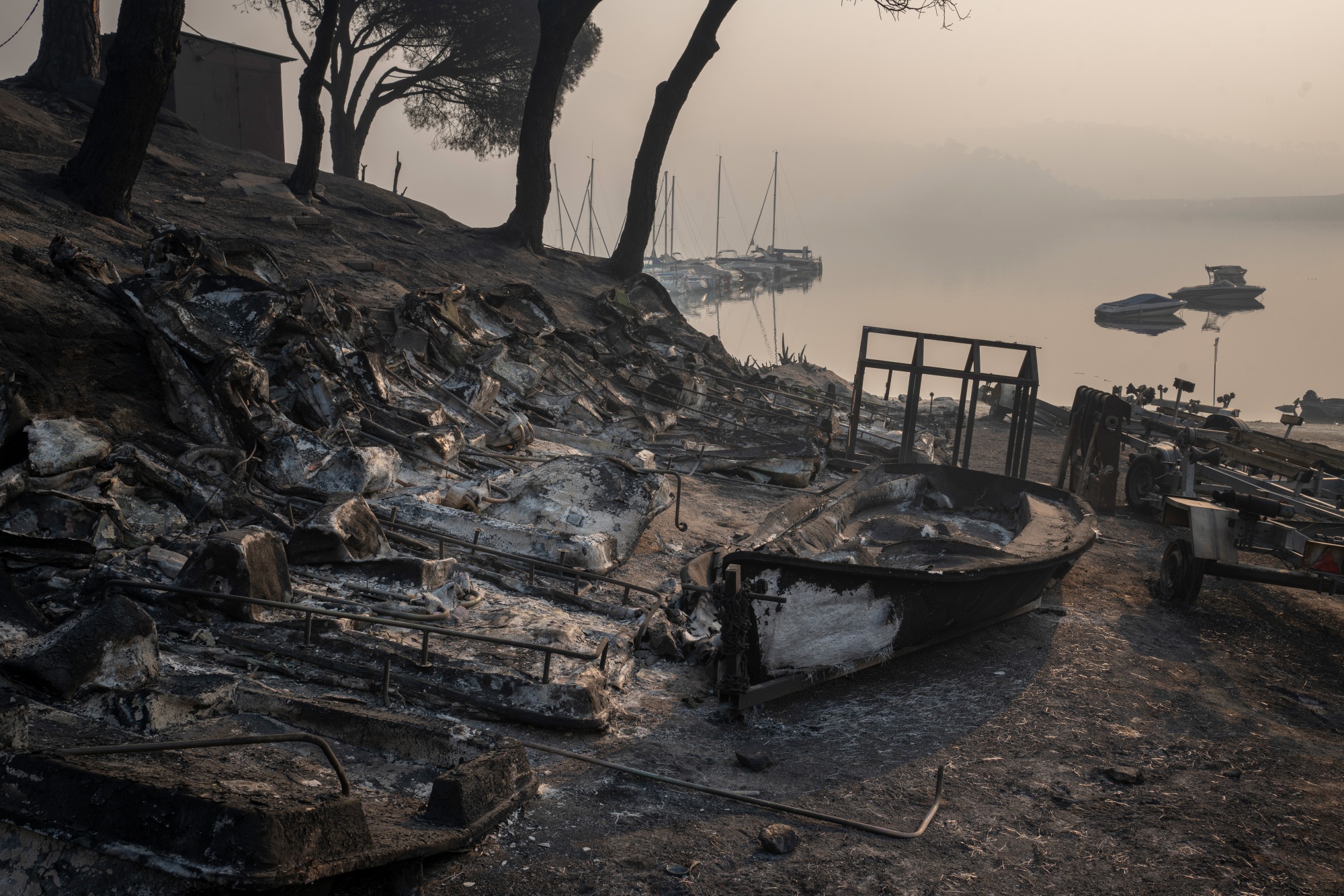
Carlos Bravo and his family own Chiringuito El Serengueti, a beach bar at the San Juan reservoir — a popular summer destination often referred to as “Madrid’s beach.” When he saw flames from the wildfire approaching last Thursday, he called the emergency services. They told him they couldn’t come — he had to leave.

Burned leisure boats and trailers at a marina on the San Juan reservoir in Spain on July 29.
Photographer: Brais Lorenzo/Bloomberg

“At first I couldn’t believe it. I stayed until the very end because I trusted that someone would come, firefighters, police, someone. But then the fire started surrounding me,” Bravo said. “That’s when I got in my car and fled, because I realized it was true, that nobody was going to come.”

He later learned that fire crews had not been able to assist because they were deployed in neighboring towns, which were being engulfed by flames. The fire ripped through the beachfront at San Juan, once bustling with restaurants, boats and campsites, leaving it in ruins. Bravo’s bar is wrecked.

Keep reading

Climate impact

20 times

Climate change made weather that fueled Europe’s wildfires at least 20 times as likely in Spain, and at least twice as likely in France, according to scientists at the World Weather Attribution group.

Unique threat

“The nature of the risk is very different than any other peril.”

Firas Saleh

Director of wildfire models at Moody’s, on the impact of blazes compared to other catastrophic weather events.

Insurers warn over rising risks

By Alastair Marsh and Claudia Cohen

Europe’s insurers are bracing for a new era of catastrophe risk fanned by rising temperatures in the world’s fastest-warming continent.

Insurers, reinsurers and brokers contacted by Bloomberg are already predicting increased premiums and bigger losses tied to natural catastrophes. Importantly, they don’t see the latest bouts of extreme heat as a temporary shock, but as a long-term trend.
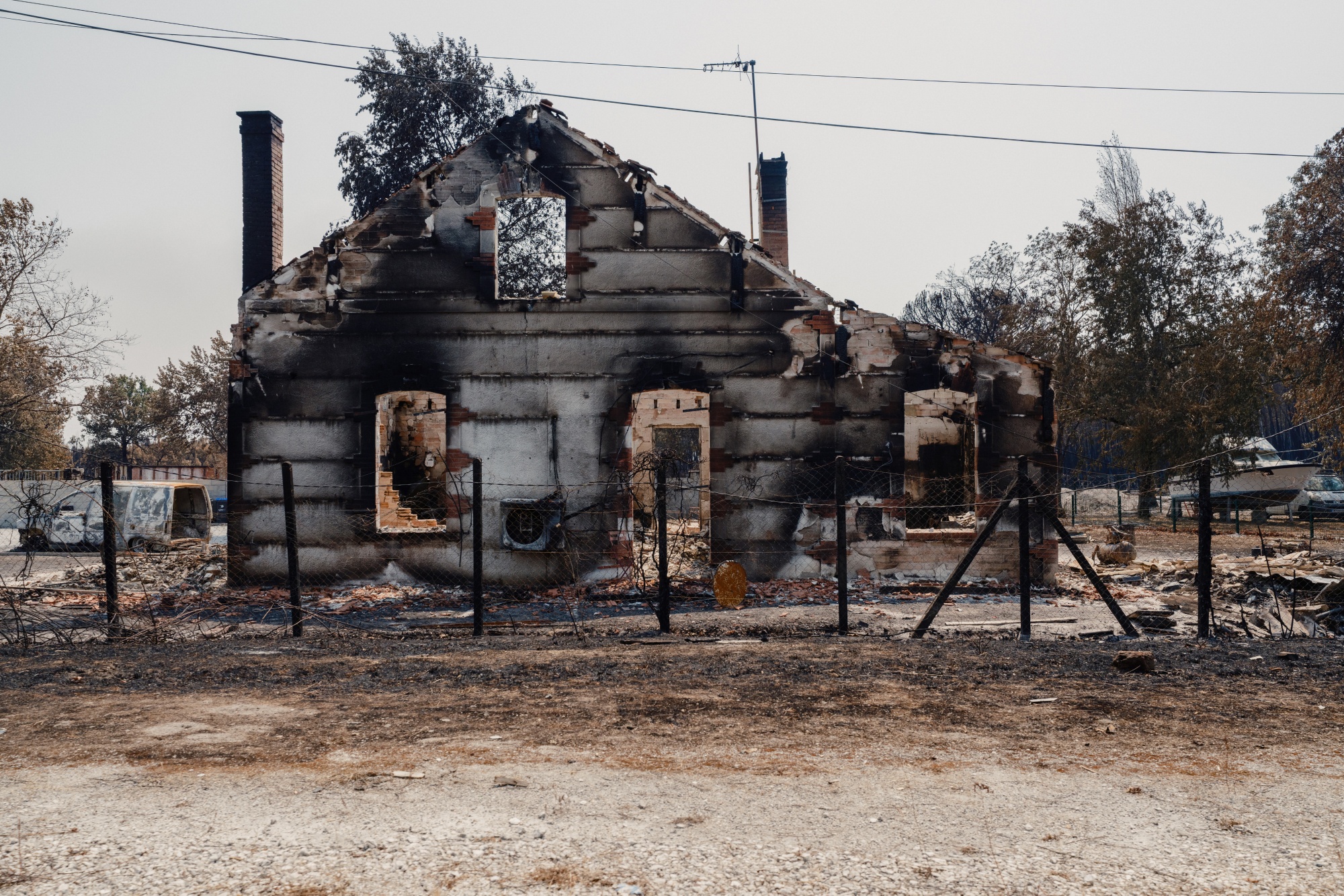
A house destroyed by a wildfire near Lanton, France.
Photographer: Wayan Barre/Bloomberg

The industry is “actively evaluating” the extent to which the rise in temperatures “represents a fundamental shift in Europe’s catastrophe risk landscape,” said Will Bruce, global head of climate risk consulting for Aon Plc, the world’s second-largest insurance broker.

Efforts are also underway to expand the “range of capital available to support resilience and recovery,” he said. That may require transferring more risk to the capital markets, “including catastrophe bonds and other insurance-linked securities.”
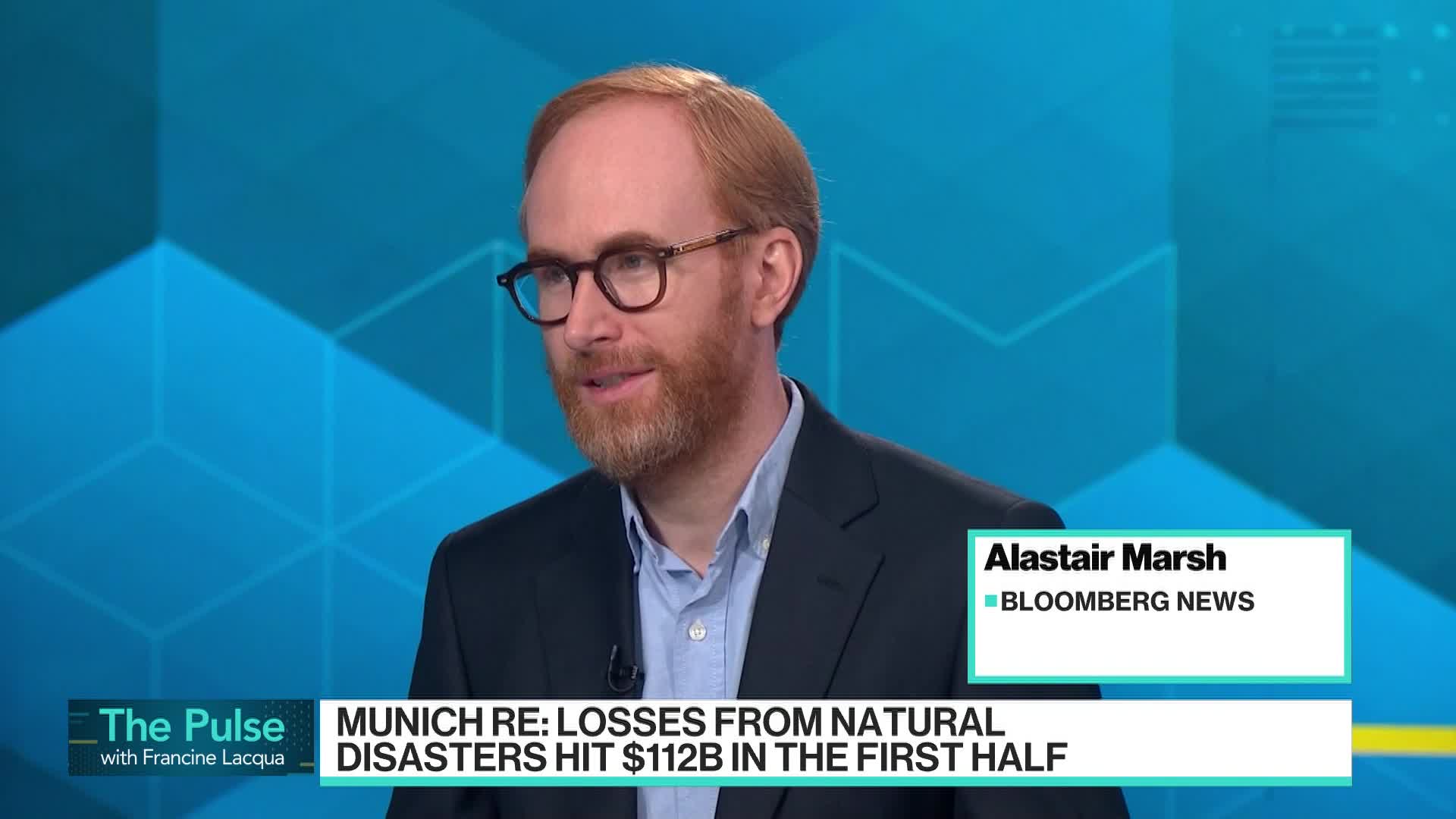
Efforts are also underway to expand the “range of capital available to support resilience and recovery,” he said. That may require transferring more risk to the capital markets, “including catastrophe bonds and other insurance-linked securities.”

Watch Now Watch now

As Europeans struggle to adapt to a much hotter world than the one inhabited by their parents, they’re trying to comprehend not just a different physical reality, but also the financial burden that will likely accompany it. Munich Re says it’s now clear that the combined forces of El Niño and global warming have produced a “dangerous mix” that will drive up losses in the second half of this year.

Wildfires have already ravaged Spain, France and Greece. Even corners of Europe that used to consider themselves too far north to be at risk are now finding they’re affected. European forecasts show “very high” fire danger forecasts through early August reaching as far north as Scandinavia. In the UK, a large wildfire broke out on Thursday close to a nuclear power station.

“What is already clear is that wildfire losses extend well beyond damage to property,” said Tyson Vickery, managing director and global placement leader for Europe at Marsh, the world’s largest insurance and risk-advisory broker. “Business interruption caused by evacuation orders, smoke or restricted access can create significant losses even where there is limited or no physical damage.”

Read more

Unprepared Europe

Watch Now Watch now

Record-breaking wildfires in France and Spain are exposing clear gaps in the countries’ firefighting capacities. Watch Bloomberg Opinion columnist Lara Williams explain where resources are lacking in Europe.

🎥 Attention all filmmakers!

Working on a short documentary about climate change? Don’t miss your chance to submit it to the Bloomberg Green Docs film competition. Grand prize: $25,000. Submissions accepted through August 14, 2026.

See official rules at bloomberg.com/greendocs.

More from Green

More from Bloomberg

  • Business of Food for a weekly look at how the world feeds itself in a changing economy and climate, from farming to supply chains to consumer trends
  • Energy Daily for a daily guide to the energy and commodities markets that power the global economy
  • Tech In Depth for analysis and scoops about the business of technology

Explore all Bloomberg newsletters.

We’re improving your newsletter experience and we’d love your feedback. If something looks off, help us fine-tune your experience by reporting it here.

Follow Us

https://assets.bwbx.io/images/users/iqjWHBFdfxIU/iDRduxloBOSA/v0/-1x-1.png icon https://assets.bwbx.io/images/users/iqjWHBFdfxIU/i5QE5__h22bE/v0/-1x-1.png icon https://assets.bwbx.io/images/users/iqjWHBFdfxIU/iiSKUb3JWcLI/v0/-1x-1.png icon https://assets.bwbx.io/images/users/iqjWHBFdfxIU/i_JvbwNnmprk/v0/-1x-1.png icon https://assets.bwbx.io/images/users/iqjWHBFdfxIU/iXt_II64P_EM/v0/-1x-1.png icon

You received this message because you are subscribed to Bloomberg’s Green Daily newsletter. If a friend forwarded you this message, sign up here to get it in your inbox.

Unsubscribe
Bloomberg.com
Contact Us
Bloomberg L.P.
731 Lexington Avenue
New York, NY 10022

Ads Powered By Liveintent | Ad Choices

The next 30 days will decide your wealth

...