| Read in browser | ||||||||||||||

A deluge of solar panels and batteries from China has transformed Pakistan’s electricity sector, bringing huge benefits for consumers. Yet, there have been losers too: the nation’s already indebted energy industry, and a previous generation of China-backed and operated coal-fired power plants. Subscribe to Bloomberg.com for unlimited access to all our coverage. Competing energy exportsBy Lili Pike and Faseeh Mangi About an hour’s drive east of Karachi, Pakistan’s coastal mega-city of more than 20 million people, a coal-fired power station hailed as a flagship project in China’s $1.5 trillion Belt and Road Initiative is being engulfed by a sea of solar. Glinting arrays crown steel plants and manufacturing sites across a vast industrial zone of about 400 companies flanking the Arabian Sea at Port Qasim, part of a rapid — and largely unplanned — advance of renewable energy that’s added new risks to the nation’s already precarious energy economics. “There are solar panels almost everywhere one sees,” says Zaheer Allana, owner of a packaging factory, where the rooftop is crowded with photovoltaic modules that generate about a fifth of the facility’s electricity needs. “We have utilized almost all available space,” he explains, as workers load burlap sacks onto delivery trucks. “If we had space, we would take it to 100%.” 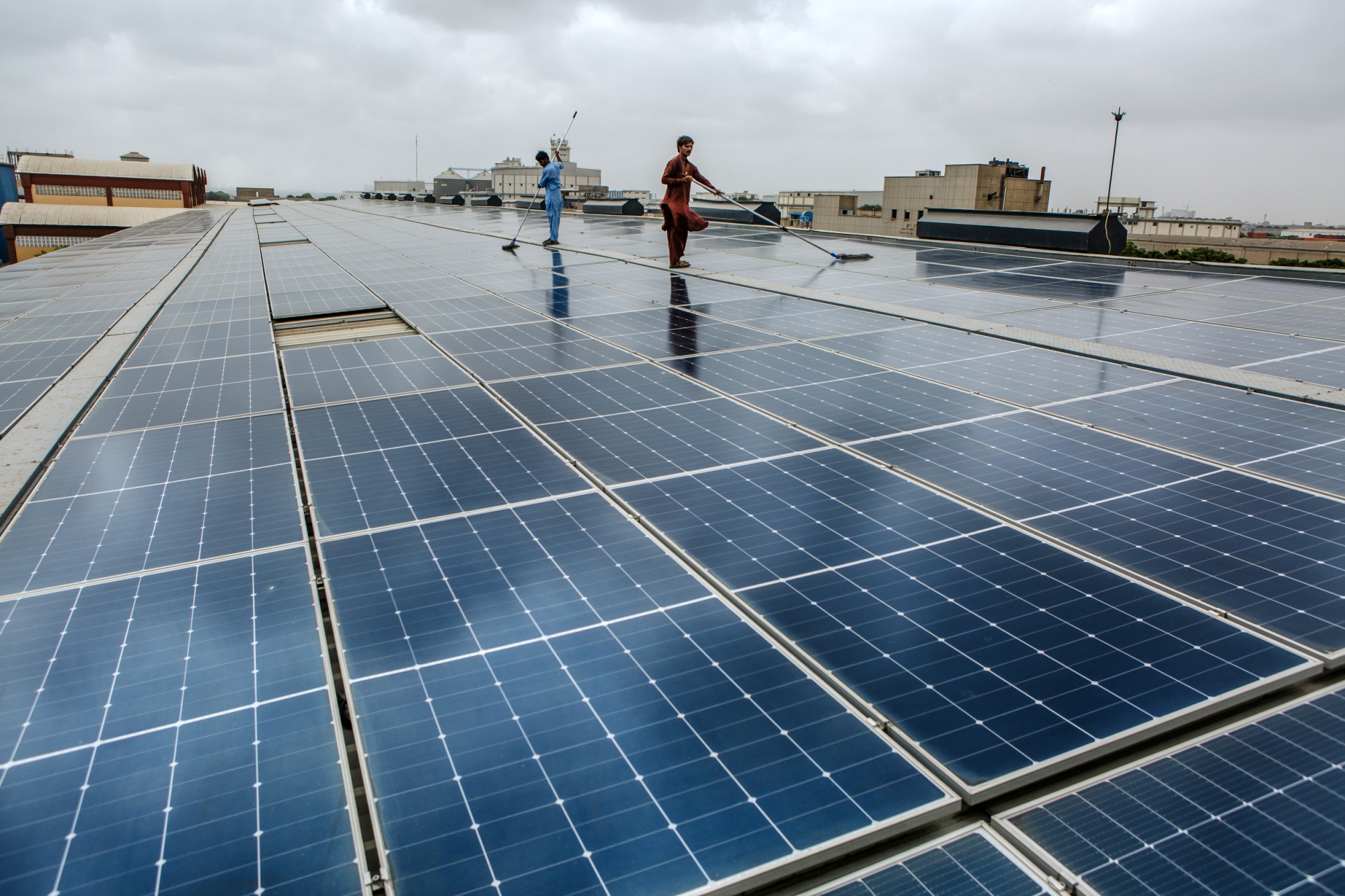
Workers clean rooftop solar panels at the Bin Qasim Packages plant in the Bin Qasim Industrial Zone in Karachi.
Photographer: Asim Hafeez/Bloomberg
Factories to farms and homes in the nation of more than 255 million people — about a fifth of whom live in poverty — are being transformed by a bottom-up, consumer-led torrent of solar installations. The technology accounted for about 20% of Pakistan’s electricity generation in 2025, up from roughly 3% at the start of the decade, according to Ember, an energy think tank. High power costs, an unreliable grid and the availability of cheap panels — popularized through DIY installation tutorials on TikTok — made the nation China’s third-largest solar export market last year, and the equipment has become so ubiquitous that it’s now even being used as wedding dowry. 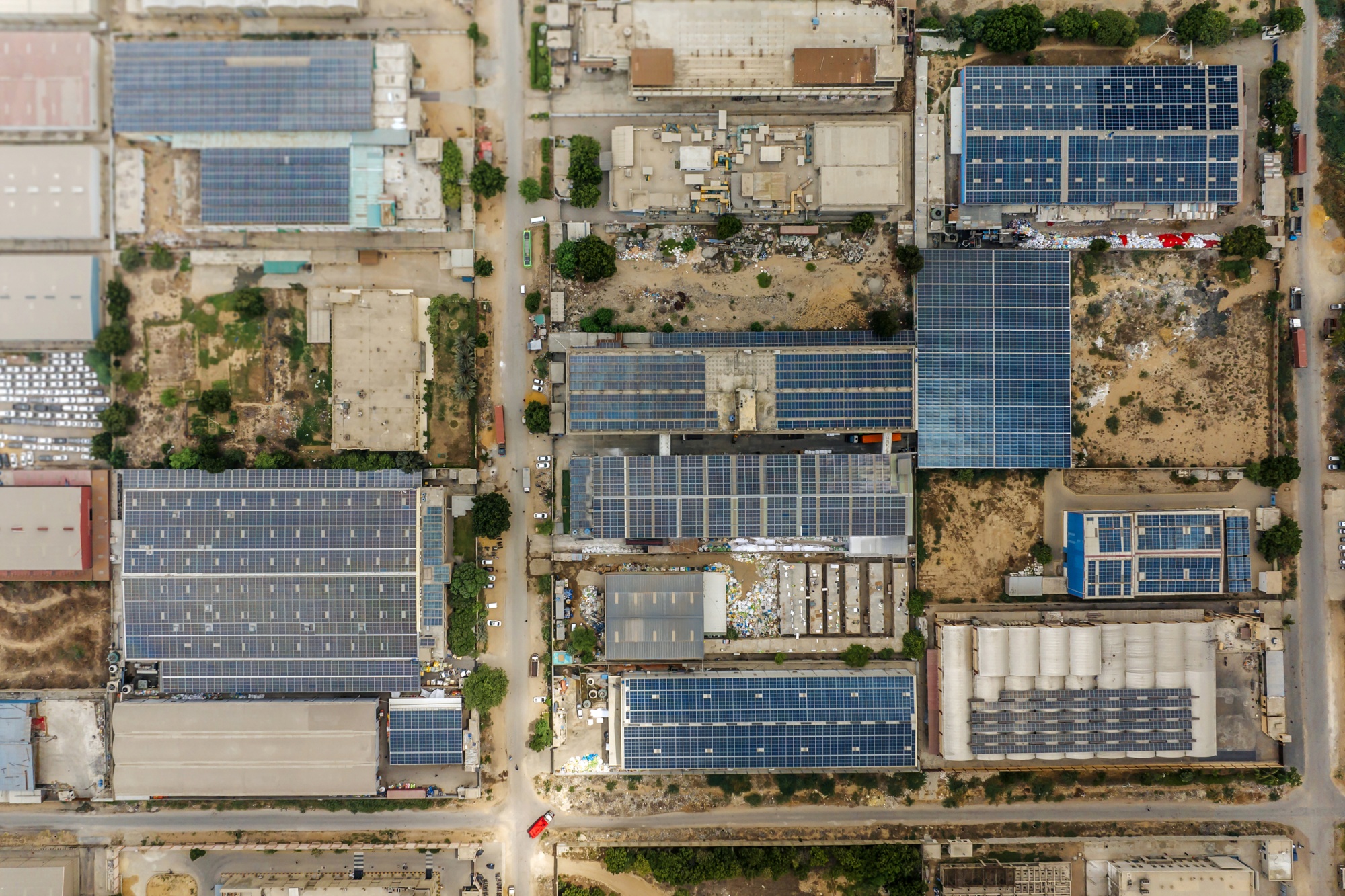
Solar panels are widely installed on the roofs of factories across the Bin Qasim Industrial Zone.
Photographer: Asim Hafeez/Bloomberg
The scale of that clean energy influx has brought huge benefits for consumers. Solar has provided not only a cheaper source of power, it’s also added electricity access in some underserved regions. For industrial customers, it has softened the impact of power tariffs that are among Asia’s most expensive. Yet dwindling demand for grid-supplied electricity has worrying consequences for both Pakistan and China. Declining margins for state-owned power utilities are straining the existing energy system, and complicating the task of repaying the Chinese companies that operate the nation’s largest coal-fired power plants. While some of Pakistan’s challenges are unique, its experience highlights the risks of underestimating the potential speed and impact of the green transition. Already, there are signs China will see stresses in other regions between that renewables boom and its legacy energy strategy, with implications for both state-owned power firms and the nation’s 1.3 trillion yuan ($190 billion) clean technology export sector. “It’s Chinese renewable energy technologies on one hand, and Chinese fossil fuel power plants on the other,” said Haneea Isaad, a Pakistan-based energy finance specialist at the Institute for Energy Economics and Financial Analysis, a think tank. “They are at odds with each other.” A follow-up wave of green imports is adding to the pressure on traditional electricity generators and distributors, as households and businesses shaken by the Iran War’s disruption to energy supply install Chinese-produced batteries, further increasing their self-sufficiency. Battery imports from China jumped almost 150% in the first half to a value of about $392 million, customs data show. 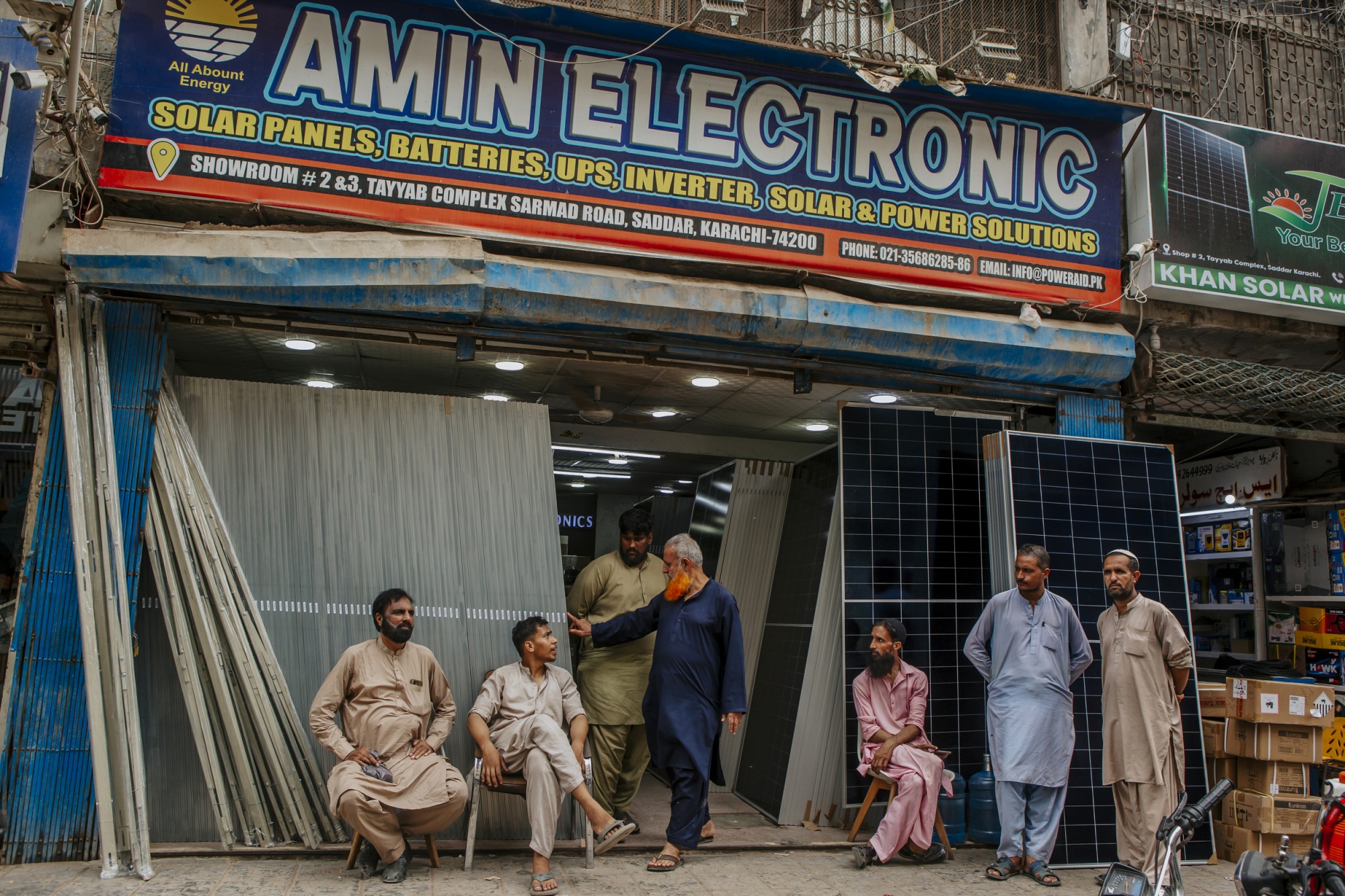
A solar energy store in the Saddar market district of Karachi.
Photographer: Asim Hafeez/Bloomberg
“Every consumer who is opting out of the grid and going to solar is causing the burden to increase,” said Muhammad Mujahid, executive director of Lahore-based Innovo Corp., a clean technology importer that has supplied batteries, inverters and solar panels. “This is like a death spiral for all the utilities.” In discussions on Pakistan, China’s officials have been unwilling so far to make major concessions on outstanding debts that would trigger losses for Chinese state-owned companies and banks, according to the people familiar with the deliberations. Even so, diplomats aim to maintain strong ties to Islamabad, a trusted ally, and are continuing to consider potential solutions, the people said. The Chinese Foreign Ministry in a statement to Bloomberg News said energy cooperation between the two countries has “strongly guaranteed Pakistan’s domestic energy supply, effectively lowered local electricity prices, and given a strong boost to economic and social development.” A spokesperson for Pakistan’s Prime Minister did not respond to requests for comment.
Keep reading
Clean tech balance56% The share of China’s total energy investments and construction contracts in Belt and Road Initiative nations related to clean power in the first half of 2026, according to the University of Queensland and the China-based Green Finance & Development Center. Solar surprise“No one knew that this dramatic and highly disruptive transition would happen so quickly.” Muhammad Mujahid Executive director of Lahore-based Innovo Corp., a clean technology importer. Shrinking Swiss glaciersBy Laura Millan Swiss glaciers lost over 5% of their ice volume following a hot summer and at least two disappeared altogether, an acceleration of melting that threatens the tourism lifeblood of Alpine communities. Lack of snowfall in winter and abnormally high temperatures over the summer caused a retreat just shy of the record year of 2022, bringing the glacial loss in the Swiss Alps to nearly 20% over the past five years, according to data from the glacier monitoring network GLAMOS and the Swiss Academy of Sciences. 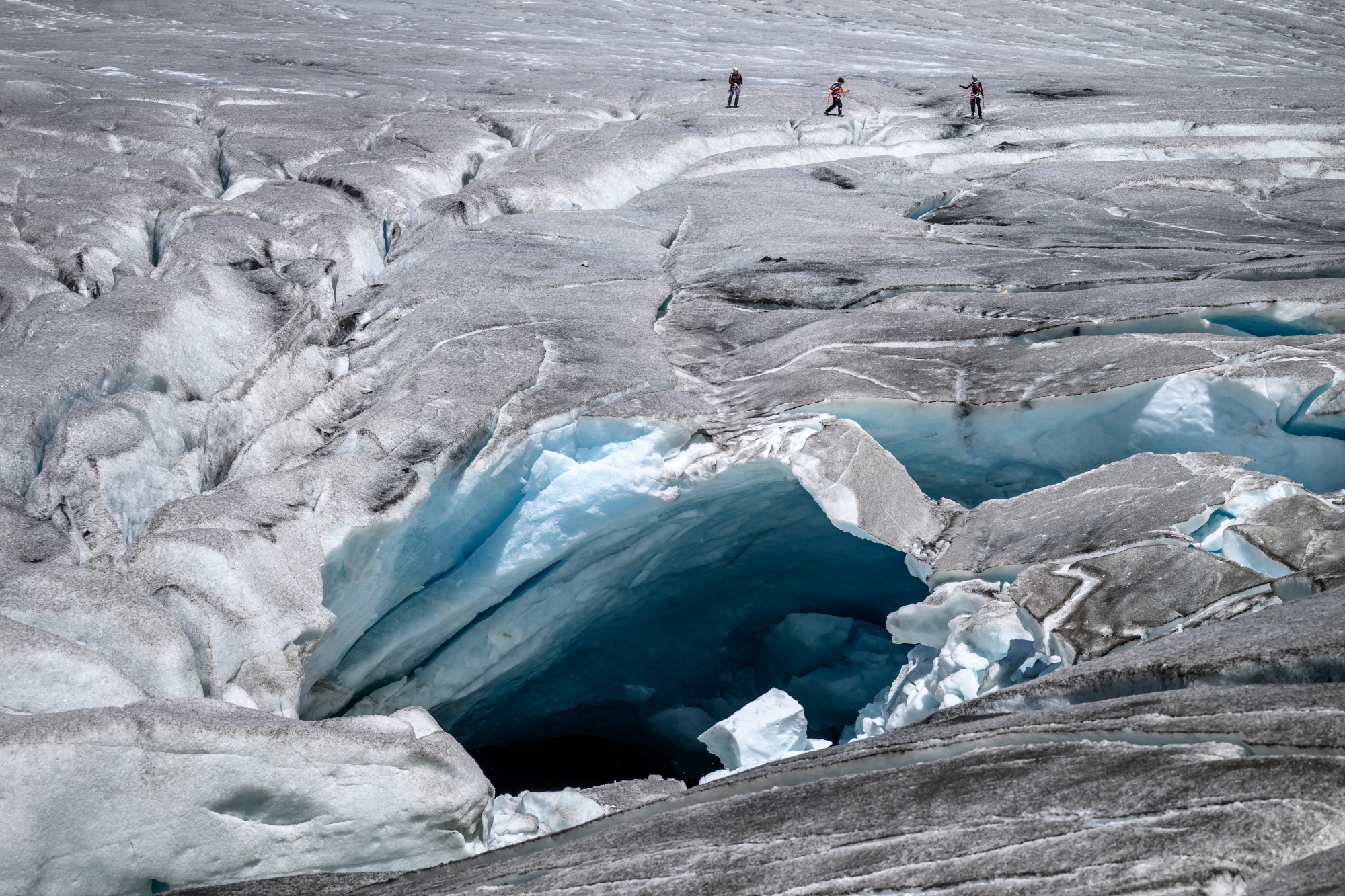
A group of hikers make their way past a melt hole on Rhone Glacier in the Swiss Alps, in July.
Photographer: Fabrice Coffrini/AFP/Getty Images
“There’s a doubling of ice losses over the past five-year period,” said Matthias Huss, a glaciologist and the head of the GLAMOS network. “We didn’t expect to see such a huge loss, especially not so concentrated in time — it’s much faster than the scenarios indicated.” The pace of the melting leaves Alpine glaciers no chance of surviving over the long term, the researchers concluded. While glaciers all over Earth are shrinking, the rate of loss is higher in the Alps. The melting permafrost is making mountain slopes unstable, posing threats to mountaineers and hikers. 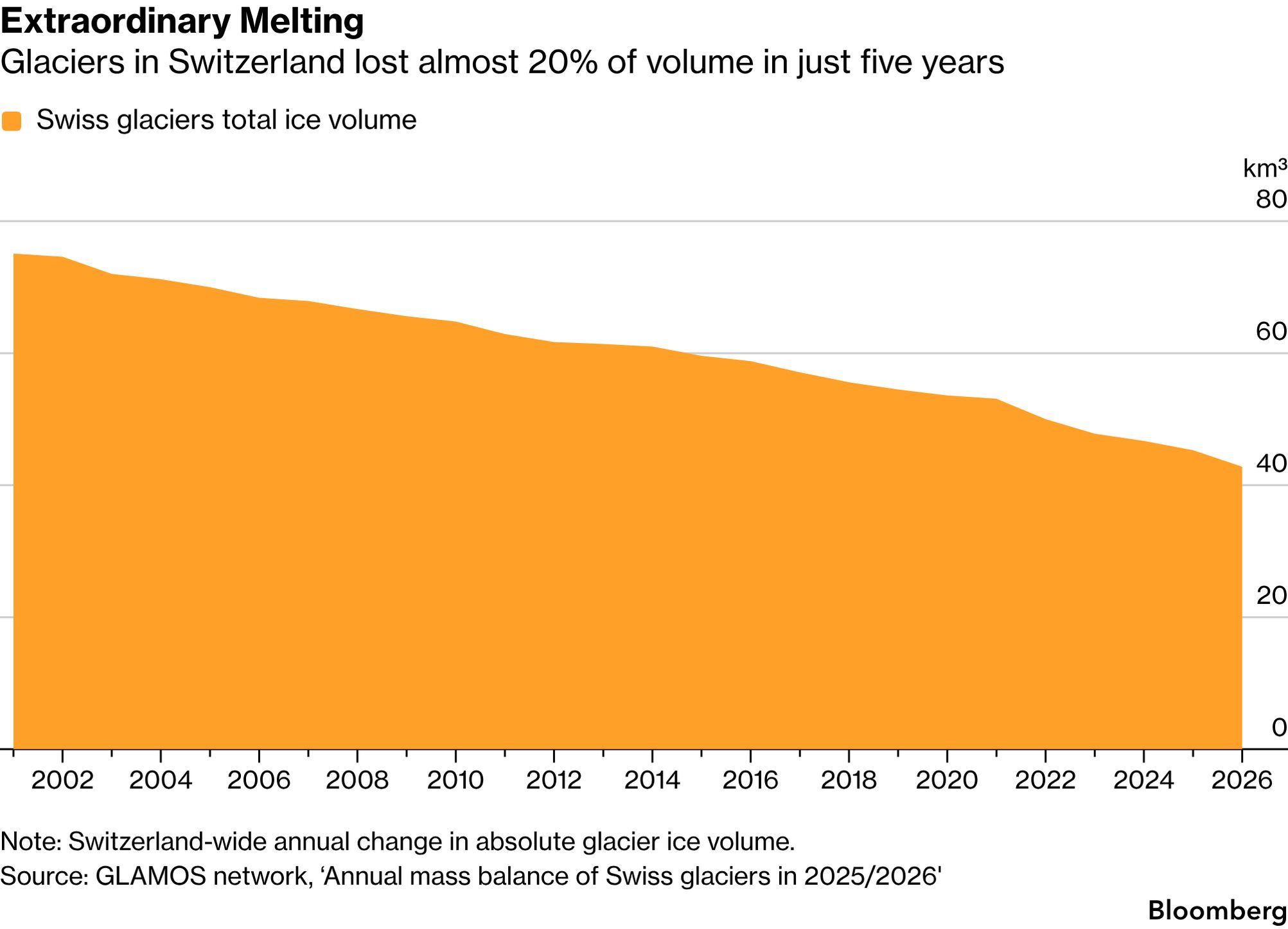
An unusual number of rockfalls in the Alps at the height of the tourism season caused at least three deaths — two Czech climbers were struck by falling rocks while crossing the Goûter corridor in the Mont Blanc massif in July, and a French climber training to become a mountain guide died from a sudden rockfall in August as he climbed the Aiguille du Génépi, also in the Mont Blanc area. The threats to human life from receding glaciers are smaller in the Alps than in densely populated places like Nepal, where more than 1,400 people were killed in August after a glacier’s collapse triggered mudslides and mass flooding.
Read more
Your Zero listenChina is a hotbed of innovation, filling nearly half of the world’s new patents every year. Much of that work is in the world of clean tech and a whole ecosystem is growing to help make these breakthroughs commercial. California’s balcony solar decisionBy Todd Woody California, the largest US solar market, is the 10th state to approve plug-in solar since 2025. A bill awaits New York Governor Kathy Hochul’s signature, and almost two dozen other states are considering similar laws. 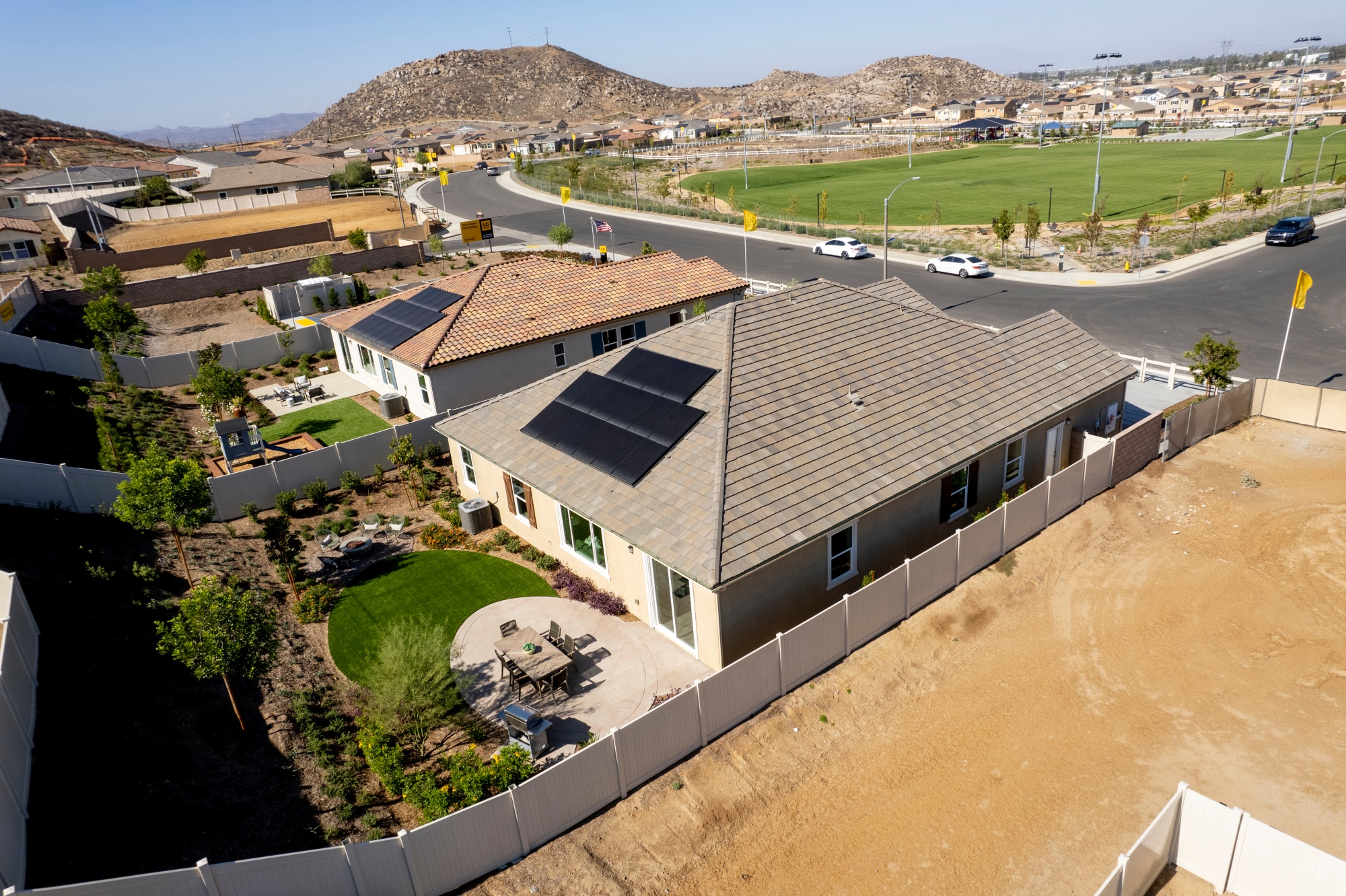
Solar panels on the roofs of homes in Menifee, California.
Bloomberg via Kyle Grillot
Plug-in systems, also called balcony solar, usually consist of two to four solar panels that plug into a wall outlet and can be placed on apartment terraces or in backyards of single-family homes. They typically cost between $300 and $2,000 or more and generate enough electricity to power a refrigerator, electronics and lights, potentially shaving several hundred dollars a year from utility bills. Some models come with batteries to store power for use during periods of peak demand, when electricity rates spike, or when storms or heat waves knock out the grid. “The world’s fourth-largest economy has opened up the market to balcony solar,” said Cora Stryker, co-founder of Bright Saver, a Bay Area nonprofit that sells do-it-yourself plug-in solar systems and has pushed for the technology’s legalization. “It sends a clear market signal to manufacturers that it is worth their while to invest in R&D to make a California version of the balcony solar systems they are selling by the millions in Germany.”
Read more
More from Green🎥Attention all filmmakers!Working on a short documentary about climate change? Don’t miss your chance to submit it to the Bloomberg Green Docs film competition. Grand prize: $25,000. Submissions will be accepted through October 2, 2026. See official rules at bloomberg.com/greendocs. More from Bloomberg
Explore all Bloomberg newsletters. We’re improving your newsletter experience and we’d love your feedback. If something looks off, help us fine-tune your experience by reporting it here. Follow Us
You received this message because you are subscribed to Bloomberg’s Green Daily newsletter. If a friend forwarded you this message, sign up here to get it in your inbox.
|
Thursday, October 1, 2026
China’s green exports collide with coal








Subscribe to:
Post Comments (Atom)
A plastic-free coffee pod
Keurig says its new compressed coffee pucks can go straight into compost ...
-
Revolutionary Stem Cell & PRP —Start Your Journey Today ...
-
You’ve shown interest in Regenerative Medicine ...


No comments:
Post a Comment