| Read in browser | ||||||||||||||

Coffee-pod makers have come under fire for the vast amount of waste left behind by their single-use capsules. And in the UK, energy officials charged with reducing carbon emissions are mulling trims to key programs after all government departments were asked to fund defense investments in response to the Iran war. Subscribe to Bloomberg.com for unlimited access to all our coverage. Beyond the podCoffee-pod makers have spent years trying to find a design that doesn’t leave a crumpled piece of plastic or aluminum with every brewed cup. This week, Keurig Dr Pepper Inc., one of the world’s biggest makers of coffee pods, launched a new way of brewing coffee it says will slash waste. Called AltaRounds, the one-cup portions are made from compressed coffee wrapped in a coating derived from seaweed that the company sources from France. The puck-shaped capsules come eight to a box, and most varieties will cost $1.37 each — comparable to one of the company’s traditional K-Cup pods. “You can dispose of the AltaRounds any way you would normally dispose of your coffee grounds,” said Monique Oxender, the company’s chief sustainability officer. “I put it on my garden. I put it on my house plants.” 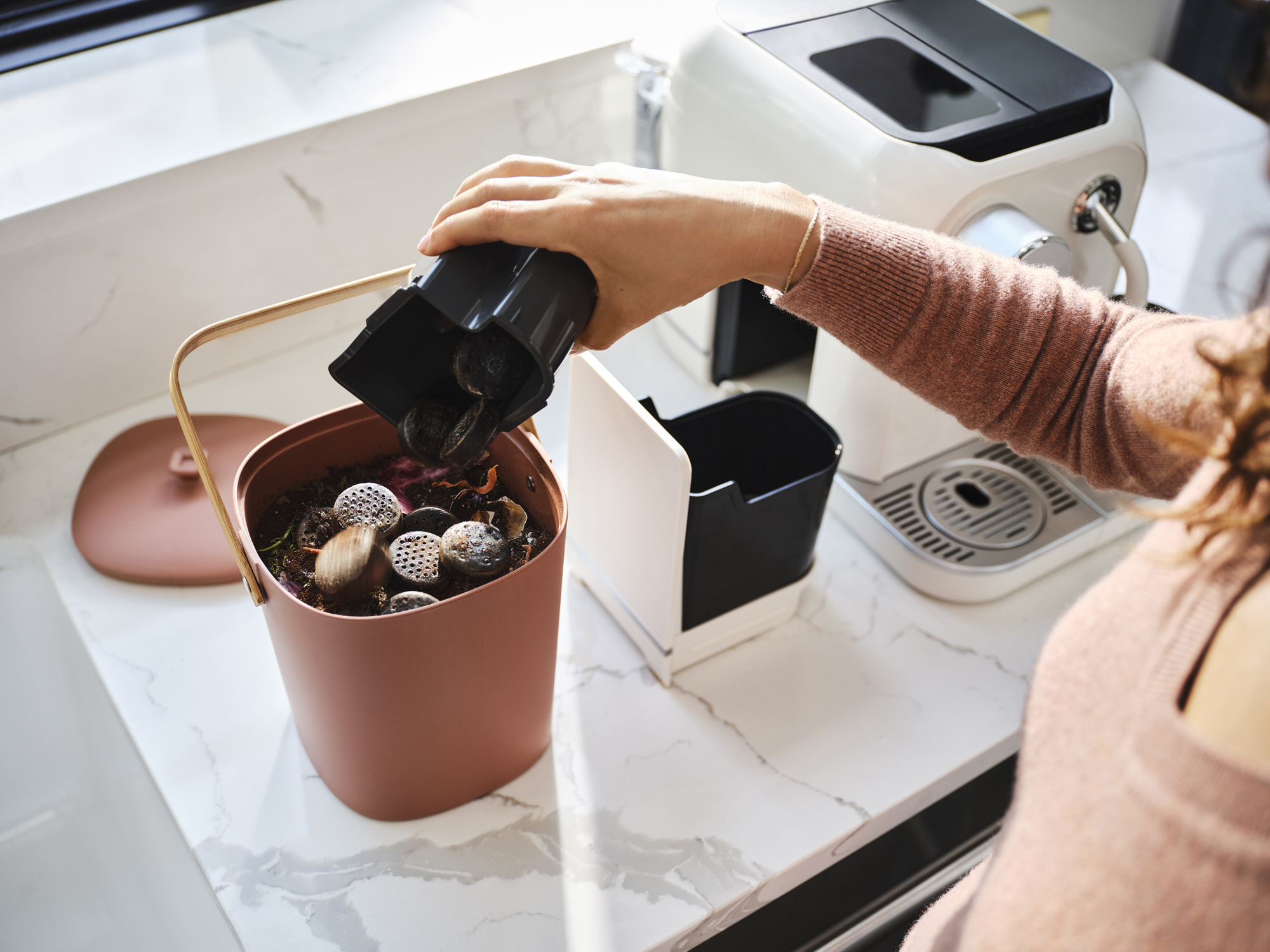
AltaRounds compressed coffee pucks. Keurig
Source: Keurig
Some producers have tried recycling coffee pods, though conventional recyclers struggle to deal with small pieces of plastic. In 2024, the US Securities and Exchange Commission charged KDP with making inaccurate statements about the pods’ recyclability after two of the country’s largest recycling companies said they wouldn’t accept the packaging. The market for single-use coffee packaging is growing. The global coffee pods market was valued at $40.5 billion in 2024 and projected to expand to $58.2 billion by 2030, according to Grand View Research, a market research and consulting firm. Other coffee companies have created compostable packaging, but there are questions about whether these products can break down entirely and concerns about the lack of infrastructure to process them. The AltaRounds don’t need to be shipped to an industrial composting facility, though that’s an option. KDP says they can be composted at home, the same way as ordinary coffee grounds, disintegrating within 12-16 weeks and fully biodegrading within 6 months. 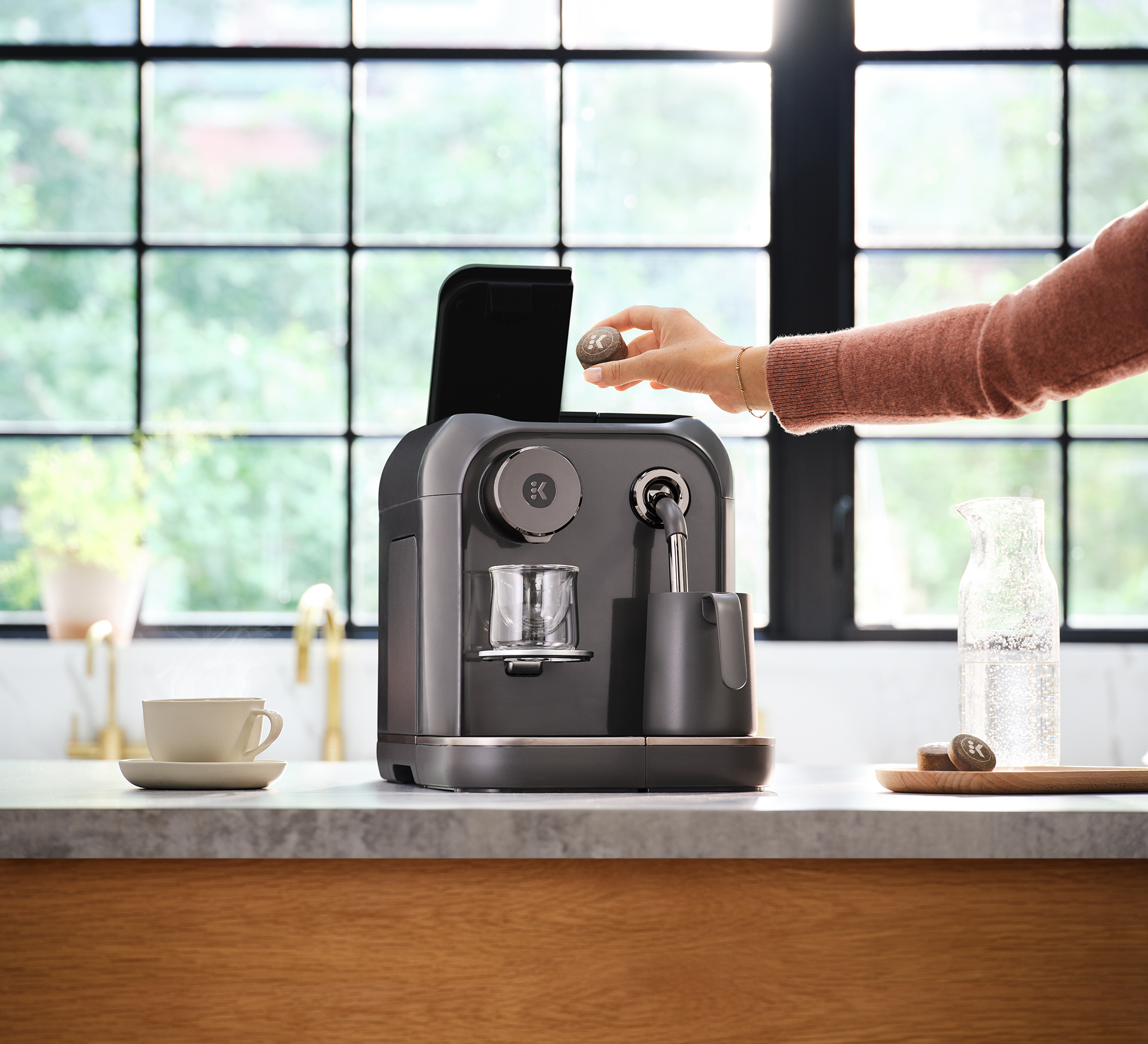
Keurig Alta coffee maker with AltaRounds, compressed coffee pucks. Keurig
Source: Keurig
Using them will require buying a new coffee machine, and because it can also make espresso, it will cost more than those that take traditional pods. KDP hasn’t said whether it plans to eventually shed the widely used K-Cup, which will still work in the new Alta coffee maker. “The consumer’s going to lead us on that,” said Oxender. “In order to transition a product, you’re going to have to get to scale.”
Read more
Lotta cups20 billion Number of coffee pods disposed of globally each year, according to Earth911, a recycling database provider. Trash heap“I’d say the problem is really in the infrastructure and the economy of recycling and composting. That’s where the real challenge is.” James Sternberg Assistant professor of sustainable packaging at Clemson University on coffee-pod waste Less insulation, more defenseBy Jess Shankleman and Olivia Rudgard The UK is considering cuts to its flagship program to upgrade millions of homes, as it seeks more than £2 billion ($2.6 billion) in energy-department savings to help fund higher defense spending. The £15 billion Warm Homes Plan is among the programs being examined for cuts, according to a person familiar with the discussions. The plan to improve the energy efficiency of as many as 5 million homes by 2030 was only announced in January, but all government departments must contribute 1% of their capital spending budgets to fund defense investments in response to the Iran war. The Department for Energy Security and Net Zero (Desnz) has been asked to find an additional £2 billion of savings by the end of the decade. 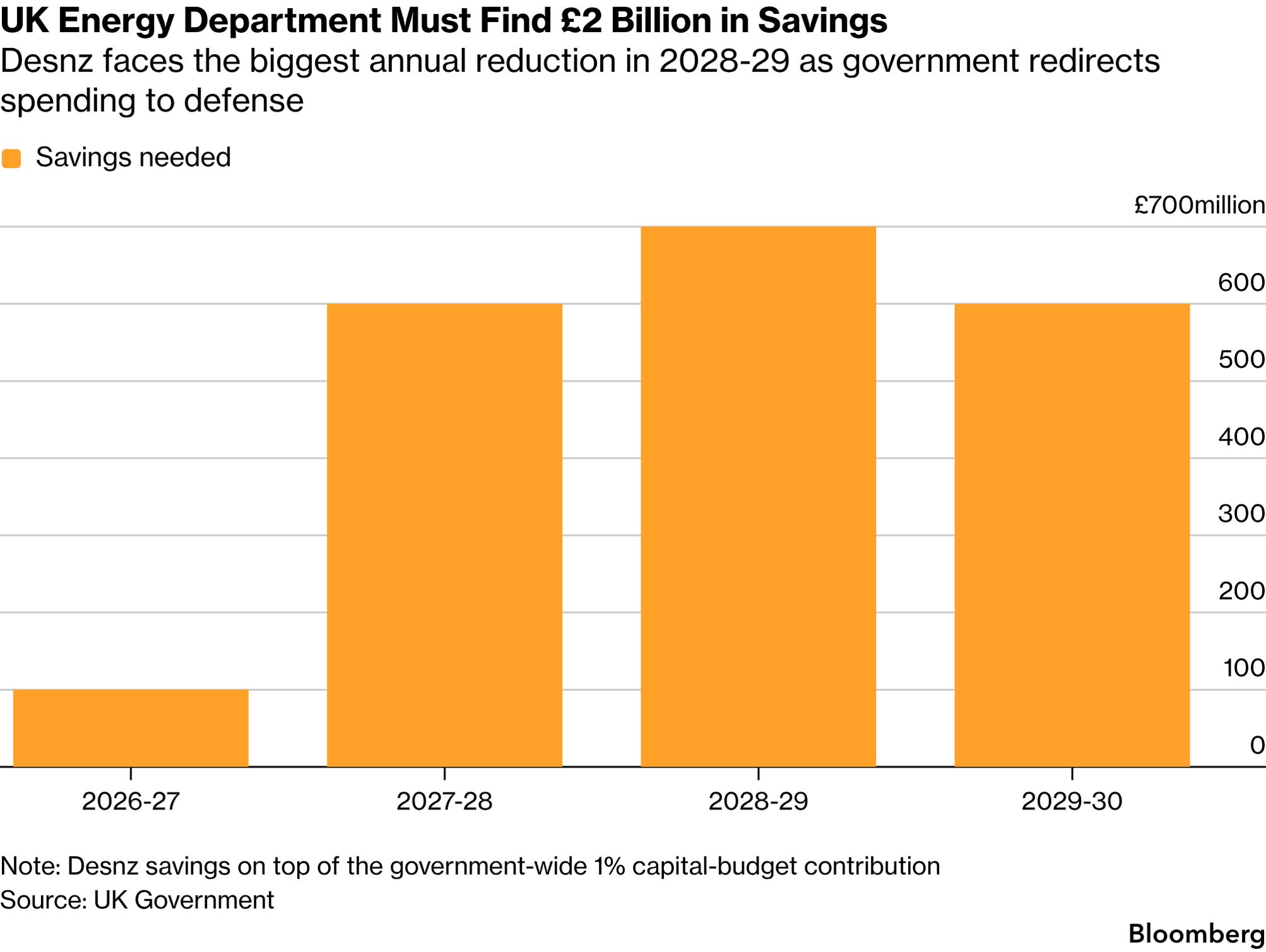
Desnz has one of the largest capital budgets, reflecting the huge sums committed to Britain’s energy transition. Miatta Fahnbulleh, its new secretary, faces the dilemma of having to trim one of the main policies designed to achieve her key priority of cutting household bills by reducing energy consumption. The Warm Homes Plan promised to upgrade as many as 5 million homes by 2030, with the addition of better insulation, solar panels, batteries and heat pumps. Now, the areas most likely to see cuts are those helping higher-income households, while those supporting lower-income homes would likely be protected, one of the people familiar said. 
Photovoltaic solar panels on homes in Lenham, UK.
Bloomberg
Carbon capture and storage is also a target for savings, while spending on hydrogen is under scrutiny, according to another person familiar, who asked not to be identified discussing a confidential matter. No final decisions have been made, and the eventual package could change as officials work through options ahead of the Oct. 28 budget.
Read more
More from GreenThis week on ZeroChina is a hotbed of innovation, filling nearly half of the world’s new patents every year. Much of that work is in the world of clean tech and a whole ecosystem is growing to help make these breakthroughs commercial. This week on Zero, Akshat Rathi is joined by Tonny Xie, chairman of Bluetech Clean Air Alliance, a China-based nonprofit organization that’s helping to grow the next era of climate startups. Listen now, and subscribe on Apple, Spotify or YouTube to get new episodes of Zero every Thursday. Listeners’ Choice Calling all fans of Zero! We’re excited to announce that Bloomberg Green’s Zero podcast has been selected as a finalist for the Signal Podcast Awards in the Sustainability & Environment category. Now it’s up to you to help Zero win. Please vote for your favorite podcast by October 15. More from Bloomberg
Explore all Bloomberg newsletters. We’re improving your newsletter experience and we’d love your feedback. If something looks off, help us fine-tune your experience by reporting it here. Follow Us
You received this message because you are subscribed to Bloomberg’s Green Daily newsletter. If a friend forwarded you this message, sign up here to get it in your inbox.
|
Saturday, October 3, 2026
A plastic-free coffee pod







Subscribe to:
Post Comments (Atom)
A plastic-free coffee pod
Keurig says its new compressed coffee pucks can go straight into compost ...
-
Revolutionary Stem Cell & PRP —Start Your Journey Today ...
-
You’ve shown interest in Regenerative Medicine ...


No comments:
Post a Comment