| Read in browser | ||||||||||||||

Welcome to Balance of Power, bringing you the latest in global politics. If you haven’t yet, sign up here. If it weren’t for the bravery and quick thinking of a handful of passengers on board the FlyDubai 1073, the attempted hijacking of a plane carrying primarily Israelis would have ended in catastrophe. Two hours into a flight bound for Tel Aviv, an altercation was heard inside the cockpit. The co-pilot had stabbed his fellow pilot and the aircraft nose-dived 14,000 feet in 30 seconds. Storming in to take down the assailant, they grabbed the controls to make an emergency landing in the Saudi desert. The issue of whether the unsettling incident of a tragedy averted was an act of terrorism, rather than an instance of a suicidal pilot without a political purpose, is now key. 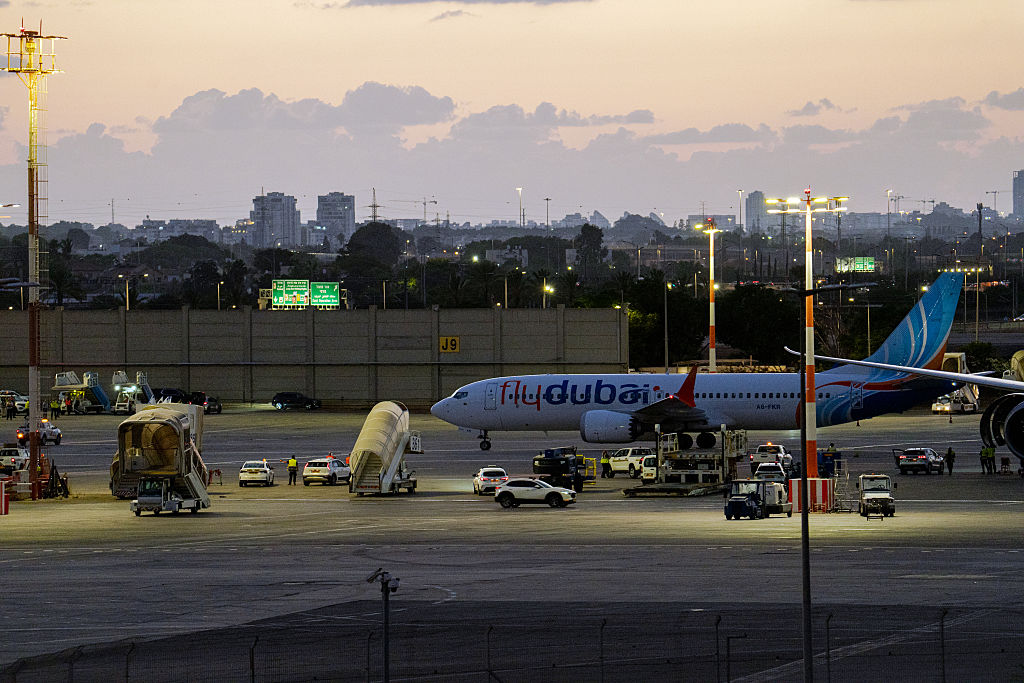 
WATCH: A pilot of a jet carrying more than 170 passengers to Tel Aviv stabbed his colleague and tried to crash the plane.
It was 25 years ago that the deadliest terrorist attacks in American history were carried out by Al-Qaeda operatives seizing four commercial jets. The motives, and nationality, of the FlyDubai co-pilot remain unknown. Israel and the UAE are close allies, and those ties have deepened during the US-led war on Iran. Still, questions around safety in airports and air travel are inevitable, given the rise in Russia’s hybrid warfare against Europe and Iran’s growing retaliation against US allies. A drone attack on Leipzig’s airport was blamed on the Kremlin. The UK pointed the finger at Iran for an attempted terrorist plot at an air base used by US bombers. The ability to exploit vulnerabilities in aviation infrastructure are there in plain sight. Today there is a happy ending to celebrate. Israeli Prime Minister Benjamin Netanyahu was on the tarmac to greet the blood-stained heroes who saved 174 lives. Facing re-election, he had been batting away news reports of warnings he had received ahead of the Oct. 7, 2023 massacre by Hamas. Now there was a story of pluck and courage to displace it. — Flavia Krause-Jackson 
Passengers arrive at Ben Gurion International Airport near Tel Aviv yesterday.
Photographer: Ohad Zwigenberg/AP Photo
Global Must ReadsFrance’s government is set to unveil plans to narrow the budget deficit sharply, kicking off a debate that risks toppling the minority administration and stoking investor concern over the country’s debts. It’s a perilous exercise for Prime Minister Sébastien Lecornu, who must balance the demands of hostile lawmakers who ejected both his predecessors with the expectations of investors who’ve dumped French assets on mounting fiscal and political worries. China is mulling additional fiscal policies to reach its growth target for 2026, according to the country’s finance minister, as the world’s No. 2 economy contends with a slowdown. Interest subsidies and higher funding limits are among the strategies to further unlock consumption potential, Lan Foan says. Read our explainer on how Chinese firms are muscling into higher-value industrial sectors and making it difficult for rivals to compete. 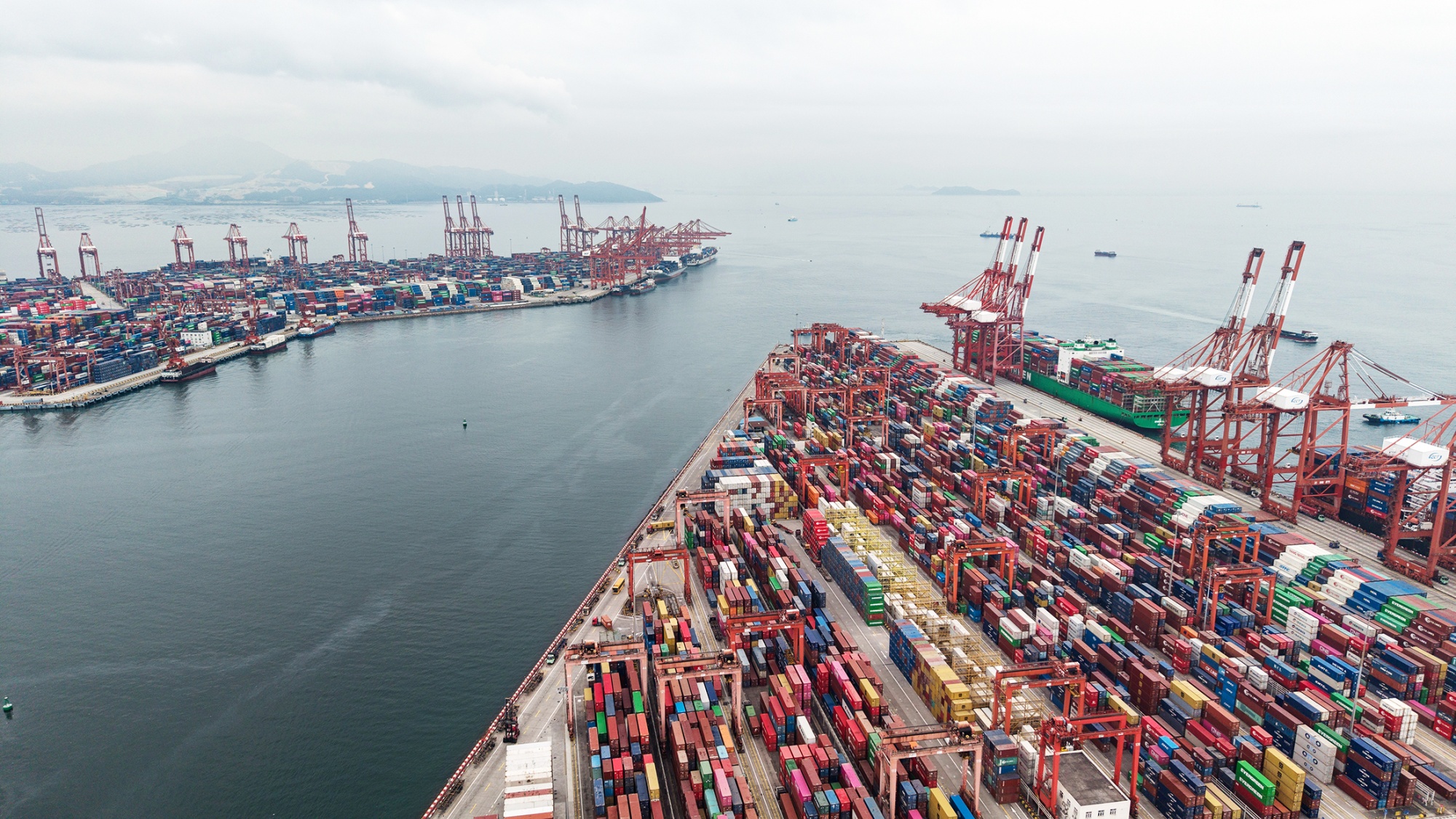
Shipping containers in Shenzhen, China.
Source: Bloomberg
Russia summoned Denmark’s ambassador in Moscow to protest the conduct of a Danish military helicopter during an encounter with a Russian warship last month, adding to tensions between the two countries. Separately, the UK’s domestic security service MI5 accused a Chinese academic institute of spying on Britain’s artificial intelligence research, in a public “espionage alert” published yesterday. Trump unveiled plans for South Korea to invest $200 billion in US energy projects, including eight nuclear power plants and an Alaska natural gas export venture. The announcements, the first tranche of projects linked to last year’s US-South Korea trade deal, come amid voter dissatisfaction over the cost of living and Trump’s stewardship of the economy that puts his fellow Republicans in danger of losing control of Congress in the November midterm elections. Across India’s northern grain belt, farmers are bringing their harvest to market. But this year, rice yields are down and costs are rising as the monsoon — one of the world’s most important weather events responsible for about 75% of India’s annual rain — delivered the weakest precipitation since 2015, auguring poorly for the nation as the knock-on effects of weak rural consumption and rising prices spread. 
Farmers at a flooded rice paddy field on the outskirts of Mumbai on July 28.
Photographer: Indranil Aditya/Bloomberg
Two explosions were heard in the Ethiopian capital, Addis Ababa, overnight amid growing unrest in the country’s northern Tigray region and as rebels threaten to topple Prime Minister Abiy Ahmed’s government. Trump says former Federal Reserve Chair Jerome Powell should resign from its board over findings the central bank mismanaged the renovation of its headquarters. Mexico’s government is increasingly confident about a possible trade deal with the US that includes reduced tariffs on key exports like steel, aluminum and light vehicles, sources say. Motorists abandoned their cars and marched through central Ulaanbaatar to protest Mongolia’s worsening fuel shortage, as hours-long lines at filling stations add to public anger over rising prices. On this week’s Trumponomics, Stephanie Flanders speaks with the authors of Muskism: A Guide for the Perplexed about how Elon Musk turned close ties with government into extraordinary power. Listen on Apple, Spotify or wherever you get your podcasts. Sign up for the Washington Edition newsletter for news from the US capital and watch Balance of Power at 1 and 5 p.m. ET weekdays on Bloomberg Television. Chart of the Day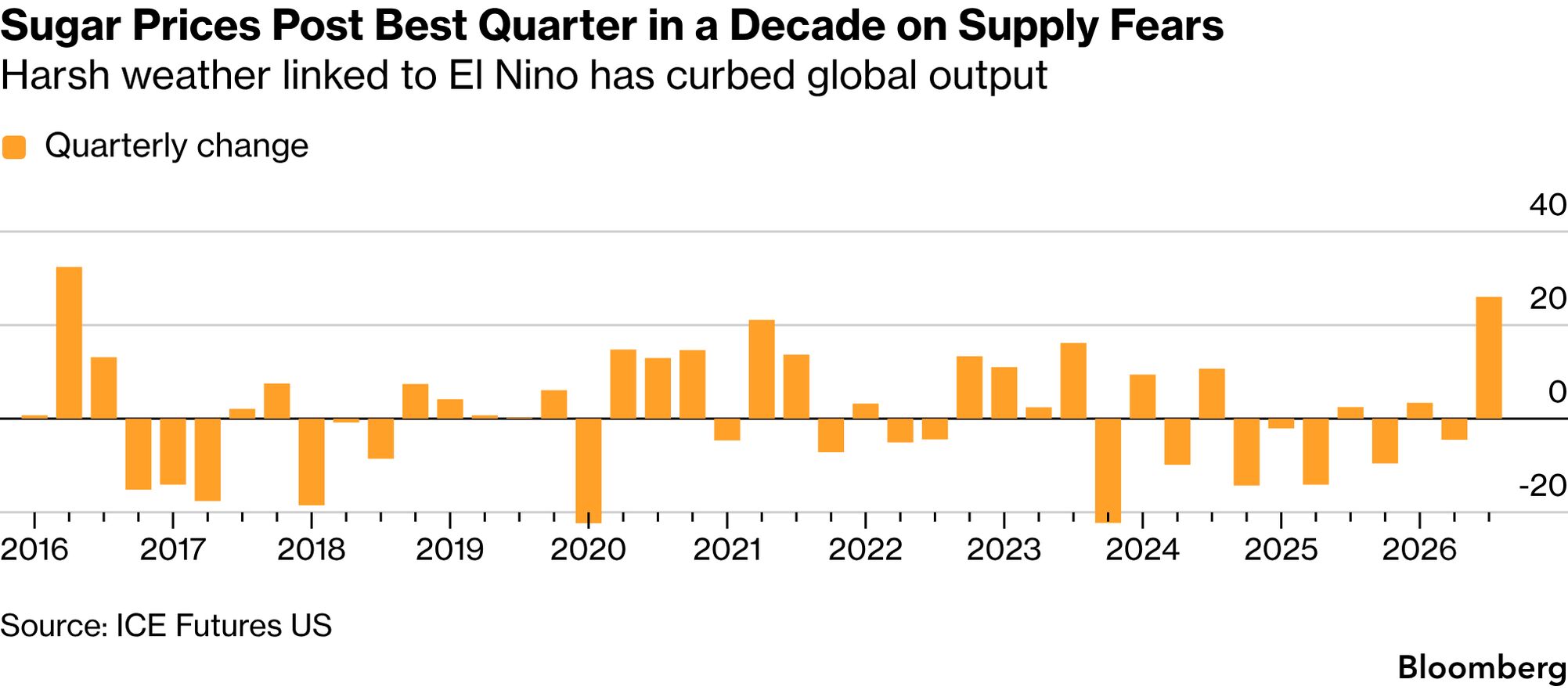
El Niño is hitting the world’s biggest sugar producers, exposing the crop’s acute vulnerability to the climate phenomenon but also providing an early glimpse of broader threats to farmers and global food inflation. It’s creating a perfect storm for the sweetener: intensifying rainfall in Southern Hemisphere growing regions, while accentuating drought north of the equator. And FinallyGlaciers all over Earth are shrinking as the climate changes, but the rate of loss is unexpectedly high in the Alps. Lack of snowfall in winter and abnormal heat over the summer saw Swiss glaciers lose over 5% of their volume and at least two disappeared altogether, bringing the loss on Switzerland’s peaks to nearly 20% over the past five years. Scientists have long forecast glaciers shrinking, a direct consequence of the warming of the planet caused by human-emitted greenhouse gases, yet the pace of the melting leaves Alpine ice caps no chance of surviving over the long term. 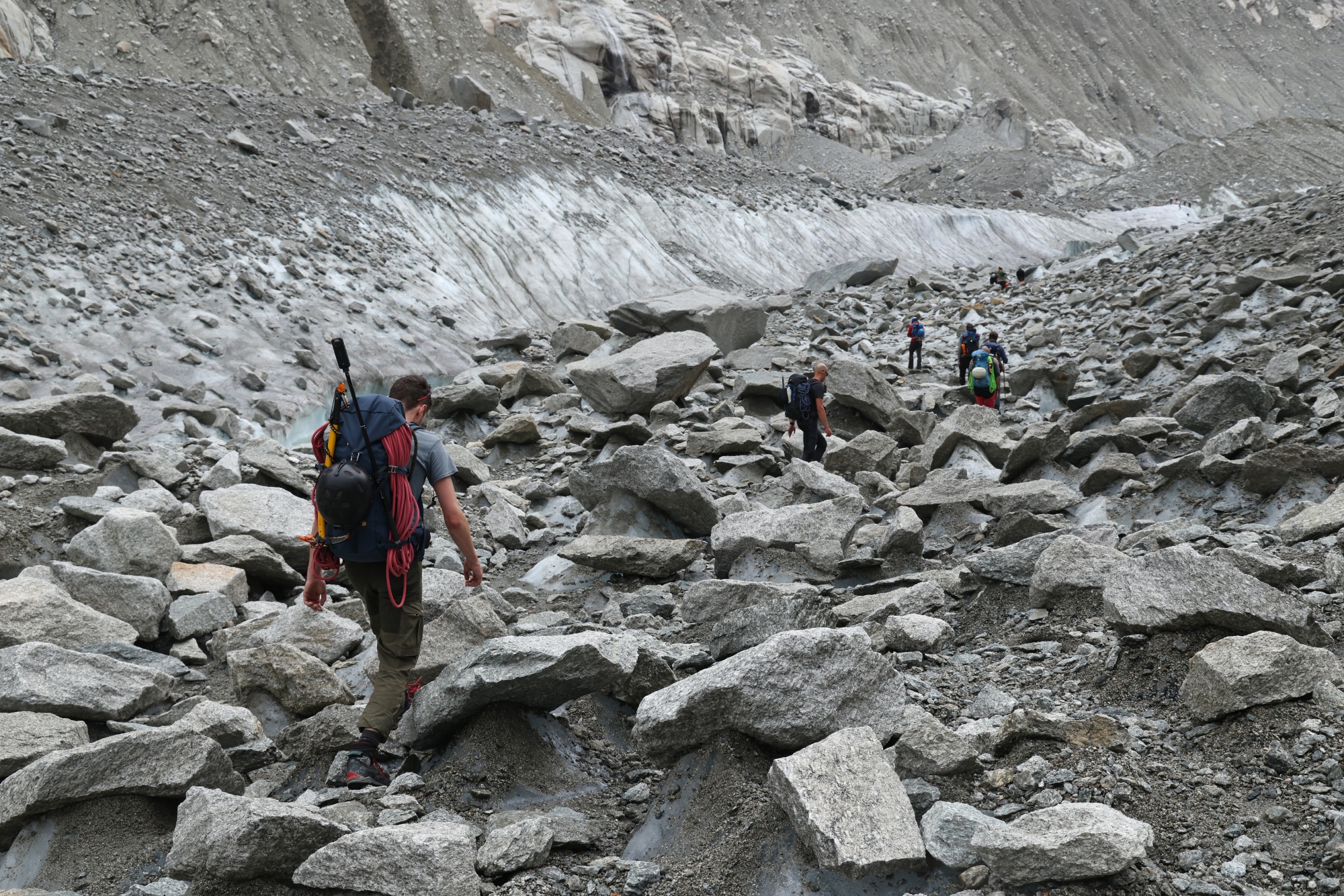
The rock-covered Mer de Glace glacier near Chamonix.
Photographer: Sean Gallup/Getty Images
More from Bloomberg
We’re improving your newsletter experience and we’d love your feedback. If something looks off, help us by reporting it here. Follow Us
You received this message because you are subscribed to Bloomberg’s Balance of Power newsletter. If a friend forwarded you this message, sign up here to get it in your inbox.
|
Thursday, October 1, 2026
An act of terror?





Subscribe to:
Post Comments (Atom)
AI Gets Audited, Plus 5 Stocks to Watch Monday
Nasdaq fell 2.8% as Wall Street questioned the AI bill. Here are 5 stocks to watch. ...

-
Revolutionary Stem Cell & PRP —Start Your Journey Today ...
-
You’ve shown interest in Regenerative Medicine ...


No comments:
Post a Comment