| Read in browser | ||||||||||||||


Welcome back to Pursuits Weekly! This week, Annika Inampudi joins me to look at the world’s biggest culture stories, as well as ideas and recommendations around travel, dining and art. Sign up here to get this newsletter every Saturday in your inbox. The limits of narrative art
UK prime minister Andy Burnham, French president Emmanuel Macron and Britain’s King Charles III all appreciate a good story.
Photographer: Ludovic Marin/AFP/Getty Images
Stories — narratives, if you want to be highfalutin about it — have a beginning, a middle and an end. If you want to tell the event-filled story of the last time Britain was successfully invaded, the obvious thing to do would be to start in 1064, as the reign of Edward the Confessor was coming to a close, and end it in 1066, with the Battle of Hastings. That’s exactly what the Bayeux Tapestry does. “It hurtles along,” writes the Guardian’s art critic Jonathan Jones, “making your heart pound with its sense of doom and destiny, culminating in fires and corpses on a battlefield full of pathos.” The Tapestry is currently on display at the British Museum in London; tickets were snapped up as soon as they went on sale. (Even the Aldwych’s special offer of a free pair of tickets with a £1,100, nearly $1,500 hotel package is now sold out.) Over the past 950 years, storytelling technologies have improved. Film, rather than embroidery, is the medium of choice for tales of epic battles, as Star Wars director George Lucas knows better than anyone. Lucas is first and foremost a filmmaker, and his movies thrum with narrative momentum. Lucas’s most recent billion-dollar project, however, is a museum, not a film. The Lucas Museum of Narrative Art, which opens this month in Los Angeles, seeks to present art that features stories embedded in the imagery. He would probably have happily shelled out $1 billion for the Bayeux Tapestry, but it’s not for sale, so instead there’s lots of Norman Rockwell, along with what Carolina Miranda describes as “an absolutely bewildering potpourri” of other bits and pieces, including, for some reason, a garden featuring a large bronze of Jabba the Hutt being strangled by Princess Leia. (Indoors, Lucas has turned a Rockwell painting, Triple Self-Portrait, into bronze; the original remains at the Norman Rockwell Museum in Massachusetts.) 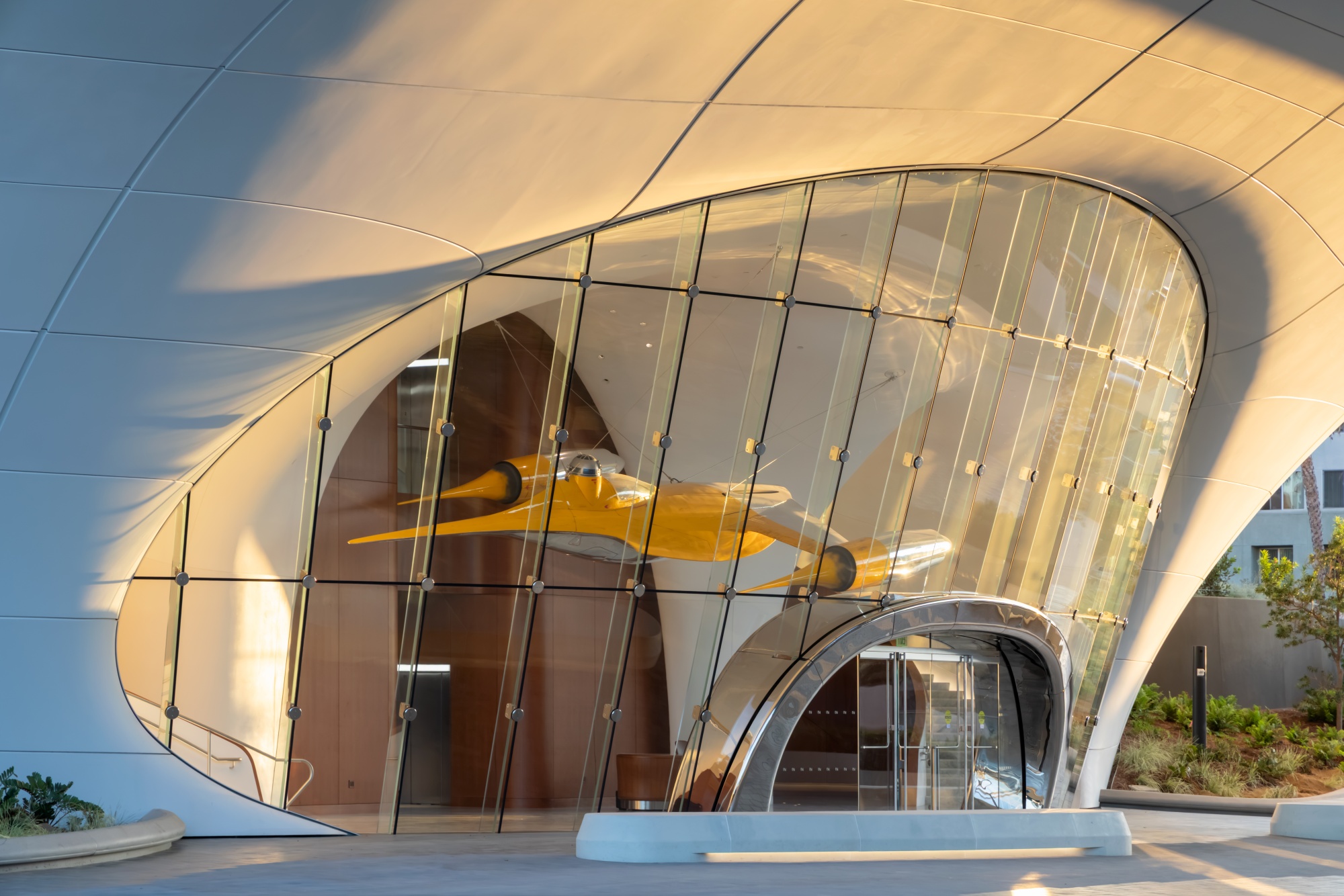
An atrium of the museum features a Star Wars film prop.
Photographer: Iwan Baan
As Christopher Knight explained in the Los Angeles Times in 2017, the fundamental problem with the concept of narrative art is that no one knows what it is: It’s what he called “a made-up category” that can’t be defined without tautology. What’s clear, however, is that the vast majority of the art in the museum, with the exception perhaps of some comic strips, is static. Any given piece, like The Triumph of Galatea, by Artemisia Gentileschi, might depict a scene from a story, but if you don’t already know the story you’re left pretty much adrift. And as art critic Maximiliano Durón points out in Artnews, there are no didactics in the museum: The curators have no interest in helping us understand the stories being depicted. When art isn’t time-based, and can’t be easily read from left to right a la the Bayeux Tapestry, contemporary viewers need some help understanding what’s going on. The Lucas Museum, by failing to provide that crucial service, ultimately fails the visitors paying $25 to enter. By the numbers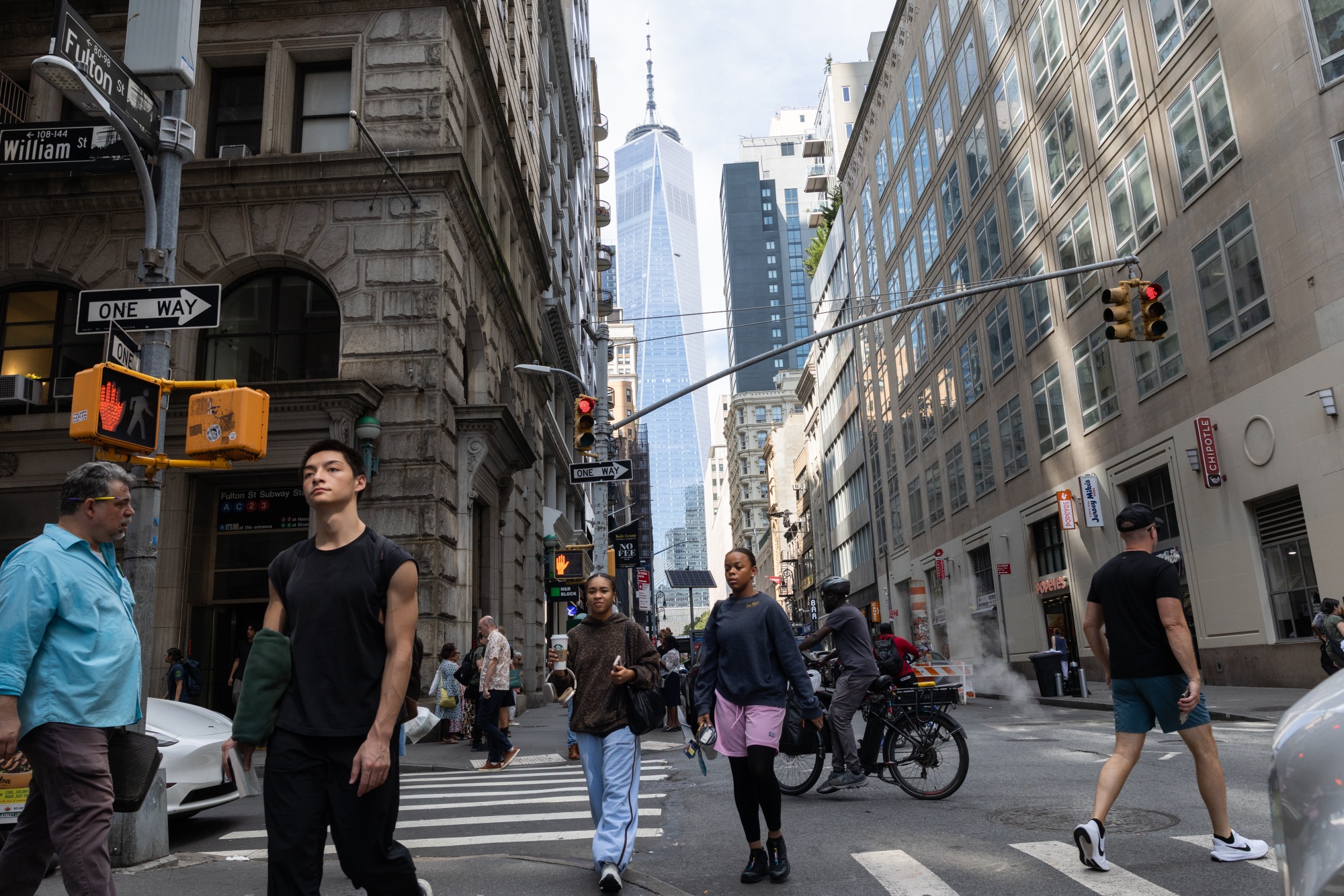
Fulton Street has never been more bustling.
Photographer: Krisanne Johnson/Bloomberg
70,761 The number of people who lived in lower Manhattan in 2024, double the number residents before the Sept. 11 terrorist attacks. The former business district has come roaring back as a hub for housing, culture and nightlife, Amanda L. Gordon, Nacha Cattan and Patrick Clark report on the 25th anniversary of 9/11. $1,999 The starting price of the iPhone Duo, Apple’s new foldable iPhone. Marketed as an upgrade to competitors’ foldable offerings, the launch marks the largest design change to the iPhone in the device’s two decade history, Mark Gurman reports. 625 rupees Or about $6.60, the price of a Canteen Tiffin Box at The Bombay Canteen, a restaurant in Mumbai’s textile neighborhood. The meal is served in a stainless steel tiffin box, just like the ones mill workers used to carry, Subhadip Sircar writes for our Five Top Tables column. $60 The price of a loaf of rye sourdough, the only menu item at Rye, a new bakery in New York City’s SoHo neighborhood. Before you try to reproduce it at home, this version involves a centuries-old recipe and a 57-year-old starter, owner Martin Auer tells New York’s Charlotte Druckman. Billionaire blues
Money can’t buy you happiness.
The artificial intelligence boom has minted a new kind of multimillionaire — and with it, a new type of despair. Founders with nine-figure exits have reported feeling aimless after selling their company, or whiplash from the sudden wealth. Tiffany Ap reports on the psychological fallout of becoming rich very quickly, which has become more acute with the speed of the AI economy. There’s a growing ecosystem of content and support networks to help those with sudden wealth syndrome. “There’s been a tremendous softening of conversations around mental health and wellbeing among entrepreneurs,” says therapist Sherry Walling. “I do think that we’ve moved on from it as the world’s tiniest violin.” Away from home
Goodbye, Soldier Field. Hello, Indiana!
Photographer: Quinn Harris/Getty Images via Getty Images North America
The National Football League’s season hasn’t even started yet and Ben Austen is already feeling deflated. After spending more than a century in the heart of Chicago, his hometown team, the Bears, said they’re moving to Indiana, crossing state lines, and double-crossing die-hard fans. For his first monthly sports column, Austen traces the history of team relocations, and how fans dealt with the loss. Even though the new Bears stadium is a mere 20 miles away, the move has stirred up feelings of abandonment among life-long fans. “I’m never going to go on record as saying it’s the same as losing a loved one,” said professor Daniel Wann, an expert on the psychology of sports fandom. “But if you talk to sports fans whose teams have left, that negative emotional state sure does mirror the things they talk about when they’ve lost loved ones.” Al fresco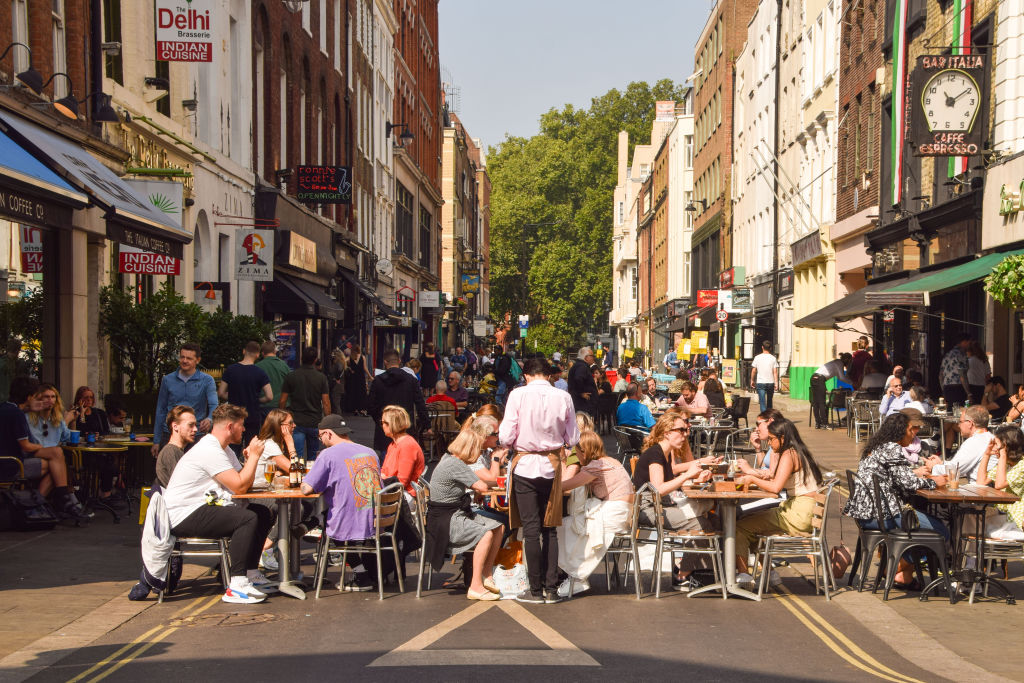
Wind in your hair, food on your plate.
Photographer: Vuk Valcic/SOPA Images/LightRocket via Getty Images via Photographer: SOPA Images/LightRocket
During the pandemic, outdoor dining was a boon to the struggling restaurant industry. Through dining sheds, igloos and heated cabanas, restaurants offered socially distanced and well-ventilated meals for cooped-up diners eager to leave their homes. But after cities began to receive complaints of trash, noise and fewer parking spaces, officials began to regulate away open-air seating. Now, Linda Poon, Fola Akinnibi and Jack Trapanick report on a slate of new bills in New York City and London to bring back the “streatery.” Officials are hoping the revenue from the extra seats can ease some of the financial pains restaurants are facing amid tariffs and the affordability squeeze. One Very Specific Recommendation: The coastal border between Maine and New BrunswickYou can’t get deeper into Downeast Maine than Lubec, two hours-plus from the nearest major airport, in Bangor, and orders of magnitude quieter than Acadia National Park. 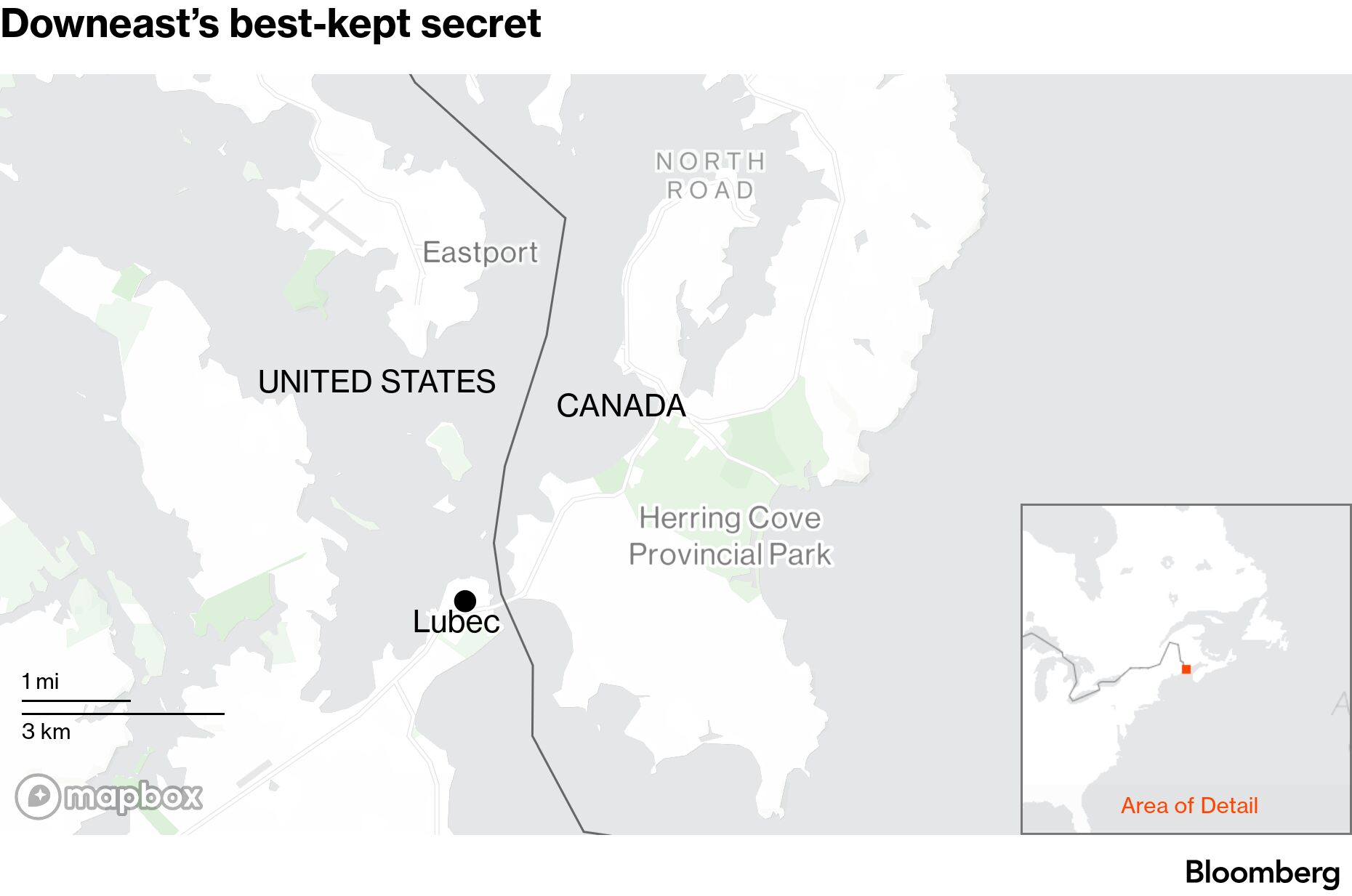
For sunrises, seafood and solitude, travelers can do no better than the area where Lubec, Maine, meets Campobello Island, New Brunswick.
I loved my mellow late-summer visit, but leaf-peepers will find tons of color and plenty of elbow room through mid-October, with high temperatures in the mid-50s. You’ll also find a good reminder of positive geopolitics. 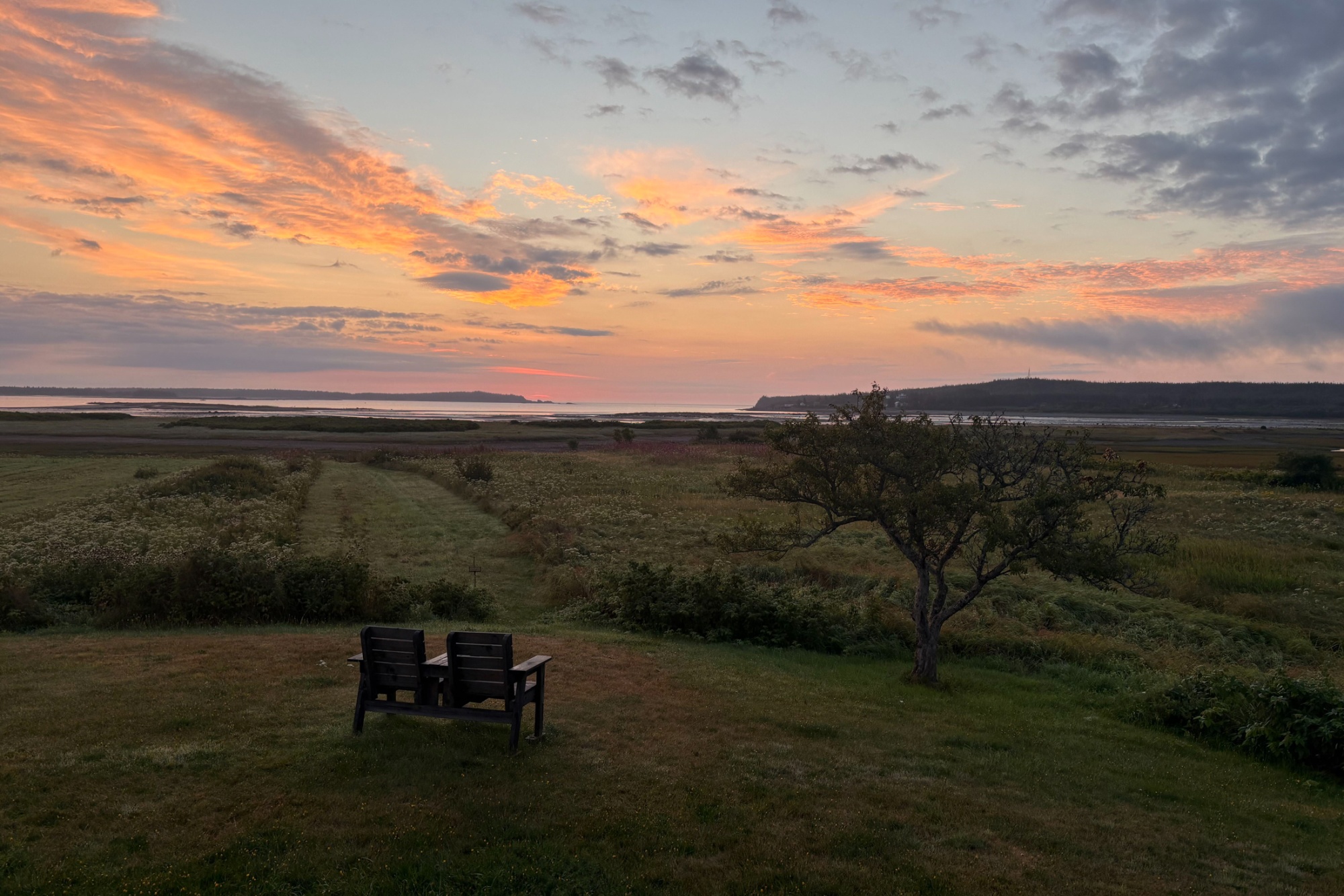
The foreground is the United States; Campobello, in Canada, is across the water.
Photographer: Adam Thompson/Bloomberg
Start your day at the candy-striped West Quoddy Head Lighthouse, the easternmost point in the continental US, where the sun rises at about 6:30 a.m. in early October. End it at Water Street Tavern with lobster or a bafflingly large plate of buttery scallops. In between, drive to the Roosevelt Campobello International Park in Welshpool, New Brunswick, home to the former country compound of Franklin and Eleanor Roosevelt. The park, jointly run by the US and Canada, opened in 1964 in tribute to the bond the countries share. —Adam Thompson New for subscribers: Free article gifting. Bloomberg.com subscribers can now gift up to five free articles a month to anyone you want. Just look for the “Gift this article” button on stories. (Not a subscriber? Unlock unlimited access and sign up here.) More from Bloomberg Ideas & Culture
We’re improving your newsletter experience, and we’d love your feedback. If something looks off, help us fine-tune your experience by reporting it here. Follow Us
You received this message because you are subscribed to Bloomberg’s Bloomberg Pursuits newsletter. If a friend forwarded you this message, sign up here to get it in your inbox.
|
Saturday, September 12, 2026
The art of storytelling





Subscribe to:
Post Comments (Atom)
Starlink Is So Dominant, Europe Is Paying Musk and Funding His Rivals
Britain is buying Starlink today while the EU pours billions into IRIS², creating two waves of spending across the satellite supply chain ...
-
Revolutionary Stem Cell & PRP —Start Your Journey Today ...
-
You’ve shown interest in Regenerative Medicine ...


No comments:
Post a Comment