| Read in browser | ||||||||||||||

Indonesia is responding to its worst wildfire season in years, and neighboring nations across Southeast Asia are also suffering as the haze spreads through the region. Today’s edition shows how the task of tackling the blazes is being affected by sharp cuts to funding for a disaster mitigation agency. In Australia, households are adding solar panels at the fastest rate since 2021, defying predictions for a slowdown in the nation’s enthusiasm for clean energy. Subscribe to Bloomberg.com for unlimited access to all our coverage. Asia’s wildfire tinderboxBy Eddie Spence, Kanupriya Kapoor, Mary Hui and Christopher Udemans On the edge of one of the largest cities in Indonesian Borneo, administrator-turned-firefighter Heru Hartarto surveys the hectares of scorched peat before him, a desolate, slate-colored landscape punctuated with burned tree trunks. Acrid smoke rises from the ground, creating a dense, low blanket of fog. It’s a scene that Hartarto, 47, and his team of first responders have seen repeatedly since a blaze ripped through the thick forest outside Palangkaraya in the region of Central Kalimantan earlier this month. They’re back to soak the dry, rich and highly flammable soil here with yet more water, hoping to prevent it from igniting yet again. 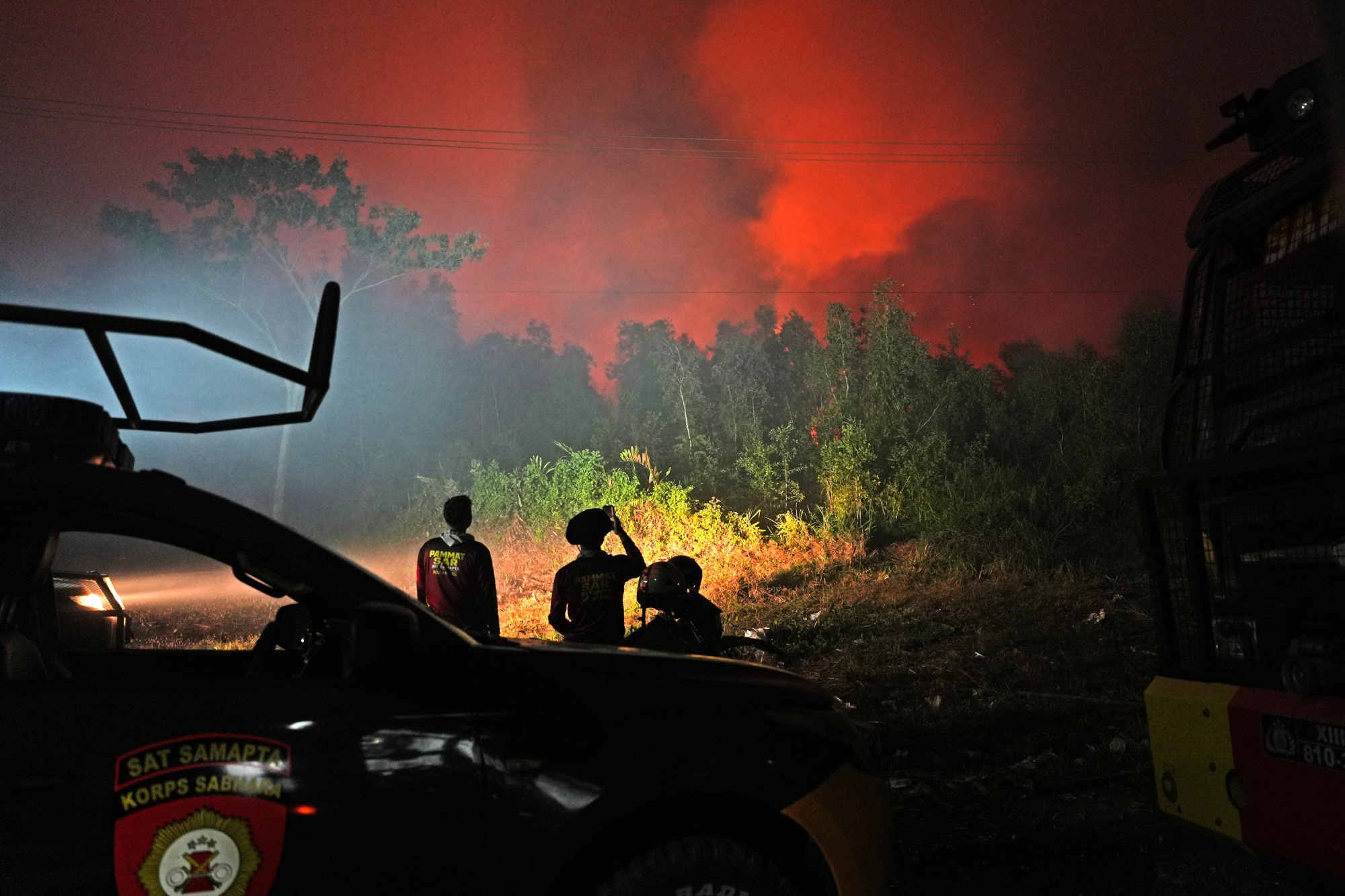
Indonesia Police extinguish forest and land fires in Banjar, South Kalimantan, Indonesia, on Tuesday, Sept. 21, 2026.
Photographer: Dimas Ardian/Bloomberg
“We’re exhausted. Many new fires are appearing,” said Hartarto, as his fire truck hummed in the background. “The impact is worse than what I could have imagined.” The resulting haze is choking citizens well beyond Indonesia’s borders, straining relations with neighbors, as cities from Manila to Kuala Lumpur and Singapore are blanketed in toxic smog. 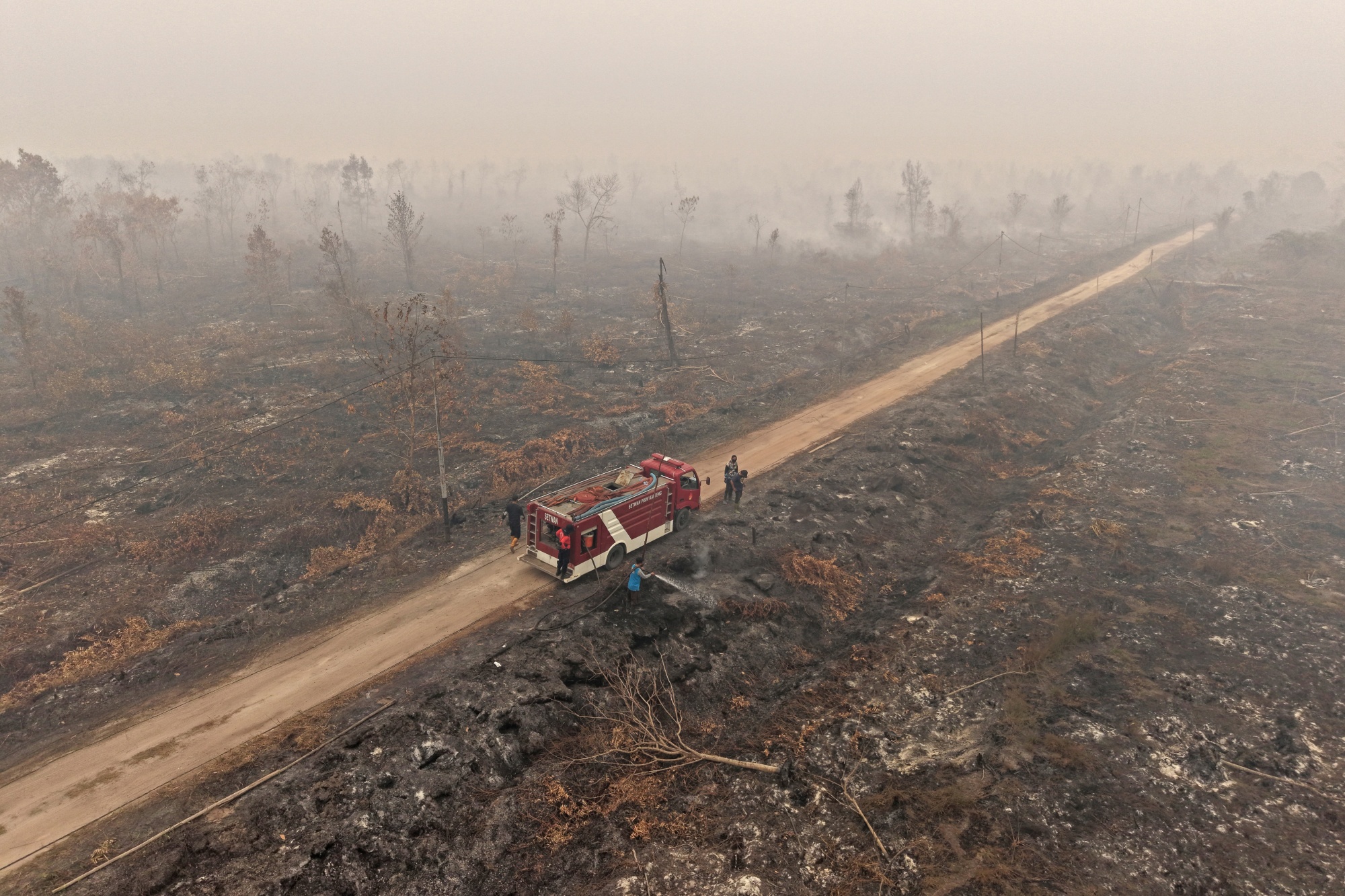
Volunteer firefighters extinguish forest and land fires in Palangkaraya, Central Kalimantan,on Wednesday, Sept. 23, 2026.
Photographer: Dimas Ardian/Bloomberg
Indonesia’s Government Communication Agency, answering questions from Bloomberg, said emergency fire-response funding had not been reduced, as “the spending adjustments concern routine costs such as official travel and meeting refreshments,” and not operational needs. Still, the number of fire hotspots across the country in August was at the highest in more than a decade, and September looks set to trail only 2015 over that period. With rains unlikely to settle in until the last months of the year, relief is likely weeks away. 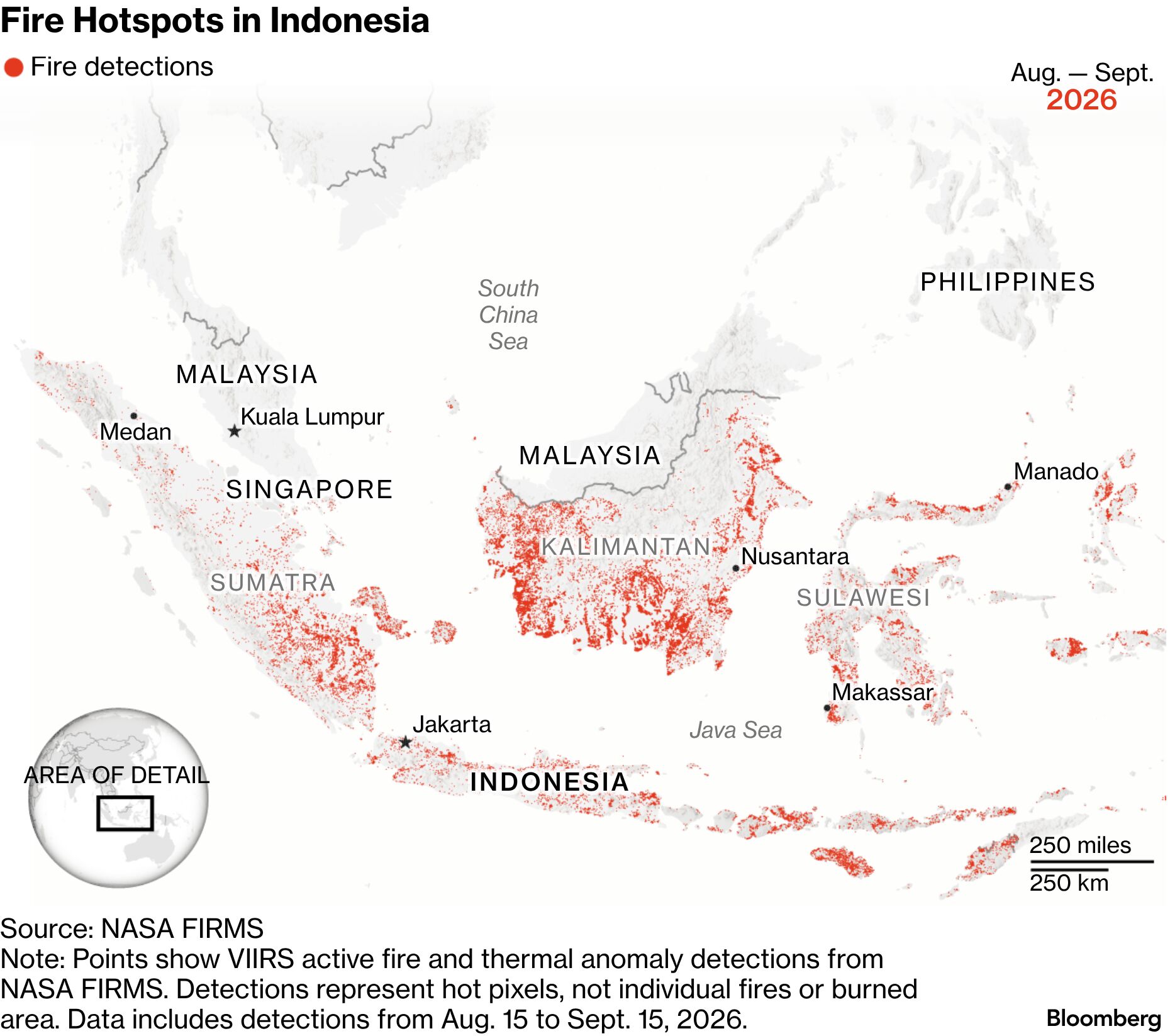
It has been a brutal wildfire season globally, with both Europe and North America grappling with severe summer blazes as temperatures rise and droughts create plenty of fuel. In Indonesia, however, man-made causes – and poor management – still explain much of the burning, according to environmentalists including Gaveau. More than 160 people and 95 companies are being investigated for suspicion of involvement in the fires, the government said this month.
Keep reading
Burned land895,000 hectares The approximate area of land burned in Indonesia this year as of August, almost the size of Yellowstone National Park, according to Nusantara Atlas. El Niño preview“Indonesia is like a magnifying glass and early warning indicator” Managing director at Global Weather Climate Analytics Werner explains how Indonesia’s fires could serve as a preview of El Niño’s potential impacts in other places worldwide. Solar surpriseBy Rob Verdonck 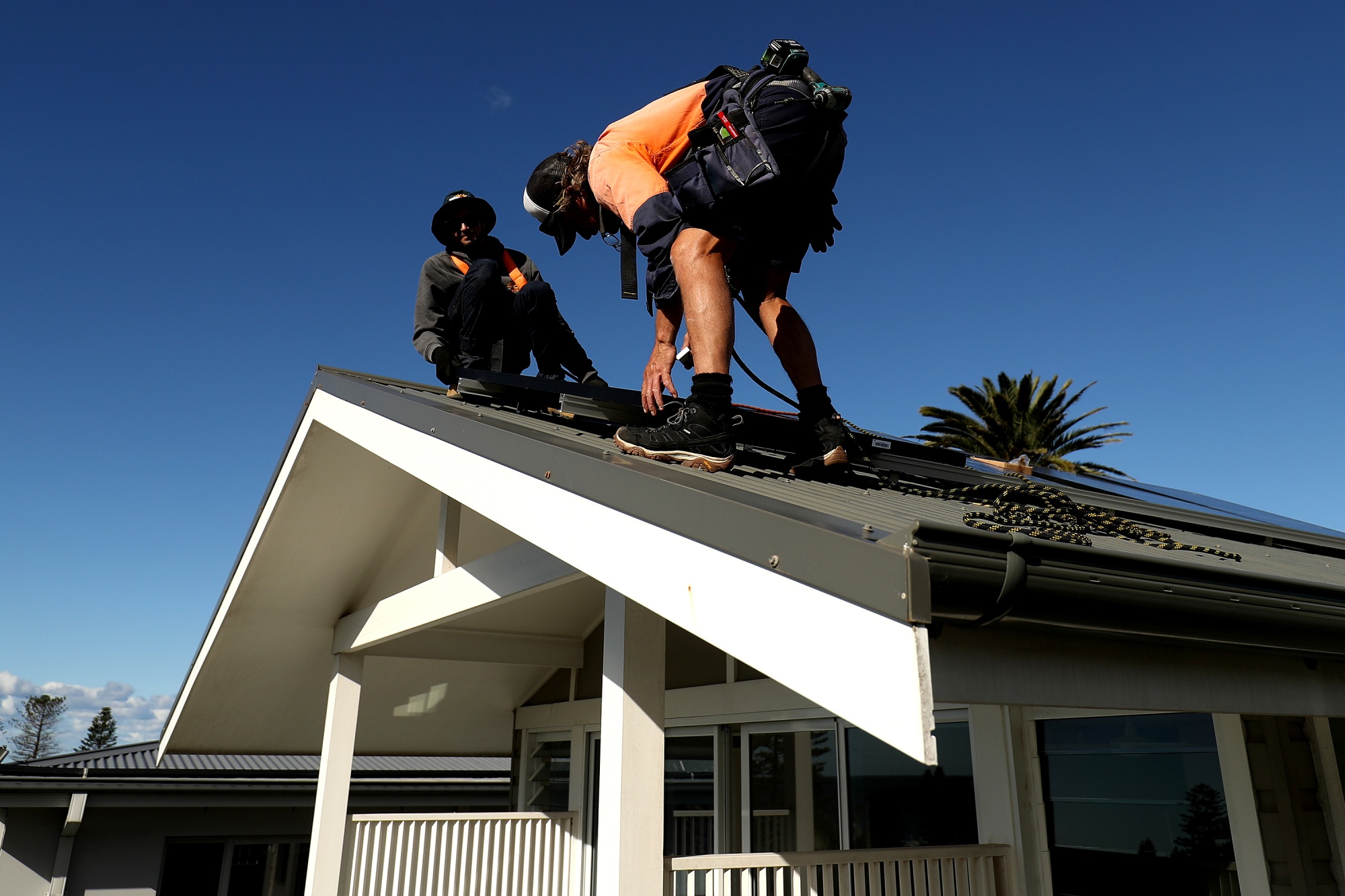
Solar panels are installed at a residential property in Sydney, Australia in 2021.
Photographer: Brendon Thorne/Bloomberg
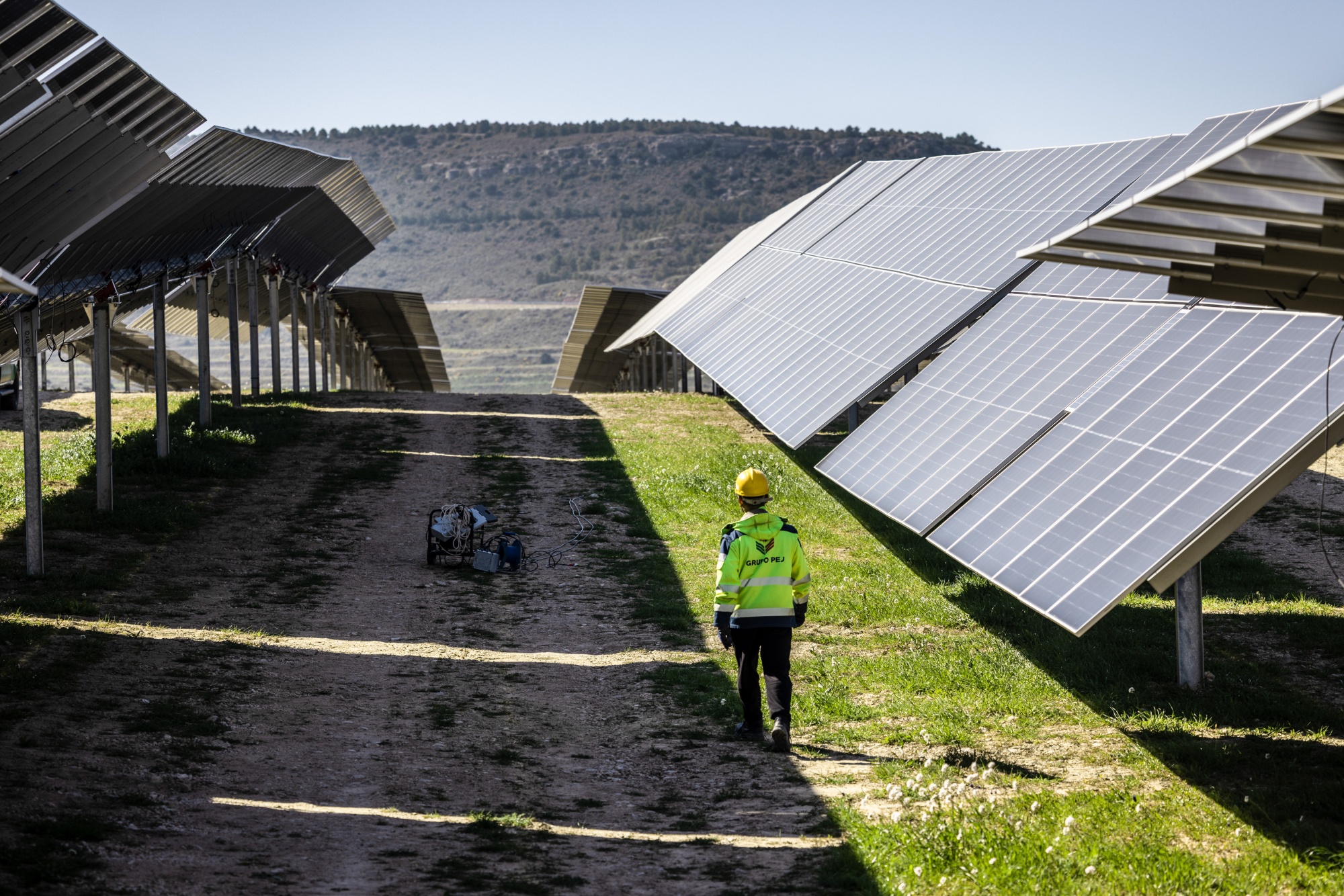
The number of rooftop photovoltaic units nationwide rose 35% in the first half of 2026 from a year earlier, the Clean Energy Council, an industry body, said in a report on Tuesday. That’s the highest for a six-month period since 2021. For the full year, installations are set to rise back above 300,000, countering the council’s own outlook six months ago that they had neared a “critical mass.” Australia has become a bellwether for the energy transition, as it replaces a rapidly aging fleet of coal power stations and aims to almost double renewable generation to 82% of the total by 2030. As part of that, the uptake of home batteries has boomed since the launch of a government subsidy program last year, helping households spread the use of solar generation to the night. 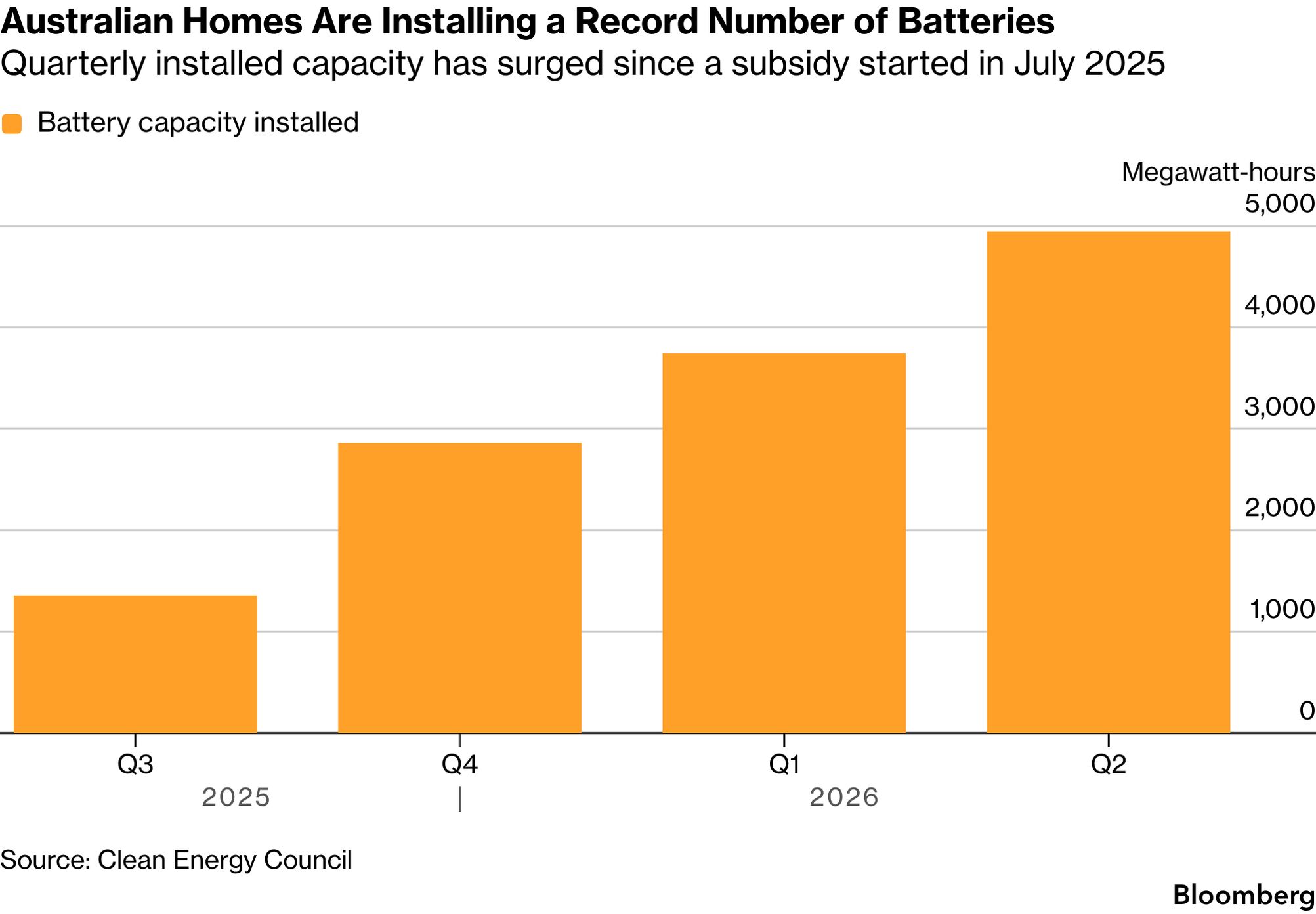
“Solar and batteries provide Australian homes with lower bills, reliable power, and clean energy, which is why people are opting for them in droves,” CEC Chief Executive Officer Jackie Trad said. Rooftop solar capacity now exceeded the remaining total for coal-fired power stations, Trad said.
Read more
More from GreenYour Zero listen 
A bonus Zero episode: Miatta Fahnbulleh, the UK Secretary of State for Energy Security and Net Zero, discusses the country’s energy transition, the push for affordable and secure power and the UK’s role in the global climate action with Bloomberg’s Aaron Rutkoff at Bloomberg Green New York 2026. Listen now, and subscribe on Apple, Spotify or YouTube to get new episodes of Zero every Thursday. 🎥Attention all filmmakers!Working on a short documentary about climate change? Don’t miss your chance to submit it to the Bloomberg Green Docs film competition. Grand prize: $25,000. Submissions will be accepted through October 2, 2026. See official rules at bloomberg.com/greendocs. More from Bloomberg
Explore all Bloomberg newsletters. We’re improving your newsletter experience and we’d love your feedback. If something looks off, help us fine-tune your experience by reporting it here. Follow Us
You received this message because you are subscribed to Bloomberg’s Green Daily newsletter. If a friend forwarded you this message, sign up here to get it in your inbox.
|
Tuesday, September 29, 2026
Fighting wildfires and budget cuts





Subscribe to:
Post Comments (Atom)
Learn More About Dynamic Life Health Center
Take a look at who we are and how we approach your healthcare. ...

-
Revolutionary Stem Cell & PRP —Start Your Journey Today ...
-
You’ve shown interest in Regenerative Medicine ...


No comments:
Post a Comment