| Read in browser | ||||||||||||||

Today’s newsletter takes you to the new frontier of deforestation in the Amazon. In Bolivia, tracts of forest are vanishing as farmers clear land to raise cattle and grow soybeans. As Brazil cracks down on forest-clearing inside its borders, the problem is flaring up next door. We also look at the rise of “regenerative” as a label for grocery-store products, paralleling the growth of the regenerative agriculture movement. Sales are booming, but what the term actually means can be hazy. Bolivia’s deforestation crisisBy Fabiano Maisonnave and Jennah Haque In a remote part of the Amazon, on the western flank of Brazil, a freshly graded strip of red earth runs right up to the country’s border with Bolivia. Bulldozers are paving a road here, financed by agribusiness. The narrow dirt path that continues on the Bolivian side is set to be similarly transformed, as Brazilian ranchers and farmers find new economic opportunity next door — drawn by cheaper land and looser rules on clearing forest. 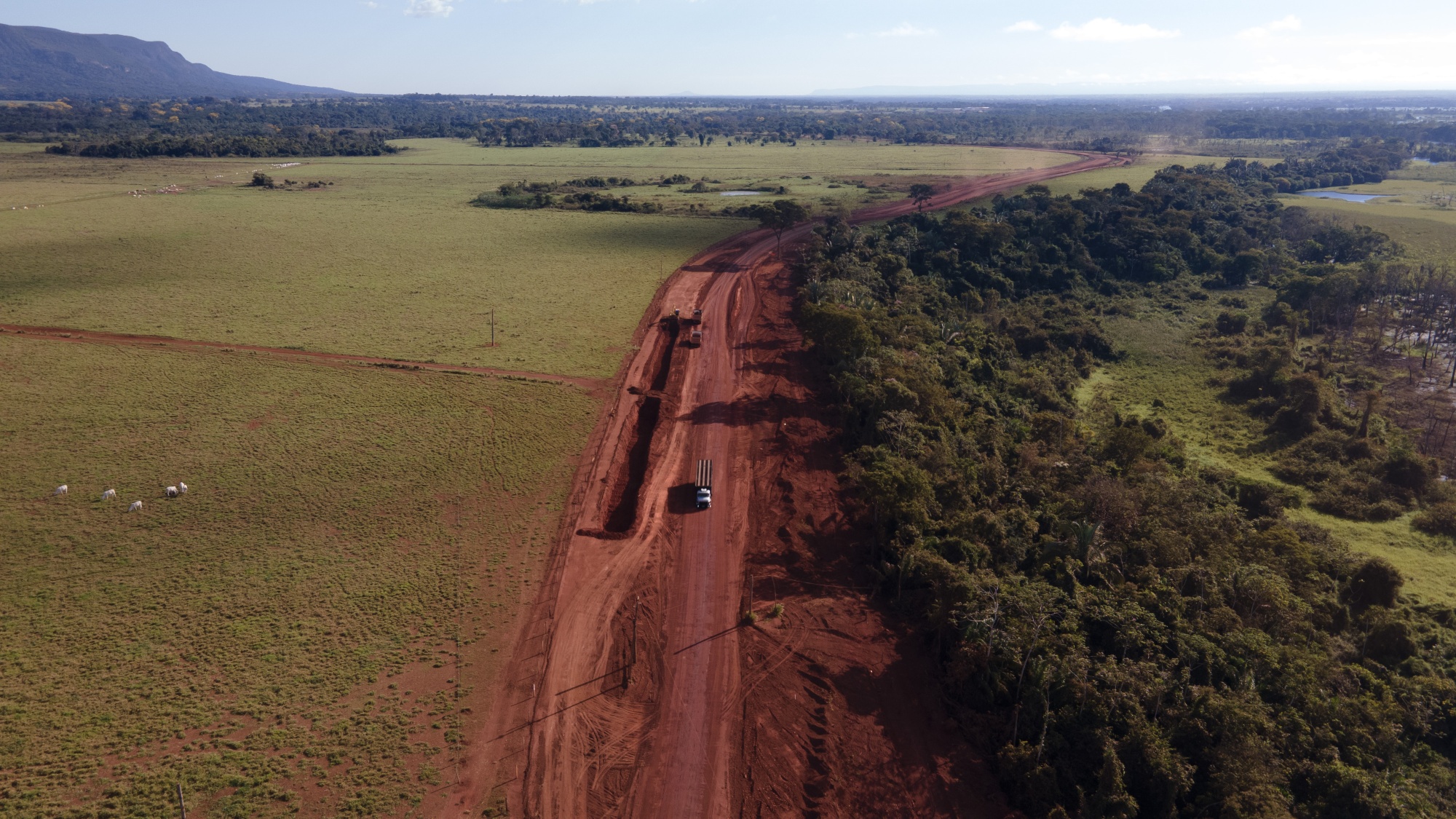
Pasture near the construction site for the road that will connect Brazil and Bolivia.
Photographer: Wara Vargas Lara/Bloomberg
One of Latin America’s poorest countries, Bolivia is struggling: Inflation has soared, revenues from natural gas have fallen and foreign currency reserves are depleted. In May, protests erupted around the country and continued for weeks, shaking the government of President Rodrigo Paz. Paz’s government is betting on soybeans and other commodity crops for much-needed growth, while Brazilian farmers are increasingly looking beyond their own borders for new land and investment opportunities. Many have already arrived — along with groups of Mennonites from Canada, Mexico and Paraguay — to set up farms in the southeast of the country, part of the Amazon basin known as the Chiquitania. Clearing land for cattle and soybeans is the main driver of deforestation in the Amazon, which often follows the paving of roads. Brazil has stepped up enforcement, and as a result, deforestation has plummeted there. But it’s surging in Bolivia. Brazil, which contains two-thirds of the Amazon, still ranks first in the world for the area of tropical forest it loses each year, according to the World Resources Institute’s Global Nature Watch. However, deforestation started declining in the early 2000s and has fallen dramatically since 2023, thanks to a crackdown by the government under President Luiz Inácio Lula da Silva. Bolivia, much smaller than Brazil, recorded the world’s second-largest area of tropical forest loss in 2025. The Chiquitano Forest is the largest tropical dry forest in the Americas, known for its uniquely adapted biodiversity. Ravaged by wildfires and agricultural expansion, it has lost a higher share of its native vegetation than any other biome in the Amazon basin, making it the region’s most endangered ecosystem. 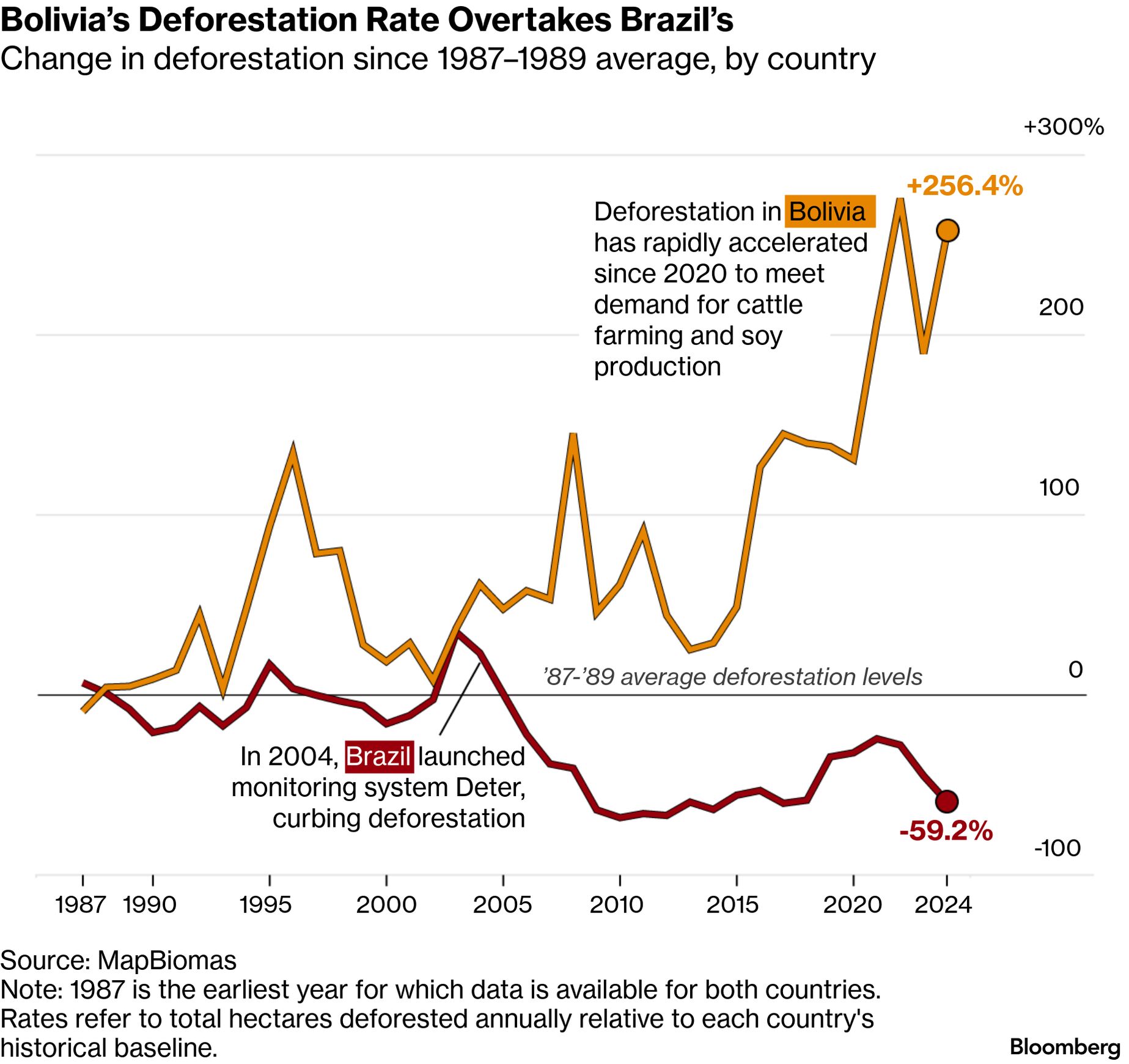
As Brazil clamps down on land-clearing, cheap, undeveloped tracts over the border lure agribusiness. But the loss of Bolivian forests erodes conservation progress in Brazil — and throws the stability of the Amazon as an ecosystem into doubt. Scientists have warned that the Amazon, which is critical to the climate and biodiversity of the planet, could begin morphing into a drier, savannah-like landscape once the level of deforestation reaches the threshold of 20% to 25%. The region has already lost 16% of its native vegetation, according to MapBiomas. One scientific study found that deforestation has also contributed to a decline in seasonal rainfall. Changes are now tangible on the ground. “There are more and more extreme temperature spikes,” said Jacob Teichroeb, who has lived for 18 years in the soybean-growing Mennonite community of Chihuahua. “I believe that’s happening because more land is being cleared and there is less forest.”
Keep reading
Lost coverOne-eighth The share of Bolivia’s tree cover that has disappeared in recent decades Competing interests“The needs of some people can’t come at the expense of others” Marcela Chuvé Chuvé leads an organization representing 63 Chiquitano communities, and commented on potential clearing of land for cattle or crops. Your weekend watchThe Deal That May Reshape the Amazon’s Future 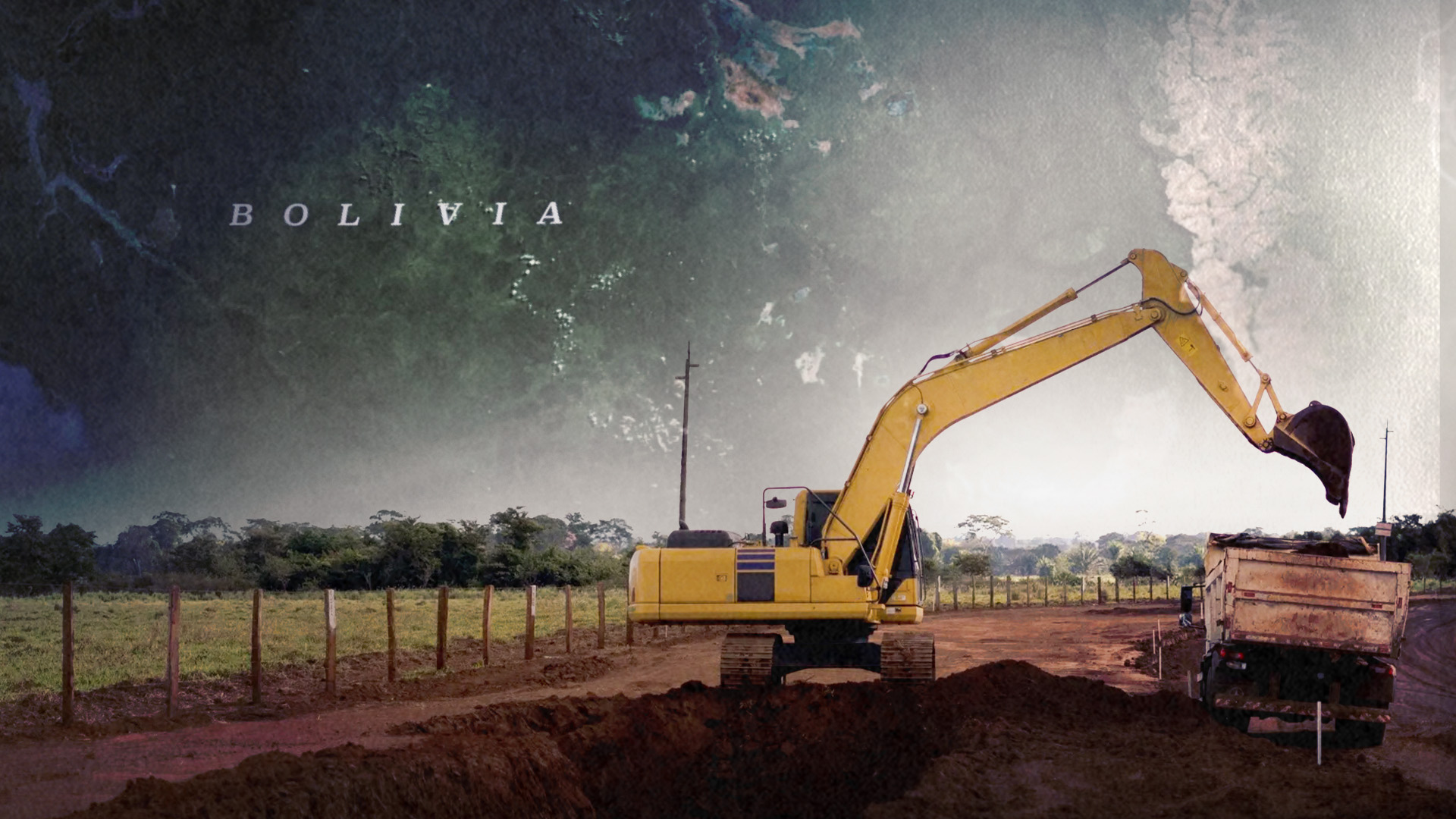 
Follow reporter Fabiano Maisonnave as he travels to the frontier of industrial agriculture in Bolivia’s Amazon and investigates a land deal with ramifications for the forest’s fate. The rise of regenerative productsBy Emma Court When Michael Ham first began handing out samples of his company’s tea to Whole Foods shoppers in 2024, explaining that it was grown using regenerative farming on South Korea’s Jeju Island, he was often met with blank stares. That didn’t last long. By the following year, “People were coming up saying, ‘Oh, you’re regenerative!’” says the co-founder and president of Westchester, New York-based Wild Orchard Tea Company. 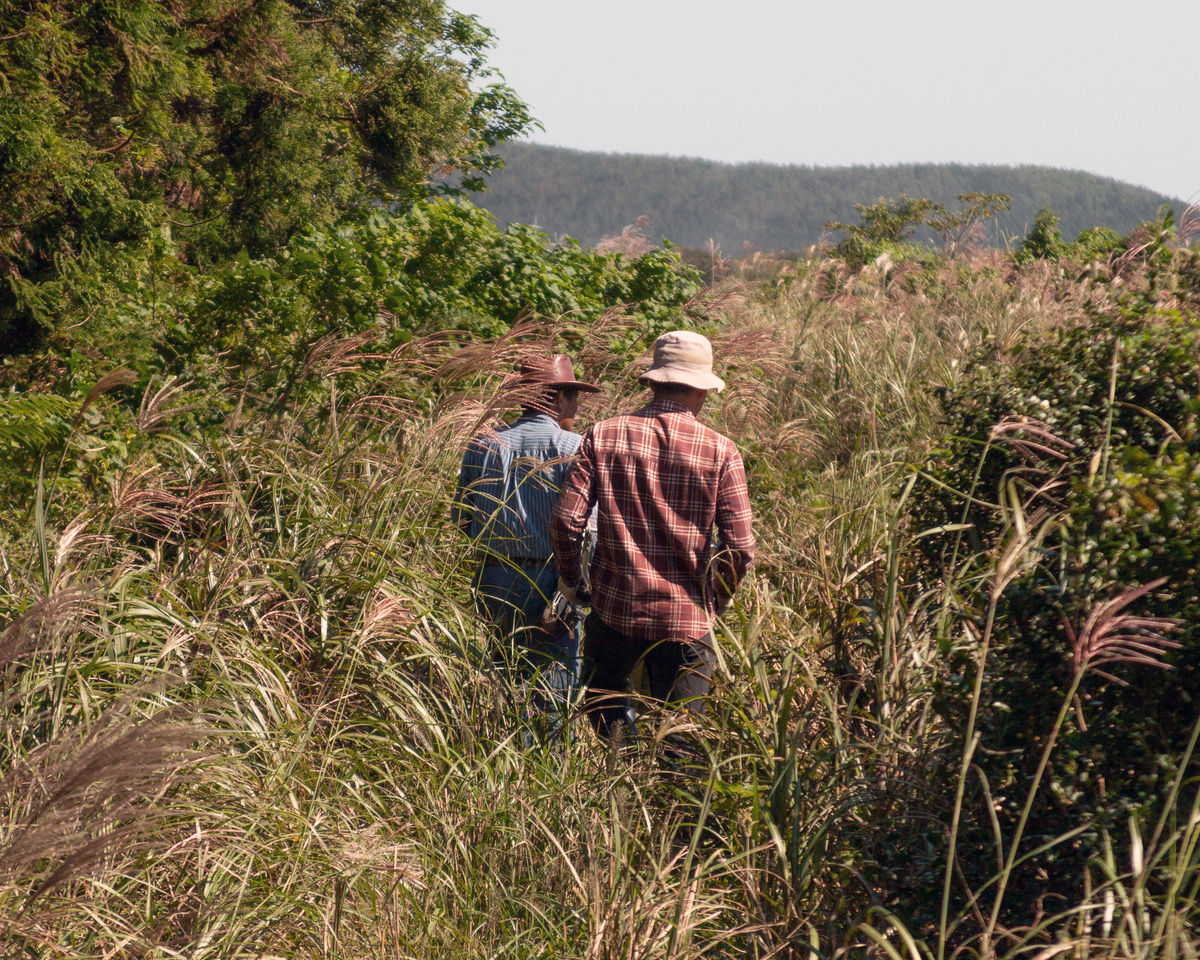
Wild Orchard’s regenerative farm
Regenerative agriculture, an approach to farming that aims to improve soil health through practices like reduced use of pesticides and plowing, is having a moment. Championed by the Make America Healthy Again (MAHA) movement and propelled by increasingly health-conscious consumers, regenerative products now generate some $2 billion a year in retail sales, and some in the industry are positioning the fast-growing category as the next organic. Big food producers and retailers like Nestlé SA, PepsiCo Inc, General Mills Inc and Walmart Inc have made regenerative agriculture commitments, often as part of ESG goals. And late last year agencies including the US Department of Agriculture announced a $700 million pilot program to support regenerative agriculture projects on farms. 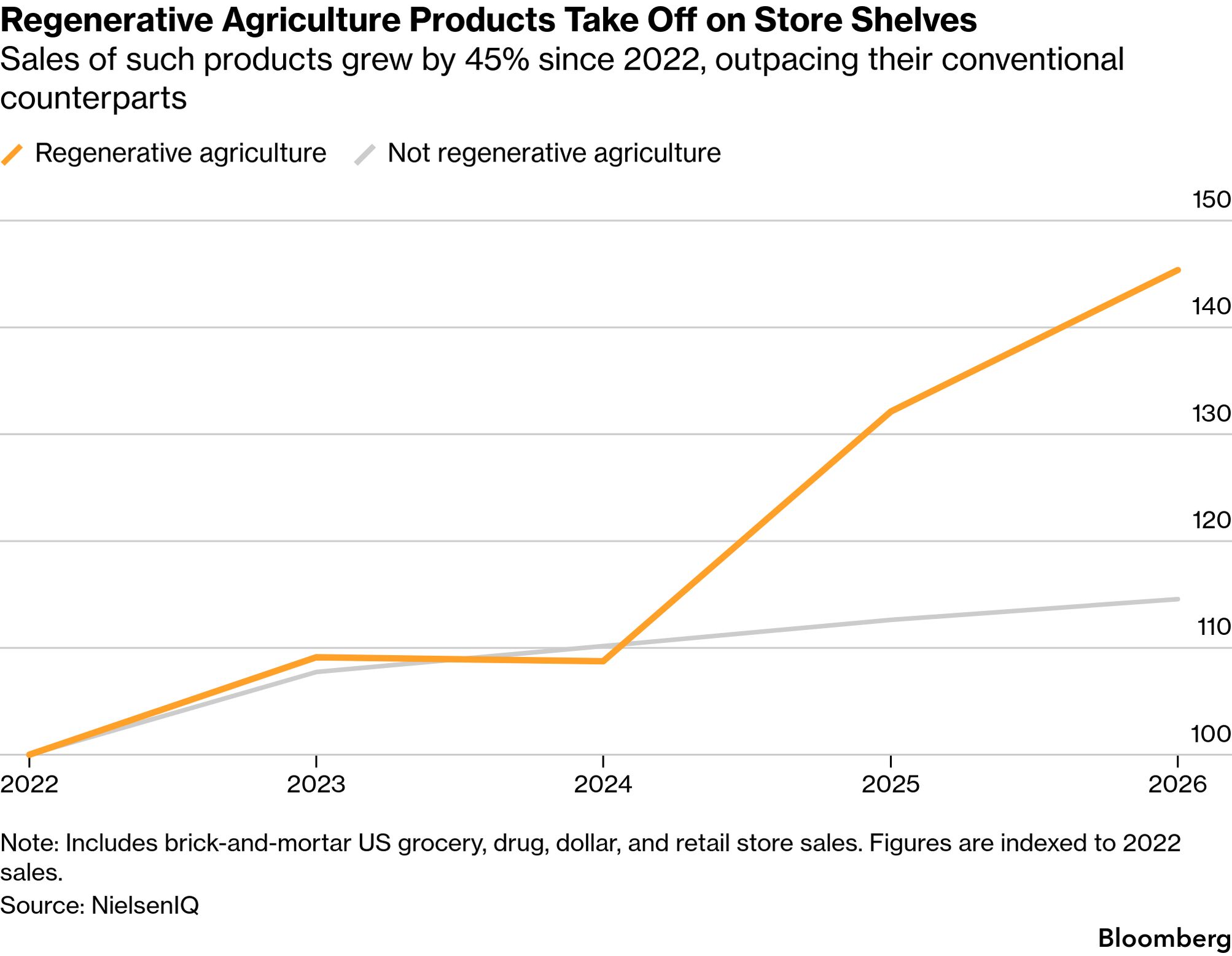
But unlike organic, regenerative agriculture is only lightly regulated at the federal level in the US. To earn US Department of Agriculture organic certification, producers must comply with detailed federal standards, including strict rules about synthetic pesticides and fertilizers, and undergo annual inspections. There’s no such equivalent for regenerative agriculture, and many products can be labeled as regenerative without having to verify their claims.
Read more
Your weekend listenThe Middle East conflict is now in its fifth month, deepening the oil and gas supply shock. Early in the war, analysts worried that the oil price would rise to $200 a barrel, causing a global recession and widespread panic, but that didn’t happen. This week on Zero, Akshat Rathi is joined by Bloomberg Opinion columnist Javier Blas to discuss why oil prices stayed around $100 per barrel and why the war is the start of a new paradigm in energy politics. Listen now, and subscribe on Apple, Spotify or YouTube to get new episodes of Zero every Thursday. 🎥 Attention all filmmakers!Working on a short documentary about climate change? Don’t miss your chance to submit it to the Bloomberg Green Docs film competition. Grand prize: $25,000. Submissions accepted through August 14, 2026. See official rules at bloomberg.com/greendocs. More from GreenMore from Bloomberg
Explore all Bloomberg newsletters. We’re improving your newsletter experience and we’d love your feedback. If something looks off, help us fine-tune your experience by reporting it here. Follow Us
You received this message because you are subscribed to Bloomberg’s Green Daily newsletter. If a friend forwarded you this message, sign up here to get it in your inbox.
|
Saturday, August 8, 2026
The new hotbed of Amazon deforestation







Subscribe to:
Post Comments (Atom)
Please confirm your payment/affiliate account (6067 daily)
figured i'd stop sitting on it ...

-
Revolutionary Stem Cell & PRP —Start Your Journey Today ...
-
You’ve shown interest in Regenerative Medicine ...


No comments:
Post a Comment