| Read in browser | ||||||||||||||

Welcome to Balance of Power, bringing you the latest in global politics. If you haven’t yet, sign up here. The World Cup was supposed to be North America’s party, a time to showcase partnership. Instead the US, Mexico and Canada are discovering that even the best co-hosting arrangement isn’t immune to underlying political friction. Washington’s announcement yesterday that it won’t renew the USMCA trade pact, citing “substantial issues” with a deal reached by President Donald Trump in his first term, opens the door to yearly reviews with unclear rules on how that’s going to work. Suddenly, the region’s $1.6 trillion in trade ties carries a big question mark. The timing is awkward as Mexico is in the throes of football celebration, the US is basking in its own team’s success, and Canada is enjoying a rare moment of soccer relevance. 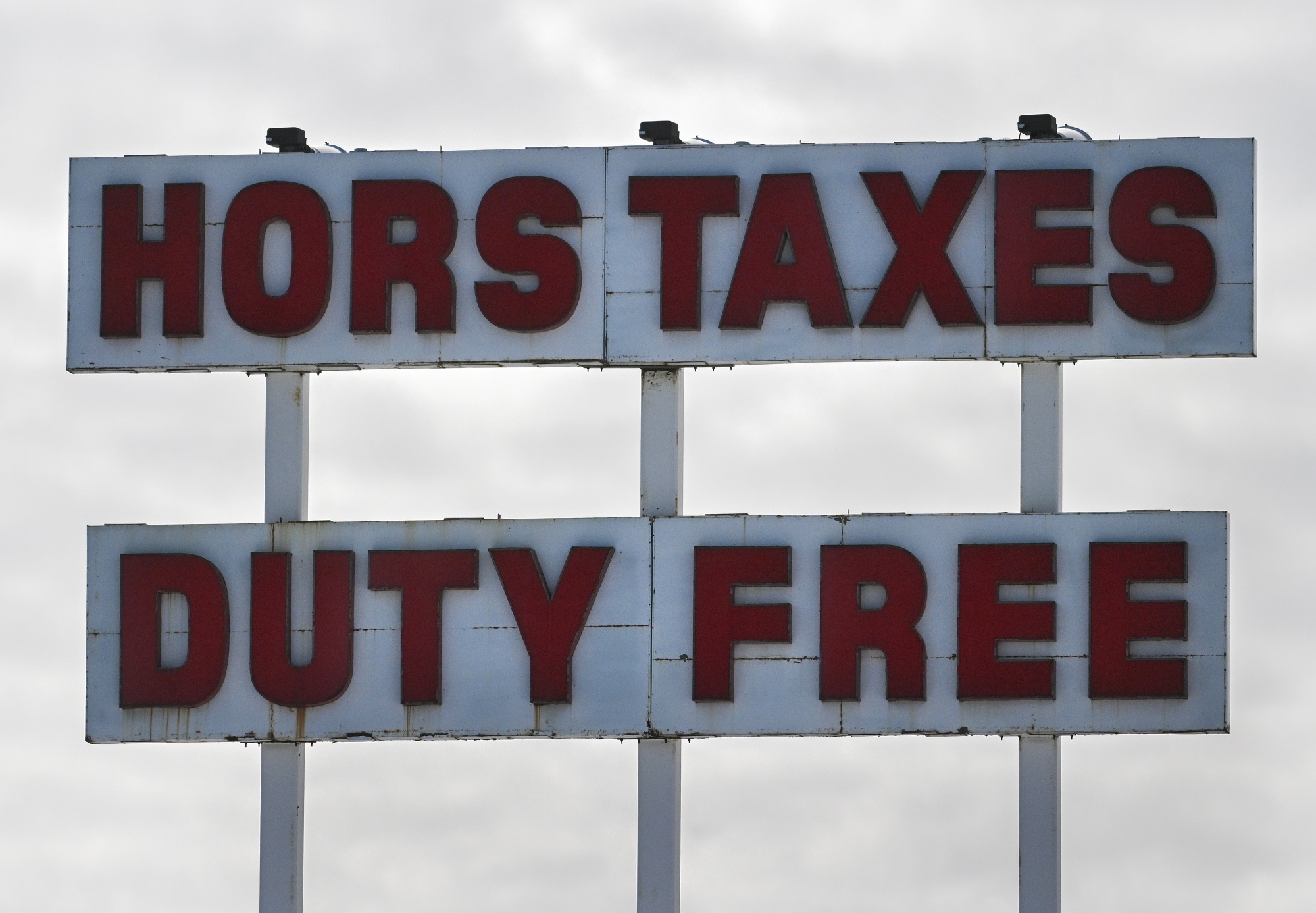
A sign at the Canada-US border in Saint-Bernard-de-Lacolle.
Photographer: Graham Hughes/Bloomberg
Mexican President Claudia Sheinbaum, whose morning message had every reason to stay in full World Cup mode after the national team had just beaten Ecuador, had to fold in a few words about what comes next for the trade agreement. Nothing says “soccer fiesta” quite like, “please remain calm about the treaty underpinning our export economy.” The problem is not merely that the USMCA is being reviewed; that was always in the fine print. At issue is what ensues if the three partners fail to agree on a clean extension: annual reviews that could keep investors, ministries and boardrooms guessing for years. Mexican officials now face the daunting task of anticipating not just what Washington wants, but how these yearly check-ins would work in practice. Would they be technical, or a fresh opportunity for tariffs and political theater? It’s another uncertainty for Mexico-US ties that already entangle trade, migration, fentanyl, autos and politics. World Cup host nations are supposed to act like partners, with synchronized ceremonies and smiling leaders. North America is instead giving off a weird dissonance right now. The teams may be advancing together. The governments, less so. — Gonzalo Soto 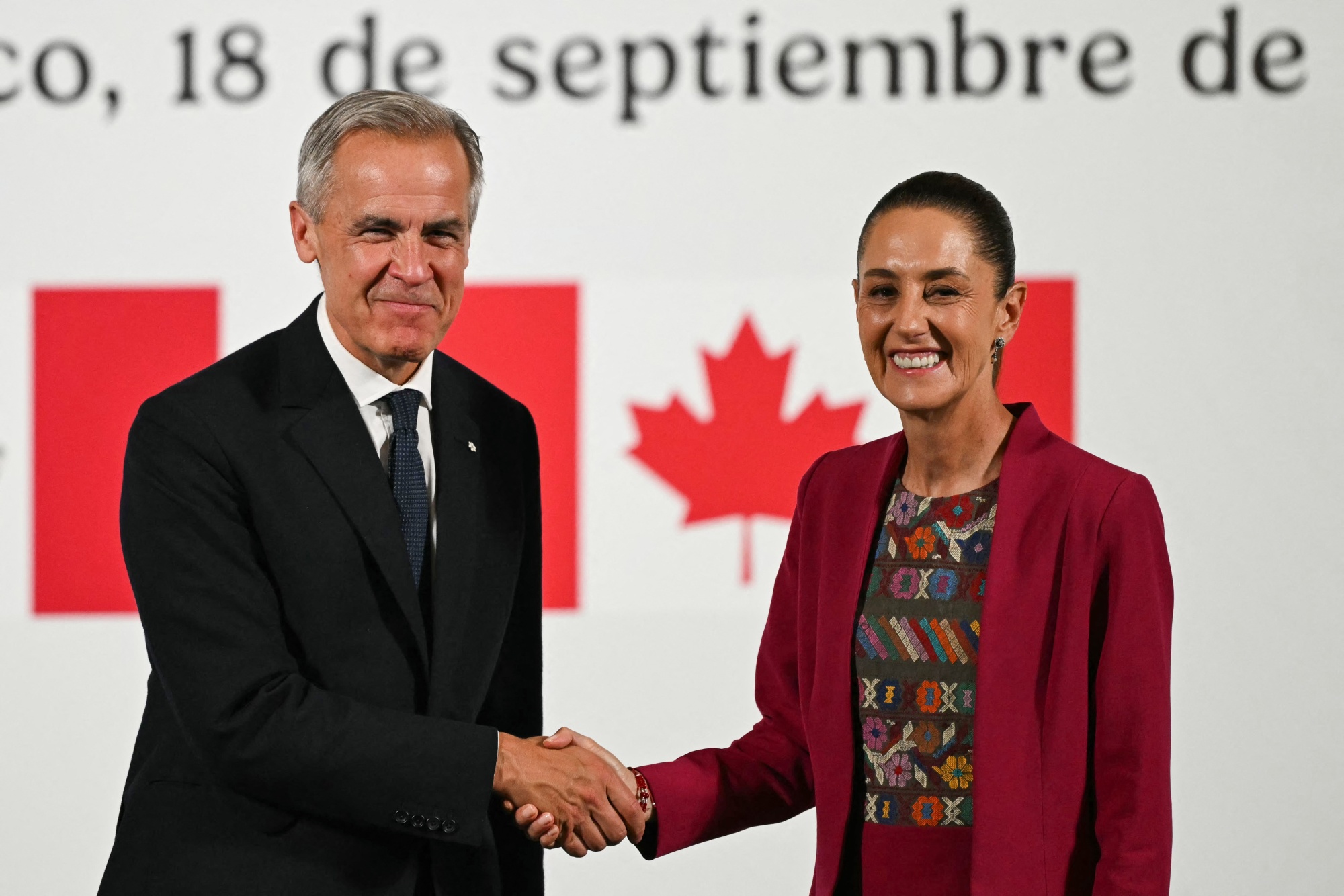
Canadian Prime Minister Mark Carney and Sheinbaum in Mexico City on Sept. 18.
Photographer: Yuri Cortez/AFP/Getty Images
Global Must ReadsCommercial shipping through the Strait of Hormuz has surged over the past few weeks, with American military support helping boost oil flows to more than 10 million barrels per day, a US official says. Trump meanwhile said negotiators made progress in indirect talks with Iran, as the two countries seek to move past last week’s tit-for-tat strikes and convert their interim truce into a lasting peace. Russia unleashed one of the most intense missile and drone attacks on Kyiv so far this year, killing at least 17 people and injuring dozens, Ukrainian officials said. Russia’s Defense Ministry indicated that Ukraine may have used a ballistic missile in combat for the first time, potentially a new step in Kyiv’s effort to expand its domestically produced long-range strike capabilities, though Ukrainian officials haven’t commented yet. 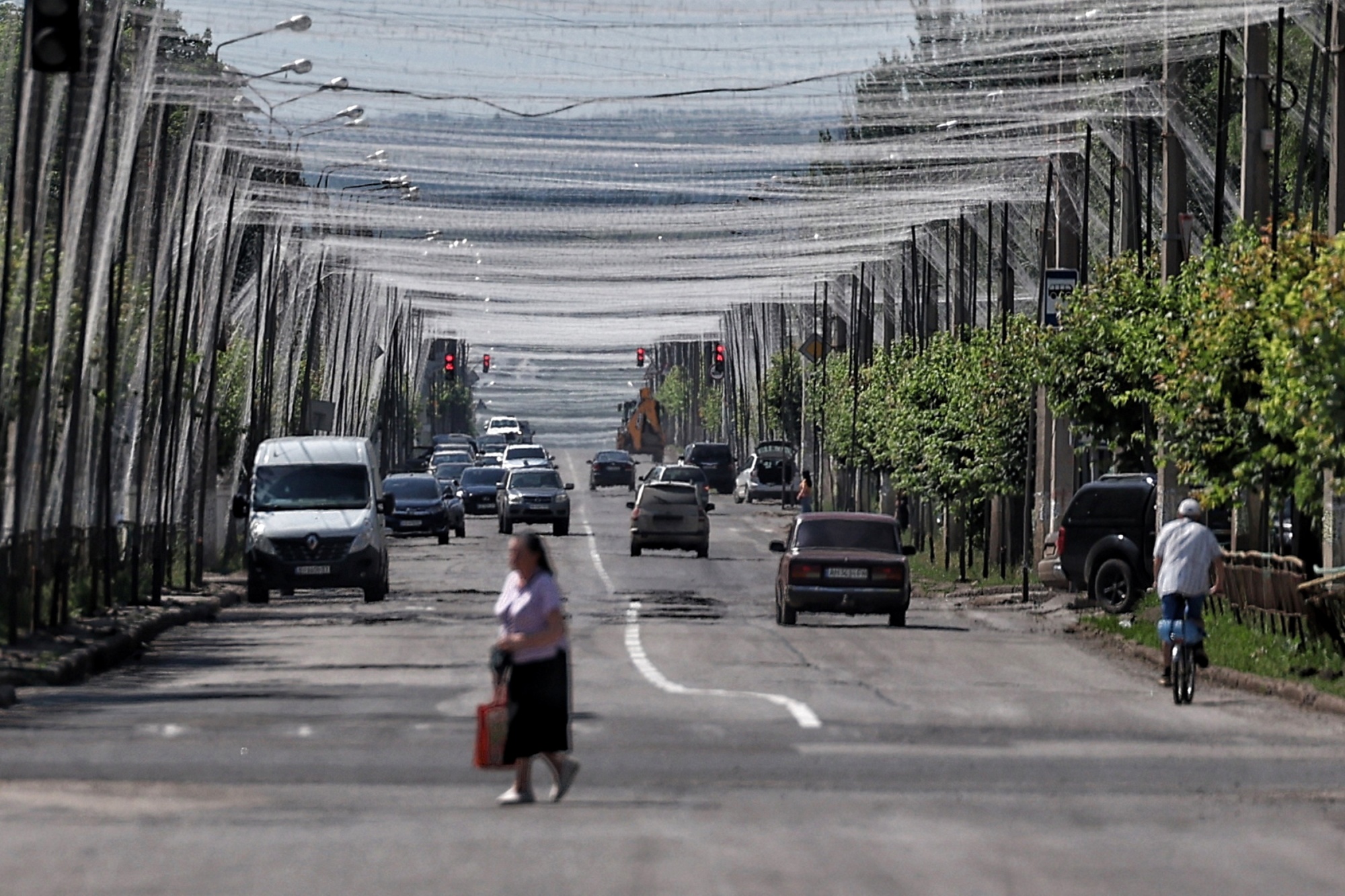
A road covered with anti-drone netting in Kramatorsk, Ukraine, on June 7.
Photographer: Yan Dobronosov/Global Images Ukraine/Getty Images
Chancellor Friedrich Merz’s coalition reached an agreement on a set of reforms for Germany’s pension system, labor market and income tax. This would give Merz’s CDU-led bloc and the Social Democrats a legislative blueprint for sweeping changes to the social welfare system as the coalition seeks to revive economic growth and regain faltering public support. Nigeria’s benchmark stock index has surged 52% in dollar terms this year, making it the world’s fourth-best performer, but many Nigerians are not feeling the benefits. While investors celebrate the rally, frustration on the street over President Bola Tinubu’s reforms and spiraling living costs is becoming a political challenge, with many citizens saying they won’t vote for him in the next election. Chinese Foreign Minister Wang Yi urged US Secretary of State Marco Rubio in their first call since May’s Beijing summit to handle issues around Taiwan with “extra prudence,” underscoring China’s sensitivity over the self-ruled island. Taiwanese business owners and entrepreneurs are increasingly keeping a portion of their wealth in Singapore due to its political stability, low taxes, and perceived safety from geopolitical risks. The yen sliding to a once-unthinkable 200 per dollar level is now a medium-term risk — albeit an extreme one — for some investors in Japan. 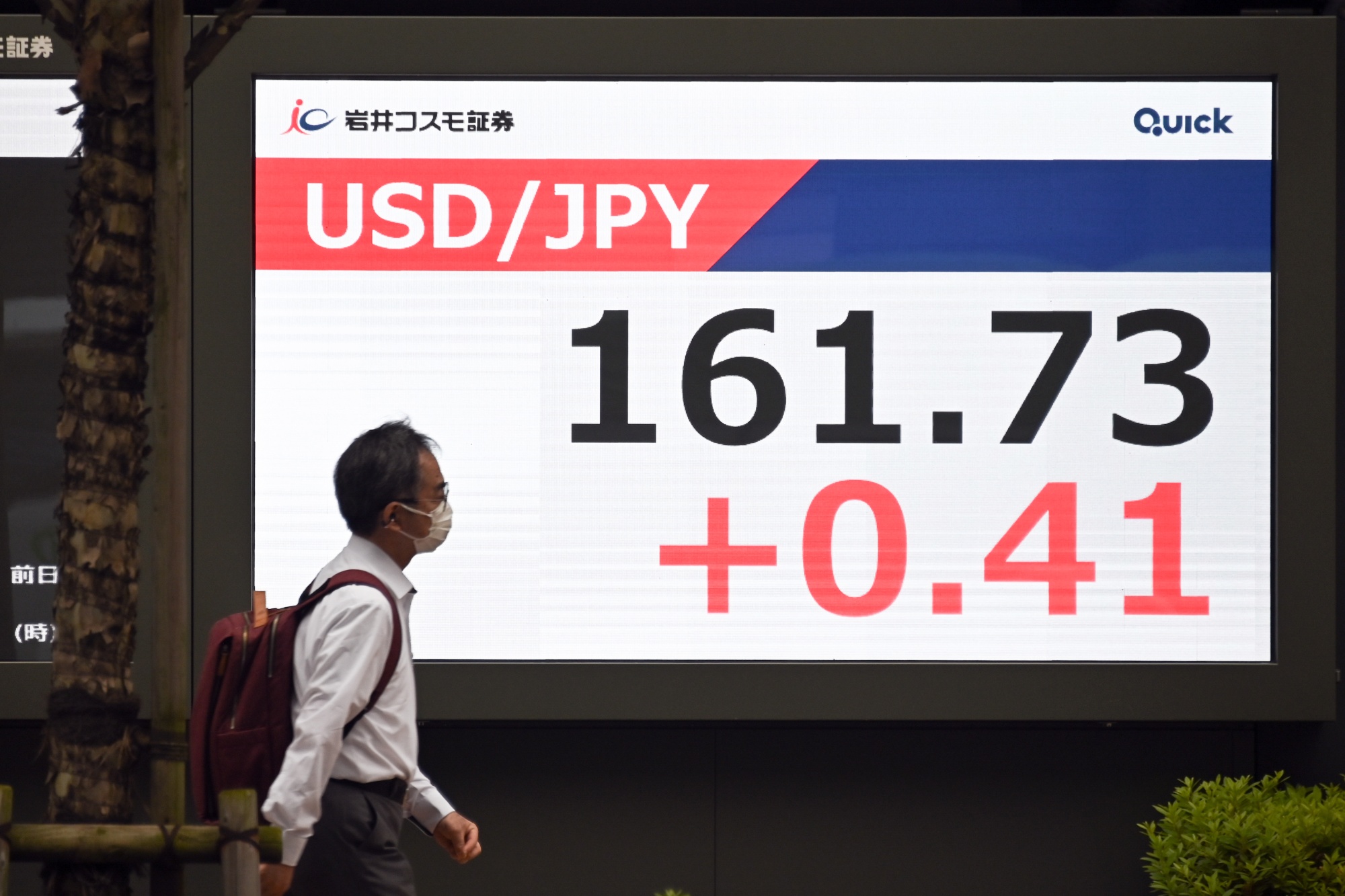
A currency display outside a securities firm in Tokyo on June 22.
Photographer: Soichiro Koriyama/Bloomberg
The US Supreme Court’s ruling expanding Trump’s control over federal agencies sent shock waves across the government, reopening lawsuits over his efforts to oust officials and spurring fresh fears about where the ax will land next. OpenAI has begun preliminary discussions about giving the US government a 5% stake in the ChatGPT developer as part of a broader arrangement under which Washington would hold that share of each of the leading American AI developers, the Financial Times reported. The European Union’s latest bid to reset its trade and economic relationship with China is already floundering, with some member states and officials involved in the planning skeptical that the bloc is ready to take decisive action should diplomacy fail. Sign up for the Washington Edition newsletter for news from the US capital and watch Balance of Power at 1 and 5 p.m. ET weekdays on Bloomberg Television. Chart of the Day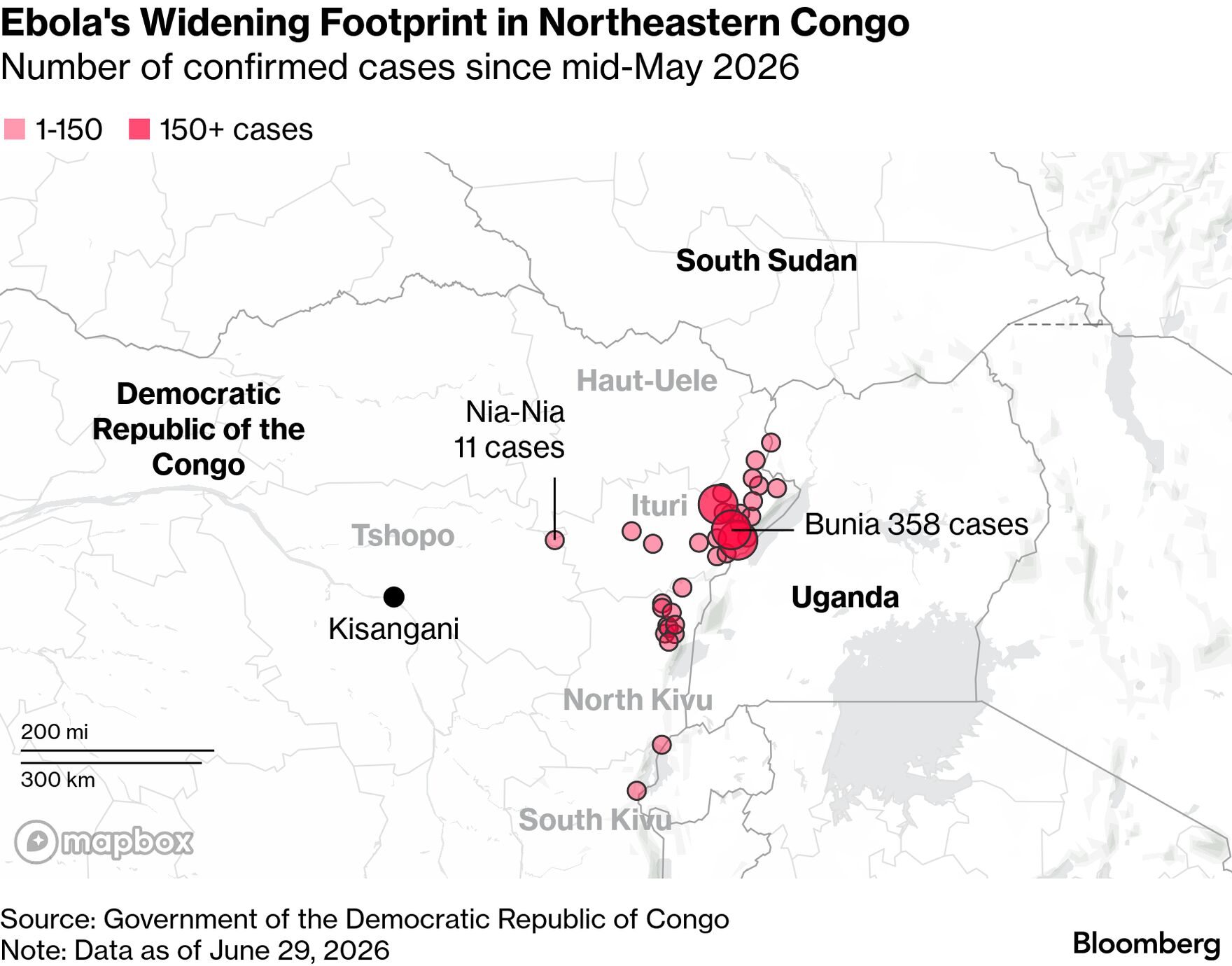
Ebola could shave more than $1 billion from the Democratic Republic of Congo’s economy, push almost 1 million more people into poverty and ripple across neighboring states as authorities struggle to contain an outbreak spreading through one of Africa’s most fragile regions, a United Nations assessment found. Health authorities this week confirmed that infected contacts had traveled into Congo’s Haut-Uele province bordering South Sudan. And FinallyWhen NATO leaders arrive at Recep Tayyip Erdoğan’s 1,000-room complex in Ankara next week, the Turkish president is expected to tell them how vital his country is to a military alliance in trouble. A separate event in the city, though, will demonstrate that importance. Motorcades en route to Erdoğan’s palace will pass military equipment outside an exhibition center where displays of ammunition and electronic warfare systems highlight Turkey’s flourishing $10 billion arms export industry. 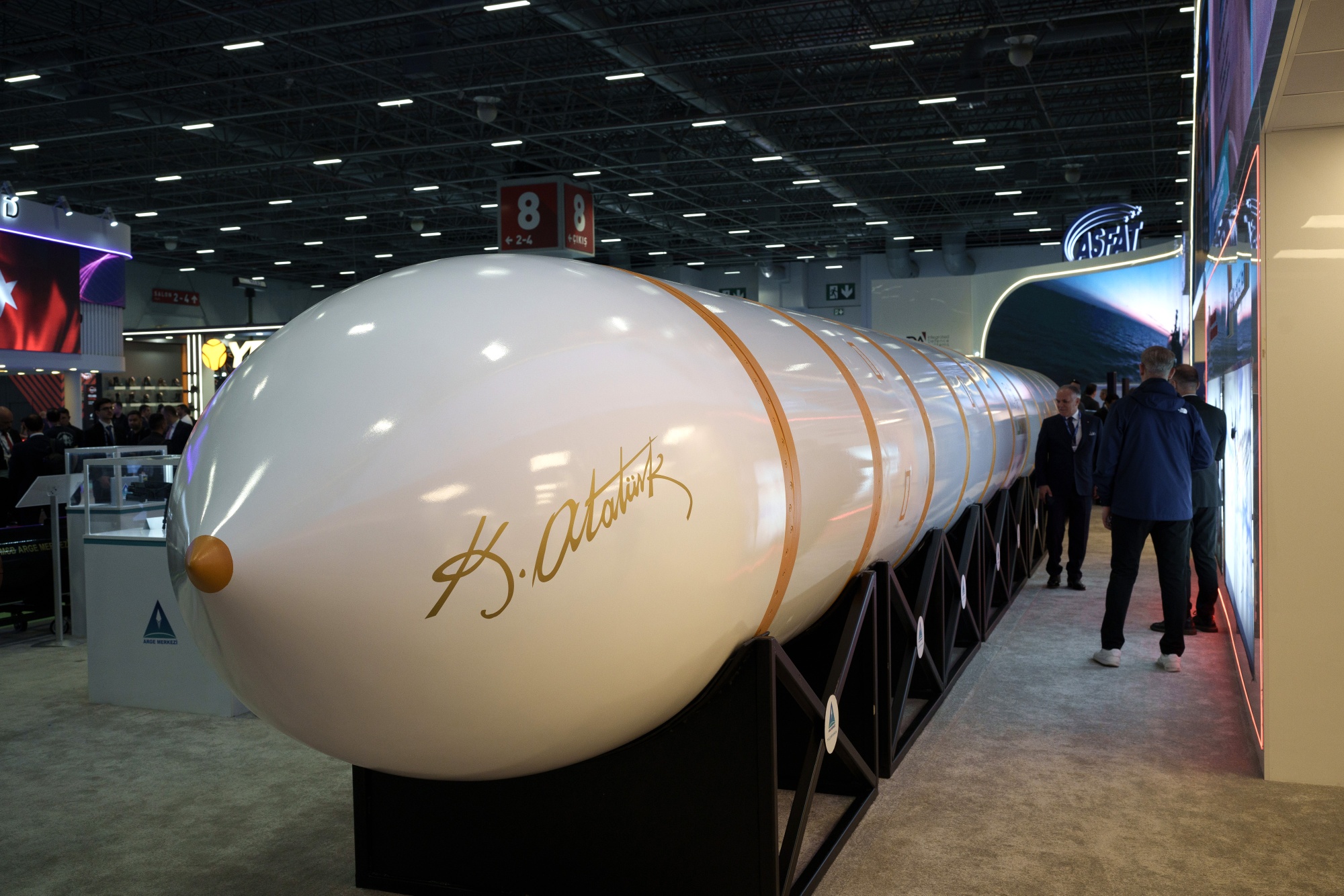
A Yıldırımhan intercontinental ballistic missile at the SAHA International Defence and Aerospace expo in Istanbul on May 6.
Photographer: Emre Caylak/Bloomberg
More from Bloomberg
We’re improving your newsletter experience and we’d love your feedback. If something looks off, help us by reporting it here. Follow Us
You received this message because you are subscribed to Bloomberg’s Balance of Power newsletter. If a friend forwarded you this message, sign up here to get it in your inbox.
|
Thursday, July 2, 2026
Trade curveball





Subscribe to:
Post Comments (Atom)
A Few Big September (NYSE American: GORO) Headlines Shine A Bright Spotlight
Three days after closing the largest financing in its history ...
-
Revolutionary Stem Cell & PRP —Start Your Journey Today ...
-
You’ve shown interest in Regenerative Medicine ...


No comments:
Post a Comment