| Read in browser | ||||||||||||||

A year ago, the Swiss town of Blatten was destroyed after part of a glacier collapsed. Today’s newsletter looks at how Switzerland faces difficult decisions over the risks and costs of mountain living in an era of dangerous climate change. Subscribe to Bloomberg for unlimited access to all our stories. Treacherous real estateBy Laura Millan, Kyle Kim and Armand Emamdjomeh It is springtime in the Lötschental Valley, and yellow dandelions are blooming under the shadow of the Swiss Alps. The landscape is an idyll of snowcapped peaks and meltwater streams, but the changing season brings with it dangers. Heavy rains in late April caused a mudslide that damaged the foundations of a 35-meter (115-foot) bridge hanging across a nearby gorge. It could take two or three years to fix, meaning that some popular hiking routes that lead through the valley are likely to be shut this summer. “We don’t live in an easy landscape,” said Lukas Kalbermatten, a 55-year-old hotelier, who has lived in the area, in the southern canton of Valais, all his life. “People ask us all the time: isn’t it dangerous to live there? I tell them life is dangerous — but it’s dangerous for everybody.” A nearby slope shows just how perilous it can be. A year ago, on May 28, 2025, an entire section of the mountain and the Birch glacier that lay on it collapsed. Within minutes, the village of Blatten, where Lukas and generations of Kalbermattens before him were born, was obliterated, along with his Edelweiss Hotel. 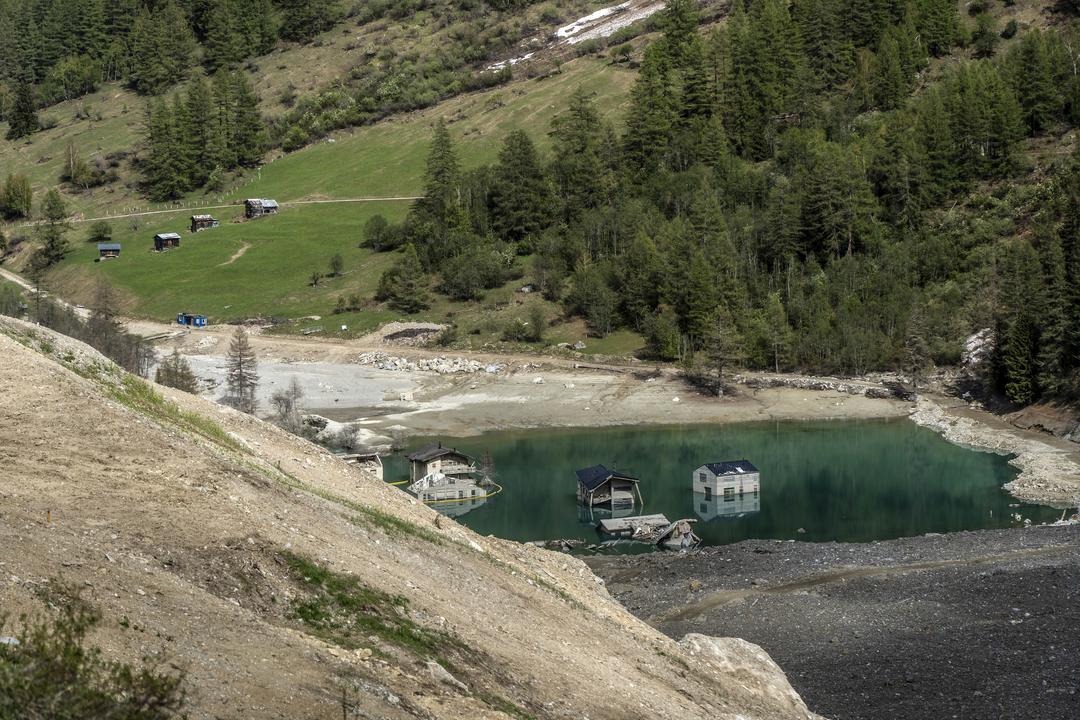
A few of the Blatten’s houses are still standing, flooded by a new lake that formed in the valley.
Photographer: Jose Cendon/Bloomberg
For years, scientists have been warning that climate change is leading to the melting of glaciers and the thawing of permafrost worldwide. Across the globe, glaciers have been losing mass every year for more than three decades, according to the latest data from Copernicus, the European Union’s Earth observation agency. Their shrinking is directly linked to climate change, with higher temperatures and greater solar radiation accelerating melting in summer, and low rates of snowfall in winter failing to replenish the lost ice. Alpine glaciers are among the world’s fastest-shrinking. Average temperatures in Switzerland have increased by 3C since pre-industrial times, compared to about an average of 1.4C for the whole planet. In Switzerland, the destruction of Blatten has brought home the risks now faced by towns and villages throughout the Alps — among them places that are central to Swiss culture and identity. It’s also revived a long running debate about the price paid by taxpayers in wealthy cities such as Zürich and Geneva to subsidize the traditional way of life in the mountains. 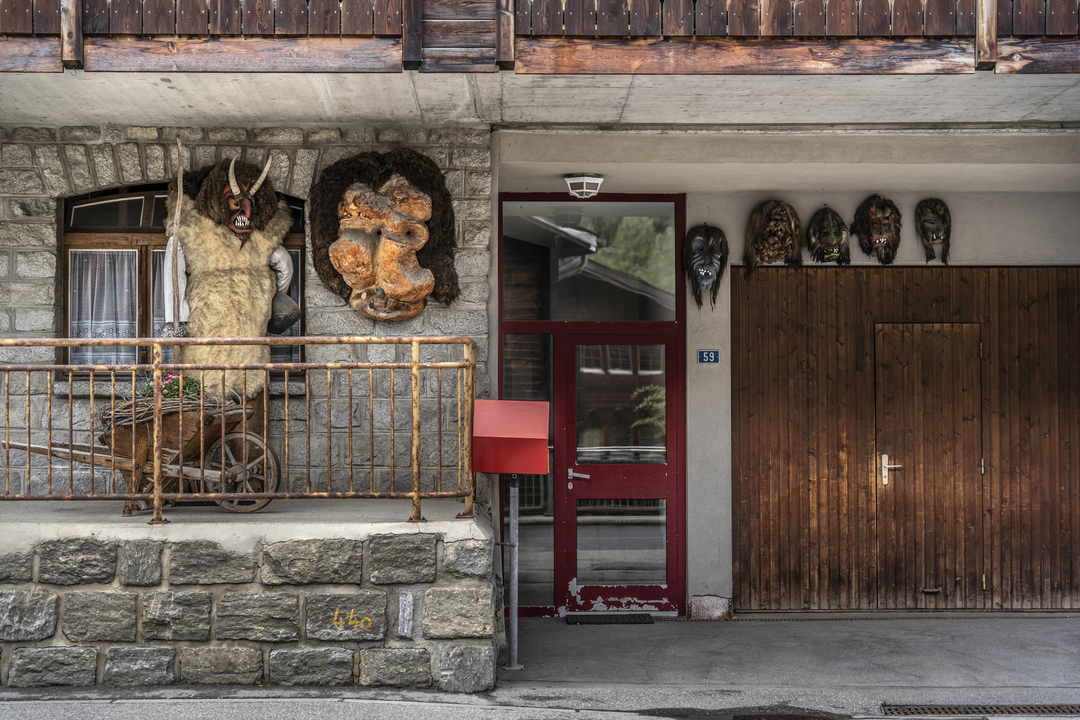
The villages have strong local identities, with unique customs and traditions that stretch back centuries.
Photographer: Jose Cendon/Bloomberg
Between 1973 and 2016, more than 1,000 glaciers vanished in Switzerland. Twenty major Swiss glaciers have lost one quarter of their volume since 2015, according to a 2025 report led by Matthias Huss, a senior scientist at ETH Zürich and the head of Switzerland’s glacier monitoring network Glamos. “We’re seeing these very strange years that only existed in crazy model simulations and now they’re happening in reality,” said Huss. “We’re seeing an acceleration of these trends.” 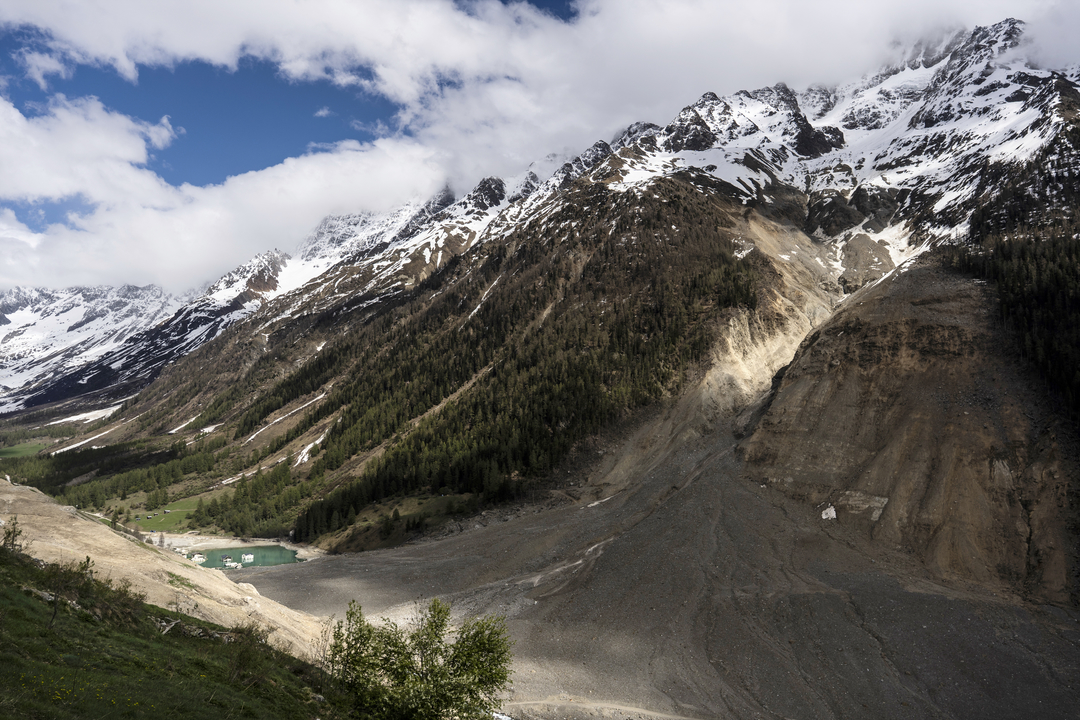
A year on from the collapse of the Birch glacier, Blatten remains shrouded in dust and debris.
Photographer: Jose Cendon/Bloomberg
Just 50 kilometers (31 miles) south of Blatten — or an hour’s drive through a meandering, scenic road carved on a steep slope — is the Saas Valley. Like the Lötschental, it’s home to small towns dotted with rural hotels and a wide network of hiking and mountain biking trails. Among the valley’s attractions is a small museum dedicated to the history of alpinism, run by Christoph Gysel, a 67-year-old pastor turned tourist guide. The latest exhibition is dedicated to another tragedy — the 1965 collapse of the Mattmark glacier, which killed 88, mostly Italian, young workers who were building a dam nearby. “People over here have always said that’s life, or the Lord, and that nothing could be done about it,” Gysel said. “But these tragedies are not for nothing if we can learn from them.”
Read more
Keeping watch60 The number of glaciers that are being monitored in Valais canton. New frontier“This is really new, unexplored terrain. It’s kind of chaotic because every situation is completely different.” Matthias Huss Head of Switzerland’s glacier monitoring network Glamos For scientists, the tricky part is knowing how each particular piece of mountain will behave as glaciers retreat, especially when other factors like extreme precipitation and heat are thrown in. Heat inflationA global food crunch due to extreme weather would boost prices more in the euro area than in Group of Seven economies, according to Oxford Economics. A “severe” shock to food prices from climate events could raise food prices in countries sharing the currency by 1.6 percentage points a year, the economic adviser said in a report. That would translate into an increase in headline inflation of as much as 0.6 percentage point, economists Robert Marks and Ronan Hegarty said in the study published Thursday. 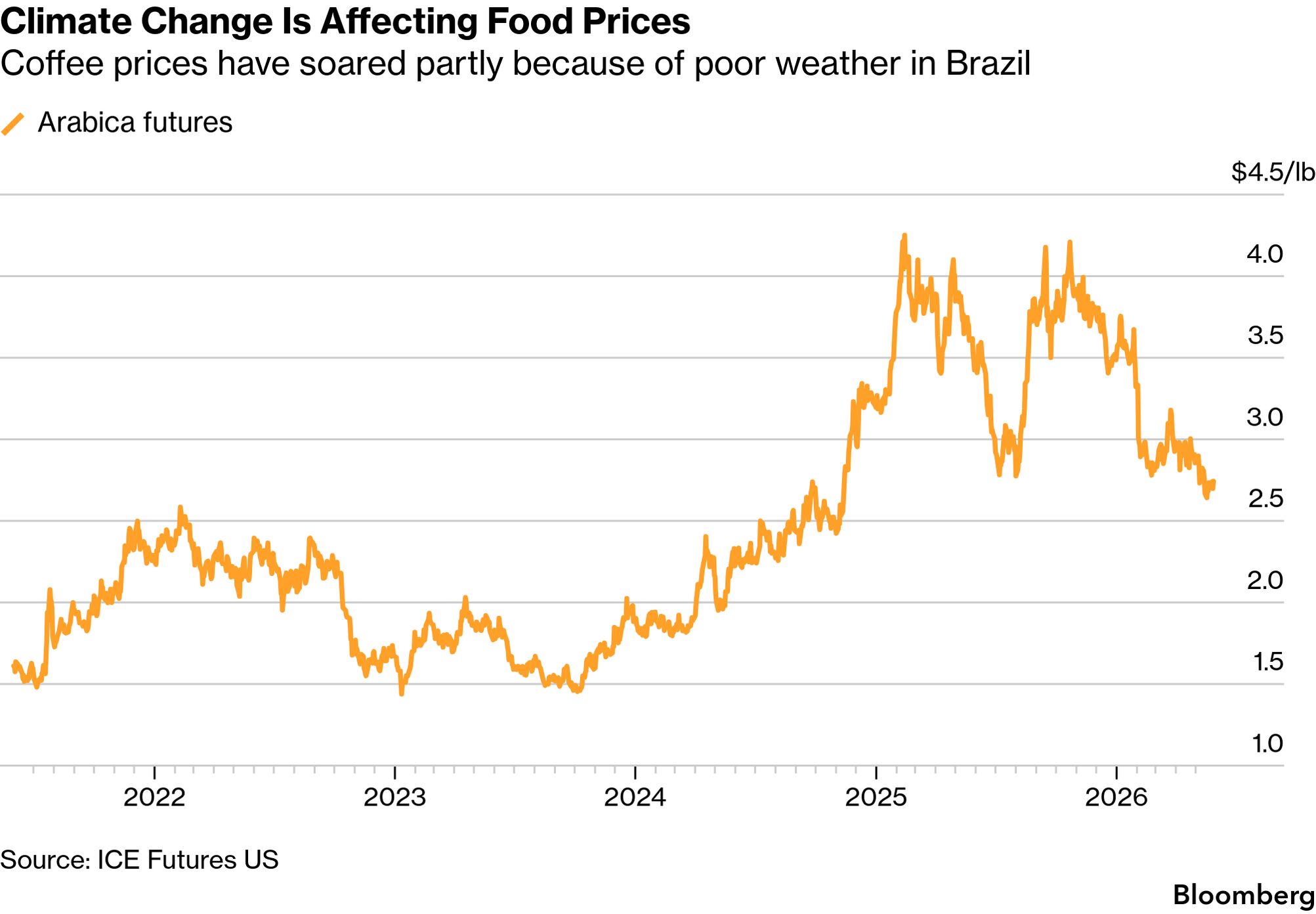
Natural disasters and heat waves could cause more harvest failures, damage infrastructure and disrupt supply chains in the future as global warming continues, with nations in Europe roasted by a heat wave this week. The resulting rises in food costs would increase pressure on central banks to rein in inflation. “Climate change and nature-loss are increasingly contributing to food price inflation and volatility, presenting a long-term risk to economies,” the authors said. “Recent research has found at least 14 cases of local or regional price spikes since 2022 linked to unprecedented extreme weather events.”
Read more
Your weekend listenReform UK is currently the most popular party in Britain. This week on Zero, Akshat Rathi asks Reform’s deputy leader Richard Tice about the party’s climate and energy plans, and why he calls it “net stupid zero.” Listen now, and subscribe on Apple, Spotify or YouTube to get new episodes of Zero every Thursday. More from Bloomberg
Explore all Bloomberg newsletters. We’re improving your newsletter experience and we’d love your feedback. If something looks off, help us fine-tune your experience by reporting it here. Follow Us
You received this message because you are subscribed to Bloomberg’s Green Daily newsletter. If a friend forwarded you this message, sign up here to get it in your inbox.
|
Saturday, May 30, 2026
Life in the Swiss Alps as glaciers collapse





Subscribe to:
Post Comments (Atom)
-
Revolutionary Stem Cell & PRP —Start Your Journey Today ...
-
You’ve shown interest in Regenerative Medicine ...


No comments:
Post a Comment