| The pound will continue to outperform the euro as yields in the UK remain higher. Nominal yields have taken over as the main driver of the currency pairs, with breakeven rates' influence quickly fading as we enter a new phase in the cycle. As the central banks within the G-10 sphere have set the path towards easing, it is now a matter of how quickly they will reduce interest rates. The Bank of England is expected to move slower than the European Central Bank, with higher yields in the UK keeping the pound well supported. 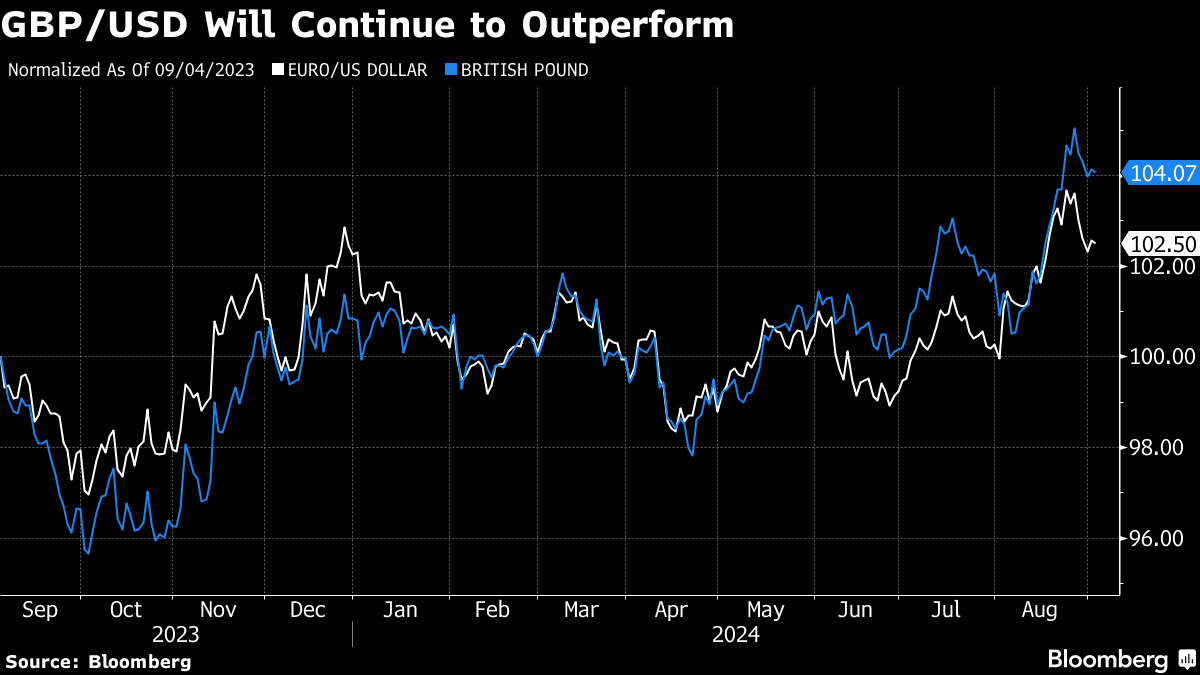 And China risks represent an added blow to the euro. The economic malaise there has been worsening with domestic demand exceptionally weak. Disinflationary pressures coming from the world's second-largest economy is a threat to the euro zone. Importing deflation leaves the single-currency region more likely to cut rates faster than its European neighbor which is much less dependent on the Asian country. The stability of the yuan has helped broader currency markets, but further weakness in the currency -- which is likely if exports are to continue holding up -- will put the euro more at risk than sterling. All this points to further downside for euro-pound. Also, the dichotomy in the political backdrop will favor sterling as risks on that front are flaring up once again in Europe. Mary Nicola is a macro strategist for Bloomberg's Markets Live team, based in Singapore. | 









No comments:
Post a Comment