| I'm Chris Anstey, a senior economics editor in Boston, and today we're looking at the damp squibs that have been the week's G-20 and WTO gatherings. Send us feedback and tips to ecodaily@bloomberg.net or get in touch on X via @economics. And if you aren't yet signed up to receive this newsletter, you can do so here. - Swiss National Bank President Thomas Jordan will step down at the end of September, with potential successors waiting in the wings.
- Euro-zone inflation eased less than anticipated in February.
- China's factory activity shrank for the fifth straight month.
Two of the key institutions of the old, globalized world economy were trying avoid getting branded as irrelevant his week against the backdrop of a decisive turn in rich-world democracies. In Abu Dhabi, the World Trade Organization's gathering of 160+ trade ministers from around the world served as a forum for deep disagreement over global commerce priorities. Talks were extended to a fifth day to give more time to negotiation deals. India and other developing nations wanted a revival f the WTO's appellate body, which has been paralyzed thanks to the US in 2019 refusing to proceed with replacing departing members. Without an enforcement mechanism, WTO rules risk losing a big part of their authority. Washington effectively disabled that panel out of frustration that cases against China, and others, took years to resolve — by which time the American companies and workers being harmed by allegedly unfair competition were already displaced. WTO procedures also were never conceived to deal with a model like China's, with comprehensive support for manufacturers ranging from subsidized capital and electricity to a lack — for decades — of environmental rules and a mass labor force of internal migrants who had no bargaining power or even residency rights where factories were located. Read More: World Trade Chiefs Inch Toward Deal With Hardest Steps Ahead Meantime, India and others at the Abu Dhabi gathering mustered against rich-world efforts to subsidize their green-energy transitions and effectively penalize the more-polluting developing world in the process. 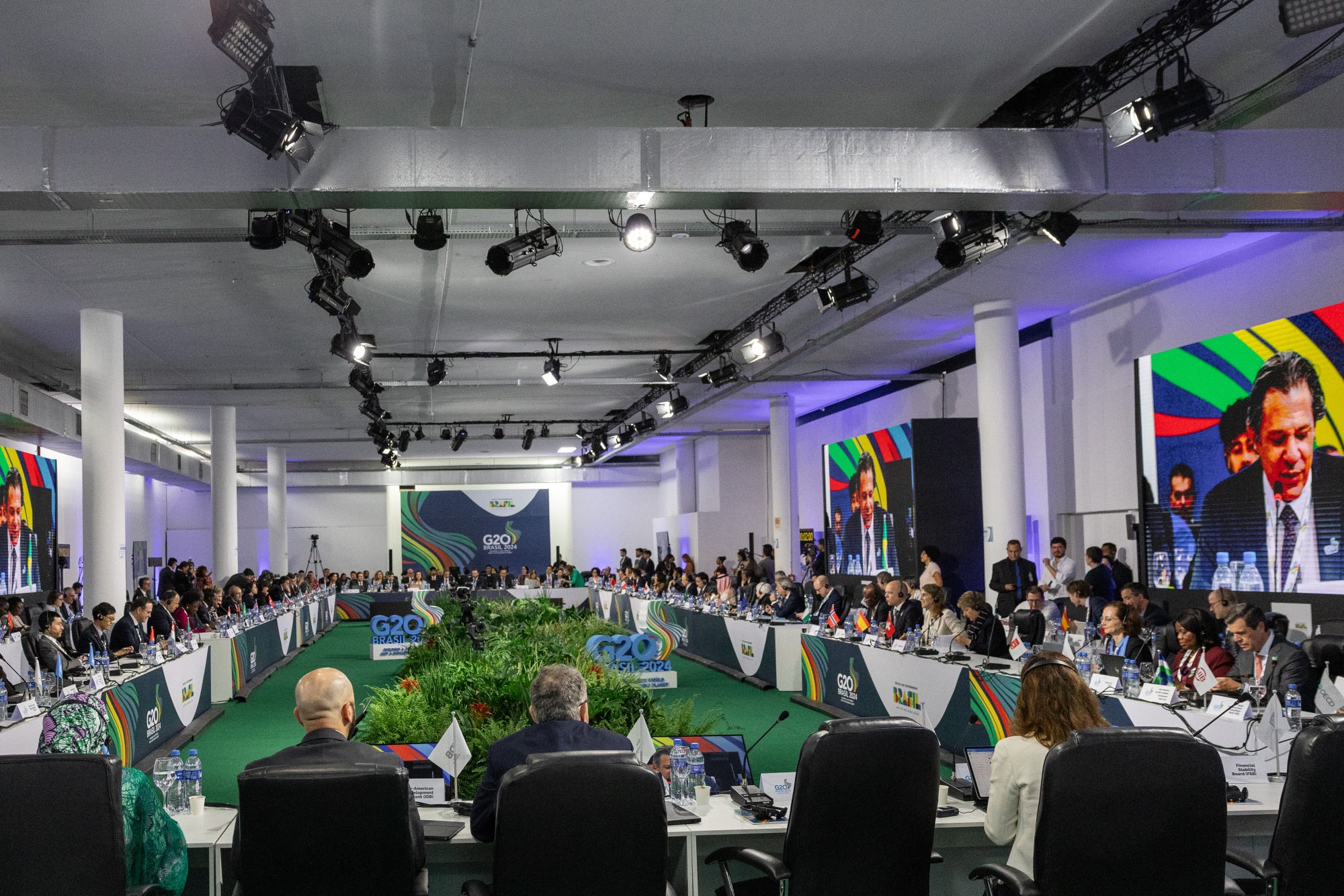 G-20 finance ministers and central bank governors meeting in Sao Paulo, Brazil, Feb. 29, 2024. Photographer: Maira Erlich/Bloomberg In Sao Paulo, Brazil played host to the latest confab of finance chiefs from Group of 20 emerging and developed nations. Once upon a time, the G-20 was a key council where consensus could be forged over major global challenges. It was effective, for example, in heading off any protectionist upsurge during the global slump caused by the 2008 financial meltdown. Nowadays, the important meetings are on the G-20's sidelines. This week, it was about the Group of Seven industrial nations trying to agree on what to do with Russia's frozen assets, amid Ukraine's dire need for capital for reconstruction. (The US is hoping for some progress by June.) With geopolitics splitting its members, there was no G-20 communique at the conclusion of the Sao Paulo meetings Thursday. Divisions over how to refer to the conflicts in Gaza and Ukraine put paid to that, Bloomberg reported. No major country has called for dissolving these institutions, and observers highlight the importance of keeping them going simply as a way of forcing engagement among competitors and even enemies. But the days of global economic policy consensus seem well past. - Treasury Secretary Janet Yellen said any plan to seize some $282 billion in frozen Russian assets to help Ukraine can't be viewed as a replacement for urgently needed assistance that's been held up in Congress.
- New York Fed President John Williams reiterated that he sees a rate cut later this year.
- South Korean exports continued to grow last month, adding to the optimistic outlook for economic growth and global commerce.
- Bank of Japan Governor Kazuo Ueda said the Bank of Japan's price target is not already in sight, a comment that may temper speculation the bank's first rate hike since 2007 could come as early as March.
- ECB Governing Council member Robert Holzmann warned against early rate cuts, while his colleague Fabio Panetta said inflation is falling faster than expected.
The US election is still eight months or so away, but it's already time — for Rabobank at least — to incorporate it into the outlook for inflation. The Dutch bank's Philip Marey says he's now assuming a Donald Trump win, which will have implications including for the Federal Reserve. "Thinking about the possible economic impact of a second term for Trump seems a sensible exercise," given current polling along with the likelihood that current US economic performance is likely "as good as it gets" for President Joe Biden, Marey, an economist who serves as Rabobank's senior US strategist, wrote in a note Thursday. While Trump rhetoric doesn't always translate into action, his threat of a 10% universal tariff is "credible" given presidential authority and his practice during his first term, Marey wrote. "This could lead to a rebound in inflation" next year as the higher import prices filter across the economy, he said. Other things equal, "this could reduce the amount of rate cuts that the Fed has in mind for 2025." Read more reactions on X | 










No comments:
Post a Comment