| Read in browser | ||||||||||||||


Welcome to the Brussels Edition. I’m Suzanne Lynch, Bloomberg’s Brussels bureau chief, bringing you the latest from the EU each weekday. Make sure you’re signed up. Countries to the east are lining up to join, with Brussels opening accession talks this month with Ukraine and Moldova. Even eurosceptic figures like Marine Le Pen and Viktor Orban have advocated changing the EU from within, rather than exiting the EU, reflecting the views of their supporters in France and Hungary respectively. According to a recent analysis by Bloomberg Economics, Brexit has cost the UK as much as 4% in lost economic output, unleashing consequences that are “significant and negative.” 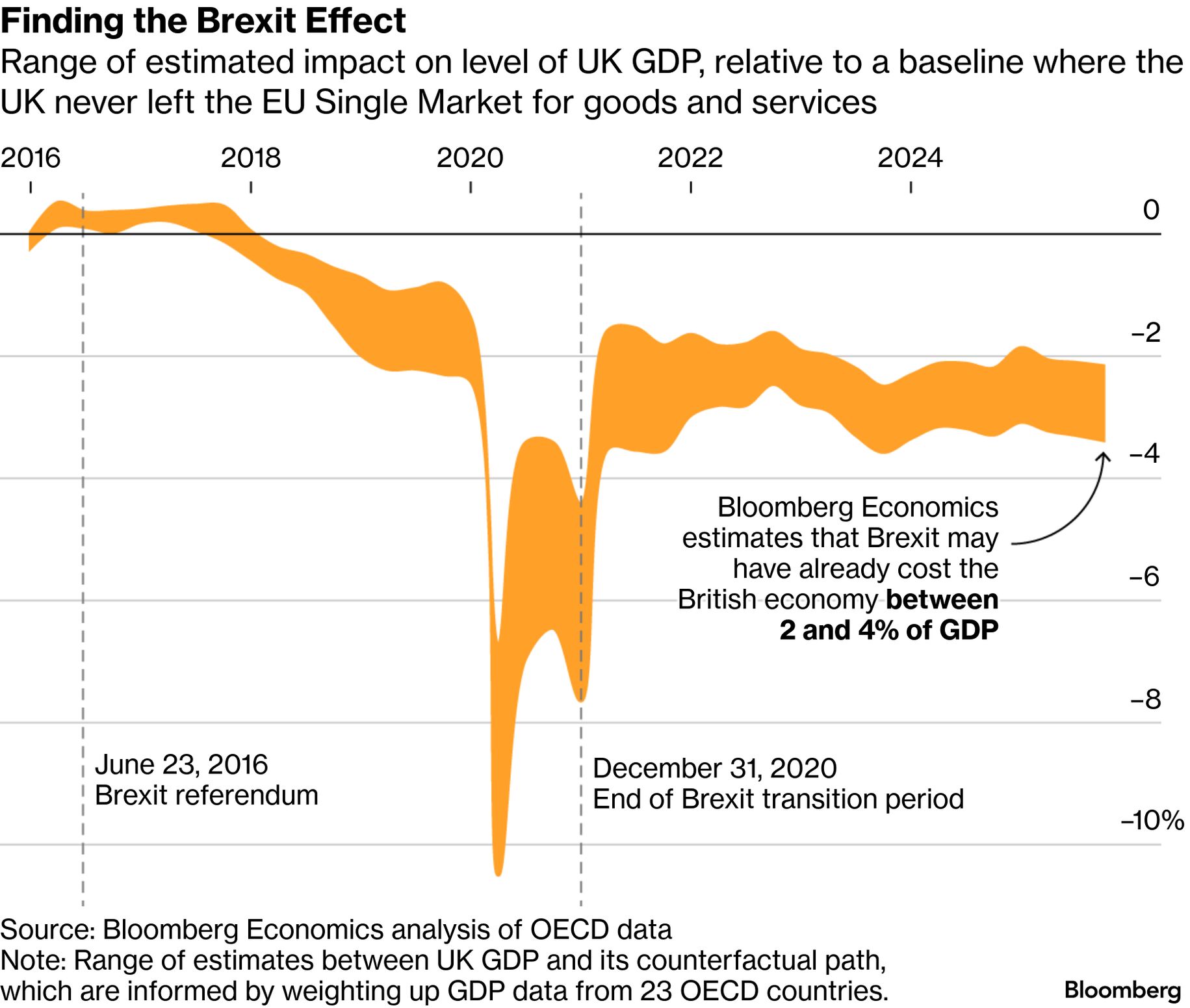
The EU too has suffered, not least ideologically, losing one of its strongest free-market voices. The bloc’s dismal failure to complete its capital-markets union means it has failed to use the UK’s departure as a springboard to strengthening its own financial services industry. Instead, the City of London remains dominant and an exodus of finance professionals never materialized, helped by domestic policy moves such as relaxing rules around bonuses. The imminent appointment of a seventh British prime minister in 10 years injects more uncertainty into the relationship. Officials in Brussels are unclear about the views of Andy Burnham, Starmer’s likely successor, on EU-UK relations — one of the reasons the European Council is postponing next month’s summit. The two sides had been expecting to make progress on rules governing trade in plant and animal goods, a linking-up of emissions trading systems, and a youth mobility scheme. Negotiating with a lame duck prime minister like Starmer was always going to be a gamble for Brussels, given that it was burned by flip-flopping British prime ministers from Boris Johnson to Theresa May who changed the goalposts many times during the tortuous Brexit negotiations. Nonetheless, European Council President Antonio Costa is still committed to a summit with the next prime minister. In the weeks leading up to Starmer’s resignation, Burnham u-turned on a number of his earlier positions, including ruling out seeking to take Britain back into the EU just eight months after saying he wanted to rejoin. The key question is whether he decides to continue with Starmer’s effort to reset ties or pursue a different path. The Latest
Seen and Heard on BloombergUkrainian President Volodymyr Zelenskyy needs to do whatever it takes to defuse his escalating dispute with Polish President Karol Nawrocki, writes Marc Champion for Bloomberg Opinion. Zelenskyy’s decision to rename a special forces unit after the controversial World War II Ukrainian Insurgent Army, known as UPA, risks alienating a key ally. And though Nawrocki is cynically weaponizing the UPA issue, Zelenskyy leads a country that relies almost entirely on Poland for its survival in today’s war. 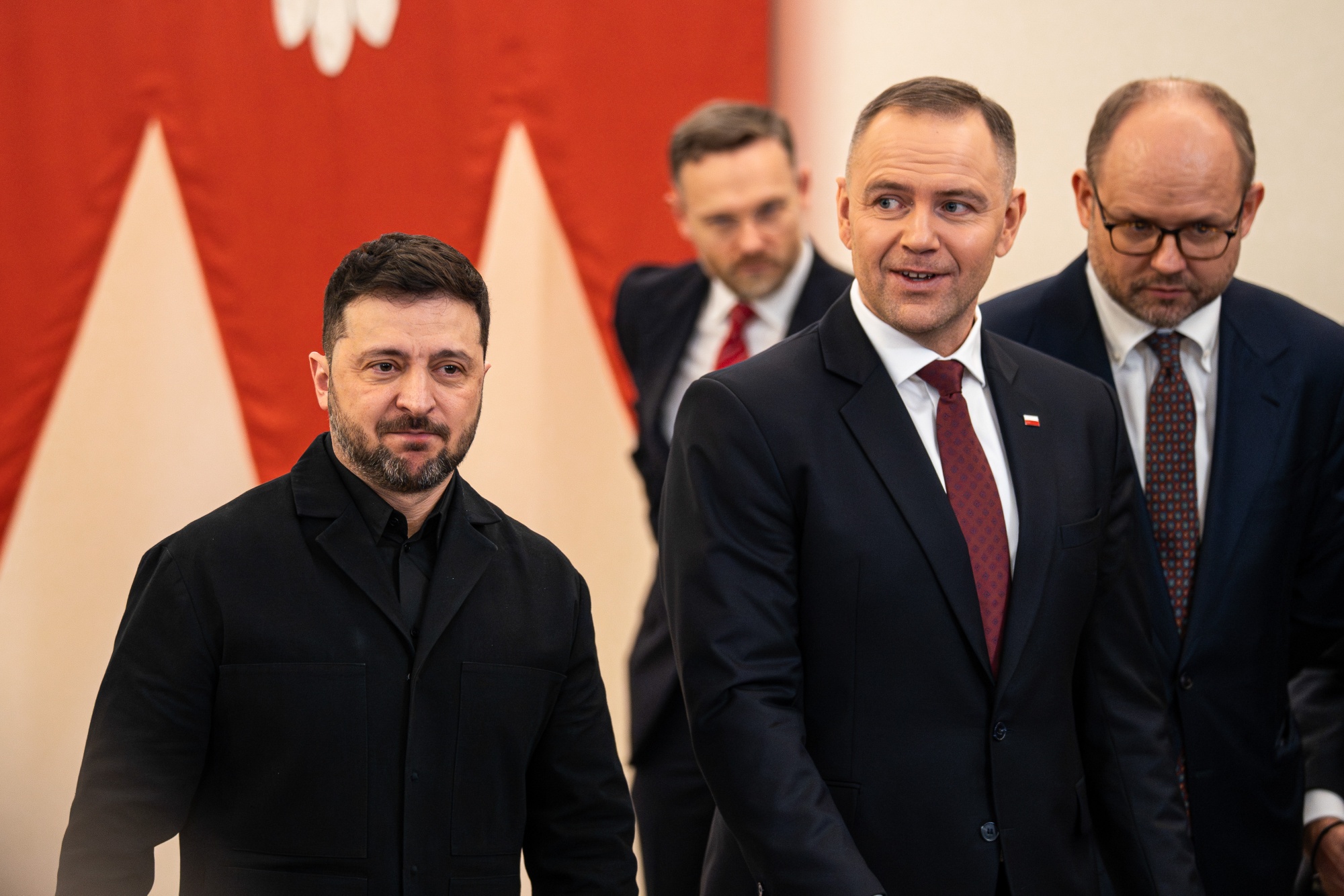
Nawrocki and Zelenskyy arrive at a news conference in Warsaw, Poland, on Friday, Dec. 19, 2025.
Photographer: Damian Lemanski/Bloomberg
Chart of the Day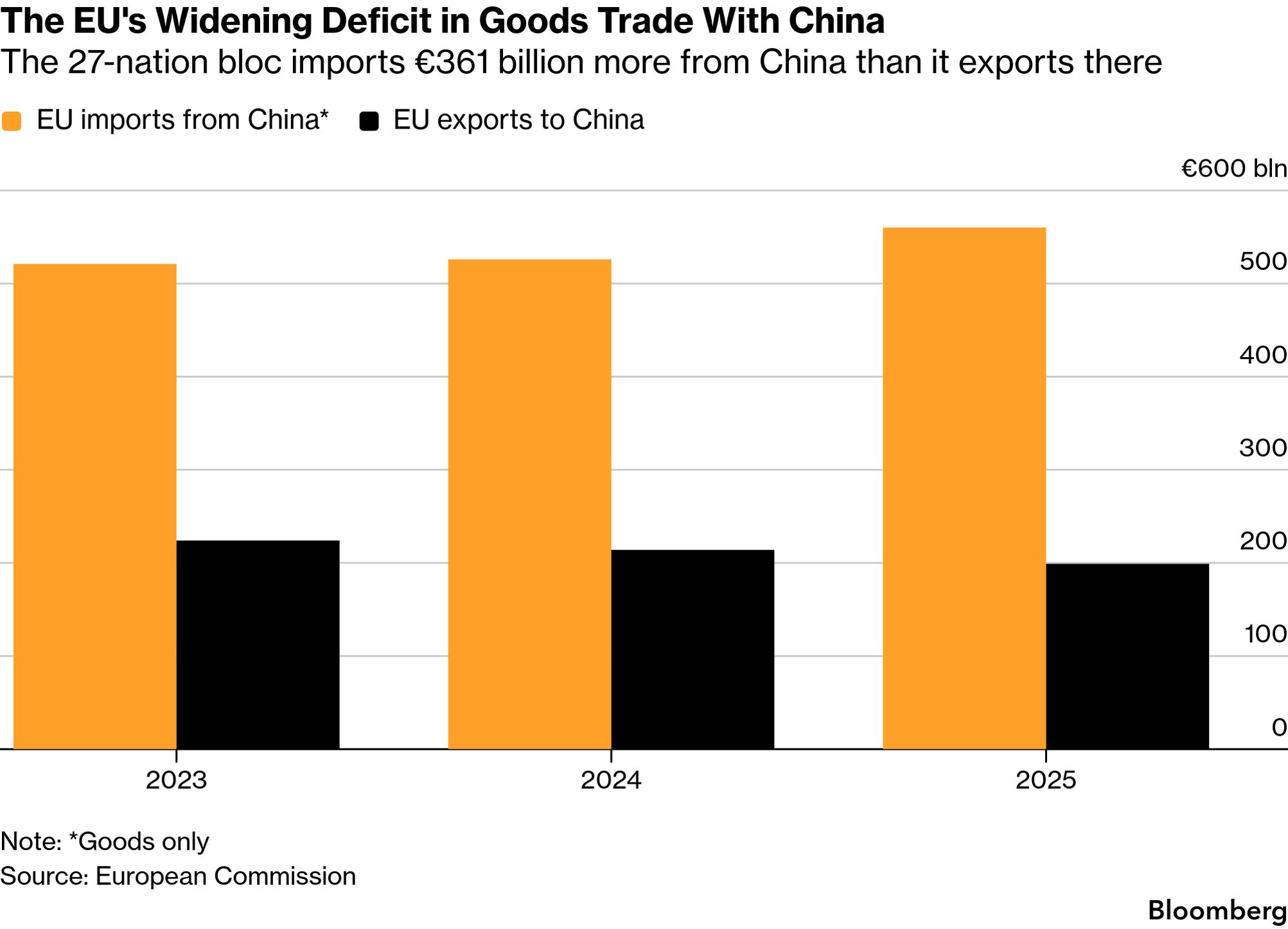
Bargain-hunting consumers across the EU will start feeling the pinch of higher online shopping costs next month when a new levy primarily targeting China comes into force. A €3 duty will apply on items less than €150, a move aimed at slowing the flood of low-priced merchandise from outside the EU sold by sites like Shein and Temu. E-commerce imports into the bloc reached nearly 6 billion items last year, and China accounted for about 90% of merchandise under €150, including fast fashion, beauty products and electronics. Coming up
Final ThoughtGreece’s rehabilitation from its economic crisis over the past decade has been lauded by euro-region peers and investors alike. But behind the new era of healthy metrics lies a decline in living standards that’s pricing even relatively affluent Greeks out of benefiting from that recovery. Inflation is among the highest in the euro area, while the average annual salary of about €18,000 is less than half that of the wider EU. 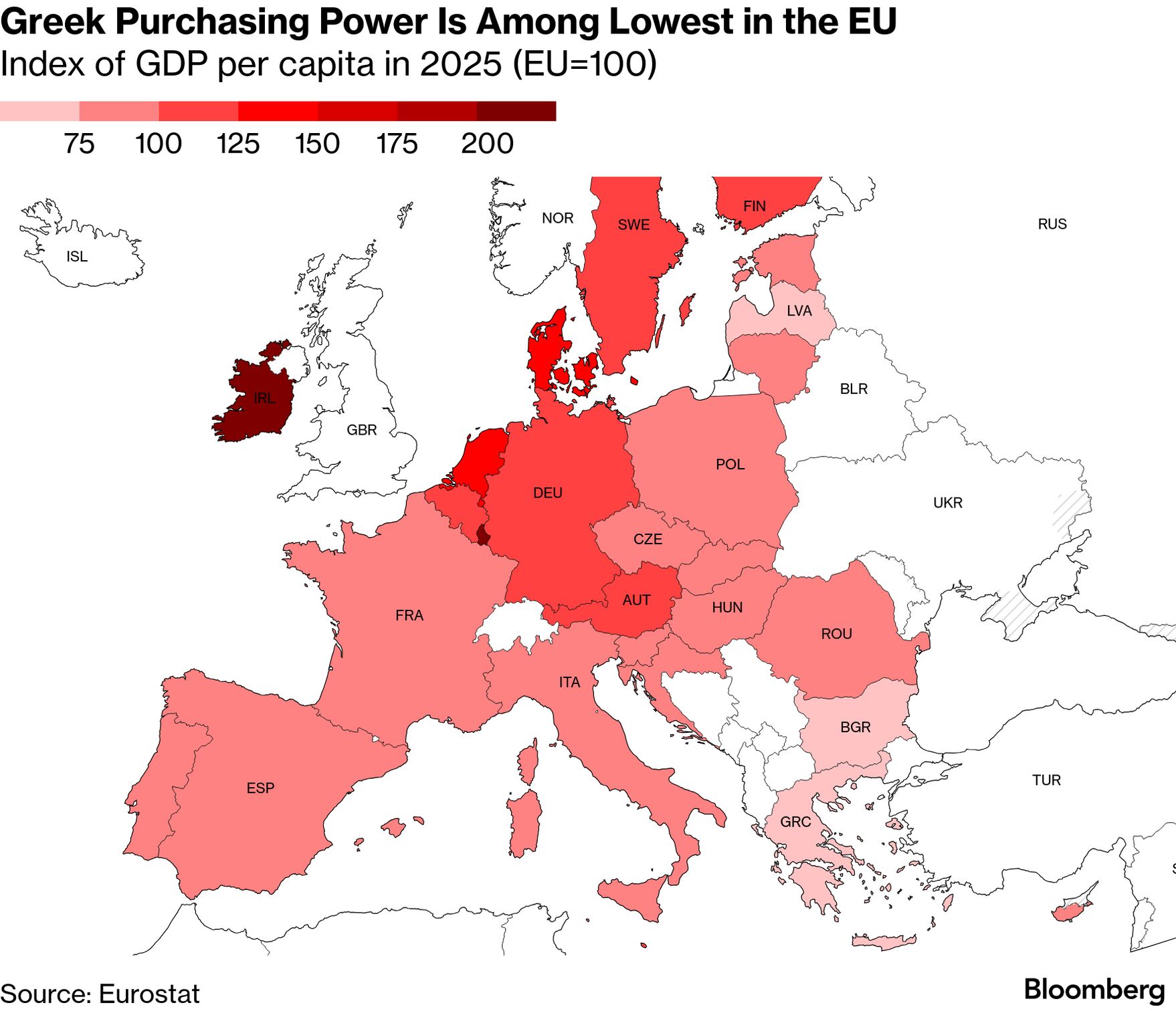
Like the Brussels Edition?Don’t keep it to yourself. Colleagues and friends can sign up here. We’re improving your newsletter experience and we’d love your feedback. If something looks off, help us fine-tune your experience by reporting it here. Follow Us
You received this message because you are subscribed to Bloomberg’s Brussels Edition newsletter. If a friend forwarded you this message, sign up here to get it in your inbox.
|
Tuesday, June 23, 2026
Brussels Edition: Brexit’s long shadow





Subscribe to:
Post Comments (Atom)
Brussels Edition: Brexit’s long shadow
Today marks 10 years since the UK’s momentous vote to leave the EU ...
-
Bloomberg Evening Briefing Americas View in browser Who's paying for Donald Trum...
-
PLUS: Dogecoin scores first official ETP ...


No comments:
Post a Comment