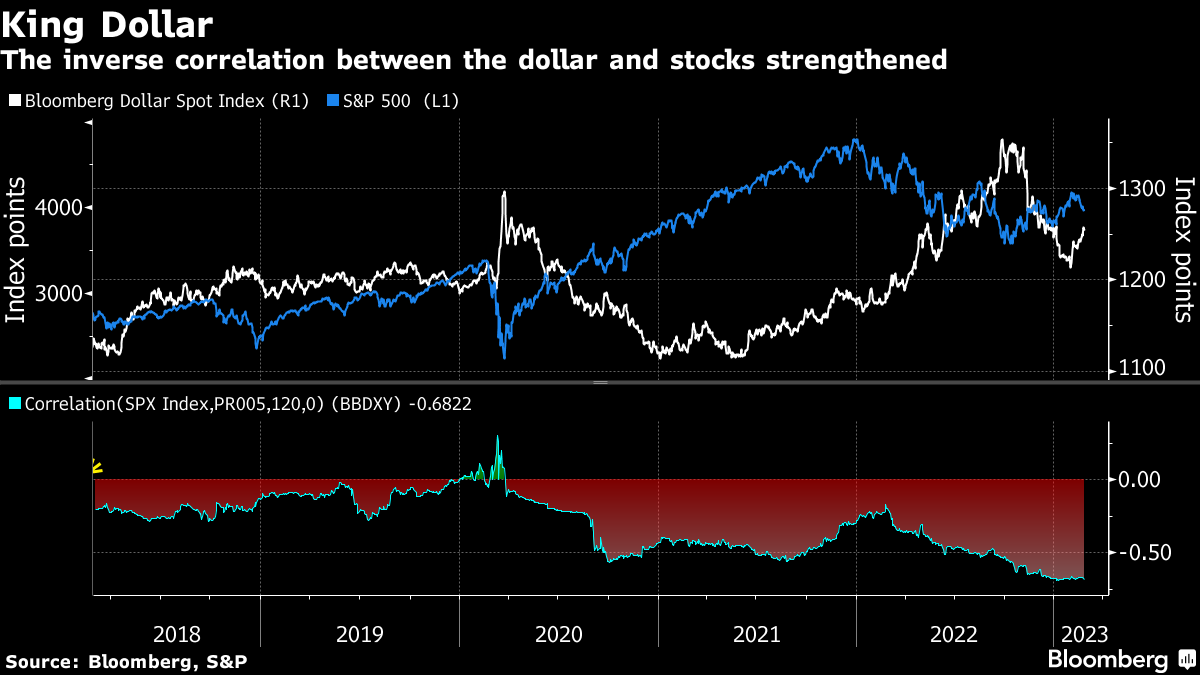
| Good morning. Rishi Sunak's challenge selling the Northern Ireland trade deal, an ECB official makes the case for higher rates and bank profits stoke ire around the world. Here's what people are talking about. Prime Minister Rishi Sunak's government is beginning its hardest sell: convincing skeptical Northern Irish politicians to back its new post-Brexit deal on trade with the European Union. That means one final effort before the UK can finally repair relations with its biggest trading partner. Monday's unveiling of the "Windsor Framework" featured a confident Sunak and a smiling, enthusiastic European Commission President Ursula von der Leyen. The next, crucial stage of the process will be a game of detail, numbers and political arm-twisting. The European Central Bank must push on with monetary-policy tightening while price pressures endure, according to Governing Council member Boris Vujcic. "As long as core persists at the levels we're talking about and this is significantly higher than our rates are and significantly higher than where are target is, we should persevere," Vujcic told Bloomberg Television. In 2008, they were branded public enemies for eviscerating billions of dollars and tanking the global economy. Now, bankers in many parts of the world are back in the hot seat. This time, though, they're being blamed for making too much money instead of losing it. As interest rates soar on seemingly everything except deposits, banks are scoring big profits on the widening gap between what they charge borrowers and pay to savers. That's attracting the ire of politicians from London to Seoul at a time when rampant inflation is stoking cost-of-living crises. Twelve years after one of the worst nuclear disasters in history shook Japan and turned the public against atomic power, a global energy crisis is encouraging the country to switch its reactors back on. Faced with rising heating bills this winter after a sweltering summer spent worrying about blackouts, more people are now reappraising the benefits of cheaper and more stable energy. Even some of those living near nuclear plants are looking beyond their fears of another radioactive disaster. European equity futures fluctuated as traders continue to assess the Fed's rate path. The EIB forum in Luxembourg includes BOE and ECB speakers. The top energy officials from the US and UK meet to discuss energy security and renewables amid tensions over green subsidies. A slew of countries report GDP data, while France and Spain deliver inflation prints. Bayer, Erste and Ocado are among companies on tap for earnings. This is what's caught our eye over the past 24 hours Making money in markets is a pretty easy thing these days, all you have to do is pick the direction of the dollar. The US currency's influence, or at the very least its coincidence, with wider sentiment is on the rise. Its correlation with the S&P 500, for instance is -0.7 measured over 120 days, hovering at a two-decade high. That's almost as eye-catching as the inverse link to gold, which at -0.8 is the strongest since record began in 2004. One explanation goes that the US currency is acting as a hedge against systematic risk. It was, after all, one of the few assets that rallied during the pandemic selloff. But the relationship is more complicated than that. A Fed hiking rates, particularly if US inflation trends lower, tends to support the dollar, while at the same time putting downward pressure on stocks and hard assets. And with bond markets capitulating with to the view of the Fed in recent sessions, it seems the outlook for the dollar is more strength, and for stocks and commodities, more volatility. This commentary first ran on Markets Live on the Bloomberg Terminal, where Eddie van der Walt is Deputy Managing Editor based in London. Follow him on Twitter at @EdVanDerWalt
This week, the MLIV Pulse survey focuses on active versus passive investing. How likely is it that an actively managed fund that outperformed in one year will outperform the next year? Would you call the growth of passive index funds a bubble? Share your views here. | 







No comments:
Post a Comment