| Read in browser | ||||||||||||||
Welcome to Balance of Power, bringing you the latest in global politics. If you haven’t yet, sign up here. The Ebola outbreak spreading across Democratic Republic of Congo and into neighboring Uganda is fast becoming an early test of what a retreat in Western health funding might mean for global pandemic preparedness. For years, the US financed networks of laboratories, epidemiologists and emergency-response programs through agencies including USAID and the Centers for Disease Control and Prevention. Those systems were designed not only to combat diseases such as HIV and malaria, but to identify dangerous pathogens before they spiraled into regional crises. In eastern Congo, where conflict, displacement and weak infrastructure already complicate healthcare delivery, those surveillance networks formed part of the thin line separating isolated outbreaks from uncontrolled spread. Now that infrastructure is weakening. 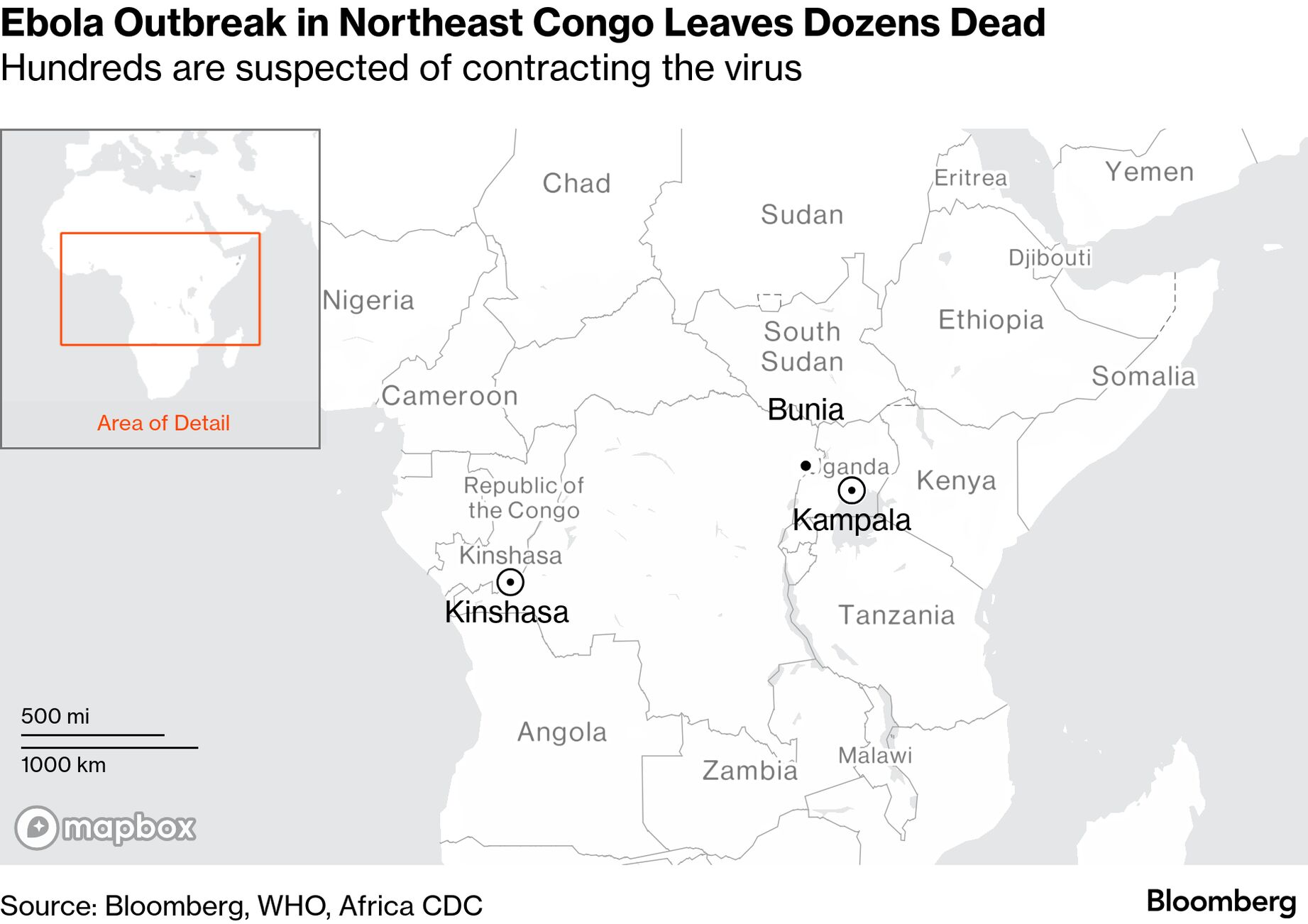
The Trump administration’s withdrawal of health funding that once helped support outbreak detection across parts of Africa represents the kind of cuts that contribute to the erosion of disease-surveillance systems. Health officials say the Bundibugyo strain of Ebola may have circulated undetected for six to eight weeks in northeastern Congo before lab testing confirmed the virus. By the time Ebola was identified, suspected cases and unexplained deaths had already spread across multiple health zones near the Ugandan border. The delayed detection is especially concerning because the Bundibugyo ebolavirus remains poorly understood compared with the Zaire strain responsible for the devastating West African epidemic a decade ago. There are no approved vaccines or antibody therapies specifically targeting it, raising fears the silent transmission allowed infections to spread before surveillance systems recognized the threat. Such systems built with international aid often serve multiple purposes: tracking outbreaks, transporting laboratory samples and monitoring unexplained illnesses in remote regions. When funding disappears, those networks weaken quickly. The spread may now illustrate what happens when fragile surveillance systems face simultaneous pressure from conflict, donor fatigue and shrinking international aid from governments focused elsewhere. — Janice Kew 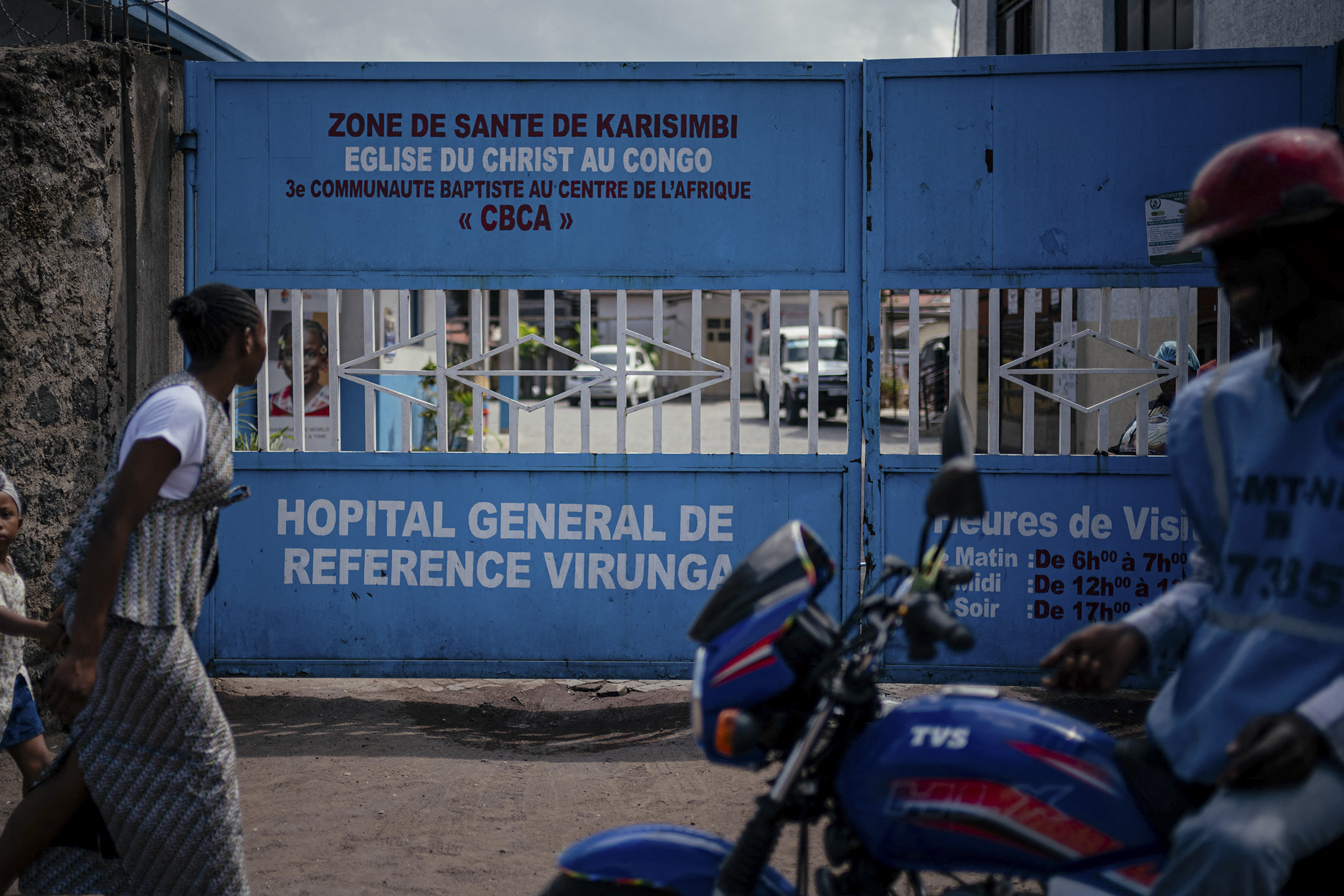
The entrance of CBCA Virunga General Hospital, in Goma, eastern Congo, yesterday.
Photographer: Jospin Mwisha/AFP/Getty Images
Global Must ReadsThe US and Iran remained far apart on a deal to end weeks of war and reopen the Strait of Hormuz, with US President Donald Trump expressing renewed frustration with Tehran as a selloff in global bonds heightened concern about the conflict’s economic fallout. Iran’s semi-official Fars news agency said the US had set five main conditions for a peace deal, including transferring uranium tied to Iran’s nuclear program to the US, providing no reparations to Tehran and freeing up less than a quarter of Iran’s frozen assets. China has agreed to buy at least $17 billion of agricultural products annually through 2028 and establish boards of trade and investment, the US said, following last week’s summit between Trump and Chinese President Xi Jinping. Meanwhile, President Lai Ching-te invoked Taiwan’s status as a global supplier of advanced tech like semiconductors as questions mount over US support for the democracy. 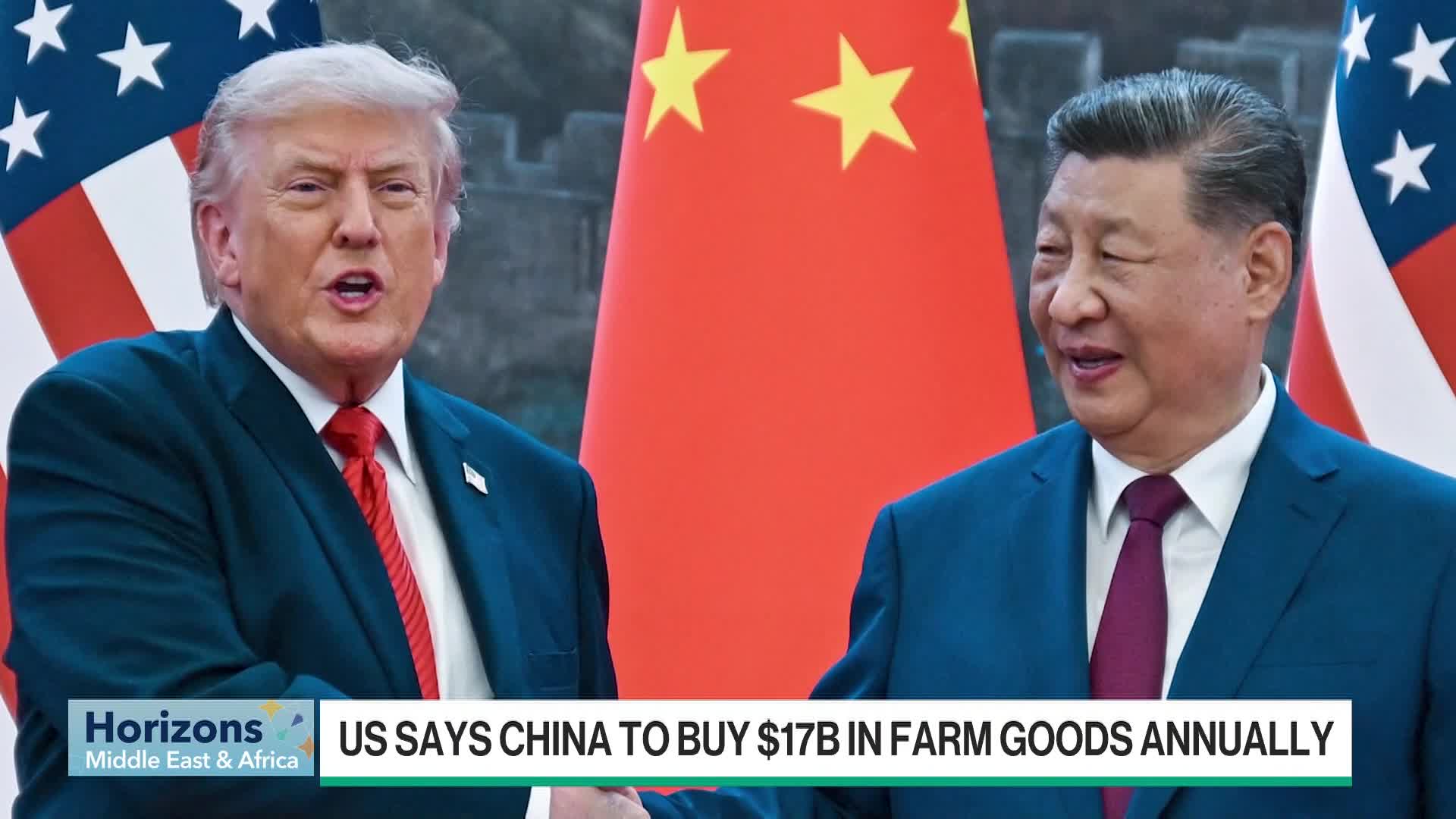 
Bloomberg’s Stephen Engle reports on China’s agreement with the US.
With Keir Starmer’s leadership in crisis, the contested issue of whether Britain should reconsider its estranged relations with the European Union has surfaced among Labour Party hopefuls angling to replace him as UK prime minister. Wes Streeting, who resigned as health secretary last week, argued in favor of rejoining the bloc in a speech on Saturday, while Andy Burnham, the mayor of Greater Manchester, also said that there was a case for EU membership. The lopsided foundations of world growth will command the attention of Group of Seven finance ministers meeting today in Paris, as economists see the seeds of a more systemic crisis without a concerted effort to re-balance financial and trade flows. German Finance Minister Lars Klingbeil urged partners to deepen cooperation on raw materials, energy and supply chains to reduce vulnerability in the face of challenges such as the Iran war. Latin American nations are expressing growing concerns over shortages of crucial goods in Bolivia as unrest grips the country and poses a challenge to President Rodrigo Paz. Bolivia’s government on Saturday deployed police and military officers against road blocks in place for two weeks, leading to clashes and arrests. Demonstrators are calling for salary hikes and measures to strengthen the economy, while the national labor union is seeking Paz’s ouster. 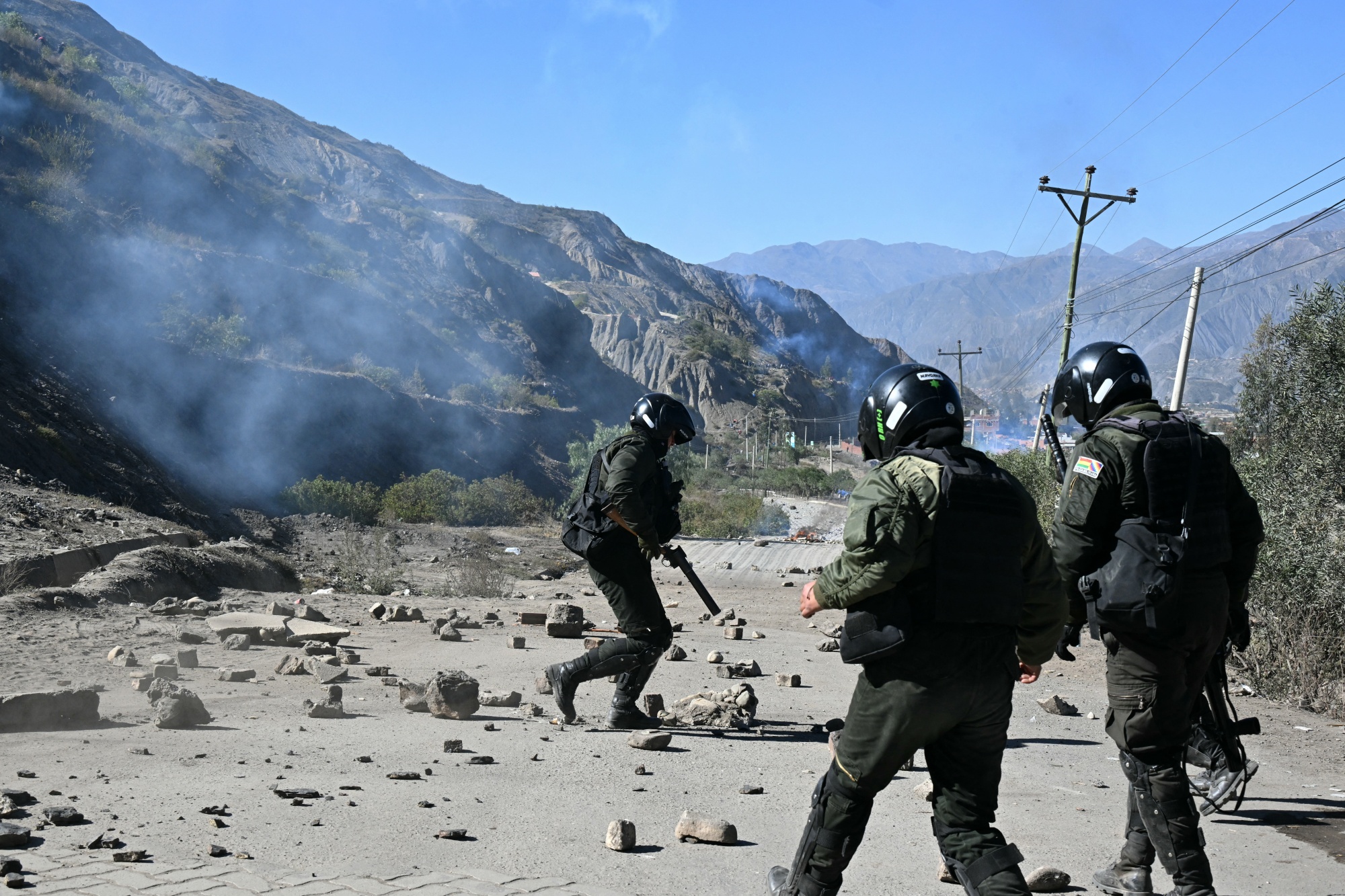
Riot police remove rocks from a road in Lipari, Bolivia, on Saturday.
Photographer: Aizar Raldes/AFP/Getty Images
Russia’s capital and the surrounding Moscow region came under record drone attacks, leaving at least three people killed and over a dozen wounded. Trump’s envoy to Greenland, Jeff Landry, arrived on the Arctic island that’s become a geopolitical flashpoint between Europe and the US, telling local media he’s there “to make friends.” Japanese Prime Minister Sanae Takaichi called on the finance ministry to compile an extra budget in response to rising commodity prices driven by the Iran war, backtracking after repeatedly insisting such a measure wasn’t necessary. The impeachment saga against Philippine Vice President Sara Duterte moves to the trial phase today, following a tumultuous week that started with a Senate power grab and descended into a terrifying night of gunfire. Sign up for the Washington Edition newsletter for news from the US capital and watch Balance of Power at 1 and 5 p.m. ET weekdays on Bloomberg Television. Chart of the Day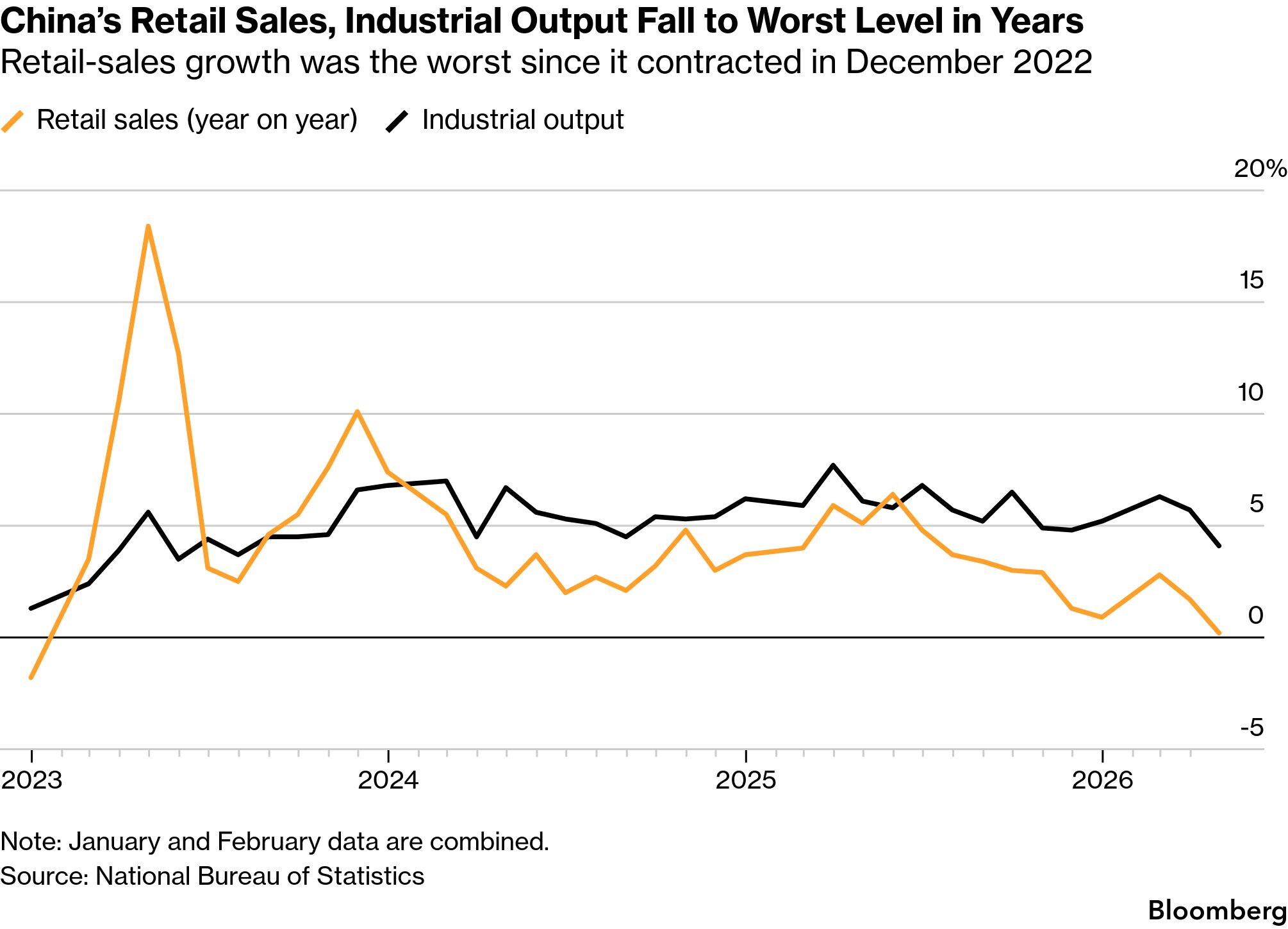
China’s economic growth slowed across the board in April with investment resuming declines, calling into question the government’s reluctance to add stimulus as a global energy crisis hits factories and consumers across the world. Data today painted a picture of an economy where booming exports no longer offset deteriorating consumption at home. And FinallyEver since US Special Forces captured Venezuelan President Nicolás Maduro on Jan. 3, Washington has been warning that Cuba will be next. A US-imposed economic blockade has kept fuel from reaching the island and last week, Cuba’s energy minister said the country has completely run out of the diesel and fuel oil it needs to keep its power plants running. Yet Cuba’s leaders remain defiant. Our explainer looks at whether the government can survive. 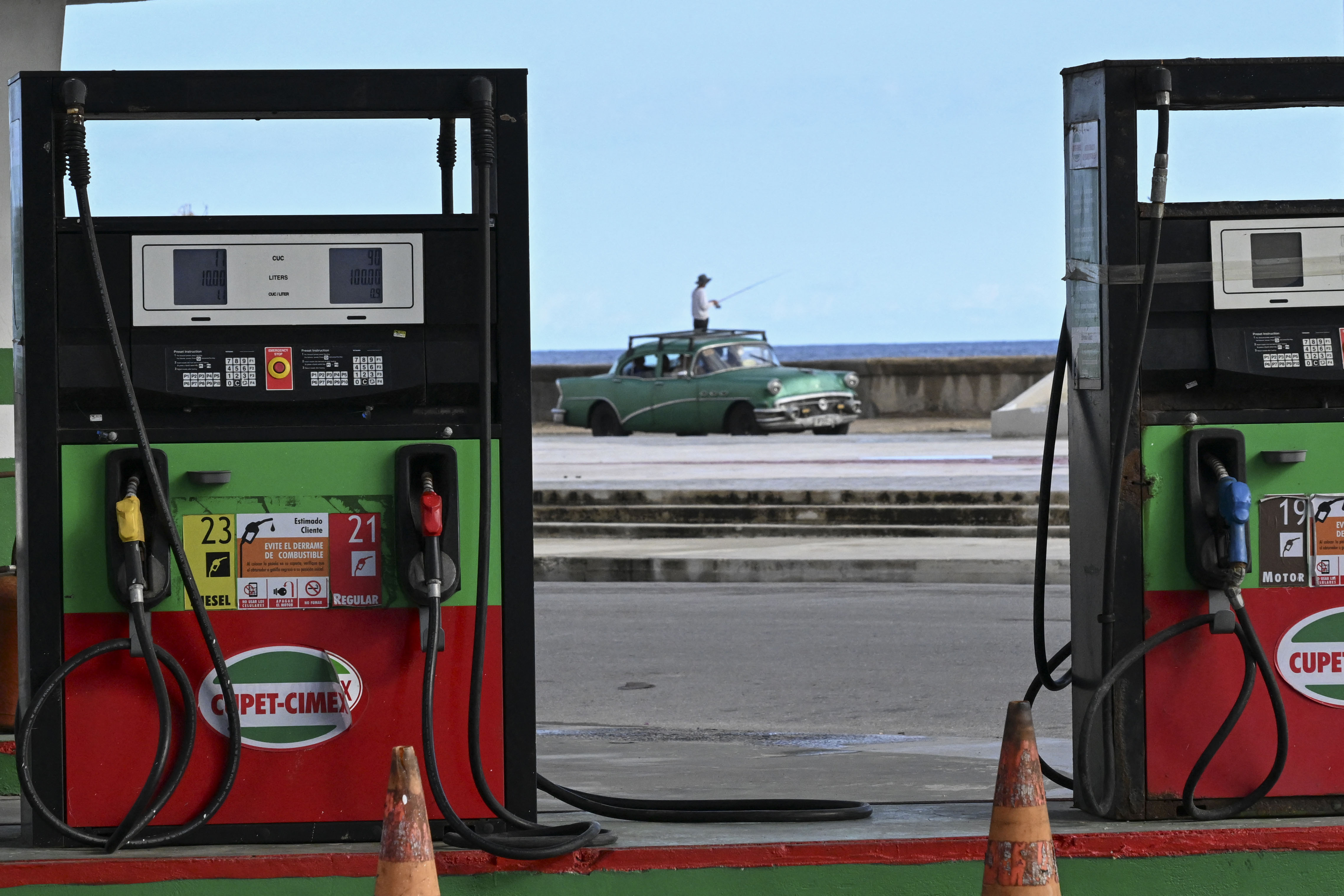
An empty fuel station in Havana on Friday.
Photographer: Yamil Lage/AFP/Getty Images
Apologies, we inadvertedly left the quiz question off Friday’s edition, so are bringing it to you today. Pop Quiz (no cheating!). What is the name of the cat that lives in 10 Downing Street and has served six UK prime ministers? Send your answers to balancepower@bloomberg.net. More from Bloomberg
We’re improving your newsletter experience and we’d love your feedback. If something looks off, help us by reporting it here. Follow Us
You received this message because you are subscribed to Bloomberg’s Balance of Power newsletter. If a friend forwarded you this message, sign up here to get it in your inbox.
|
Monday, May 18, 2026
The thin line





Subscribe to:
Post Comments (Atom)
The Market's Compass US Index and Sector ETF Study
Week #595 / Is a Correction in The Cards? ͏ ͏ ͏ ͏ ͏ ͏ ͏ ͏ ͏ ͏ ͏ ͏ ͏ ͏...

-
Bloomberg Evening Briefing Americas View in browser Who's paying for Donald Trum...
-
PLUS: Dogecoin scores first official ETP ...


No comments:
Post a Comment