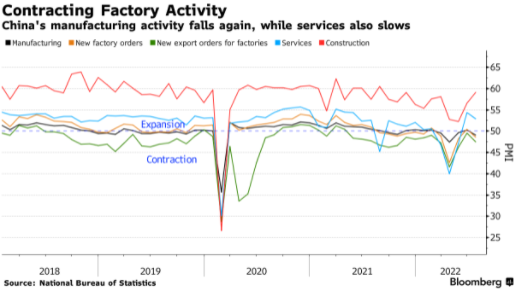
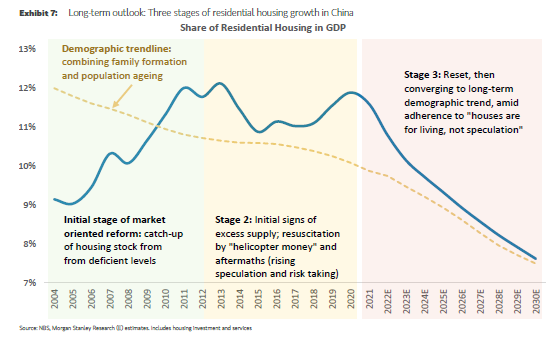
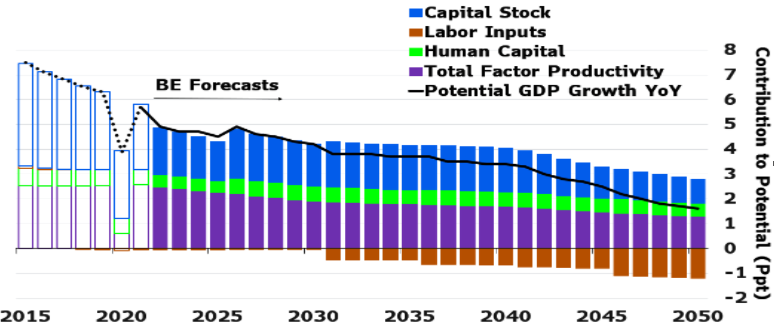
| — Hello. Today we look at how Beijing's efforts to fix parts of the economy are creating problems in other areas, inflation's effect on football stickers and declining US life expectancy. The Law of Unintended Consequences is wrecking havoc on China. And by the day, economists are turning more bearish as a result. Raymond Yeung at ANZ Bank become the latest to slash forecasts for growth this year, down to 3% from his earlier 4% call, after new data showed factories continue to contract. And it seems at almost every turn, a well-intentioned policy is only making the current economic woes even worse. The desire to avoid a massive death toll stemming from an unrestricted wave of Covid 19 is crimping activity and shaking confidence. Yeung said a likely tightening of the Covid-Zero strategy ahead of the Communist Party Congress in mid-October is among reasons for his outlook cut. The desire to reduce speculation in the property market and rein in credit risks has whacked that sector. In a new report, Morgan Stanley economists led by Chetan Ahya say the housing market is at a "critical juncture." Their base case is that authorities will roll out policy support that limits the housing fallout. But doubts around that have led them to stress test a worst-case scenario where "negative feedback loops" see housing and the macro economy drag each other lower. Meantime, the push to get banks to do their bit to help revive the economy is damaging their bottom lines, with the biggest lenders reporting slowing earnings growth and eroding margins. As reported by Bloomberg News last week, pressure on them to lend is leading to some unusual practices that end up doing very little to help the real economy. It's been clear for some time now that the former One Child Policy had created a demographic cliff. But the fallout is occurring sooner than thought. With fewer births, Bloomberg Economics's Eric Zhu says the population will start to contract in 2022, five years earlier than previously projected, weighing on growth prospects. Then there's the desire to rein in the power of tech giants — hardly a uniquely Chinese goal. That has ended up worsening employment prospects for the youngest and brightest as sector leaders from Alibaba to Tencent Holdings and Xiaomi this year began firing people by the thousands. A record of almost 11 million new graduates are expected to flood the labor market this year, Bloomberg reports. And with the tech sector no longer offering them as lucrative and exciting a career path as it once did, many will join the jobless ranks in an economy where one in five people between the ages of 16 and 24 are already out of work. China's policy makers knew there'd be a price to pay for de-risking the economy and boosting regulation and have argued that the cost of allowing Covid to spread through the community isn't acceptable. Day by day, economists are waking up to that too and cutting forecasts as a result. —Malcolm Scott Collecting FIFA World Cup sticker albums — a longtime hobby of football fans — is expected to be costlier than ever this year due to global inflation. Ahead of the Qatar event in November, Italian manufacturer Panini SpA bumped up prices for packets containing five stickers by 12.5% in the UK, bringing the cost to fill the 670-sticker album to about £870 ($1,014). During the 2018 World Cup, a mathematician at Cardiff University in the UK calculated a fan would need to buy 4,832 stickers on average to complete the album. Some deft swapping might bring down that number, but even still, collectors the world over won't be spared inflation's sting.  | - Coming up | ADP Research Institute's national employment report — a staple of US labor data ahead of the government's payrolls release — will return on Wednesday with updated methodology and fresh wage data.
- Growth recession | Forget about a soft landing — Federal Reserve Chair Jerome Powell is now aiming for something much more painful for the economy to put an end to elevated inflation. Separately, Fed officials stressed their commitment to defeating inflation.
- European bills | Prices in British shops rose at the highest rate since at least 2005 this month as Britons battled soaring costs on everything from gasoline to crisps. Meantime, euro-area inflation accelerated to another all-time high.
- Single and child free | A growing cohort of US women are putting off motherhood or forgoing it entirely. As a result of the decision not to parent, many are making career advances over prior generations to enter a new frontier of wealth.
- China fills Russia void | Chinese cars, televisions and smartphones are replacing German and South Korean imports in Russia as its market is reshaped by sanctions and an exodus of brands.
- Turkish growth | One of the world's worst inflation crises has yet to derail Turkey's economy, as an upswing in consumer spending and tourism propels growth to among the fastest in the Group of 20.
- Israel hikes | The Bank of Israel is likely to raise rates further and keep them high until inflation returns target, its governor signaled.
- Argentina jobs | The government etched out a job market program aimed at addressing informal labor as it seeks to lower government spending.
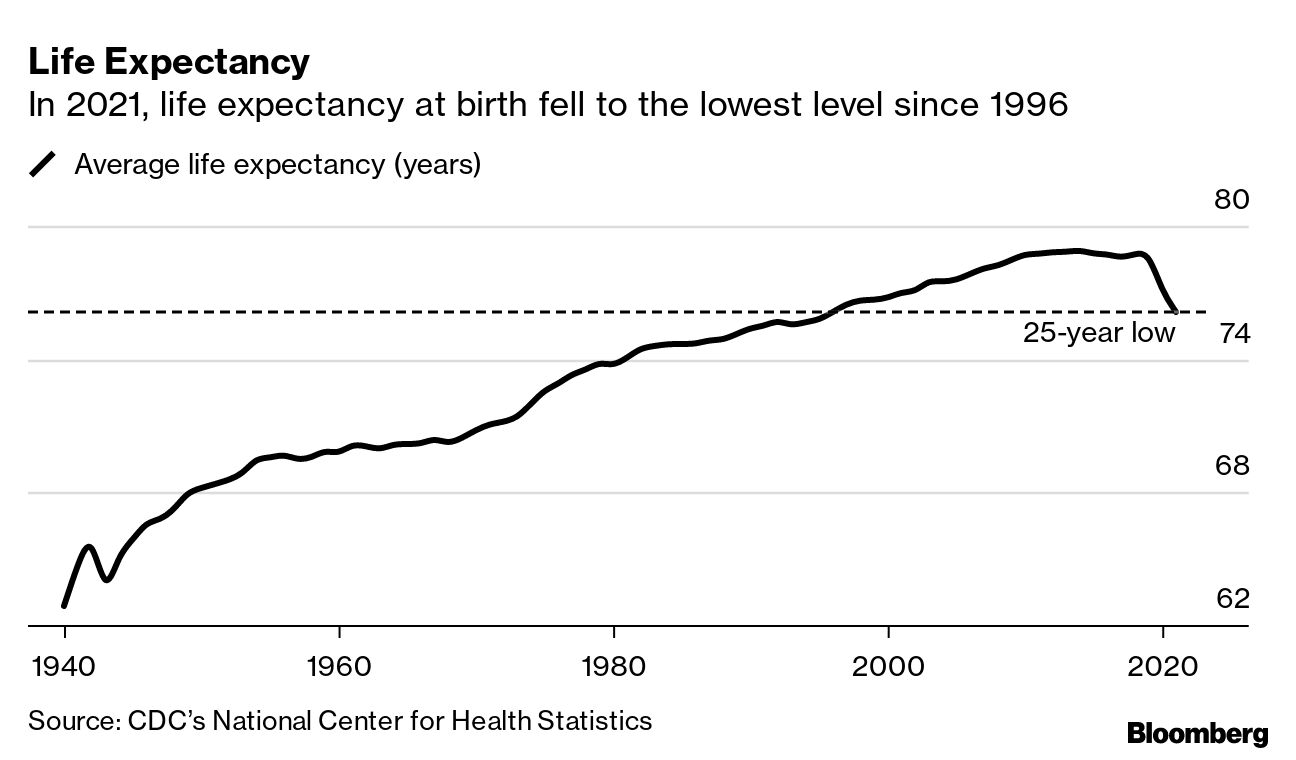
US life expectancy fell by almost a year in 2021 after plunging by 1.8 years in 2020, the biggest two-year decline in almost a century as the Covid-19 pandemic ravaged the country. Life expectancy at birth decreased by 0.9 year to 76.1 years in 2021, the lowest level since 1996, according to provisional data from the Centers for Disease Control and Prevention. It was the first two-year drop since the early 1960s and the biggest since 1921-1923. "Covid-19 deaths contributed to nearly three-fourths or 74% of the decline from 2019 to 2020 and 50% of the decline from 2020 to 2021," the report said.
An eventful eight months so far: Read more reactions on Twitter. | 








No comments:
Post a Comment