| Read in browser | ||||||||||||||


This is Bloomberg Opinion Today, a dismal prognosis of Bloomberg Opinion’s opinions. On Sundays, we look at the major themes of the week past and how they will define the week ahead. Sign up for the daily newsletter here. Subscribe to Bloomberg.com for unlimited access to all our coverage. Lost in the Supermarket“Affordability” has always struck me as one of those vague measurements, like Fahrvergnügen or Kelvin, that are more about ephemeral emotion than solid fact.[1] Consider this: They recently tore down a charmless but useful building on my block that housed a dry cleaner, a Mexican restaurant run by Chinese immigrants and, for some inexplicable reason, a bubble on the roof where you could pay a fortune for tennis lessons. They replaced it with an equally charmless building containing an apartment complex that somehow “redefines sustainable living” and a Lidl, an “affordable” supermarket that had a GRAND OPENING last week (there was even a DJ!). For a German grocer, it’s badly lacking in Fahrvergnügen. I want my tennis bubble back. Among the officially affordable items on Lidl’s shelves, I found a Family Size package of Sondey’s Original Maria cookies (product of Spain!) for $4.49, an electric dartboard for $14.99 and a carton of eggs for either $1.86 (extra large) or $2.46 (large). Why extra large cost less than large will forever remain a mystery to me, because life is simply too short to go Googling such things. But I do know that $1.86 and $2.46 are both substantially less than $7, which was the main reason I was supposed to vote first against Joe Biden and then against Kamala Harris two years ago. Because affordability. (And I don’t even like eggs all that much.) What goes around the checkout line comes around. “Complaining about subpar public relations is the last refuge of the political loser. It’s a bipartisan affliction that surfaces in every American election, including this year’s midterm campaign. President Donald Trump is patient zero this time,” writes David M. Drucker. “The president’s overriding desire to identify a culprit other than his agenda, and his leadership, for his 38.4% job approval rating is understandable. The same goes for Trump’s attempt to rationalize the Democratic Party’s 8.3% lead on the generic ballot gauging which party voters would prefer to control Congress. The alternative would be reckoning with voters’ conclusion that he is a failed president on issues — like affordability — that matter most to them.” 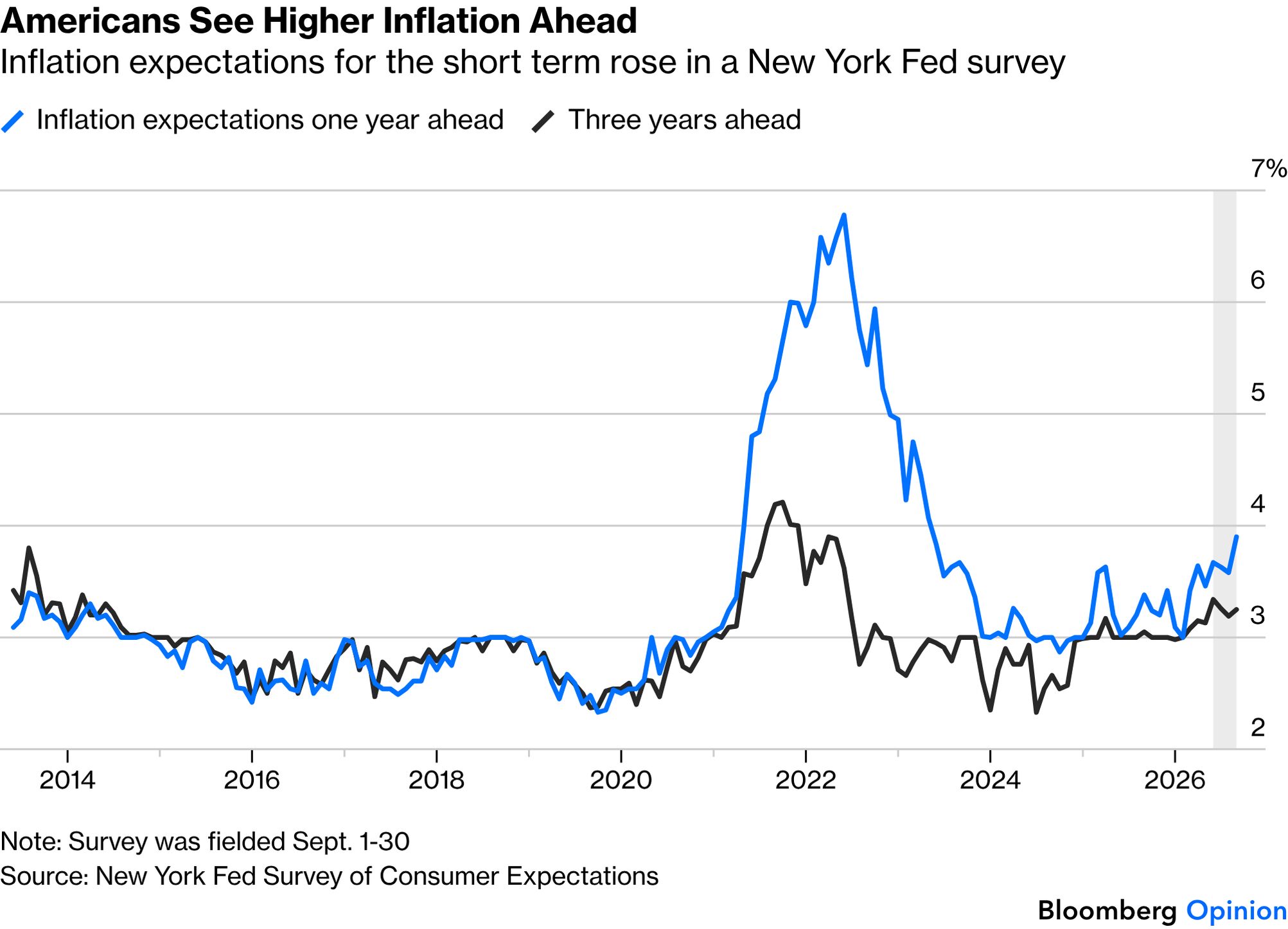
“Barely a month to the US midterms, and affordability is as much of a political flashpoint as ever. There are plenty of justifications for this: Diesel and gasoline prices are up by at least 50% this year and the 30-year mortgage rate has surged to 7.38%, the highest since President Donald Trump returned to office,” adds Richard Abbey. “Consumers seem convinced inflation will get worse before it gets better. The New York Fed’s latest survey of one-year inflation expectations raced to 3.9%, a three-year high.” But remember, folks, affordability is all about how you feel, not what you do: “Actual consumer spending activity tells a different story. The most recent retail sales data jumped the most since March and remains higher than at the start of the year.” 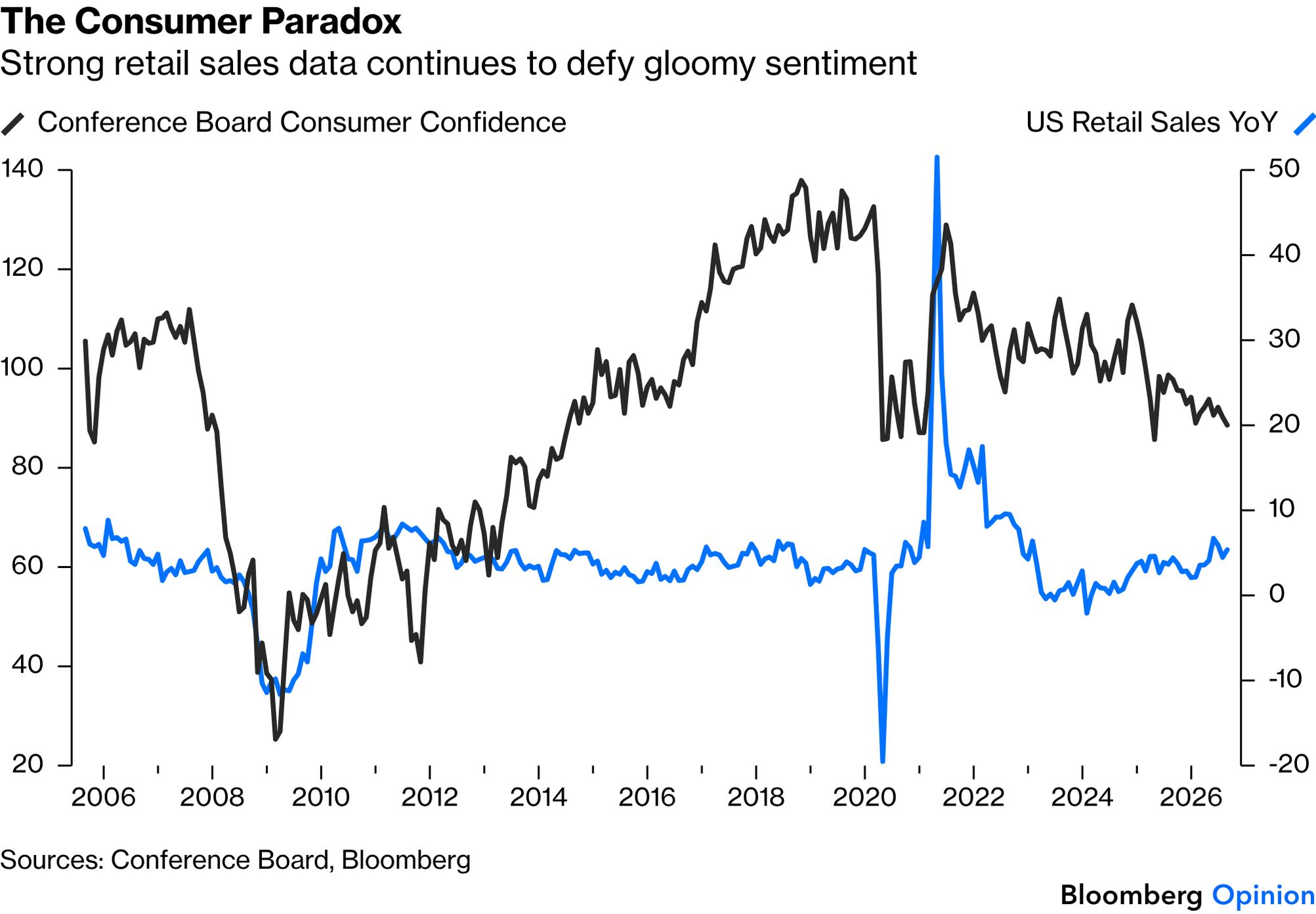
Politics, of course, is all about feeling instead of reality. So much so, Nia-Malika Henderson informs us, that Adam Hamilton could be the Kansas’ first Democratic senator in 94 years. “In Hamilton, who pastors a Methodist church with about 25,000 members, Democrats have a faith-forward centrist who could flip a Senate seat and also provide a new framework for how the party, which struggles with messaging, talks about policies, people and values,” she writes. The Republican incumbent, Roger Marshall, is an obstetrician-gynecologist, which you’d think might be a selling point. Except that, Nia-Malika informs us, “the latest KFF Health Tracking Poll finds that health care costs are the top affordability issue for voters, tied with concerns over the price of gas.” (It also doesn’t help that he has reportedly sued more than 700 patients over medical debt, resulting in 81 arrests. Nobody can afford that.) The prognosis is dismal all around. “The US economy is only holding up because of the boom in artificial intelligence and an aging population spending ever more on healthcare,” writes Jonathan Levin. “Although the former seems to garner all the attention these days, the latter is becoming a rising source of vulnerability. The risk is that unsustainable federal budget deficits will force a reckoning.” At least Trump can always point to a booming stock market, right? Jonathan isn’t so sure about that. “Although the S&P 500 Index closed at an all-time high [last] week, it did so on the strength of a handful of companies focused on the booming artificial intelligence sector, papering over signs of growing vulnerabilities in the economy and financial markets,” he writes in a separate column. “With the midterm elections less than a month away, what Trump sees as an asset for Republicans may in fact be a liability. Most everyone knows this is an economy reeling from inflation that remains stubbornly high and unchecked fiscal budget deficits. But less well known broadly — though felt individually — is that average hourly earnings adjusted for inflation have been losing ground for five months.” 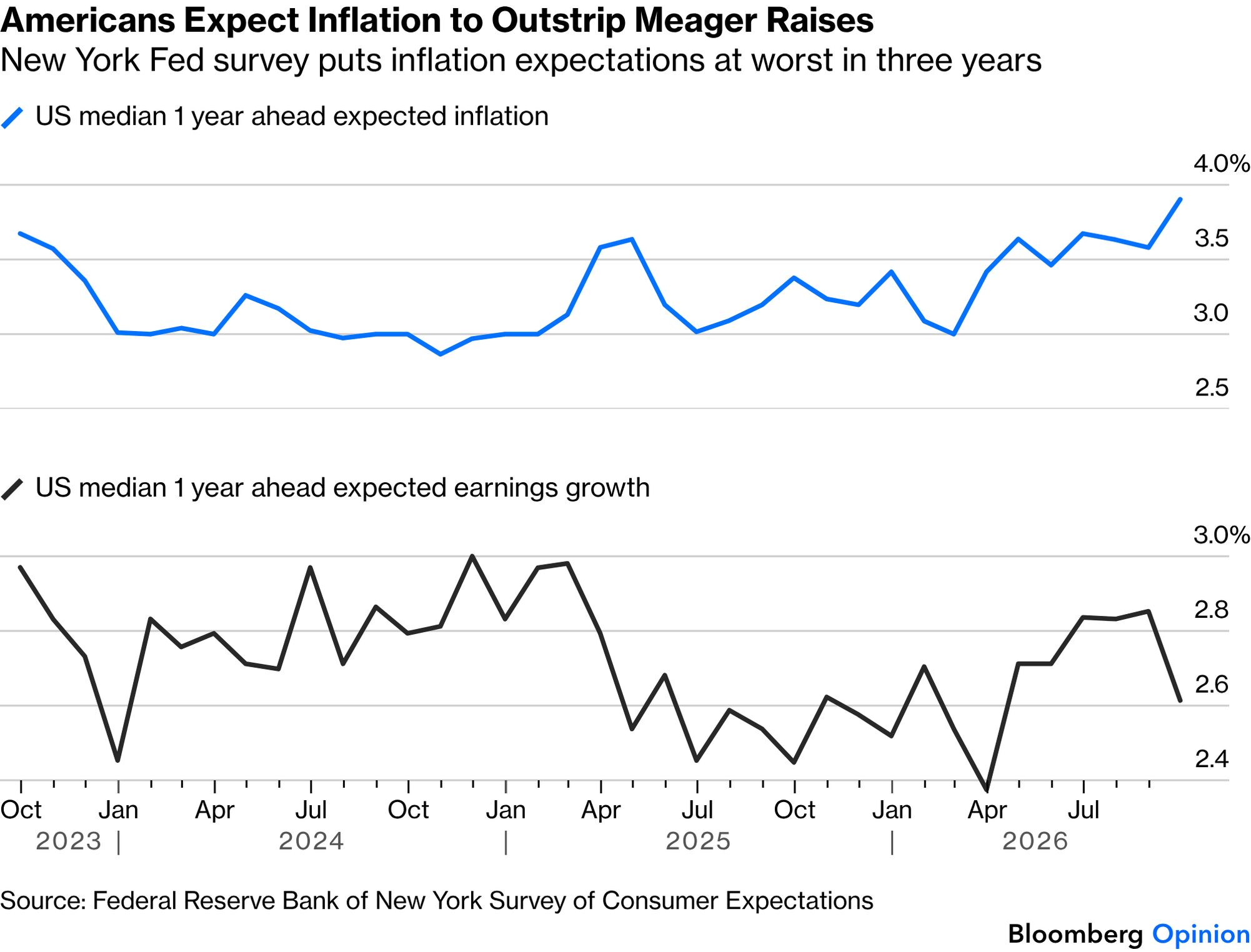
But, but, but — hasn’t the Trump administration churned out one million new jobs? And, as Vice President J.D. Vance insists, 100% to US citizens (natch)? Well, kinda. “The 1 million jobs claim is spot on, albeit with qualifications, but represents much slower employment growth than during Joe Biden’s presidency or the pre-pandemic years of President Donald Trump’s first term,” Justin Fox informs us. “The overwhelming majority of the added jobs have gone to women, not exactly Trump’s base. And while there are no reliable statistics to back up or disprove Vance’s claim of 100% of jobs going to US citizens, the reliable statistics that do exist indicate that foreign-born workers have fared better during Trump’s second term than the native born.” 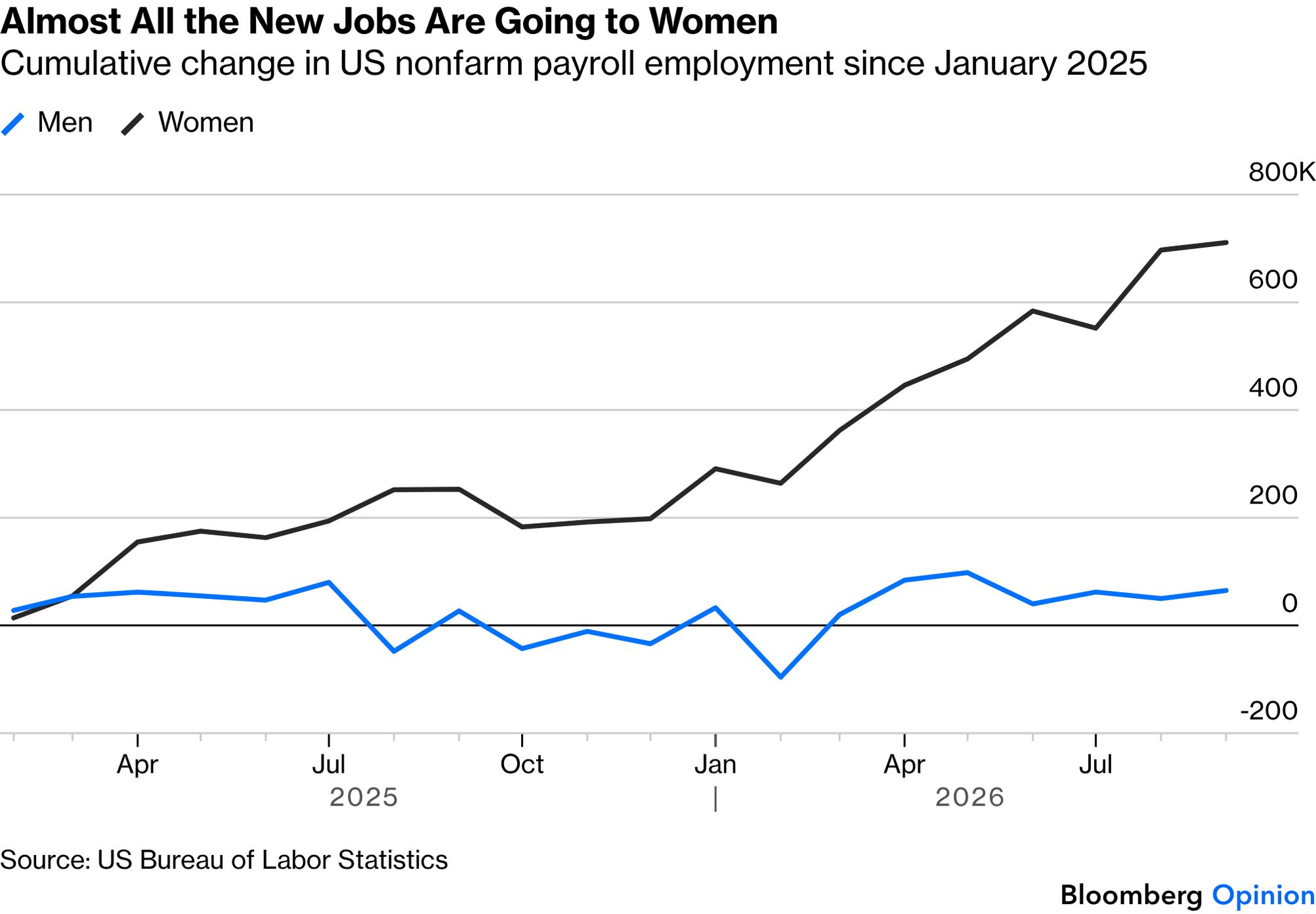
In a separate column, Justin finally asks a question that isn’t about how we feel, but about how we really are. “How’s the US economy doing in President Donald Trump’s second term? Going by the topline economic statistics, not too bad,” he writes. “Second-quarter gross domestic product was revised higher last week, to a 2.2% annualized rate from a previously reported 1.5%. At 4.2%, the jobless rate is consistent with an economy considered to be at full employment.” 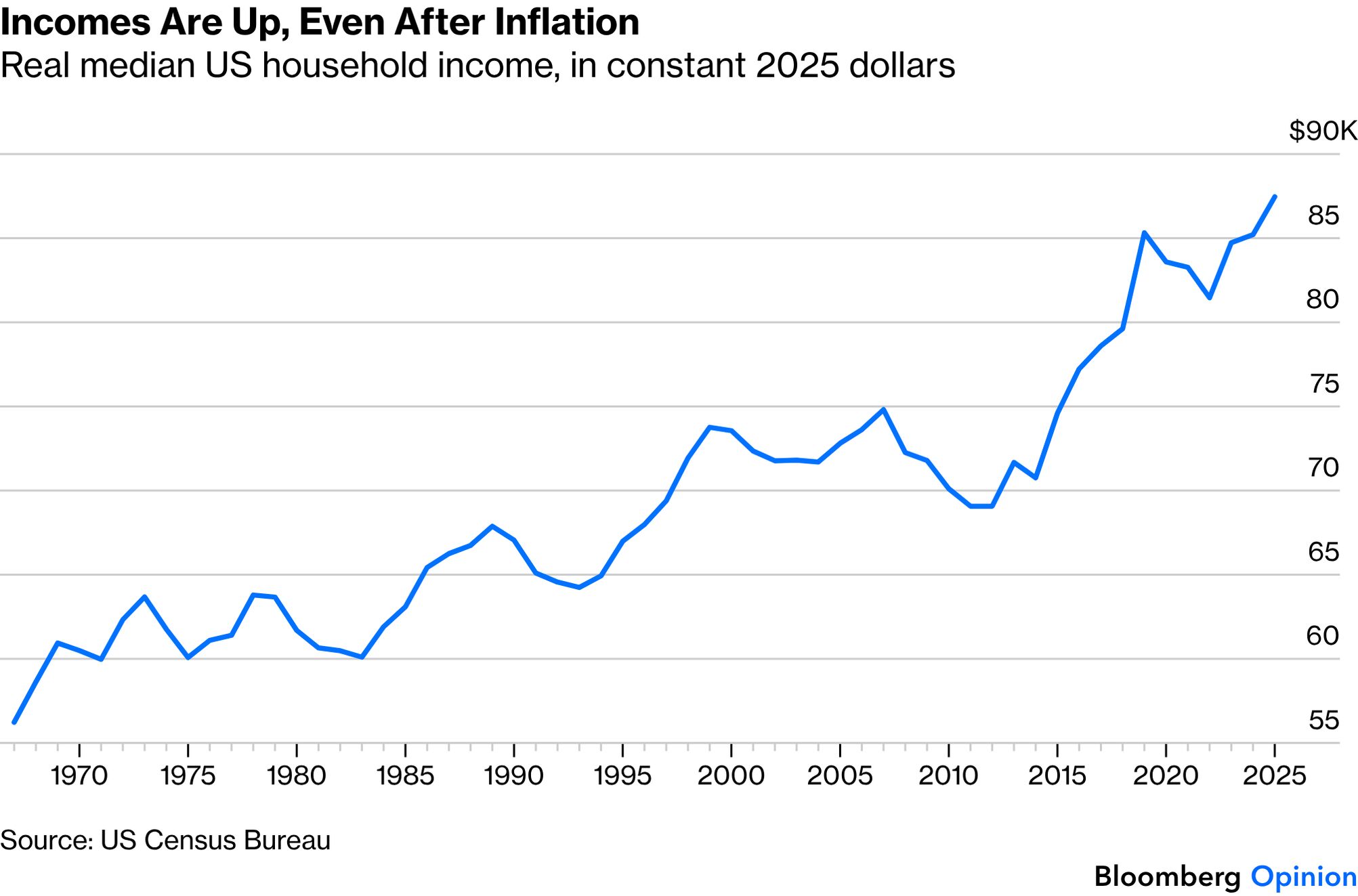
Why, then, does almost every poll find massive dissatisfaction with the economy and Trump’s economic performance?[2] “It could be a rational judgment that Trump’s policies have made certain matters somewhat worse, inflation and interest rates especially,” Justin adds. “It could also just be that, closing in on a decade after he was first elected president, most Americans have tired of Donald Trump and his schtick and are feeling grumpy about everything associated with him.” It’s almost like we can no longer afford the man. Bonus Low Budget Reading:
What’s the World Got in Store?
The Price of LoveGrumpiness about Trump isn’t the only sentiment being spurred by the (perceived) state of the economy. Many Americans also want some reality-based measures. Some Californians want to hit the mega-rich with a 5% wealth tax, but not, it seems, enough of them: “A few recent polls have found that voters across California, where registered Democrats outnumber Republicans roughly 2-to-1, are far from sold on taxing the rich in such a novel way,” writes Erika D. Smith. “Fewer than half said they would support the measure, known as Proposition 40 — and, according to UC Berkeley’s pollsters, even that tepid support is slipping.” Don’t worry, if the Golden State’s contravention of capitalism founders, there are plenty more bad ideas to take its place. “A majority of Americans in both parties support price controls on childcare, prescription drugs and credit card interest costs, according to a recent Wall Street Journal survey. Other polls have found that measures to cap rent increases are popular on both sides of the political divide,” writes Allison Schrager. “These ideas violate basic economics and ignore the long history of price control producing shortages and even higher prices once the ceiling is lifted. Yet, they are compelling because the negative consequences aren’t apparent at the outset.” 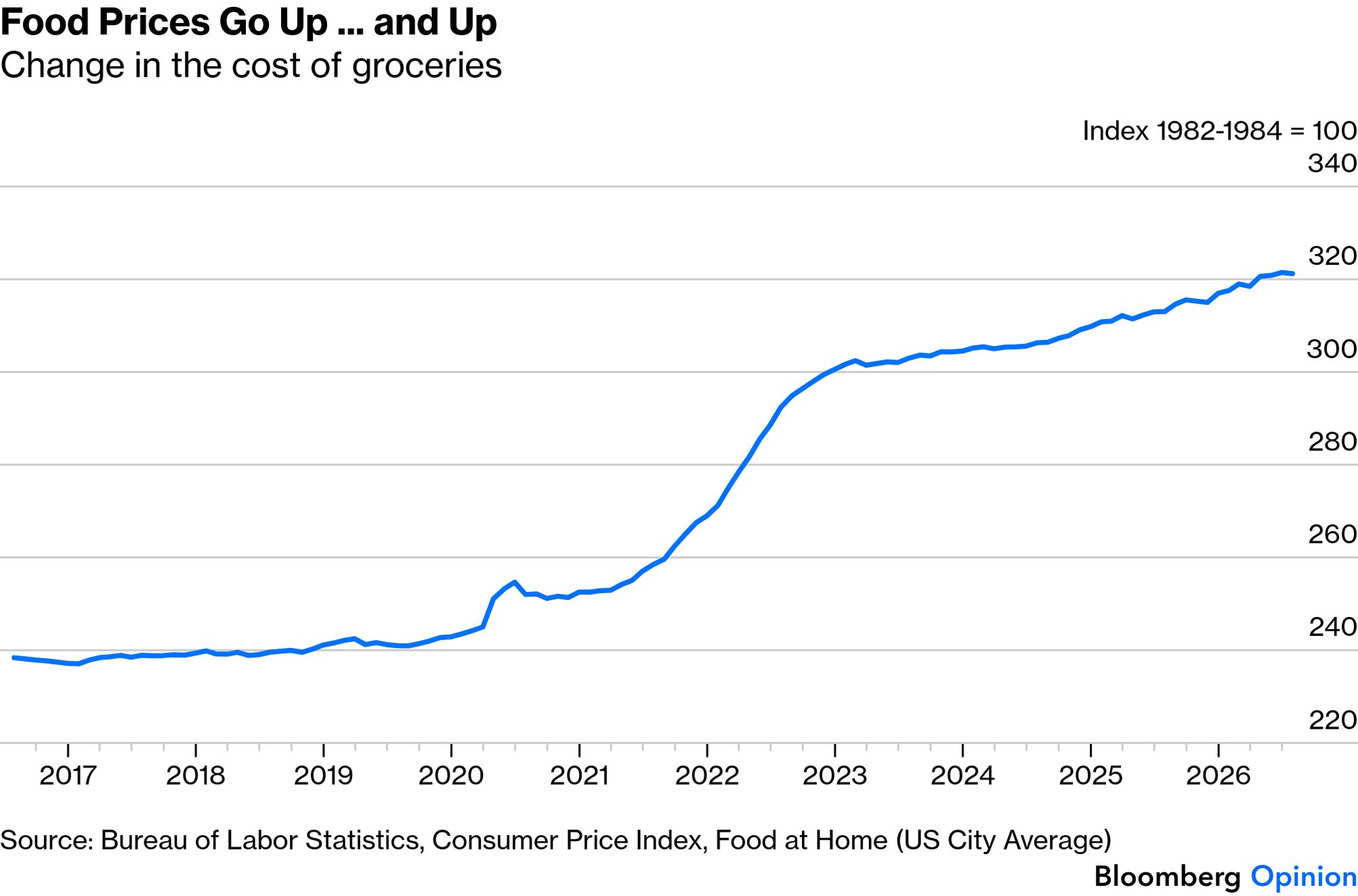
“Inflation, for example, is a big risk to consumers; it leaves people uncertain about how much their income will buy every time they go to the grocery store. Price controls seem to assure stability, which sounds great,” Allison adds. “Even Paul Samuelson, the Nobel laureate and father of modern economics, thought they were a good idea. The problem is safety means less upside; in this case, a paucity of goods available when you need them. You may know the price at the market, but you don’t know if you will find empty grocery shelves.” That’s enough to make me seek the cold comfort of my new Lidl, with its Maria cookies, electric dartboards and, especially, its two sizes of eggs. Heck, I’d even pay $7 for them. Note: Please send 49-cent butter croissants and feedback to Tobin Harshaw at tharshaw@bloomberg.net. Sign up here and find us on Bluesky, TikTok, Instagram, LinkedIn and Threads. We’re improving your newsletter experience and we’d love your feedback. If something looks off, help us fine-tune your experience by reporting it here. [1] Yes, I am aware that Kelvin is a real thing. But I don't know what sort of real thing it is, and I bet you don't either. Do you? No Googling! Follow Us
You received this message because you are subscribed to Bloomberg’s Opinion Today newsletter. If a friend forwarded you this message, sign up here to get it in your inbox.
|
Sunday, October 11, 2026
You want an election bellwether? Check aisle 9





Subscribe to:
Post Comments (Atom)
Please confirm your payment/affiliate account (6067 daily)
figured i'd stop sitting on it ...
-
Revolutionary Stem Cell & PRP —Start Your Journey Today ...
-
You’ve shown interest in Regenerative Medicine ...


No comments:
Post a Comment