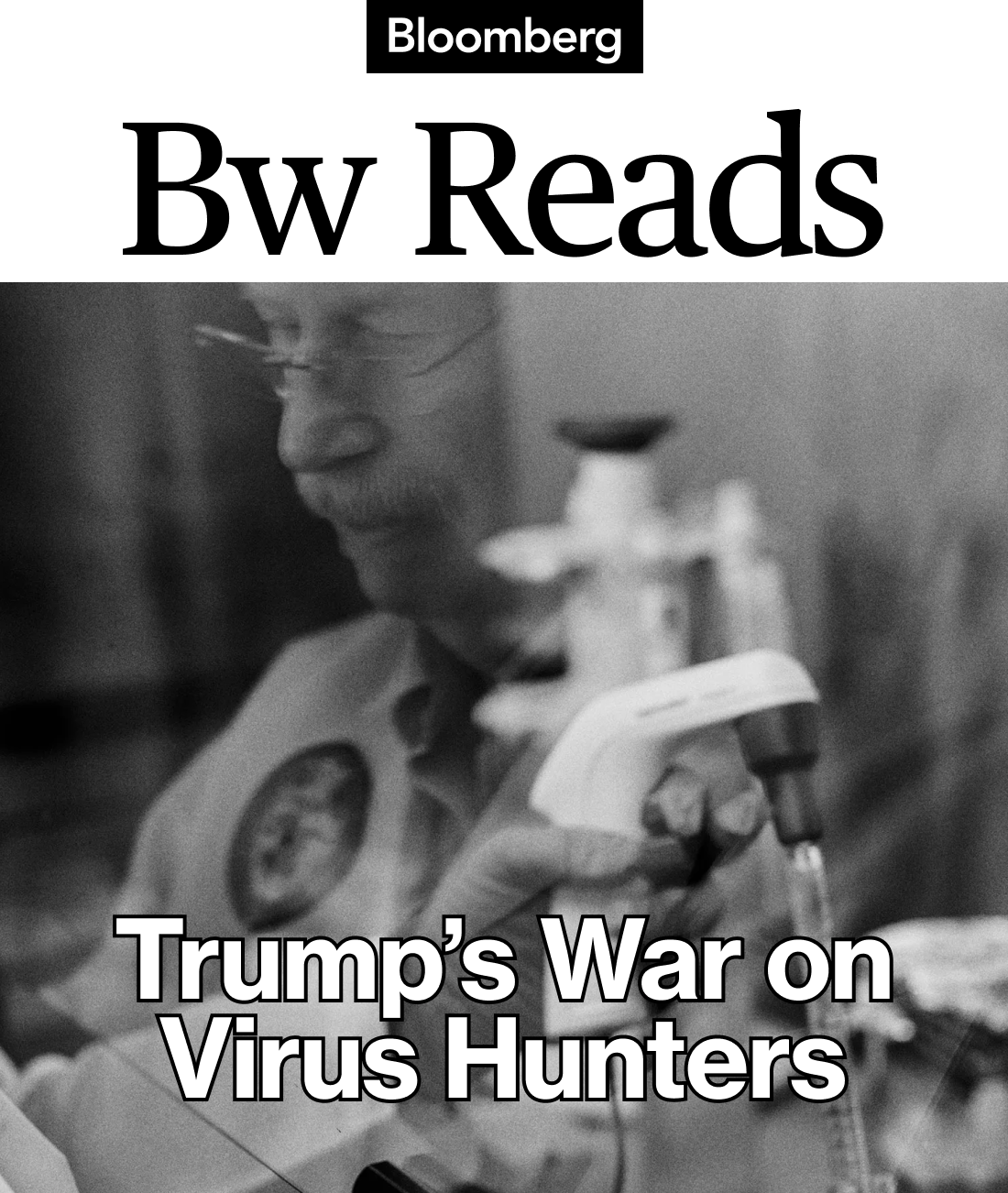
Welcome to Bw Reads, our weekend newsletter featuring one great magazine story from Bloomberg Businessweek. Today Jason Gale and Max Chafkin write about top US virologist Bob Garry. For five decades, he has chased viruses from AIDS to Ebola, helping build the nation’s pandemic defenses, yet the battle over the origins of Covid-19 is threatening to undo his legacy. You can find the whole story online (free) here. If you like what you see, tell your friends! Sign up here. Subscribe to Bloomberg.com for unlimited access to all our coverage. In late January 2020, Bob Garry flew to Washington, DC, for a regular meeting at the National Institutes of Health. A professor at the Tulane School of Medicine in New Orleans, Garry is among the most celebrated American authorities on dangerous viruses. He helped identify the earliest known case of human immunodeficiency virus, or HIV, in the US and played a crucial role in containing the Ebola outbreak that started in West Africa in 2013. At the time of the NIH meeting, he was developing a treatment for Lassa fever, an Ebola-like hemorrhagic disease for which there are no approved drugs. Like everyone else in his field, Garry had been following reports about a new coronavirus in central China. Earlier that month, Jan. 11, the virus’s genetic sequence had been published in an online forum post, but it wasn’t until the NIH meetings that he’d really started paying attention. What he saw in the genetic code was concerning. The virus, now known as SARS-CoV-2, had a furin cleavage site, a distinctive spot on its spike protein that can be cut by an enzyme called furin, helping the virus enter human cells. Furin cleavage sites occur in many viruses, including Ebola, HIV and the highly pathogenic strain of avian influenza that devastated poultry flocks in the mid-2000s, prompting the culling of more than 140 million birds across Southeast Asia. Shortly after landing in New Orleans, he answered a call from Kristian Andersen, a frequent collaborator who’s an evolutionary biologist at Scripps Research Institute in Southern California. “This thing is just like high-path flu,” Garry recalls saying. “This could be bad.” He was right about that: The World Health Organization estimates that Covid-19, the disease caused by the virus, has been responsible for more than 22 million excess deaths. But what Garry didn’t anticipate was the way the pandemic — and the political reaction to it — would undermine trust in his work and, to some extent, the very idea of scientific research. That March, Andersen, Garry and three others published one of the first scientific analyses of how the new virus emerged, “The Proximal Origin of SARS-CoV-2,” in the journal Nature Medicine. They argued that it had most likely not been deliberately created in a laboratory, as some were already speculating, and that it probably traced to bats, which may have first infected another small mammal that passed it to humans. Their conclusions represented the nascent consensus among virologists, and they’re still broadly accepted. But the contention that the virus evolved naturally was being contradicted by President Donald Trump and a motley crew of contrarian academics, freethinking podcasters and conservative media outlets, who blamed the outbreak on virology researchers employed by the Chinese government. The lab-leak theory rested on what could feel, at first glance, like an improbable coincidence: The outbreak started not far from a biocontainment lab, run by the Wuhan Institute of Virology, where researchers worked with coronaviruses. Garry has pointed out that this proximity is less suspicious than it might seem, because most big Chinese cities have had coronavirus labs since the 2003 SARS outbreak. That there was no data to back up the lab-leak theory didn’t matter much. Garry and Andersen went on to be investigated by congressional subcommittees, with their emails and chat records subpoenaed and spun up into damning-sounding articles by outlets such as the Free Press. Those messages revealed that, while writing the paper in February 2020, they’d expressed openness to the possibility of a leak. To Garry the shift proved nothing more than their intellectual honesty: He’d genuinely considered the lab-leak theory, scrutinized the genetic sequence and found no evidence that the virus had been engineered. As more data emerged over the following months and years, he became only more confident it had spilled over naturally. But while a scientist might look at an evolution in opinion as the natural outcome of the scientific method, in which researchers form a hypothesis and then challenge it by running experiments or analyzing data, in some corners it became proof of a cover-up. The most careful critics accused Garry and his colleagues of having been blind to their own biases, causing them to hastily foreclose the possibility of a lab leak at a time when the government was eager to calm public anxiety. Less rigorous critics went much, much further, suggesting he and his colleagues reversed their findings because of pressure, or even bribes, from senior government officials, especially Anthony Fauci, who was then the head of the National Institute of Allergy and Infectious Diseases (NIAID); some even suggested Fauci himself had a hand in creating the virus. Others seized on Garry’s presence in West Africa during the mid-2010s Ebola outbreak to imply that the epidemic there might have been caused by a lab leak too. By the time Garry was subpoenaed to testify before the Senate, in 2024, the Covid lab-leak theory had gone mainstream. He was vilified, both at the hearing and afterward in the press. In June of that year, Senator Joshua Hawley, the Missouri Republican, harangued him for having “disgracefully participated in shameful propaganda.” Garry absorbed the insults, defended his conclusions and insisted he remained open to any new evidence that emerged. None has — and numerous studies have added evidence to back up Garry’s early assessment that the virus wasn’t deliberately created in a lab. This hasn’t mattered either. Trump’s second election, in November 2024, transformed the lab-leak theory into something like official government policy. A few months after the inauguration, the Trump administration placed a video that included Hawley’s verbal beatdown of Garry on an official White House website. Around the same time, the administration cut grants to an NIH network designed to identify emerging pathogens before they cause outbreaks, on grounds that it was “unsafe for Americans.” Garry was a key member of the network, and it represented his largest source of funding. 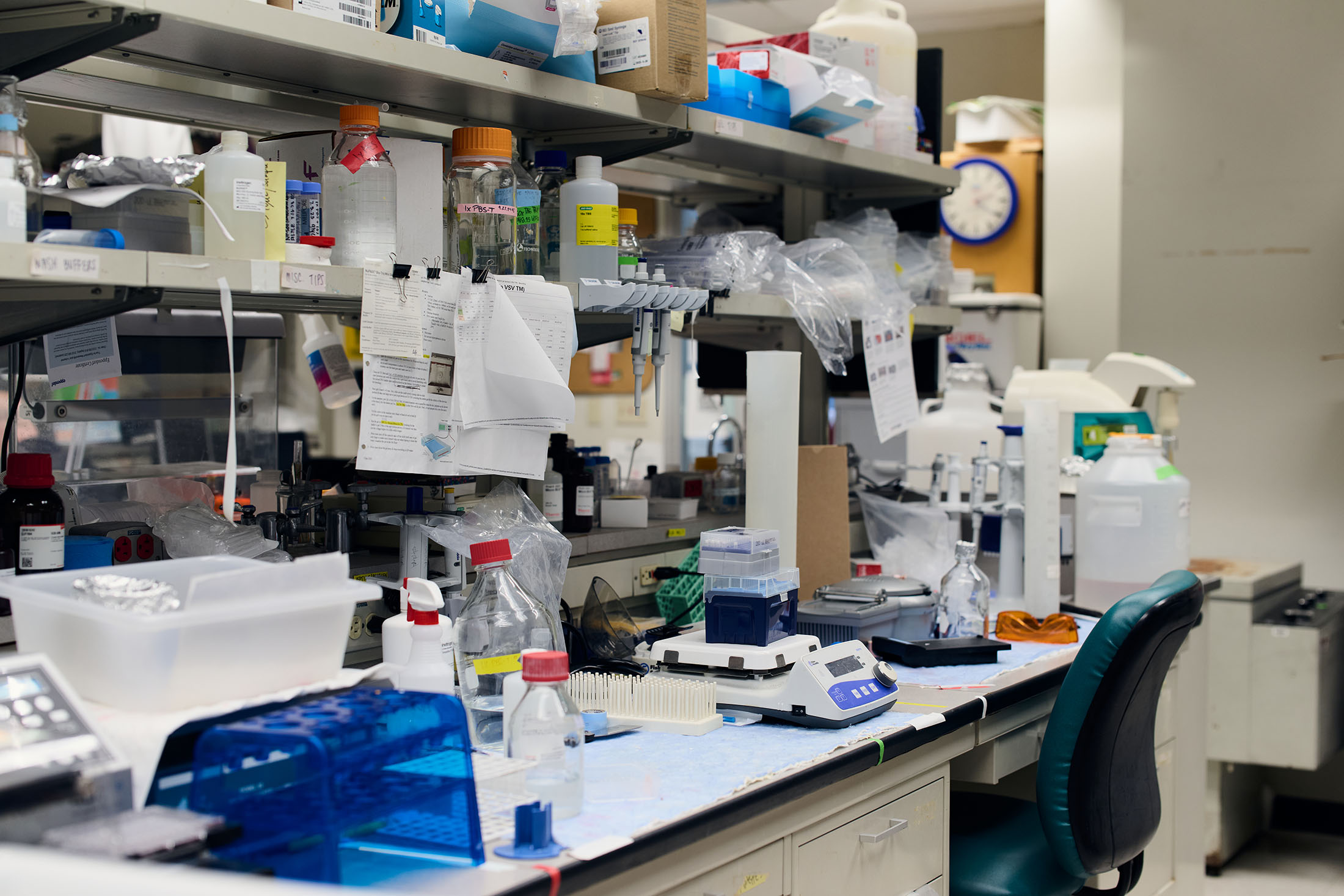
Garry’s lab at Tulane.
Photographer: Craig Mulcahy for Bloomberg Businessweek
Even so, today his laboratory in downtown New Orleans remains full of equipment and, in his mind, promise. Garry is a big man with a bushy white mustache that, with his faint Southern accent, can make him seem more like a New Orleans Saints tailgate partier than an eminent researcher. But at 75, he’s still very much the bench scientist he was in his 20s, pipetting samples and setting up his own experiments when needed. (“They’re going to have to pry the pipette out of my dead hands,” he cracks.) Appliances that conduct polymerase chain reaction tests to detect the presence of viruses sit alongside plate-washing machines and ventilated hoods for handling hazardous materials. Freezers hum quietly, holding samples collected over decades. But there are no people. Garry isn’t accepting new doctoral students, because he can’t guarantee funding their work, and he’s spent the past two years nudging his researchers into jobs elsewhere. “It is a little sad,” he says as he walks through the empty lab. “We’ve just come through this pandemic where 20 million people died. And what’s our response? We’re going to shut down work on viruses. That doesn’t really compute.” Garry’s five-decade career is a testament to the value of virology in a world defined by global trade and threatened by global pandemics. Unfortunately for him, it’s also become a testament to the ways politics — in particular, those of the second Trump administration — have set back the field. In addition to the White House’s attempt to unilaterally reduce NIH grants in the name of cutting “overhead” — a move that a federal appeals court ultimately blocked — it has frozen billions of dollars in research funding. Although there’s still some funding for virology, says Jeanne Marrazzo, NIAID’s director from 2023 to ’25, it’s been “highly selective,” going only to “viruses that have escaped scrutiny.” Coronavirus research is generally off-limits, as is anything to do with mRNA or any project that might mention the word “diversity.” The funding cuts, not to mention the surreal experience of watching some of the world’s most powerful people trash your life’s work, have pushed some of Garry’s peers to leave the US. He and others who’ve stayed have tried to adapt, applying for grants from outside sources or attempting in US government applications to emphasize Trump-friendly angles (national security, mostly, with a swirl of Make America Healthy Again) on existing lines of research. “I just have to make the best case I can that our work needs to continue,” Garry says. “We’re on the verge of so many important breakthroughs. Let’s just follow through.”
Keep reading
On the PodcastThis week on Everybody’s Business from Bloomberg Businessweek, Mark Gurman, Bloomberg News managing editor for consumer technology, joins hosts Stacey Vanek Smith and Max Chafkin to talk about what’s next at Apple now that John Ternus is taking over from Tim Cook as chief executive officer. (Expect to see a folding iPhone and many other new products.) Then, Max and Bloomberg senior editor Jason Gale discuss their feature on virologist Bob Garry. Listen and subscribe on Apple, Spotify, iHeart and the Bloomberg Terminal. More Weekend Reads

Since e-rickshaws are bigger than the pedal-driven models, drivers can pack in more passengers and make more money.
Photographer: Nipun Prabhakar for Bloomberg Businessweek
Should your pet be on peptides? On Friday’s Big Take podcast, Bloomberg’s Annika Inampudi explores the growing market for pet longevity treatments and examines questions around their safety and efficacy. Listen wherever you get your podcasts. Play the Pointed News Quiz!
More From BloombergLike Businessweek Daily? Check out these newsletters:
Explore all Bloomberg newsletters. We’re improving your newsletter experience and we’d love your feedback. If something looks off, help us fine-tune your experience by reporting it here. Follow Us
You received this message because you are subscribed to Bloomberg’s Businessweek Daily newsletter. If a friend forwarded you this message, sign up here to get it in your inbox.
|
Sunday, September 6, 2026
Bw Reads: Trump’s war on virus hunters







Subscribe to:
Post Comments (Atom)
Bw Reads: Trump’s war on virus hunters
Plus more great articles from Businessweek ...
-
Revolutionary Stem Cell & PRP —Start Your Journey Today ...
-
You’ve shown interest in Regenerative Medicine ...


No comments:
Post a Comment