
Welcome to Bw Reads, our weekend newsletter featuring one great magazine story from Bloomberg Businessweek. Today Isabella Steger and Akemi Terukina write about the intellectual property theft plaguing Japan’s premium fruit business. Farmers go to extraordinary lengths to shield their perfect strawberries and grapes from the elements, but the industry hasn’t been able to stop this carefully cultivated produce from being smuggled out and replicated abroad. You can find the whole story online (free) here. If you like what you see, tell your friends! Sign up here. Subscribe to Bloomberg.com for unlimited access to all our coverage. In a greenhouse perched on a hillside in western Japan, fourth-generation farmer Shingo Hayashi inspects bunches of grapes that represent years of painstaking breeding. Among them are seedless Shine Muscats, highly prized for their intense sweetness, and the pride of his crop: the ultrapremium Muscat Zipangu, a large, juicy variety that commands as much as ¥10,000 ($64) per bunch in Japanese markets. Hayashi, who breeds more than 120 types of grapes, registered the rights to Zipangu in 2014 to prevent unauthorized propagation and sales. “I want them to be cultivated properly and developed in a good way,” Hayashi, 48, says under the blazing sun in Okayama prefecture. Raising flawless fruit takes relentless care, including hand-pruning foliage so sunlight hits every grape evenly. “The varieties I create are like my own precious children.” But registering these high-end grapes, which can grow to the size of a ping-pong ball, hasn’t done much to protect them from bad actors trying to replicate Japan’s “perfect fruit” for sale in their own markets. 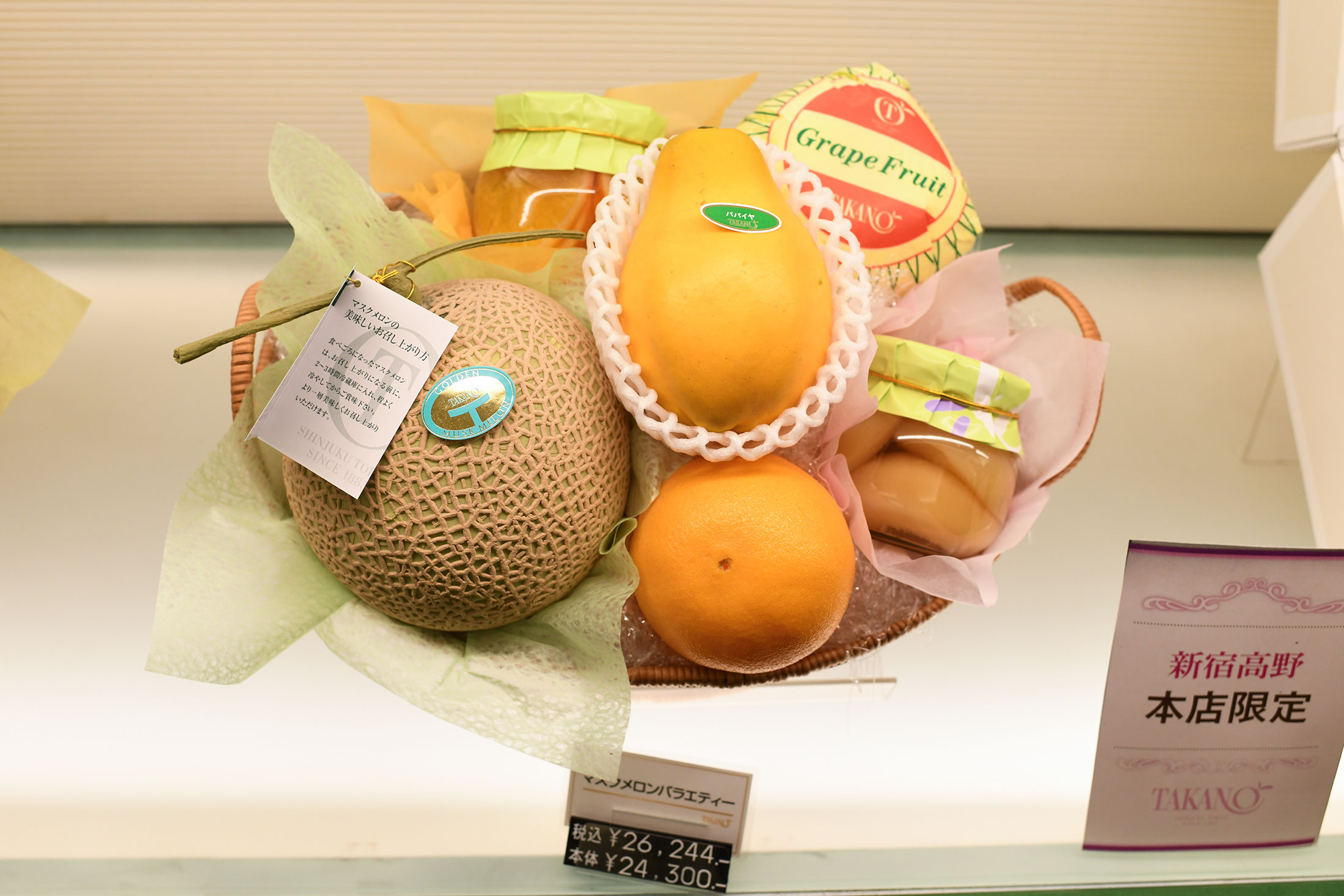
A fruit assortment for gifting sold at Shinjuku Takano in Tokyo.
Photographer: Noriko Hayashi for Bloomberg Businessweek
Hayashi’s grapes and others like them are at the center of an increasingly urgent campaign to stop the island nation’s carefully cultivated produce from being smuggled out and replicated abroad. Lawmakers in July enacted a bill to tighten protection of Japanese plant varieties, and officials are carrying out a widely broadcast crackdown on illicit trade. This comes after years of watching farmers in other countries, especially China and South Korea, grow fruit cloned from strains developed and trademarked by Japanese breeders, undercutting premium exports to crucial Asian markets such as Hong Kong and Taiwan. 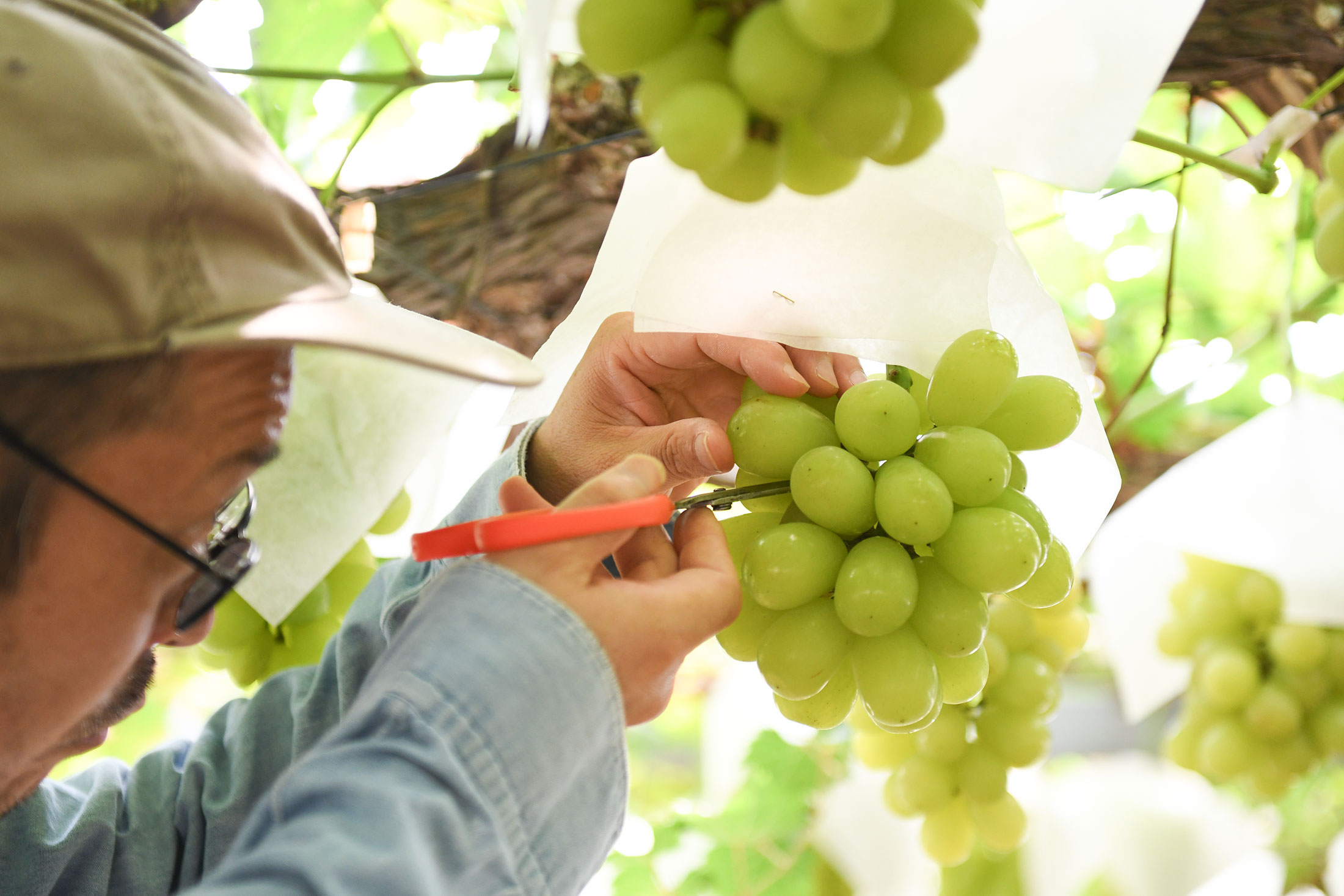
Hayashi trims produce by hand.
Photographer: Noriko Hayashi for Bloomberg Businessweek
Japan’s agriculture ministry estimates that overseas leakage costs around ¥20 billion a year in lost licensing fees for Shine Muscat grapes alone. Cumulative losses from South Korean-grown Japanese strawberry varieties totaled ¥22 billion as of 2020, the most recent year for which data was available. While the ministry has no comprehensive figure across all agricultural products, the overall toll — including missed market opportunities as well as royalties — is believed to be far higher. The threat from abroad comes at a particularly pivotal time for Japan, which, in an effort to counteract its shrinking domestic market, is making a big push overseas by setting a target of ¥5 trillion in agricultural exports by 2030, essentially triple 2025 levels. Cheaper Japanese strains grown abroad could severely undermine that goal. As Takashi Asano, chief executive officer of agricultural consultant Agri Soken Corp., puts it: “There is an acute sense of crisis.”
Keep reading
On the PodcastGLP-1s, touted as a miracle drug by many, are slowly disappearing from Americans’ insurance plans. On a new episode of the Everybody’s Business podcast, Bloomberg News workplace reporter Taylor Nicole Rogers explains why companies are saying “no thanks” to one of the hottest classes of pharmaceuticals on the market. And then, what would you do if you were in $30,000 of credit card debt? Debt Heads podcast co-host Jamie Feldman gives her negative balance a casual shrug and makes the argument that you should too. Listen and subscribe on Apple, Spotify, iHeart and the Bloomberg Terminal. More Weekend Reads
 
Video: Why Brazil Can’t Hide From Its Debt
Test Your Knowledge
More From BloombergLike Businessweek Daily? Check out these newsletters:
Explore all Bloomberg newsletters. We’re improving your newsletter experience and we’d love your feedback. If something looks off, help us fine-tune your experience by reporting it here. Follow Us
You received this message because you are subscribed to Bloomberg’s Businessweek Daily newsletter. If a friend forwarded you this message, sign up here to get it in your inbox.
|
Sunday, September 27, 2026
Bw Reads: Copying Japan’s flawless fruit








Subscribe to:
Post Comments (Atom)
Falling Fast! 🍁
The 15% off sale ends tonight! ͏ ͏ ͏ ͏ ͏ ͏ ͏ ͏ ͏ ͏ ͏ ͏ ͏ ͏ ͏ ͏ ͏ ͏ ͏ ͏ ͏ ͏ ͏ ͏ ͏ ͏ ͏ ͏ ͏ ͏ ͏ ͏ ͏ ͏ ͏ ͏ ...

-
Revolutionary Stem Cell & PRP —Start Your Journey Today ...
-
You’ve shown interest in Regenerative Medicine ...


No comments:
Post a Comment