| Read in browser | ||||||||||||||

Welcome to Balance of Power, bringing you the latest in global politics. If you haven’t yet, sign up here. Sanae Takaichi’s government has halted the Japanese yen’s historic slide by orchestrating a rare intervention with the world’s biggest economy. The question now is: What does Washington want in return? President Donald Trump said yesterday that the US was acting as a “friend,” while Treasury chief Scott Bessent called the operation proof his boss “delivers for America’s trusted partners.” Yet if last year’s sweeping tariff war taught America’s allies anything, it’s that this administration likes to maximize its leverage. The US government could ramp up pressure for Tokyo to pay more for American bases on Japanese soil, and spend more on its own defense. Trump might also try to negotiate more favorable conditions for Japan’s $550 billion investment deal in the US. 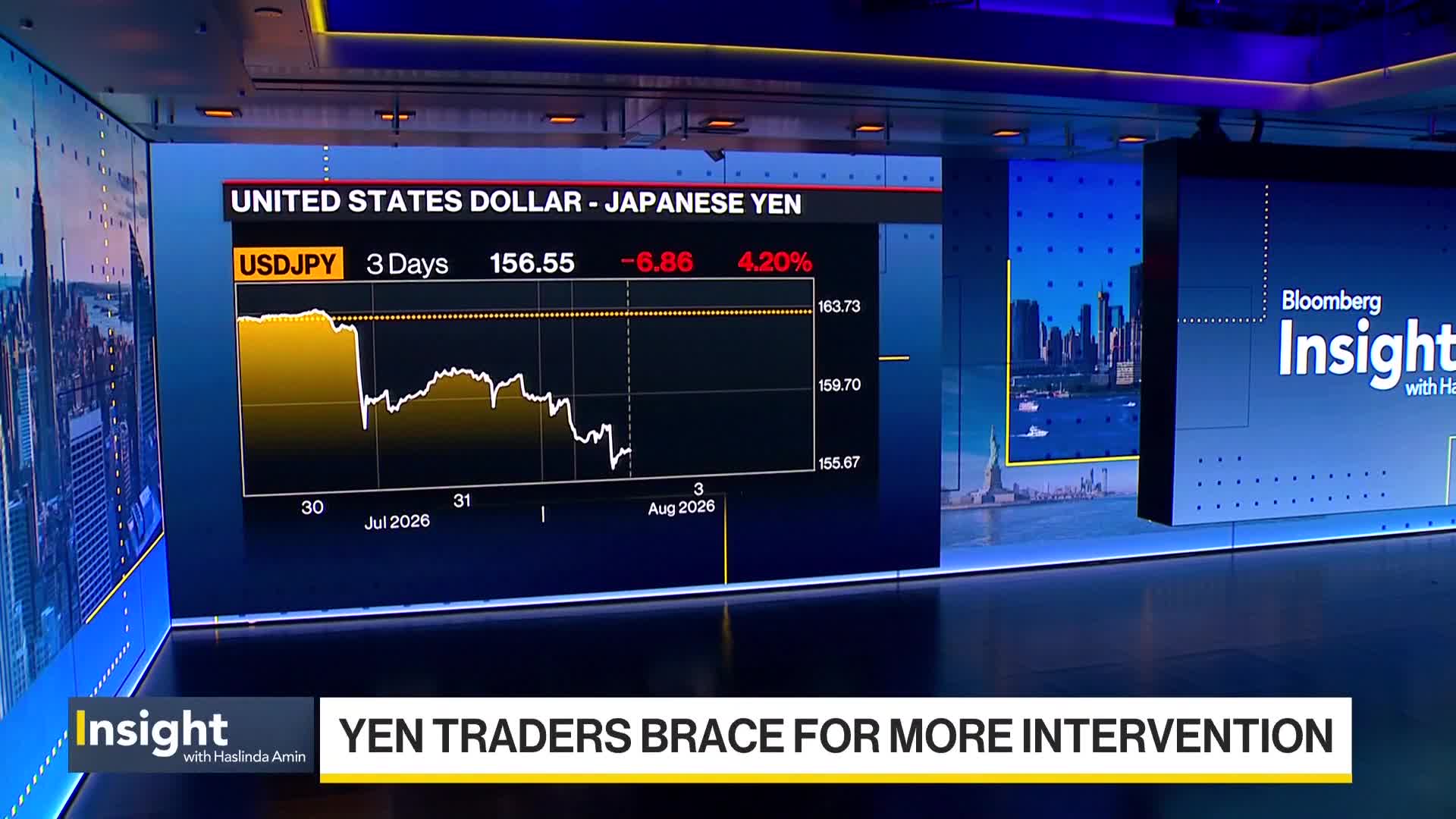 
Bloomberg Intelligence’s Stephen Chiu reports on the intervention.
A simpler request would be for the Japanese prime minister to stand by the US more publicly on thorny international issues such as Iran, where she’s so far avoided criticism but refrained from concrete support. A harder ask would be any appeal for Japan to make concessions on China, as the Asian neighbors remain embroiled in a row over Taiwan. Either way, for Takaichi the US deal came at a crucial moment. A stronger yen would help her ease the cost-of-living crisis at a time when her approval ratings, once topping 70%, have tumbled. Shoring up the currency could also calm markets wary of her spending plans as she tries to slash a controversial food sales tax — without explaining where the money will come from. Ultimately, without meaningful change, Japan’s efforts are a Band-Aid on the yen’s weakness — even with America’s backing. The spotlight is now on the Bank of Japan to raise rates at its September meeting. Such a hike, if it comes in lockstep with the Federal Reserve, might prove a double act with some staying power. — Jenni Marsh 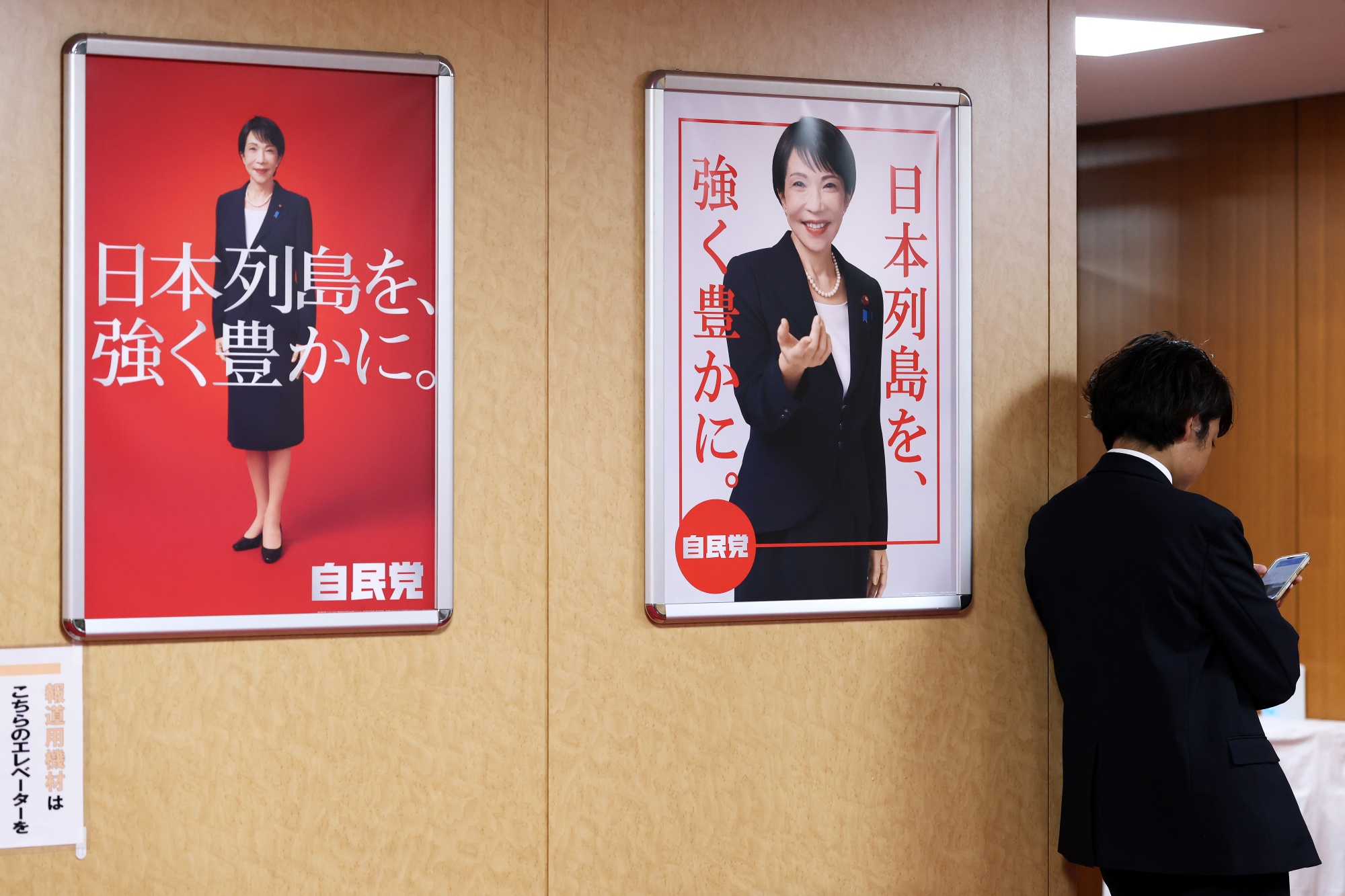
Posters of Takaichi at the Liberal Democratic Party’s headquarters in Tokyo on July 30.
Photographer: Kiyoshi Ota/Bloomberg
Global Must ReadsNew Iran talks are set to start today after Trump called off a planned attack, partially in response to pleas from US allies in the Middle East, including Saudi Arabia. “It would have been the biggest attack since World War II,” Trump told reporters on Air Force One. The US president suggested a deal on reopening the Strait of Hormuz may be close and that he would also continue to pursue a path to end Iran’s nuclear program. Europe’s biggest rivers are drying up due to a series of heat waves, with water levels in the Rhine and Danube falling toward record lows. That’s starting to disrupt the transport of chemicals, oil products and other goods, and curbing power generation at riverside reactors from France to Hungary, pushing up energy prices and straining Eastern European economies. 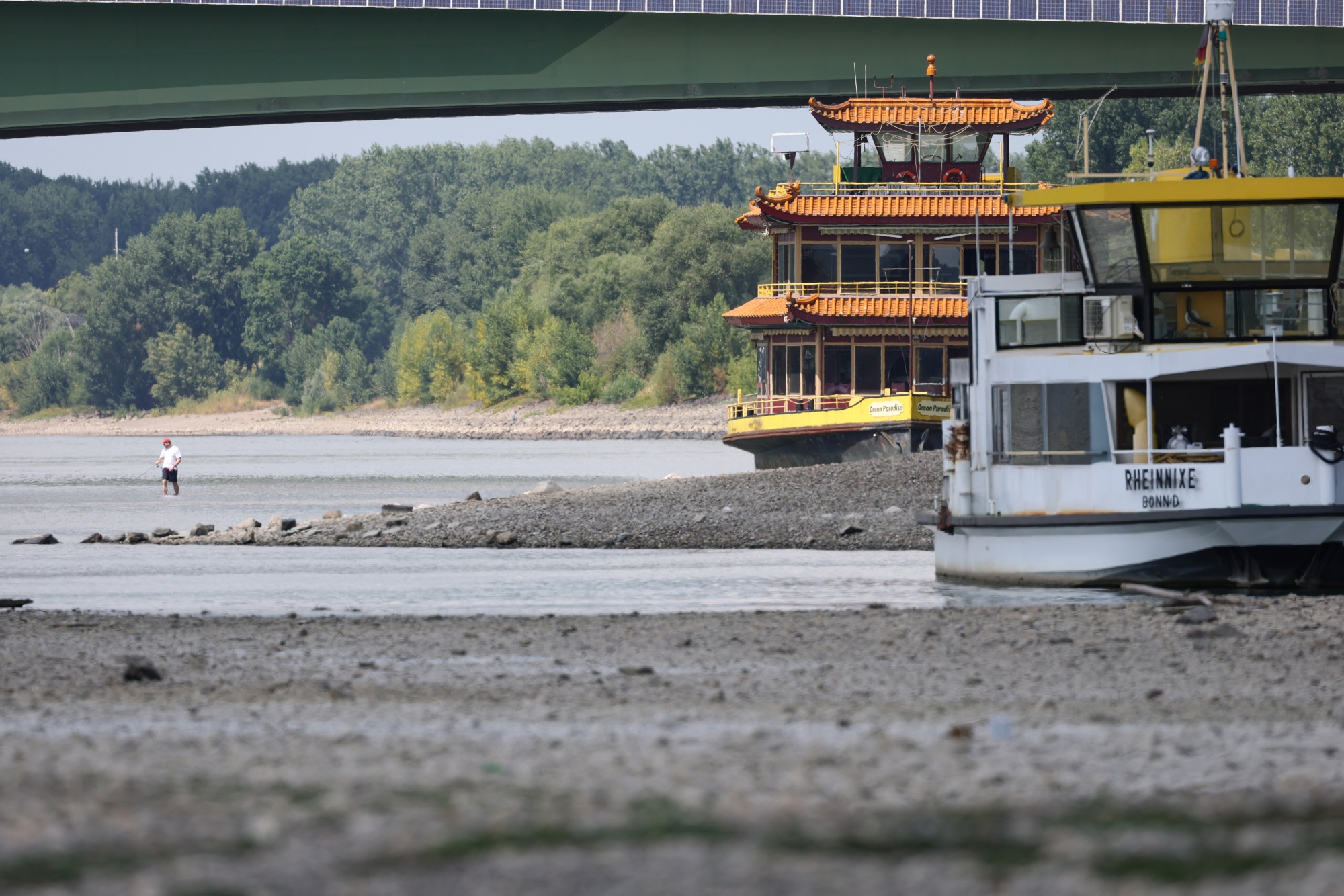
The Rhine River on July 15.
Photographer: Andreas Rentz/Getty Images
Acting US Attorney General Todd Blanche announced he’s rescinding an order creating an “anti-weaponization fund” that could have paid $1.8 billion to Trump’s allies and clarified the president’s sweeping immunity deal with the Internal Revenue Service. The move potentially clears the way for Blanche’s confirmation, after Senator John Cornyn insisted he sign a document to rescind the fund and limit the agreement to the IRS and not other agencies. As South Korea’s world-beating stock market surged in January, authorities saw a chance to attract more capital and bolster the won by offering high-risk products for notoriously adrenaline-loving retail investors. Now that gamble is backfiring on President Lee Jae Myung after the Kospi index plunged some 40% from its peak a month earlier, while he and key staff watched from afar in South America during an 11-day diplomatic tour. Venezuela’s government and some opposition members formally launched a US-backed political dialogue that could establish the terms for future democratic elections. The talks, which face skepticism from both sides, are expected to address reforms to the Supreme Tribunal of Justice, the electoral system and legislation governing political participation. Malaysian Prime Minister Anwar Ibrahim’s coalition lost a key state election, raising fresh doubts about his political standing ahead of the next national polls. Morocco’s government says factors such as misinformation and human trafficking lured tens of thousands of migrants into illegally crossing into the Spanish-governed northern African enclave of Ceuta last week. 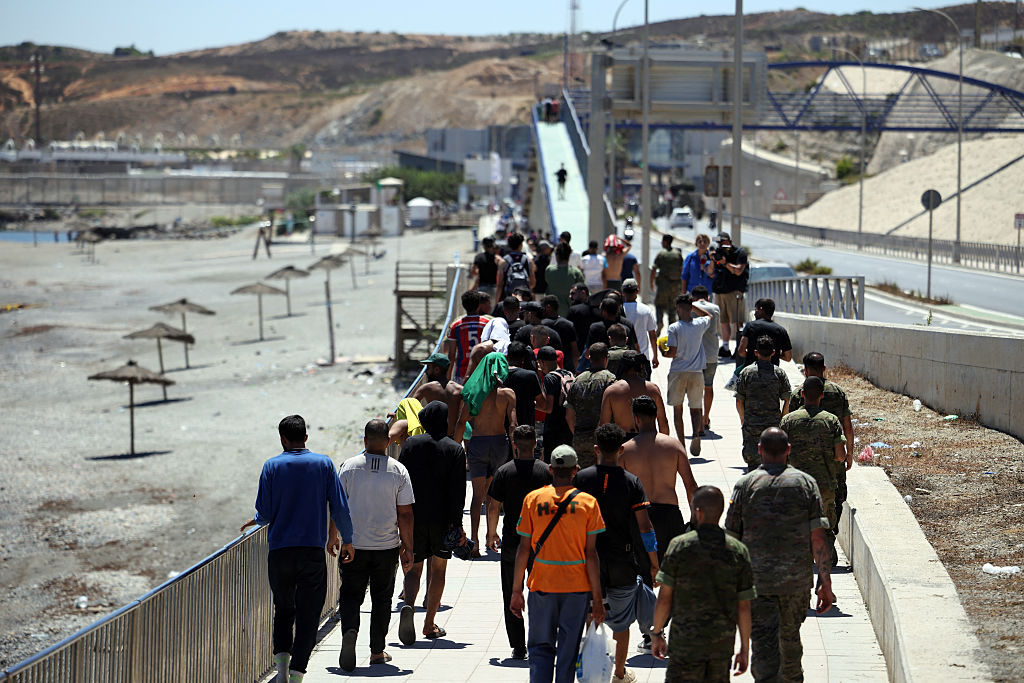
Migrants return to Morocco from Ceuta yesterday.
Photographer: Henry Nicholls/AFP/Getty Images
An influential Brazilian political party blocked one of its key members from becoming Flávio Bolsonaro’s running mate in October’s presidential election, dealing another blow to his chaotic campaign. Myanmar’s military-backed government released photographs of Aung San Suu Kyi meeting a representative of the International Committee of the Red Cross today amid growing concern over the health of the 81-year-old detained civilian leader. Sign up for the Washington Edition newsletter for news from the US capital and watch Balance of Power at 1 and 5 p.m. ET weekdays on Bloomberg Television. Chart of the Day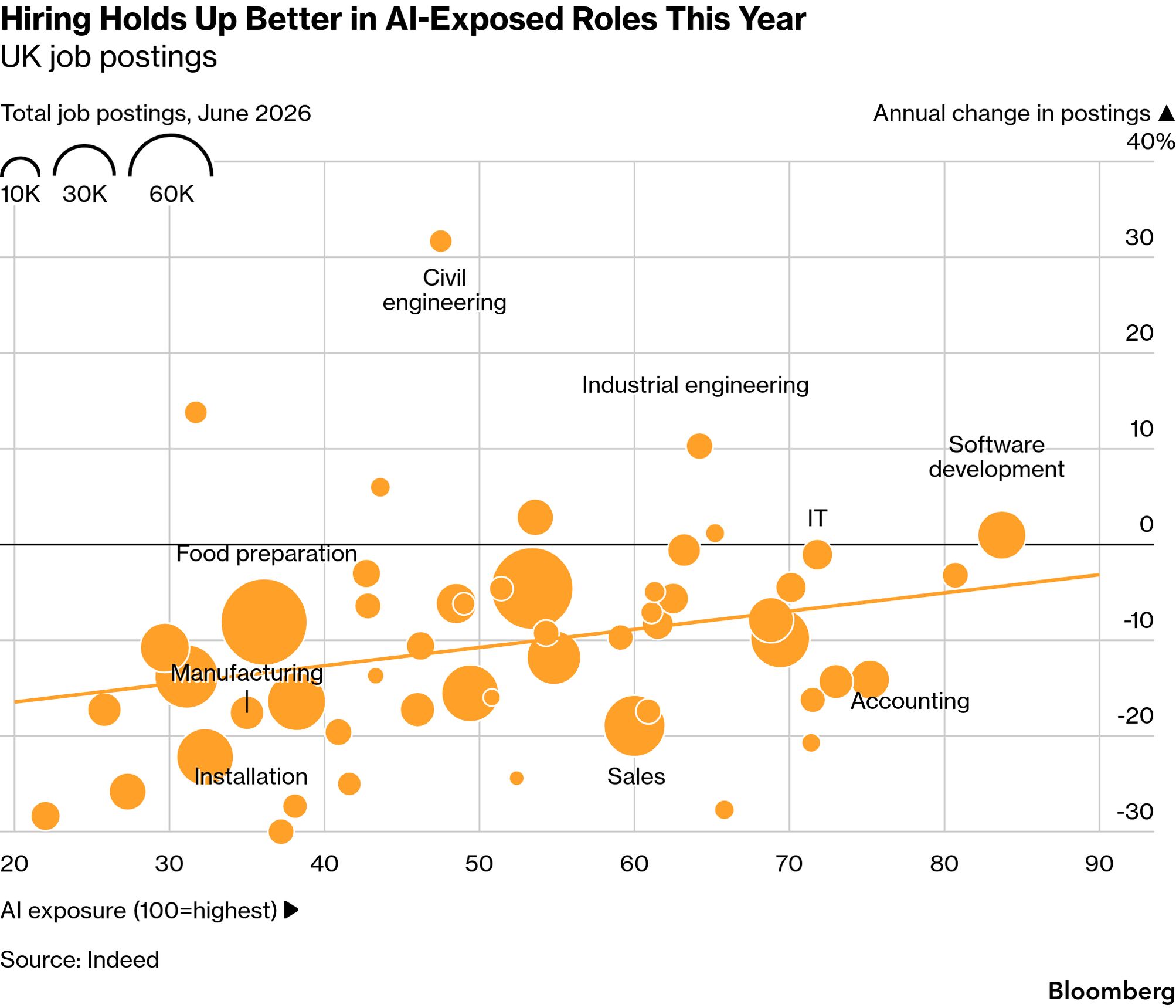
UK employers are creating jobs for experienced staff with artificial intelligence skills and cutting back elsewhere, according to new figures that show how the technology is starting to result in a two-track labor market. Software developers are back in demand and IT and engineering jobs are among the few that held up over the past year, while those in retail, manufacturing and white-collar roles like accounting are falling. That casts doubt on Prime Minister Andy Burnham’s plans to encourage young people to pursue technical qualifications as a way to future-proof their careers. And FinallyBurnham vows to rebuild the UK economy by decentralizing power away from London, putting control into the hands of those who know what works in their region. Fiscal powers were devolved to Scotland, Wales and Northern Ireland from the 1990s, yet England was left out. Today, Burnham’s Manchester is one model for what he wants to achieve, although another is ironically to be found closer to the Westminster power base he wants to demote, in London. Untimately, deprived towns like Ashington in northern England will be the test of his vision for “growth in every postcode.” 
A mural celebrating Ashington’s coal mining heritage.
Photographer: Michael Vince Kim/Bloomberg
Thanks to everyone who answered Friday’s quiz question, and congratulations to Peh Chwee Hoe, who was first to correctly identify Myanmar as the country that last week passed a law authorizing the death penalty for using forced labor in cyber-scam operations. More from Bloomberg
We’re improving your newsletter experience and we’d love your feedback. If something looks off, help us by reporting it here. Follow Us
You received this message because you are subscribed to Bloomberg’s Balance of Power newsletter. If a friend forwarded you this message, sign up here to get it in your inbox.
|
Monday, August 3, 2026
Yen rescue





Subscribe to:
Post Comments (Atom)
Elon Musk Says AI Will Overtake Rockets at SpaceX… This Month
SpaceX generated $2.6 billion from its AI segment last quarter – and Musk says the business is about to become larger than everything else...
-
Revolutionary Stem Cell & PRP —Start Your Journey Today ...
-
You’ve shown interest in Regenerative Medicine ...


No comments:
Post a Comment