| Read in browser | ||||||||||||||

A few weeks ago, Bloomberg News business of sports reporter Ira Boudway wrote for the Businessweek Daily about how the World Cup was a success for FIFA by just about any measure. A lot has changed since then. Plus: A Walk With E.L.F. Beauty’s CEO after its buzziest acquisition (free link), and a new episode of the Everybody’s Business podcast. If this newsletter was forwarded to you, click here to sign up. Subscribe to Bloomberg.com for unlimited access to all our coverage. Icarus himself would marvel at the month FIFA President Gianni Infantino is having. After this summer’s World Cup, he was soaring. The football tournament was a smashing success, a $10 billion mega-event unlike any in the history of sport. At first, it seemed as though Infantino would be content to revel in his triumph and cruise to reelection in March. Then, last week, he came forward with a plan to create a commercial arm of FIFA and sell stakes to outside investors. His wings promptly melted. The blowback was swift and severe. UEFA, the confederation of Europe’s football associations, said its members would boycott FIFA tournaments, including the World Cup, if Infantino went through with his proposal. “The World Cup cannot be treated as an investment product,” UEFA wrote in a statement summing up the general reaction. “No part of it should ever be surrendered to private investors.” Concacaf, the governing body for North America, Central America and the Caribbean, and the Asian Football Confederation also came out in opposition. One of Infantino’s senior advisers resigned in protest. And FIFA’s chief operating officer said Infantino had deceived his own staff. 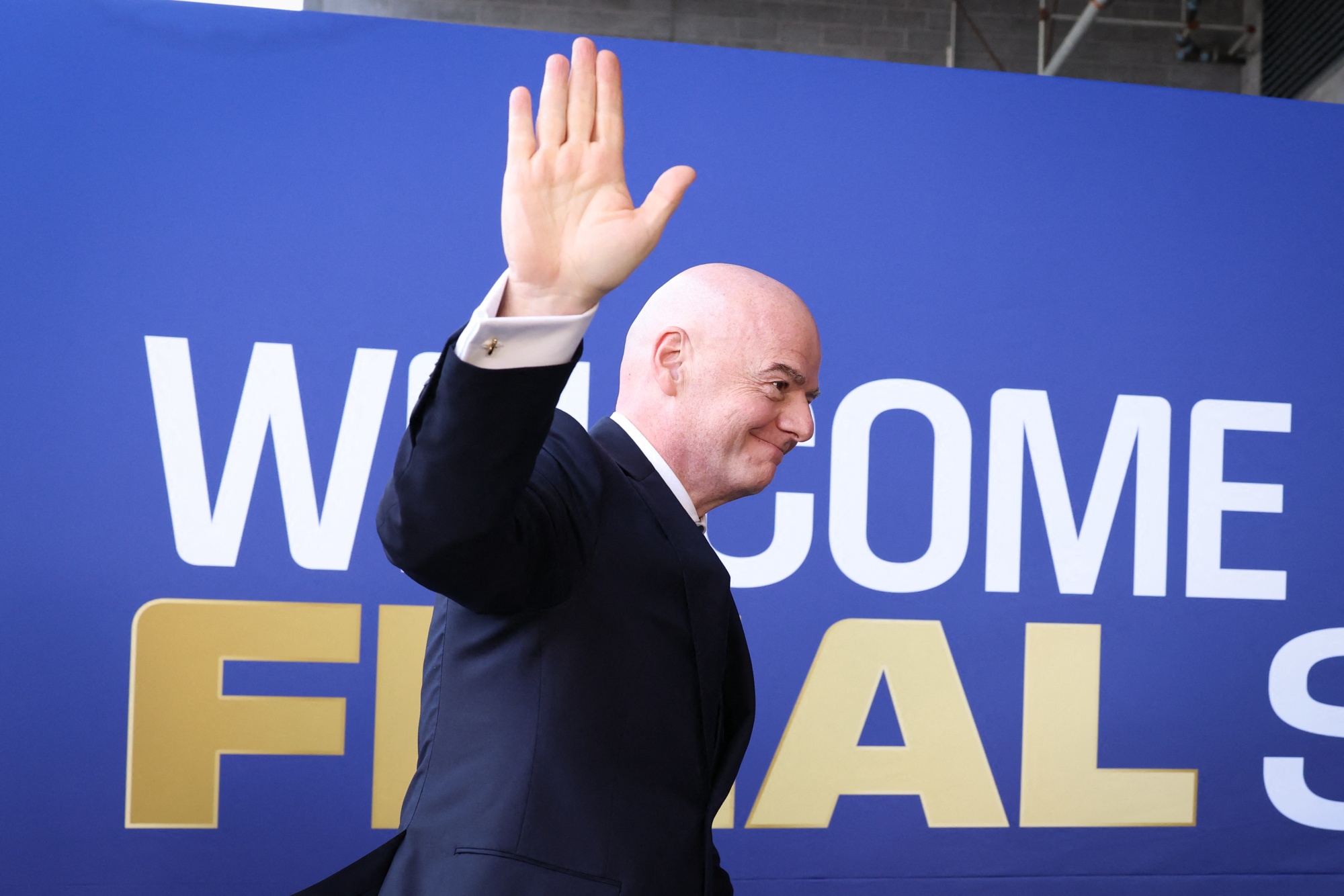
Infantino at the 2026 World Cup final on July 19.
Photographer: Charly Triballeau/AFP/Getty Images
Within a week, Infantino withdrew the plan, which had been set to come to a vote before FIFA’s 211 member associations in September. On Wednesday, FIFA’s leadership held an emergency meeting, then issued a statement acknowledging that “mistakes were made” and reaffirming their support for Infantino. It might not be enough to save his job. UEFA has yet to call off its boycott, saying it still needs assurances there will be further attempts to sell off parts of FIFA. If Infantino loses his post, he’ll have no one but himself to blame. Over his decade in office, he’s failed to reform FIFA after the bribery scandal that brought him to power, cozied up to authoritarians and provided cover for human-rights violations, bent rules and invented prizes to curry favor with President Donald Trump, raised ticket prices to new heights, and added commercial breaks to games under the pretext of pursuing player safety. Few football fans would mourn his departure. Still, it’s possible to sympathize with the 56-year-old Swiss-born administrator. Infantino is paid about $6 million a year, with some excellent perks, including seemingly unlimited access to a private jet. It’s not a bad life by any normal standard. But people don’t tend to assess their wealth in absolute terms; they judge against their peers. Infantino hobnobs with billionaires, heads of state and A-list celebrities. When you keep company like that, it’s easy to compare and despair. More to the point, Infantino seems to have noticed that other people with jobs like his make a lot more money than he does. NFL Commissioner Roger Goodell, for instance, takes home about 10 times as much as the FIFA boss, a situation Infantino’s sell-off plan was almost certain to remedy. It’s only human that Infantino might have looked around and thought: “I run the most valuable property in sports. Why am I being paid as much as the average midfielder?” Sign up for Bloomberg’s Business of Sports newsletter for the context you need on the collision of power, money and sports, from the latest deals to the newest stakeholders. In Brief
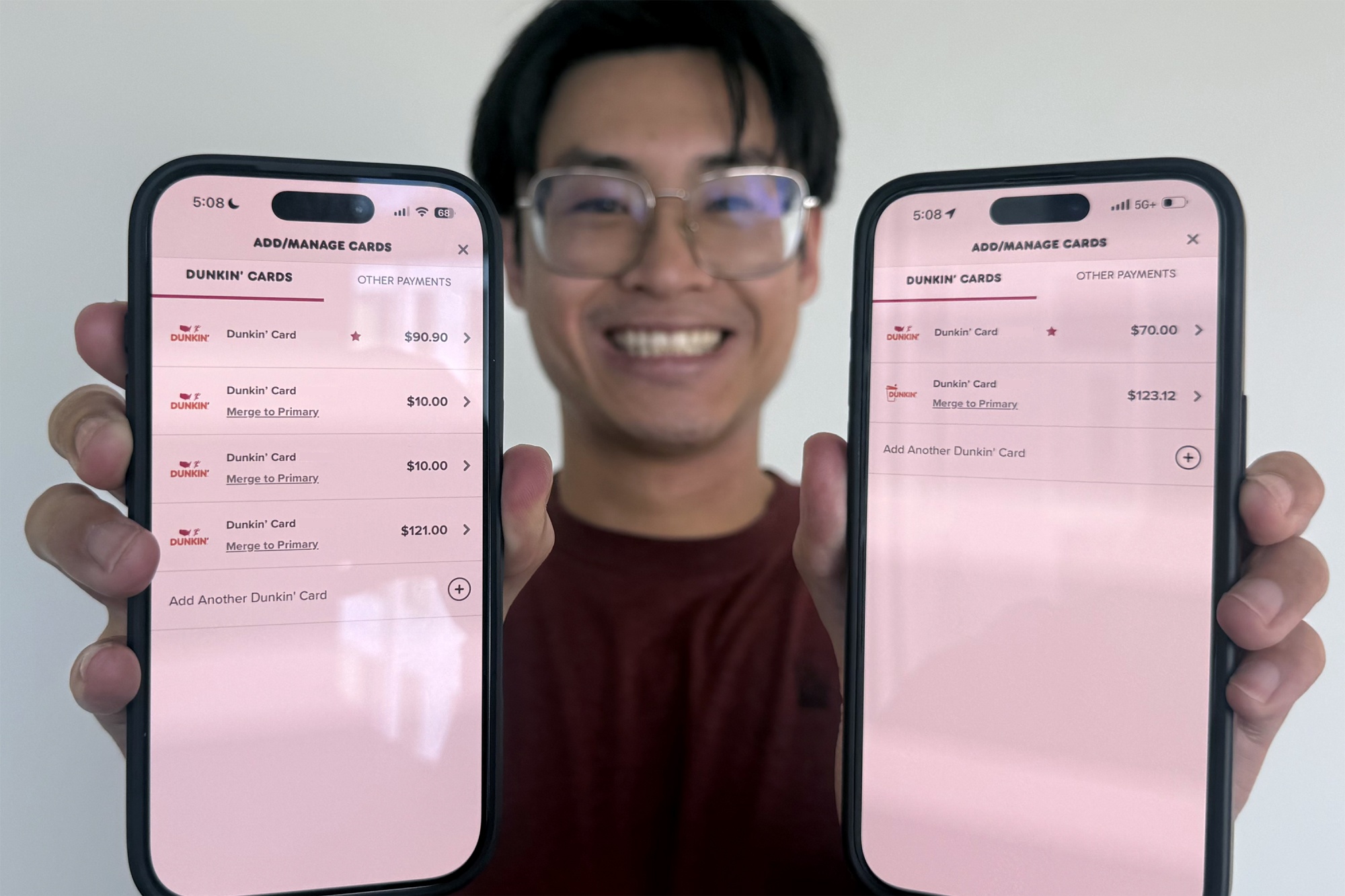 
Video: Dunkin’s $10 Gift Cards Are This Summer’s Hottest Free Money Hack
On the PodcastThis week, there’s a lot to digest on the Everybody’s Business podcast from Bloomberg Businessweek. Hosts Max Chafkin and Stacey Vanek Smith dig into the recent elections in Michigan as well as political spending with Businessweek editor-at-large Wes Kosova. Plus, Businessweek’s Extra Salt columnist Deena Shanker unpacks the image problem at the Department of Health and Human Services with the cyclospora outbreak, Robert F. Kennedy Jr.’s new cooking show and cuts to SNAP funding. Listen and subscribe on Apple, Spotify, iHeart and the Bloomberg Terminal. North Korean Windfall$22 billion That’s how much foreign revenue the family-run dictatorship of North Korea’s Kim Jong Un raked in between 2022 and 2025, according to a Bloomberg Economics analysis of government trade figures and intelligence, as well as external research on key sources of income generation. Pretty ‘Elfing’ Delighted
E.L.F. Beauty CEO Tarang Amin.
Photographer: Dolly Faibyshev for Bloomberg Businessweek
Tarang Amin may be a clean-cut executive wearing tucked-in business casual, but he wields a fluffy powder brush with the deftness and enthusiasm of a YouTube beauty influencer. The 61-year-old’s own skin-care routine — moisturizer, sunscreen, two different primers, a hydrating concealer under his eyes and powder to finish it all — is something he picked up on the job. After all, Amin leads E.L.F. Beauty Inc., the roughly $5 billion cosmetics empire that sells more individual sticks, tubs and tubes of makeup than anyone else in the US. He and I are perusing the E.L.F. Cosmetics aisle, lined neatly with crisp white and black packaging, inside an Ulta Beauty shop on 34th Street in Manhattan. A young woman approaches, grabbing three products in quick succession. Amin steps out of the way. “I don’t want to interrupt the sale,” he says, soft-spoken but beaming. Cheryl Wischhover writes that E.L.F. Cosmetics, known mostly for its affordable prices, is the No. 1 mass-market color cosmetics brand in the US by unit sales. It also now owns Hailey Bieber’s higher-end Rhode line. See how E.L.F. is adapting to the newly viral market (🎁). Early Bet on SpaceX“You make 5 or 10 investments and hope one of them will work. This one has worked very well.” Max Chapman A former chair of the board of directors of Chapel Hill Investment Fund The University of North Carolina’s endowment management company made an initial investment in SpaceX more than 15 years ago. That early bet helped turbocharge its endowment returns to more than 30% this year, making UNC’s endowment one of the best performing in the US. Play Alphadots!Our daily word puzzle with a plot twist. 
Today’s clue: Flight tracker? More From BloombergLike Businessweek Daily? Check out these newsletters:
Explore all Bloomberg newsletters. We’re improving your newsletter experience and we’d love your feedback. If something looks off, help us fine-tune your experience by reporting it here. Follow Us
You received this message because you are subscribed to Bloomberg’s Businessweek Daily newsletter. If a friend forwarded you this message, sign up here to get it in your inbox.
|
Friday, August 7, 2026
Trying to see FIFA’s failed plan from Infantino’s view





Subscribe to:
Post Comments (Atom)
Right now members already know today's trade. You could too.
The Beacon fired last night. The setup is already in their inbox. ͏ ͏ ͏ ͏ ͏ ͏ ͏ ͏ ͏ ͏ ͏ ͏ ͏ ͏ ͏ ͏ ͏ ͏ ͏ ͏ ͏ ͏ ͏ ͏ ...

-
Revolutionary Stem Cell & PRP —Start Your Journey Today ...
-
You’ve shown interest in Regenerative Medicine ...


No comments:
Post a Comment