| Read in browser | ||||||||||||||

Days after blazes tore through France and Spain, tens of thousands of Washington residents were displaced by threatening wildfires. Today’s newsletter looks at what the events have in common: extremely hot, dry, fire-friendly conditions that climate change promotes in many parts of the world. We also consider the looming impact of the El Niño weather cycle, which as one expert puts it, “acts as an intermediate between economics and the climate.” And, there’s a curious solution in Japan to help beat the summer heat. Subscribe to Bloomberg.com for unlimited access to all our coverage of climate change and extreme weather. Everywhere has fire weather nowBy Brian K Sullivan, Leslie Kaufman, and Todd Woody The US is enduring one of its worst wildfire seasons in years, with blazes scorching millions of acres. It’s part of a global pattern of hot, dry conditions that favor fires becoming more common with climate change. Fires that erupted over the weekend in and around Spokane, Washington, have destroyed hundreds of structures and forced more than 60,000 from their homes — about 10% of the population. Three major fires have burned more than 8,000 acres and have not been contained, according to InciWeb, a federal fire-tracking website. There are 17 total fires currently active across Washington, Public Lands Commissioner Dave Upthegrove said on Monday. 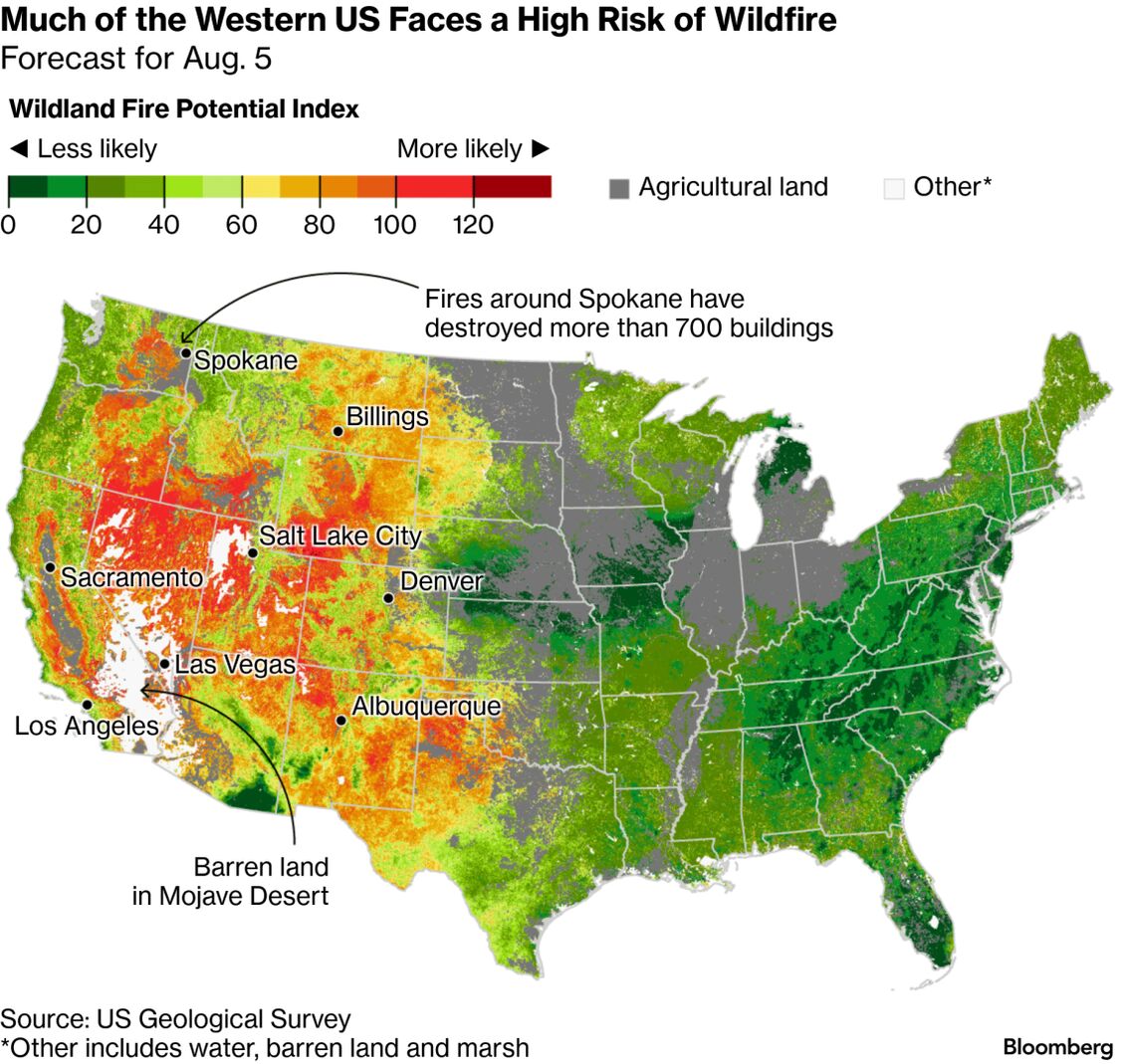
Meanwhile, ongoing fires in Greece have consumed tens of thousands of acres and triggered evacuations. These conflagrations follow the historic fires that raged in France and Spain last month, displacing hundreds of thousands of residents. All these fires broke out in different regions and ecosystems. But they’re examples of the same underlying shift: Rising temperatures are worsening wildfire risk. It’s happening in two ways at once. First, traditional fire country is becoming hotter and drier in all regions. Second, the range of landscapes that can sustain destructive blazes is growing broader. “We’re seeing both, in the same moment, in different places, in different ecosystems,” said Daniel Swain, a University of California climate scientist who studies wildfire. “The commonality between all of them is that there has been a substantial period of record-breaking warmth and/or dryness.” Swain describes the phenomenon as “lifting the flammability veil.” Some parts of the world have always been susceptible to burning but rarely became hot and dry enough, for long enough, to support large fires. Now global warming is “putting a thumb on the scale, producing severe and unprecedented heat waves,” said Noah Diffenbaugh, a professor of Earth system science at Stanford University. 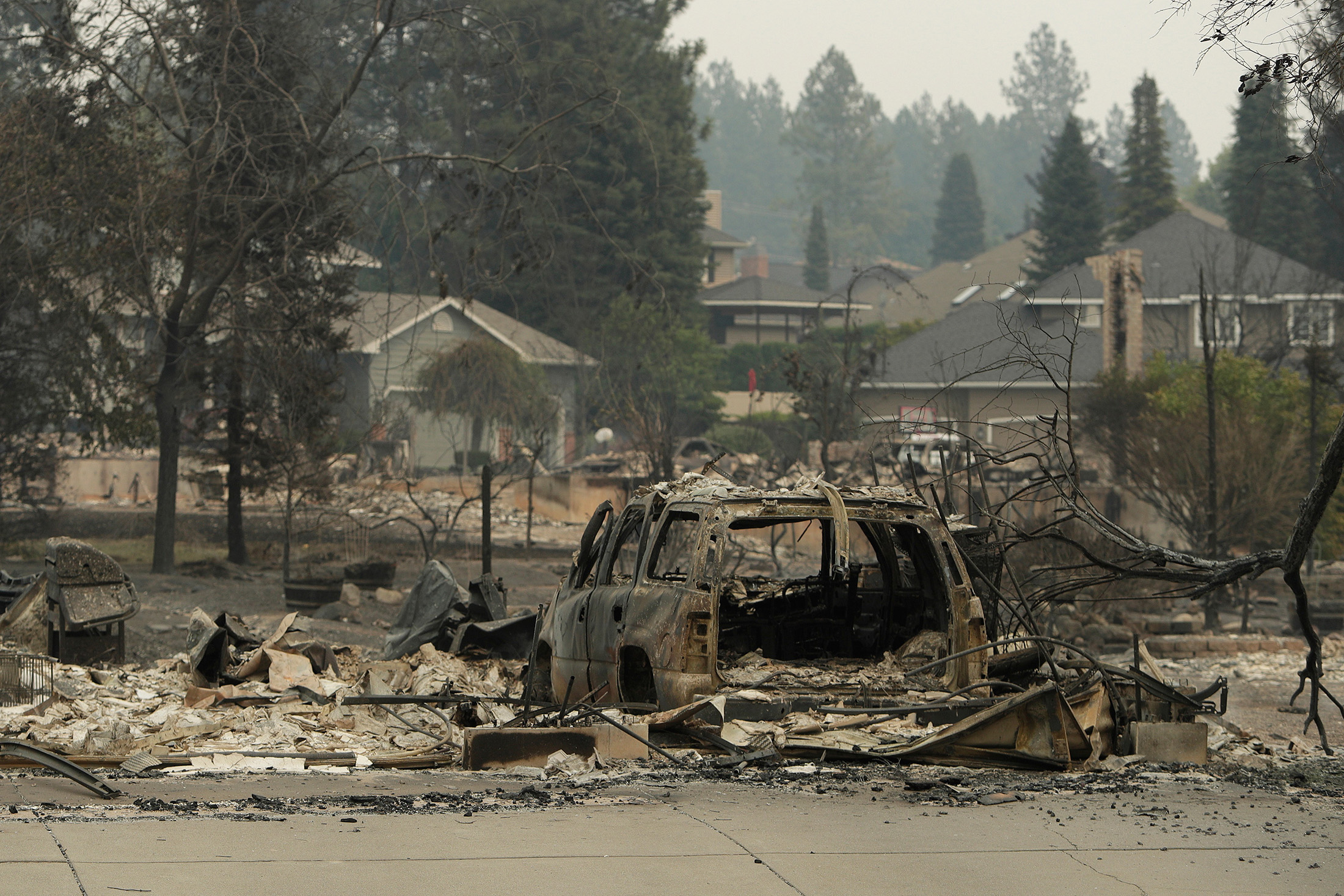
A vehicle and structure burned on N. Skyline Dr. following the wildfire in Spokane, Washington, on Aug. 2, 2026.
Photographer: Young Kwak/AP Photo via FR159675 AP
Trees lose moisture over extended periods of exceptional heat and dryness, becoming progressively more combustible. That has a stronger impact in ecosystems like Canada’s boreal forests, California’s Sierra Nevada mountains and parts of temperate Europe that evolved under relatively cool, moist conditions. Unlike many forests in the American Southwest, where trees are adapted to seasonal drought and frequent fire, these forests can become tinderboxes when subjected to weeks of unusual heat. Last winter, the Pacific Northwest, Rocky Mountains and large parts of California experienced a snow drought. This robbed the landscape of its natural replenishment that happens every spring and early summer. But extreme precipitation, not just the lack of it, plays a role in worsening fire conditions too. Deluges promote the growth of vegetation that then becomes fuel. Swain noted that heavy rains battered Spain in February prior to this summer’s heat waves. “That is the same sequence of events that led up to the Los Angeles fires in 2025,” he said. With fires now happening everywhere all at once, nations will be constrained in their ability to come to each other’s aid by dispatching firefighters and equipment. Communities that didn’t think they needed evacuation plans or fire mitigation measures will need to reevaluate. If the planet’s warming is lifting the flammability veil, as Swain says, the question is whether we’re prepared for what lies beneath.
Read more
Burn zone50 The number of uncontained large fires burning in Washington and Oregon as of Tuesday afternoon, according to the National Interagency Fire Center Unstoppable“You just cannot stop a fire when the conditions are so extreme as we have seen in recent days in Europe.” Raul Cordero Carrasco Climate researcher at the University of Groningen Carrasco spoke about the combustible conditions in Europe in late July. El Niño’s economic shockwavesBy Lauren Rosenthal, Mary Hui, Ben Westcott, and Laura Curtis The El Niño on track to become the most powerful of the past 76 years is strengthening rapidly, posing a major threat to fragile economies already roiled by conflict in the Middle East. 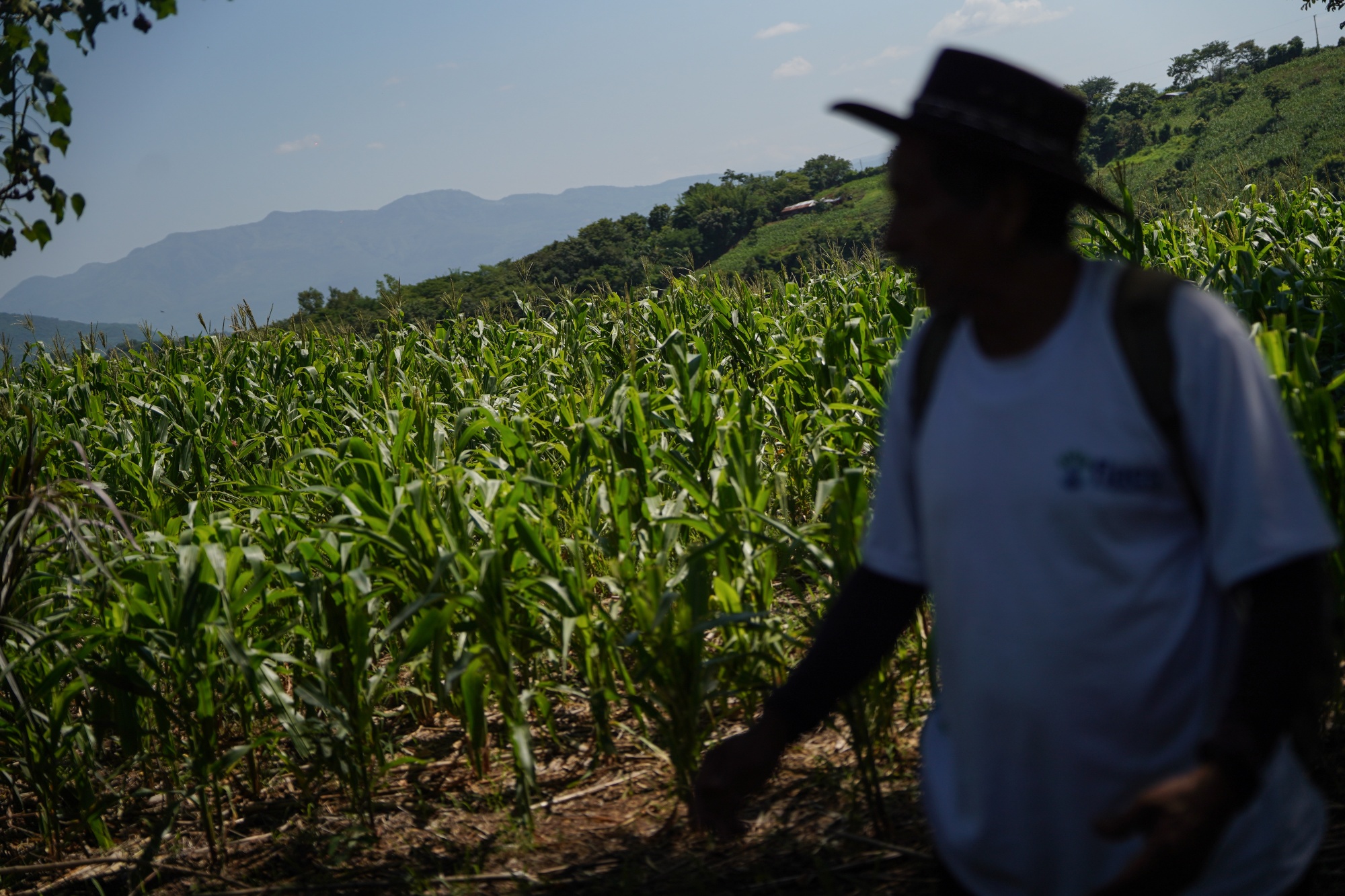
A farmer walks past drought-damaged corn plants on a farm in Tacuba, El Salvador.
Photographer: Camilo Freedman/Bloomberg
Since forming in June, the event, which some scientists are calling a “Super El Niño,” has boosted the odds of drought, heavy rainfall and extreme heat across parts of the Global South. Such hazards pose a direct threat to human lives and livelihoods, risking crops and food security for millions. Global temperatures have grown significantly hotter over the past decade, raising concerns that some of the upcoming impacts may be particularly severe. A potentially record-breaking event may also offer a glimpse of what’s to come as climate change pushes temperatures higher, extreme weather intensifies and geopolitical tensions simmer. For emerging markets, and especially for nations in Latin America, Africa and Asia, El Niño’s intense heat and erratic rains will likely compound months of higher oil import costs and strained supply chains warped by the war in Iran. 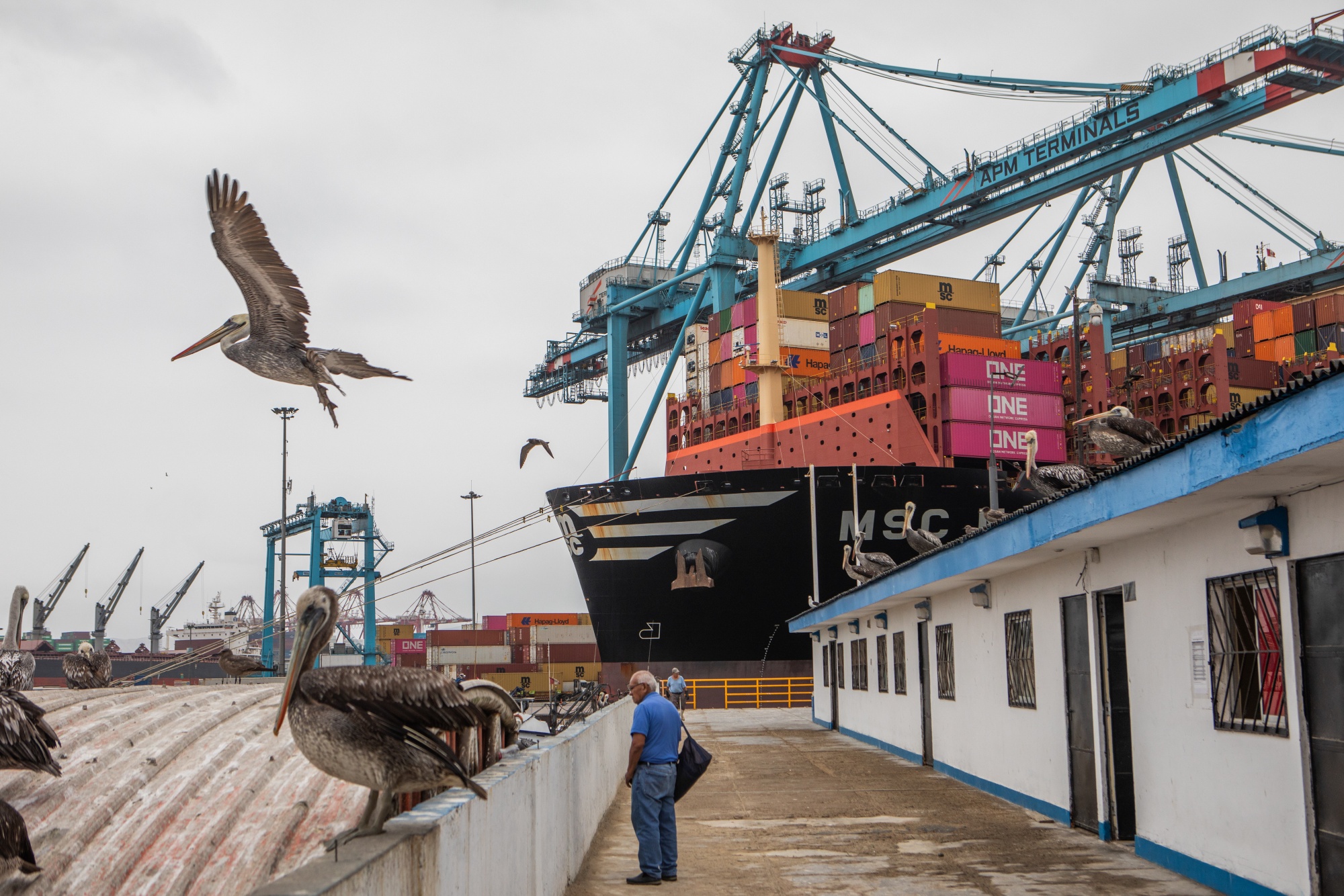
The Port of Callao in Callao, Peru, where the fishing sector has been disrupted due to the warming of the Pacific waters off the country’s coast.
Photographer: Marco Garro/Bloomberg
In countries including India and Colombia, El Niño events have repeatedly amped up pressure on energy systems and food commodities that help feed billions globally. Economic growth is already slowing in Peru as the nation’s lucrative anchovy fishery — which supplies exports valued up to $1.8 billion — remains closed due to warming ocean waters. El Niño may be contributing to volatile monsoon conditions in India. Cumulative rainfall through August 3 was 12% below normal nationally, raising risks for rain-fed crops and hydropower in the regions with the largest deficits. In the Philippines and Indonesia, policymakers have watched the price of pantry staples swell after working for months to contain inflation exacerbated by the Iran war. El Niño risks sending those numbers even higher. Drought conditions from a typical El Niño may cause consumer prices to jump by nearly two percentage points in both countries, according to research from Bloomberg Economics based on past episodes. “El Niño acts as an intermediate between economics and the climate, which is already warming and changing,” said Hazem Krichene, a senior climate economist at Allianz. “It might be an issue in those countries already suffering from a lot of geopolitical tensions and a lot of local conditions that are really, really hard.”
Keep reading
Japan’s heat reliefBy Yui Hasebe The glass door closes, and a curtain of cool air spills over your head, neck and shoulders, delivering instant relief from the punishing summer heat. 
Trusco Nakayama’s Do Hiemon Box.
Source: Trusco Nakayama Corp.
This is what it’s like to chill in the Do Hiemon Box, an oversized stainless-steel refrigerator that looks big enough to fit a human being, because that’s exactly what it’s designed to do. Trusco Nakayama Corp. has sold about 200 of the ¥1.5 million ($9,500) booths to steel mills, construction sites, golf courses, universities and leisure facilities since it went on sale earlier this year.
Read more
🎥 Attention all filmmakers!Working on a short documentary about climate change? Don’t miss your chance to submit it to the Bloomberg Green Docs film competition. Grand prize: $25,000. Submissions accepted through August 14, 2026. See official rules at bloomberg.com/greendocs. More from GreenMore from Bloomberg
Explore all Bloomberg newsletters. We’re improving your newsletter experience and we’d love your feedback. If something looks off, help us fine-tune your experience by reporting it here. Follow Us
You received this message because you are subscribed to Bloomberg’s Green Daily newsletter. If a friend forwarded you this message, sign up here to get it in your inbox.
|
Wednesday, August 5, 2026
The summer of fire isn’t over






Subscribe to:
Post Comments (Atom)
Next Africa: A steel elephant
Nigeria’s Ajaokuta factory hasn’t worked since 1979 ...
-
PLUS: Quantum threat pushes SEC into action ...


No comments:
Post a Comment