| Read in browser | ||||||||||||||


This is Bloomberg Opinion Today, today’s scapegoat of Bloomberg Opinion’s opinions. On Sundays, we look at the major themes of the week past and how they will define the week ahead. Sign up for the daily newsletter here. Subscribe to Bloomberg.com for unlimited access to all our coverage. Free RadicalsAs moderate Democrats freak out over the rise of the Democratic Socialist insurgents, I can offer this bit of solace: So far, nobody has given the keys to their city to Fidel Castro. (Yes, yes I know, Fidel is dead — just take it more figuratively than literally.) Because when I was nine years old, the mayor of my city did exactly that. In Havana, no less. It was 1975, and the man who handed over the key to Madison, Wisconsin, was Paul Soglin, who had been elected mayor two years earlier at the age of 27. Before that, he had been arrested three times for on charges including unlawful assembly, failing to obey orders from a police officer and blocking a bus lane (not as absurd as it sounds). Soglin became a folk hero after the police forcibly cut his hair while in custody. Too bad no Cuban barber did the same with this mustache: 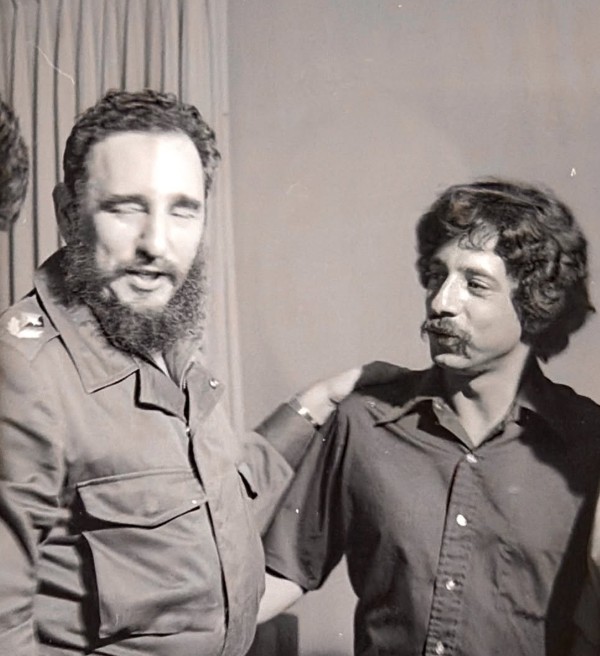
Castro and Soglin, comrades in hirsuteness
Source:Facebook
My point is not that a counterculture city elected a counterculture mayor at a counterculture time. It’s what happened later that’s interesting. Soglin served three stints as mayor — 1973-79, 1989-97 and 2011-19 — and all along he became more pragmatic, moderate and, dare I say it, sometimes conservative. By the end of his career he was preaching fiscal discipline and public-private development, crowing about his private-sector work for a tech company, taking a tough line on homelessness and, irony of ironies, ending the annual Mifflin Street Block Party, the always-raucous scene of the arrest that first brought him to public notice back in the ’60s.[1] So, can we picture Representative Alexandria Ocasio-Cortez working for Amazon someday? Probably not. Senator Bernie Sanders getting DIY help at Home Depot? Unlikely. But I wouldn’t be surprised to see New York City’s mayor, Zohran Mamdani, follow the Soglin path (well, minus the whole Castro thing). He is already showing pragmatism: maneuvering around the City Council NIMBYists to fast-track more housing; boosting the police headcount; keeping mayoral control of the schools; and, another irony of ironies, making nice with President Donald Trump. My final irony here is a good one: While famously establishment NYC elected a progressive mayor, famously progressive San Francisco has gone all moderate on us, electing Levi’s heir Daniel Lurie as mayor two years ago. And it seems to be working out all around, at least for now. “Despite their vast ideological differences, Mamdani and Lurie share some crucial attributes and approaches to politics that are at least as important as their policy positions in explaining their early successes,” writes guest columnist Jonathan Weber. “Politicians across America have much to learn from these commonalities.” OK, they are both relatively young. But you can’t teach youth any more than you can teach speed. So what else? Mihir Sharma thinks that style travels well overseas — in the person of new UK Prime Minister Andy Burnham. “Burnham’s modest announcements — comparatively cheap, easily explained and designed to be noticed by householders and small businesses — are closer to the approach of the only effective leader the populist left has produced in recent years: New York Mayor Zohran Mamdani,” writes Mihir. “Burnham is making British politics feel graspable again, just as Mamdani won because he understood that his electorate responded to leaders who spoke about everyday frictions.” Mamdani is, however, following through on one of his socialist-leaning campaign promises: city-owned grocery stores. Allison Schrager thinks it’s a costly misstep. 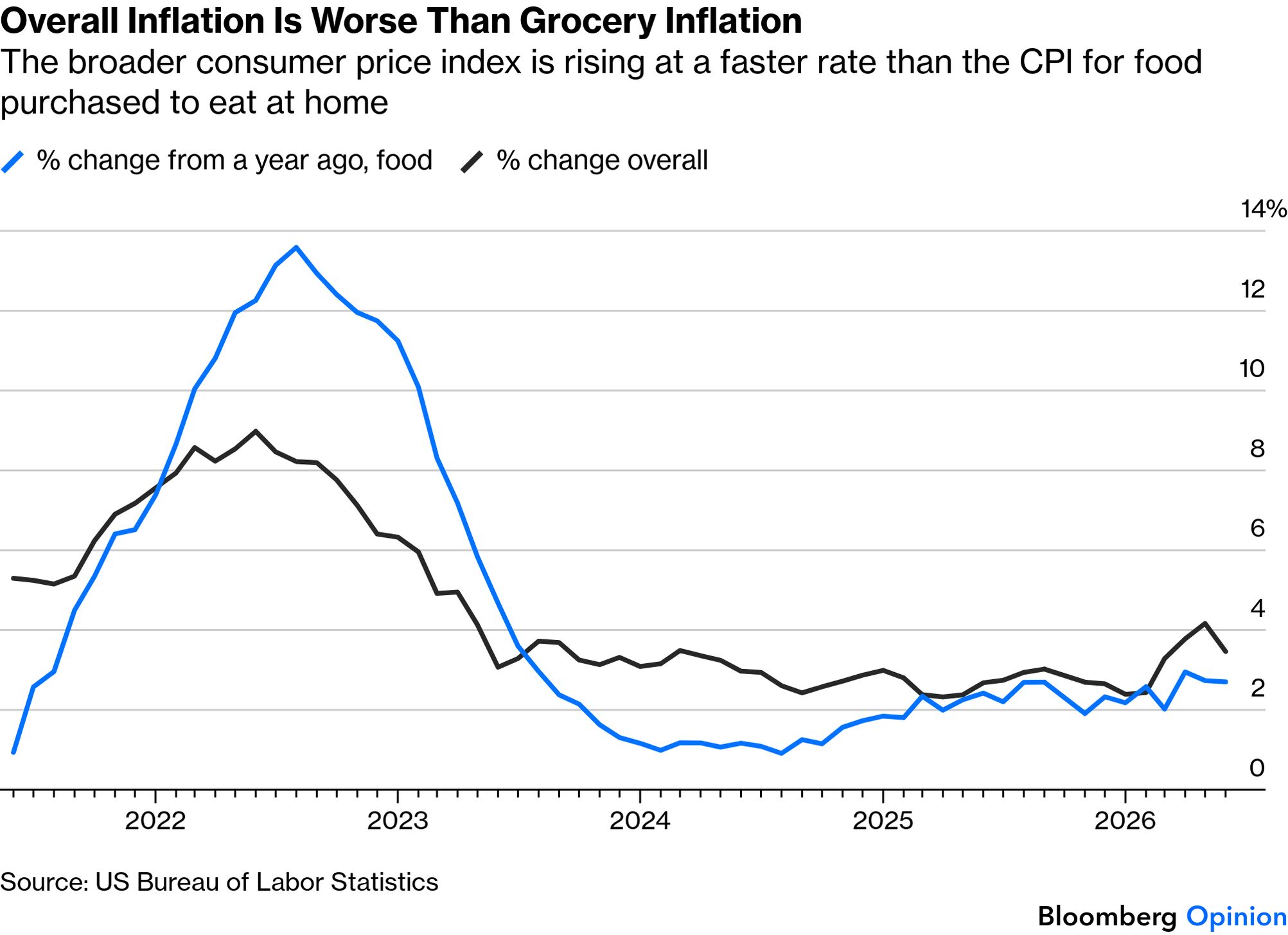
“When a market fails, it is tempting for public officials to intervene with a policy to fix it. Sometimes these interventions work. Often they make the problem they are trying to solve worse — or create new ones. “New York City Mayor Zohran Mamdani’s plan for government-run grocery stores, five of which are scheduled to open in 2029, falls into the latter category,” she writes. “Studies have found that when healthier food is made available in low-income areas, people don’t buy it. Local stores don’t sell highly processed, sodium-rich and sugary food because it is cheaper — they stock it because it’s what people want to buy. Perhaps that is a failure of public health policy or misguided farm subsidies. In any case, a government-run store does not fix the problem.” And therein lies a conundrum for the Democrats. Progressives and socialists have a lot of momentum inside the party, but traditional liberals and moderates are still a healthy majority. 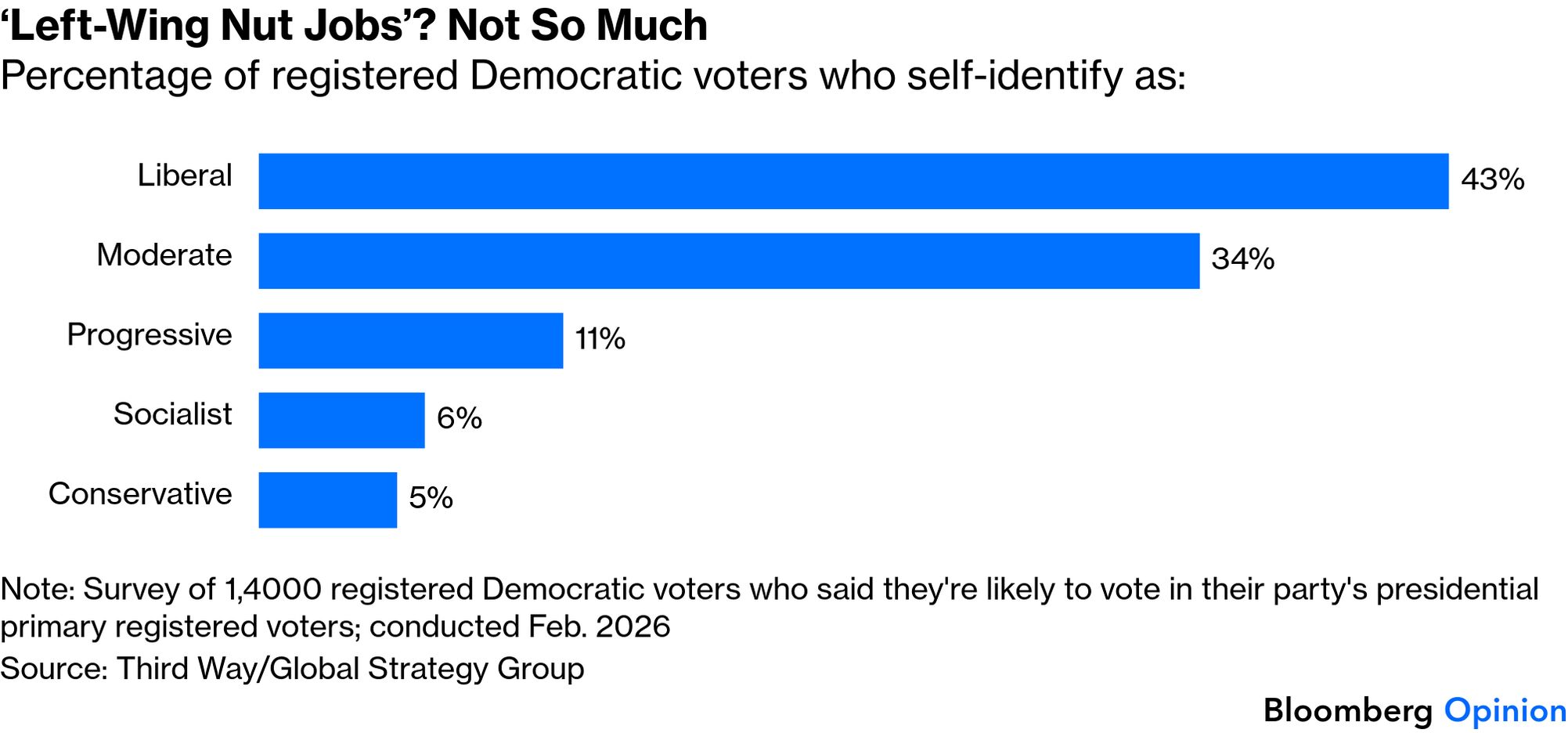
It’s a civil war being fueled in part by a foreign one: the Israeli incursion into the Gaza Strip. Can anyone give peace a chance? Yep, Mary Ellen Klas reports. Consider the Texas Democrats’ convention in June. “Texas delegates recognized the right of return for Palestinian refugees. They supported Palestine becoming a United Nations member state ‘when qualified under the UN Charter.’ And they name-checked the American Israel Public Affairs Committee — one of the most prolific campaign fundraising organizations in the country — as a harmful force,” she writes. “But the party also attempted to bridge tensions by acknowledging that criticism of Israel’s policies should not be perceived as hostility toward Israelis.” Meanwhile, back in my home state, hostility remains the order of the day. “Democrats are freaking out about Wisconsin. State Representative Francesca Hong, a Democratic Socialist, is leading Badger State polls in the gubernatorial primary, as centrist Democrats try to coalesce around a candidate who can block her path,” Nia-Malika Henderson writes. “Their efforts come less than a month before primary day, and could end up bolstering Hong. It’s a whole hot mess, with candidates dropping out (and one jumping back in) all with an eye toward finding someone moderates think can compete in a purple state.” That messy race got even messier on Thursday, when the centrists’ best remaining hope, former Lieutenant Governor Mandela Barnes, dropped out of the race. America’s Dairyland is the current state of the Democratic Party in a milkshake. There is plenty of blame to go around going back years (looking at you, Hillary Clinton) but today’s scapegoat is Democratic National Committee leader Ken Martin, who is not helping himself: A recent New York Times investigation found that the Dems are millions of dollars in debt and that Martin is becoming so paranoid about his job he threw a phone at the desk of a subordinate. “The knives are out for Martin, who seems in over his head at a time when the Democratic Party desperately needs innovative leadership and bold messaging,” Nia-Malika writes in a separate piece. “For Democrats, who lead by 11 points in the latest generic ballot polling, Martin’s weak messaging and fundraising couldn’t come at a worse time.” Chaos at the top isn’t perhaps such a big change for the Dems, but their new primary calendar — which demotes Iowa and New Hampshire from their longtime leadoff spots — is creating further turmoil down below. “No one can be certain yet how this new nominating system will function. At the least, it ensures that candidates cannot compete without appealing to minority voters. The ideological implications of the new calendar are less certain,” writes Ronald Brownstein. Less certain, sure, but Ronald has a guess: “The new plan could create a more challenging pathway for centrist candidates.” Well, at least so far nobody has handed the keys to the city to Nicolás Maduro. Bonus Roots Radical Reading:
What’s the World Got in Store?
Ticket to RideWhile Soglin and Mamdani are two lefty mayors who have searched for common ground, former New York City Mayor Bill de Blasio rarely found common sense. But he did one admirable thing: lowering the speed limit on city streets from 30 miles an hour to 25 MPH. Of course, given that our streets are more chaotic than DNC headquarters, enforcing it is nearly impossible. Yet there has been one successful effort few New Yorkers likely even know about: speed cameras, which operate near schools and infrastructure work zones, and dish out $50 tickets by tracking license plates. Justin Fox is all for it. “Speed cameras are in fact a proven safety measure, with study after study — most conducted in Europe, where the cameras are more widely used and accepted than in North America — finding that they make roads safer,” he writes. “In Ontario, the cities of Ottawa and Toronto have gathered striking evidence since the speed-camera ban of how effective they were in dissuading motorists from going too fast.” 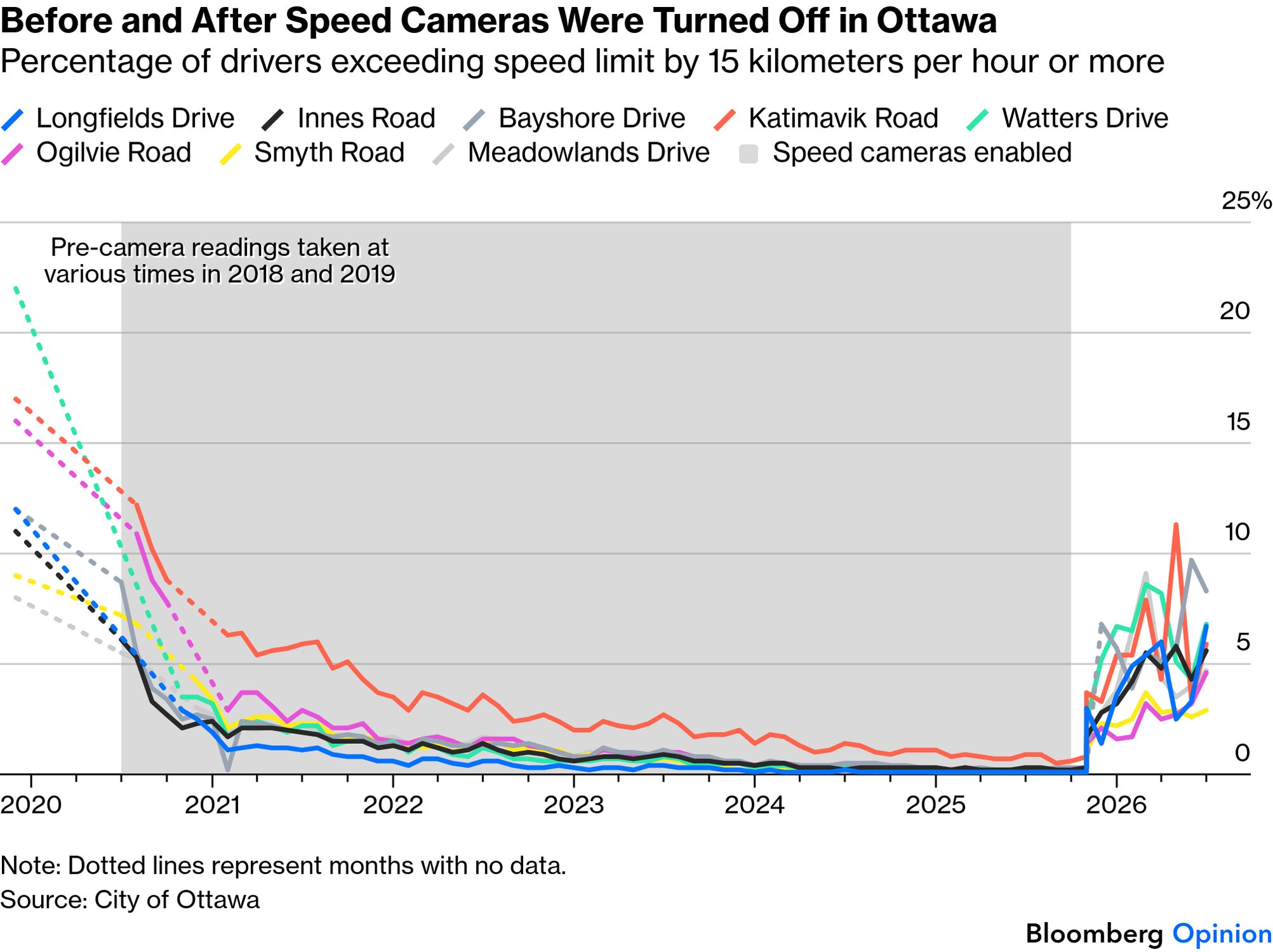
“So what do some people have against speed cameras?” Justin asks. “I think it’s mainly just that drivers are accustomed to a certain amount of impunity. Yes, almost everyone accepts that going more than 10 mph over the speed limit means risking a ticket, but when all the enforcement is done by police and highway patrol officers with radar guns, that risk is quite low. Speed cameras change the equation. Drive too fast in the wrong place, and you will get caught.” So, bad news if you just dropped more than half a mil on this: 
The 12Cilindri Manuale’s gated shifter
Photographer: Kai Grossmann via Source: Ferrari
Ferrari, with its stock now stalled, is hitting reverse to zoom ahead. “The limited edition 12Cilindri Manuale grand tourer is its first new car in more than a decade to feature a gear lever and clutch pedal,” Chris Bryant writes. “All 1,499 of these front-engined two-seaters have already been allocated to loyal clients, with shipments beginning next year. Prices start at €590,000 ($671,000), with customization likely adding another six figures on top.” 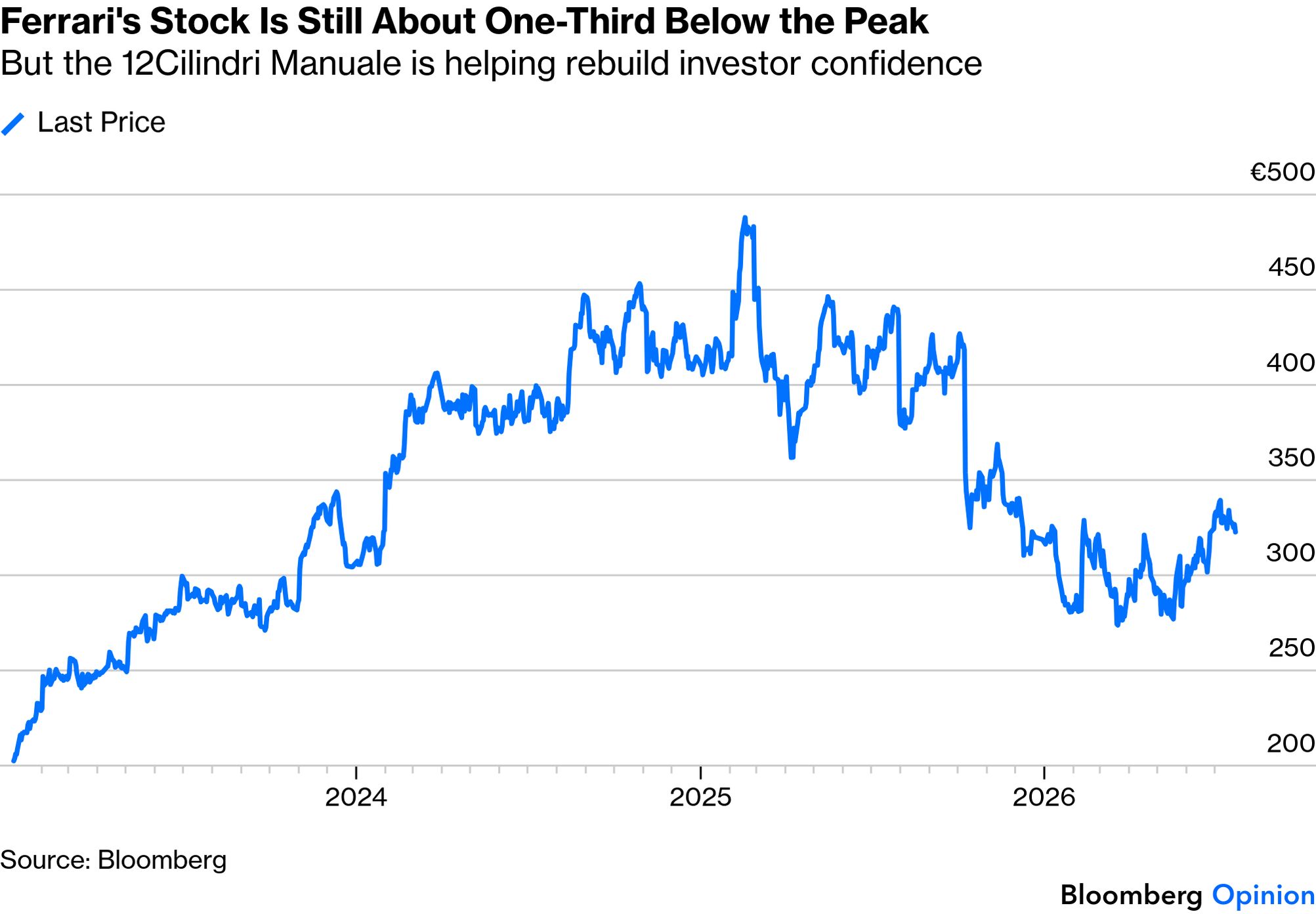
“While Ferrari is clearly adept at capitalizing on its rich heritage and pairing innovation with tradition, it mustn’t lose sight of younger high-earners, including tech world beneficiaries of the artificial intelligence boom. The average Ferrari client is in their 50s,” writes Chris. Before the Ferrari execs begin pandering to youth, they might want to check out this hilarious video of my editor, thirtysomething Jessica Karl, haplessly trying to learn to drive stick from her father. Chalk another one up for Generation X. Note: Please send sodium-rich sugary food and feedback to Tobin Harshaw at tharshaw@bloomberg.net. Sign up here and find us on Bluesky, TikTok, Instagram, LinkedIn and Threads. We’re improving your newsletter experience and we’d love your feedback. If something looks off, help us fine-tune your experience by reporting it here. [1] Unfortunately, Soglin never showed remorse about meeting with Castro, who ran a repressive totalitarian state, executed political enemies, banned independent media and labor unions and sent gay men to forced labor camps because of their “bourgeois perversion.” After the Cuban leader’s death in 2016, Soglin eulogized him as “a popular leader who inspired generations of Cubans.” Follow Us
You received this message because you are subscribed to Bloomberg’s Opinion Today newsletter. If a friend forwarded you this message, sign up here to get it in your inbox.
|
Sunday, August 2, 2026
Mamdani’s secret sauce might not be socialism





Subscribe to:
Post Comments (Atom)
Elon Musk Says AI Will Overtake Rockets at SpaceX… This Month
SpaceX generated $2.6 billion from its AI segment last quarter – and Musk says the business is about to become larger than everything else...
-
Revolutionary Stem Cell & PRP —Start Your Journey Today ...
-
You’ve shown interest in Regenerative Medicine ...


No comments:
Post a Comment