| Read in browser | ||||||||||||||

Heat waves this summer in London are delivering new risks to homes across the UK capital. Today’s edition explains how a shrinking of the city’s clay soil is destabilizing foundations and has triggered a record number of insurance claims tied to subsidence. Elsewhere, hot and dry conditions are boosting demand for so-called “coolcations” and that’s sent hotel prices in Scotland surging in recent months. In Nevada, a fast-spreading wildfire prompted evacuation orders for tens of thousands of residents. Subscribe to Bloomberg.com for unlimited access to all our coverage. London’s subsidence riskBy Gautam Naik Londoners are facing historic levels of subsidence risk after five successive heat waves dried out the clay soil on which much of the city is built. 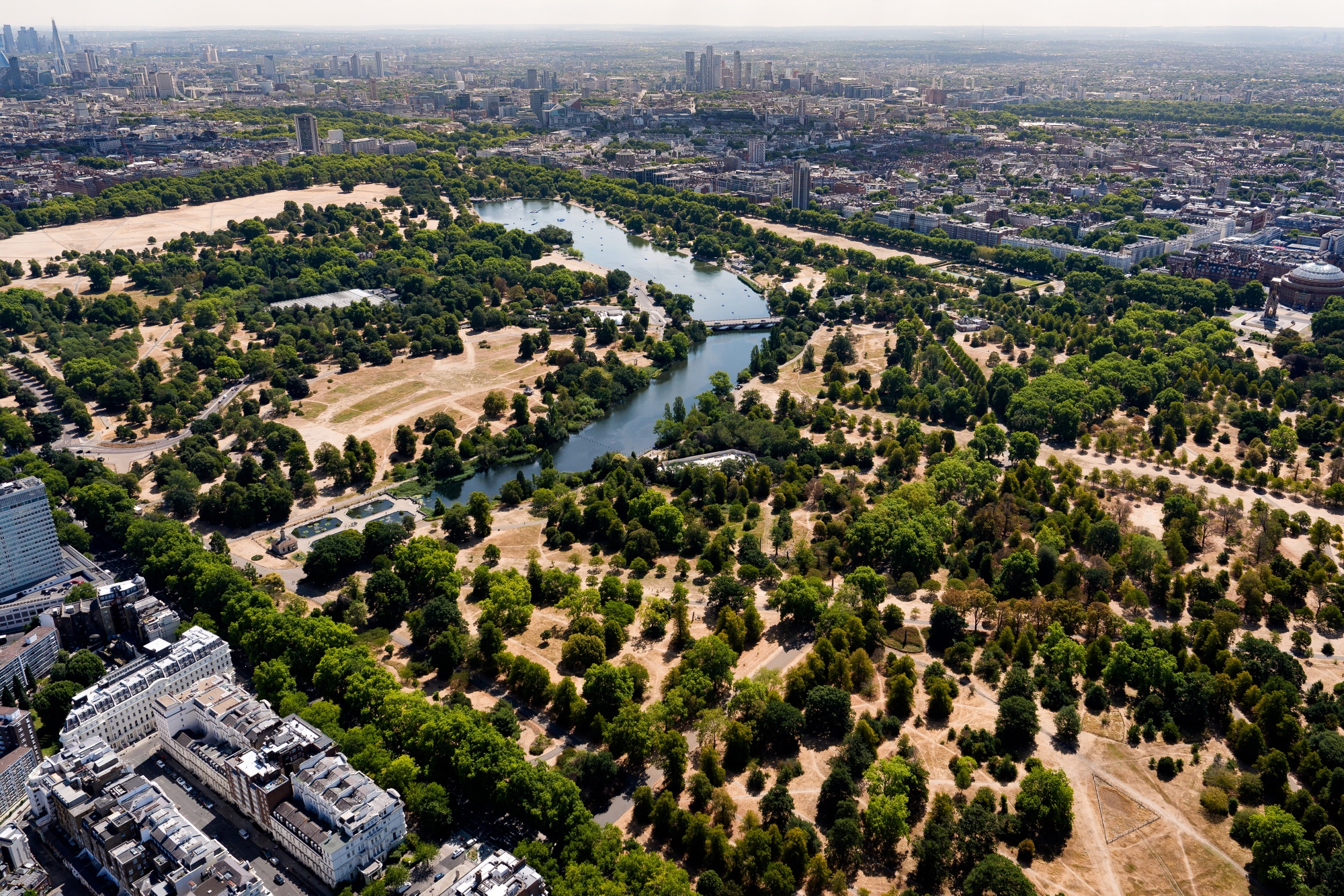
Central London during the heat wave in July.
Photographer: Aaron Chown/PA/Getty Images
Insurance claims tied to subsidence — a phenomenon associated with bouts of hot, dry weather that shrink the soil and destabilize the foundations on which buildings stand — hit a record last quarter, according to data provided by the Association of British Insurers. On average, households claimed £20,000 ($27,200) for the risk, more than in any previous quarter and a 15% jump from the same period in 2025, the ABI said. Laura Hughes, head of general insurance at the ABI, says the upward trend is likely to continue. “We expect to see more subsidence cases because of the hot weather,” she said in an interview. Londoners have taken to social media to express their dismay. On Reddit, people offered personal accounts telling of “horrendous cracking” in their homes, and “doors sticking” due to subsidence. One said it was “genuinely scary” to discover that their kitchen had moved as the foundations of the home shifted. Another Reddit user described the response of a structural engineer they contacted for help. “Before I could finish explaining he laughed and said, ‘You and 20,000 other people in southeast London’,” the person wrote. 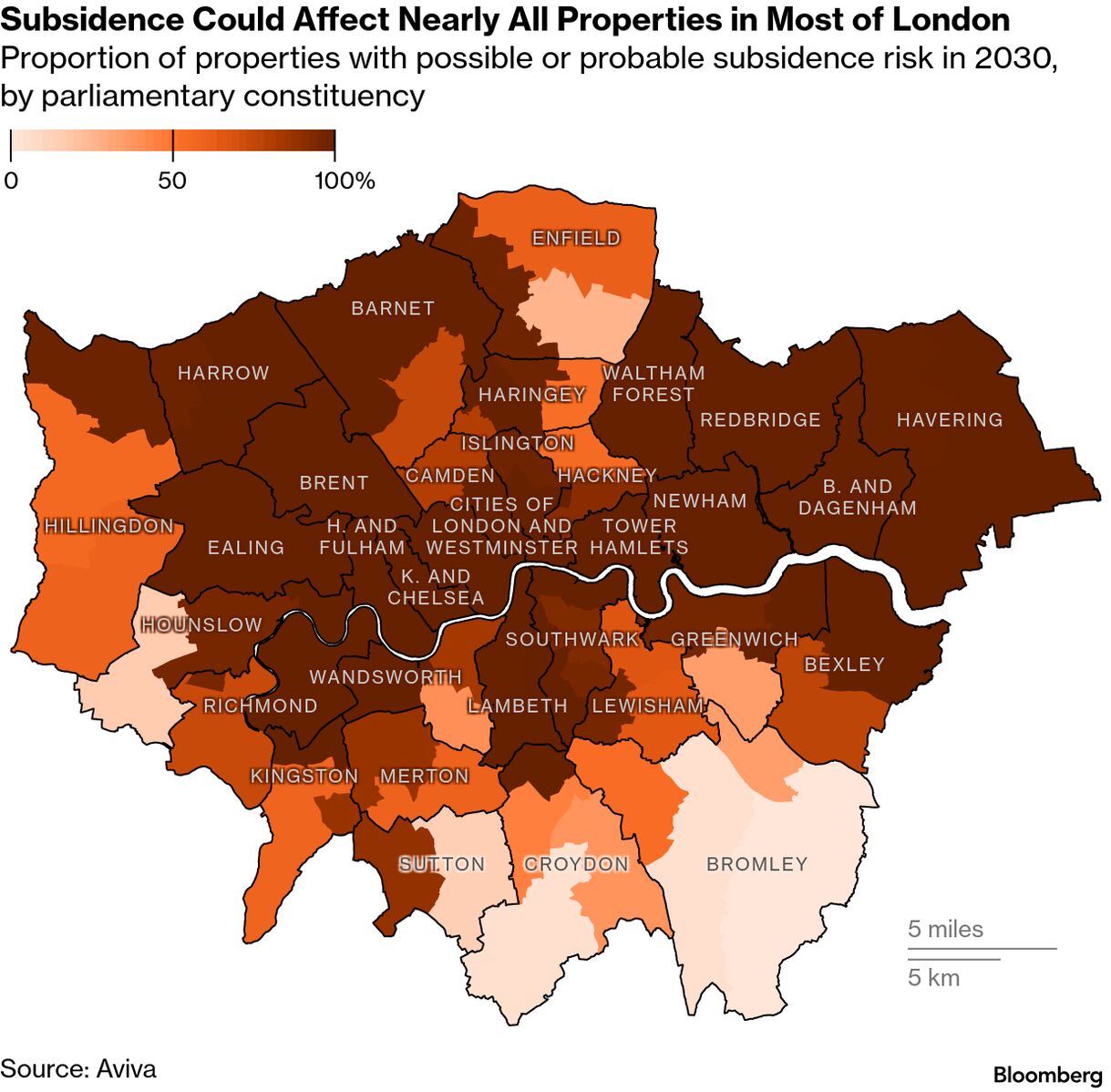
“It’s crazy, what’s happening now,” said Otso Lahtinen, chief executive of Geobear, an engineering firm that’s regularly called in to repair damage caused by subsidence. “It’s the new norm, and it seems it will happen more often in the next 20-30 years.” Data provided by Aviva Plc show that the areas of London that are most at risk are some of the UK capital’s most sought after, namely the boroughs of Westminster, as well as Kensington and Chelsea. While subsidence has been affecting homes in the British capital for decades, climate change is making it worse. London clay is especially sensitive to fluctuations in moisture, expanding when wet and contracting when dry. The threat of subsidence in the UK is concentrated in and around London as well as in parts of the southeast. In the four years through 2025, insurance payouts for subsidence damage soared roughly 90% to reach a record £297 million, according to data provided by the ABI.
Keep reading
Lost value20%-25% The average property devaluation as a result of subsidence, according to the Federation of Master Builders Evidence of warming“The impact that climate change is having is undeniable.” Laura Hughes Head of general insurance at the Association of British Insurers. Rising “coolcation” demandHotel rooms in rural Scotland have surged in price over the summer, the latest sign of growing interest from American tourists and domestic travelers seeking “coolcations.” 
A sea view terrace at Knockinaam Lodge.
Source: Knockinaam Lodge
The average daily rate of a hotel room there rose 9.2% in the three months through July from a year earlier, according to data from CoStar Group Inc. That’s the fastest growth of any rural British holiday destination. The cost of a night’s stay there climbed to above £167 ($228) last month, making it by far the UK’s priciest rural location of the regions analyzed. The data show how Scotland is benefiting from a surge in interest from travelers at home and abroad. The country’s historic golf courses, whisky, castles and lochs are drawing US visitors, helped by better airport connections. Meanwhile, British tourists seeking cooler domestic breaks, or “coolcations,” to avoid the heat waves in parts of England are also driving demand. “You are seeing people choosing to come to somewhere that gives them the same kind of experience at the seaside and rural coastal locations, but without the intense heat that you’re getting in the south of the country or southern Europe,” said Kate Nicholls, chief executive officer of lobby group UK Hospitality.
Read more
Tune in Wednesday
Photographer: Laura McDermott/Bloomberg
Join the conversation: The AI boom has spurred trillions of dollars in rapid investments to fund critical data center and energy infrastructure, but many of the projects have met fierce local opposition. What questions do you have about America’s battle over AI data centers? Join Bloomberg journalists for an interactive Live Q&A on Wednesday, Aug. 26 at 1 p.m. EDT. Set a reminder and stream the conversation here. Send in your questions early to liveqa@bloomberg.net 🎥 Attention all filmmakers!Working on a short documentary about climate change? Don’t miss your chance to submit it to the Bloomberg Green Docs film competition. Grand prize: $25,000. Submissions will be accepted through October 2, 2026. See official rules at bloomberg.com/greendocs. More from GreenMore from Bloomberg
Explore all Bloomberg newsletters. We’re improving your newsletter experience and we’d love your feedback. If something looks off, help us fine-tune your experience by reporting it here. Follow Us
You received this message because you are subscribed to Bloomberg’s Green Daily newsletter. If a friend forwarded you this message, sign up here to get it in your inbox.
|
Monday, August 24, 2026
Heat shakes London’s foundations







Subscribe to:
Post Comments (Atom)
The market just flashed red
The AI boom isn't over — it's shifting. See who actually profits from Phase 2. ͏ ͏ ͏ ͏ ͏ ͏ ͏ ͏ ͏ ͏ ͏ ͏ ͏ ͏ ͏ ͏ ͏ ...

-
Revolutionary Stem Cell & PRP —Start Your Journey Today ...


No comments:
Post a Comment