| Read in browser | ||||||||||||||

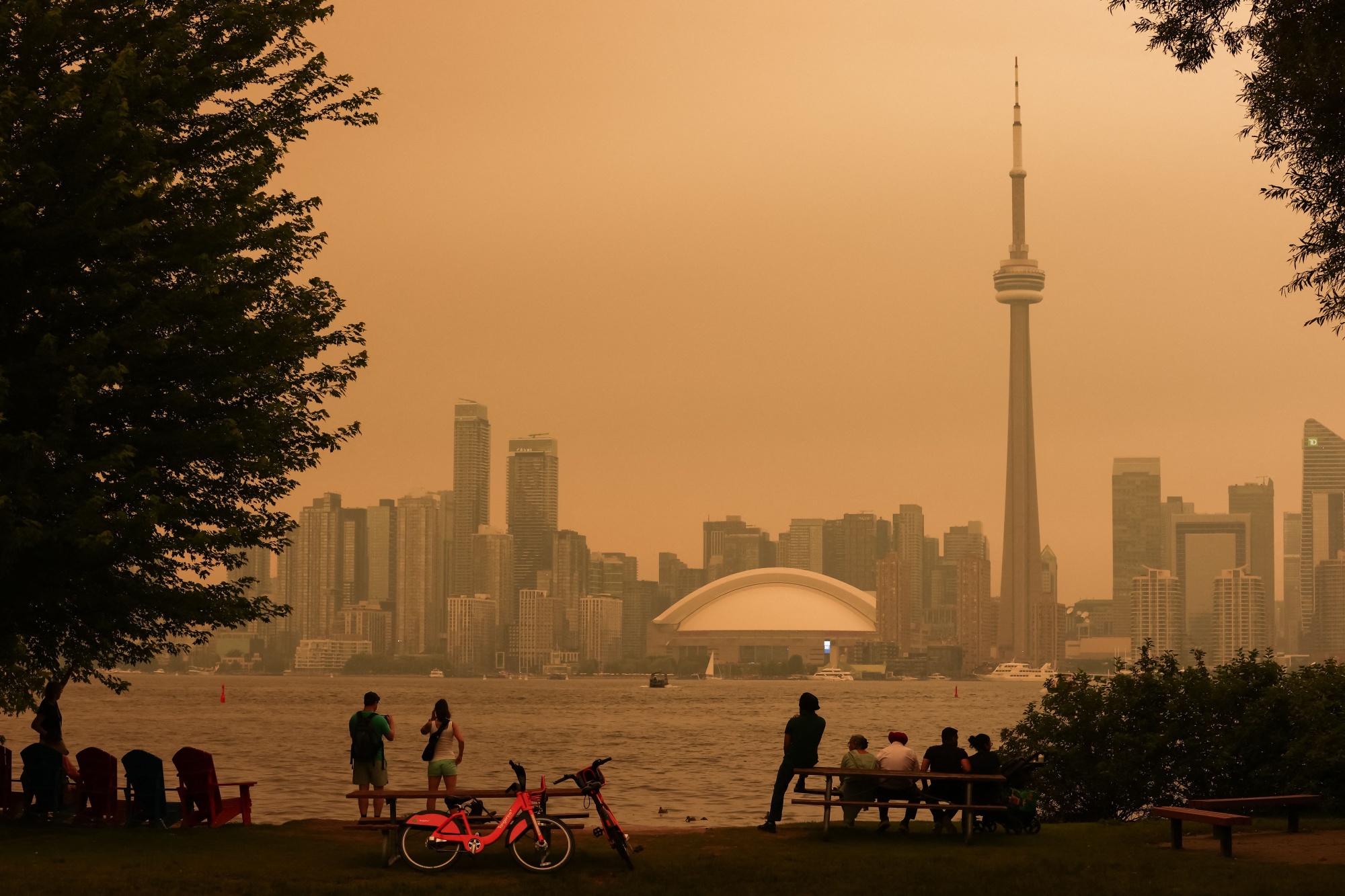
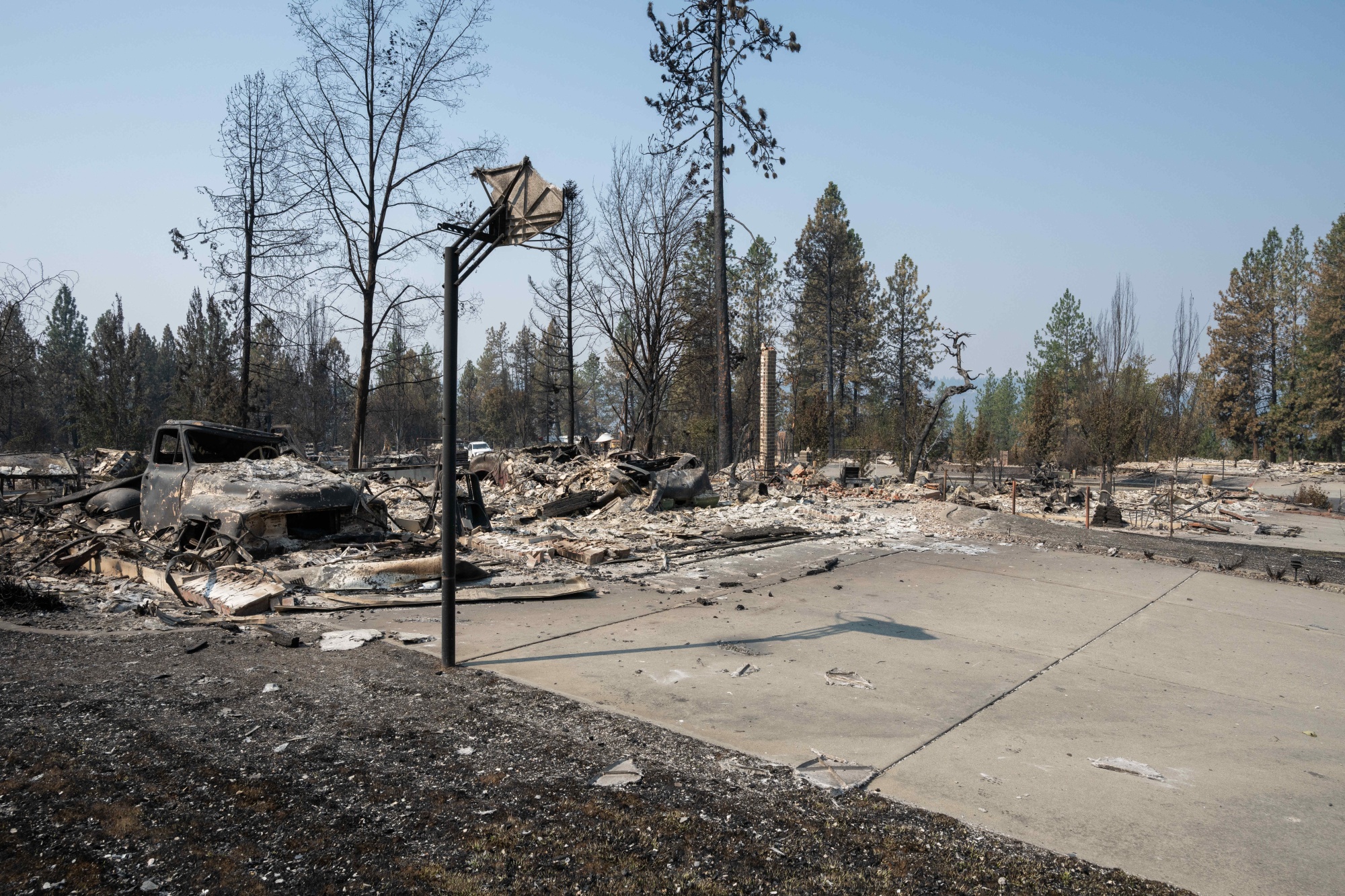
Is golf an environmental issue? In today’s edition we examine debates about the sport’s impact at opposite ends of the planet. Also, new statistics detail the death toll in Europe from extreme heat this year, and scientists explain how climate change made Canada’s wildfires more likely. Scotland’s golf showdownBy Laura Avetisyan 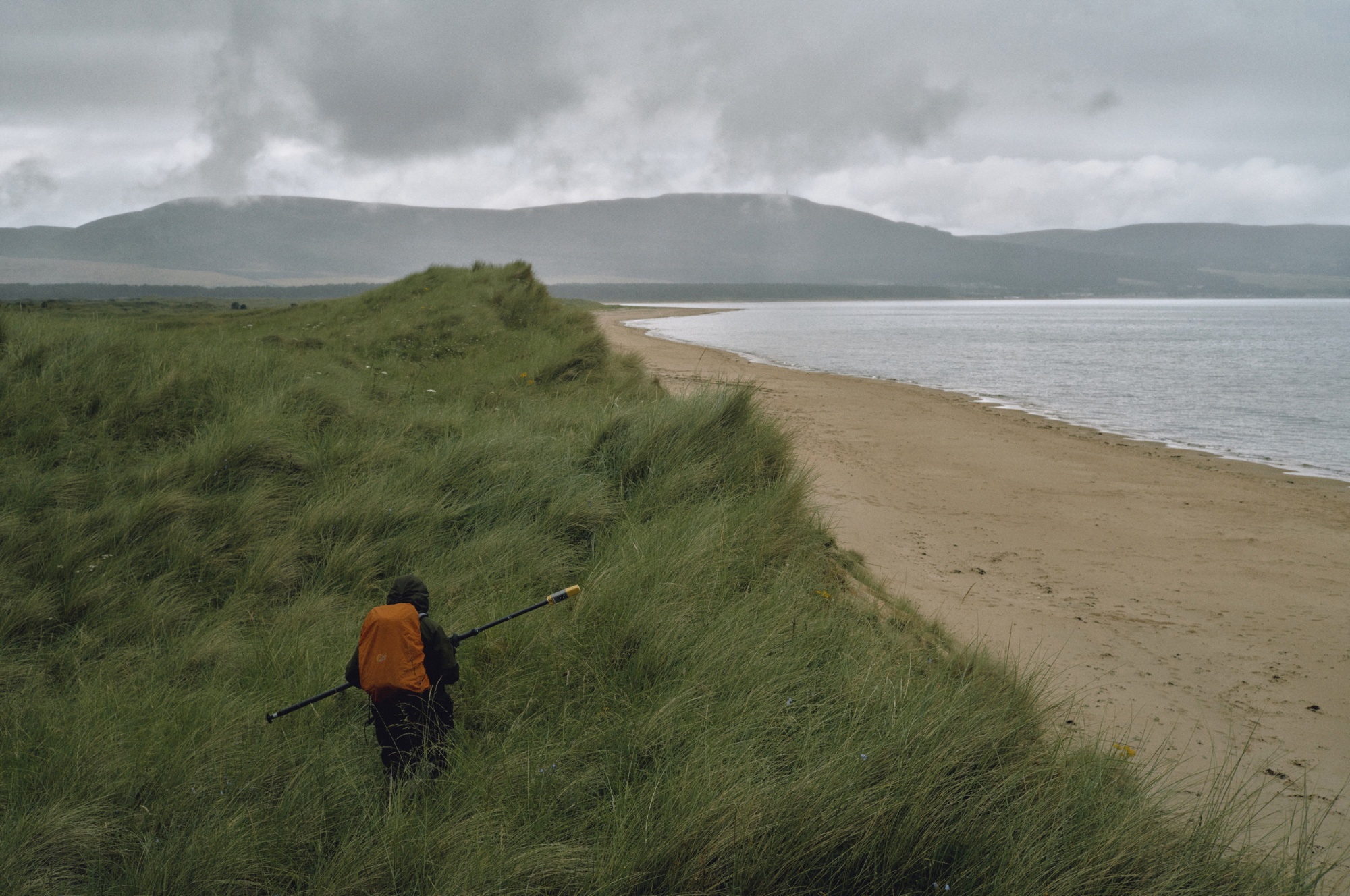
Local ecologist Tom Dargie at Coul Links, a protected coastal sand dune system, in Sutherland on the east coast of Scotland.
Photographer: Michael Vince Kim/Bloomberg
It’s the sort of real estate showdown being played out across the globe as investors seek to monetize sparsely populated sites and deep-pocketed tourists look for somewhere niche to spend their time and money. Standing against them is an often-powerful lobby of nature watchers and scientists. It’s also a story not unfamiliar to Scotland after the government cleared Donald Trump to build a premier course on a protected area near Aberdeen almost two decades ago, well before he became US president. Should the conservationists prevail this time, it would be a significant victory for them and a big setback for an expanding golf tourism market estimated by Fortune Business Insights to be worth about $3 billion in the UK. Rejecting the golf development plan at Coul Links, which is part of the Loch Fleet Site of Special Scientific Interest, or SSSI, a diverse ecosystem next to the chilly waters of the North Sea, would probably kill the project for good. The landowner, Edward Abel Smith, has an initial £20 million ($27 million) of US-based financing ready for release as soon as he gets the green light, a large part of which would to go to preserving the wetlands, grasses and dunes next to the proposed site. The Keiser family, whose résumé includes top-ranked resort Bandon Dunes in Oregon, would develop a championship-level course designed by golfing royalty in the form of Bill Coore and two-time major title winner Ben Crenshaw. The land to be developed on the SSSI amounts to just 1.5 hectares (3.7 acres). 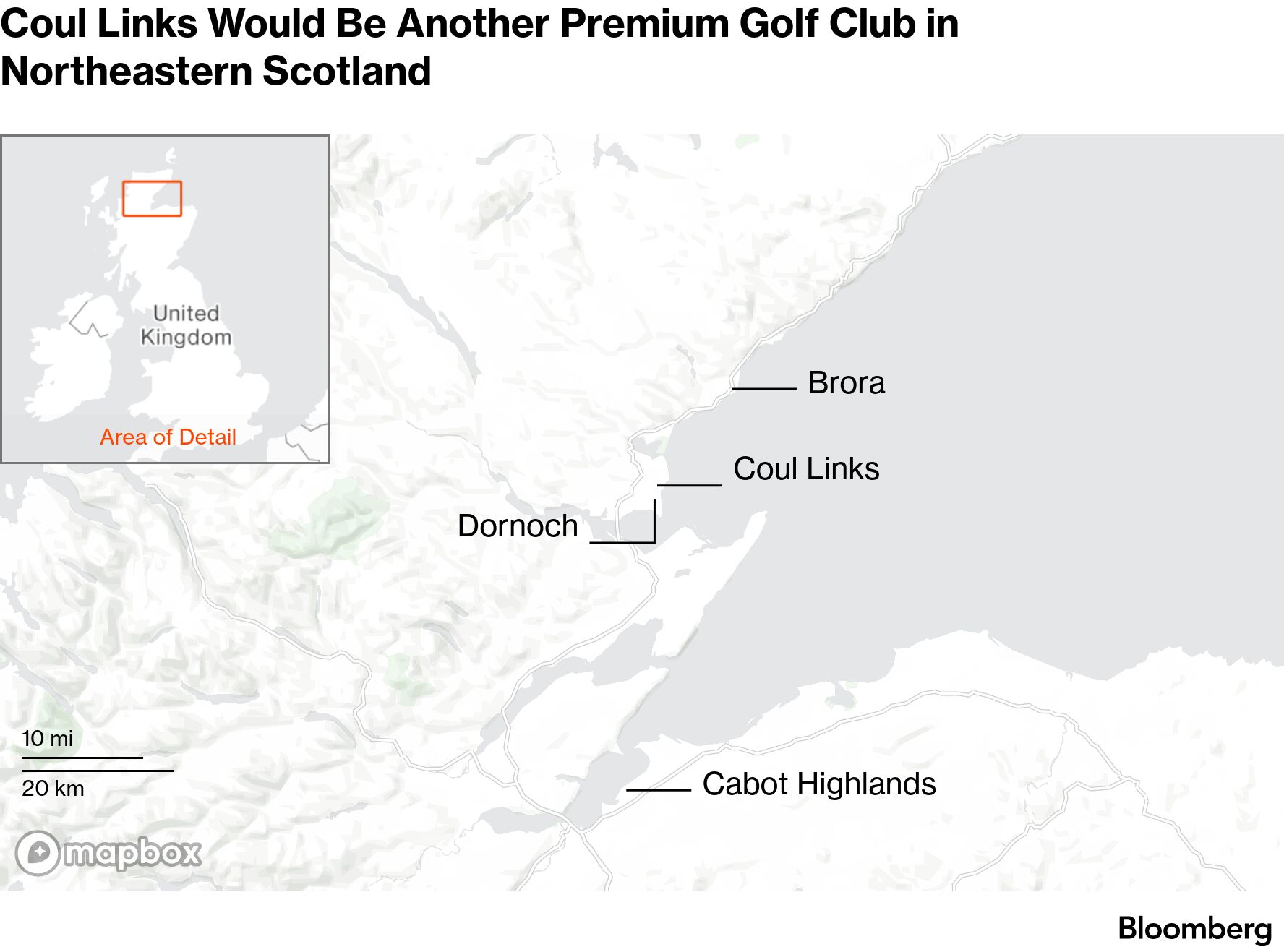
There would be no members, only people wanting to knock a small ball around a chunk of land with heather-clad mountains in the background and the sound of the sea not far away. Another £30 million would go toward a new hotel and bolstering local infrastructure. For anyone wanting to make a weekend of it, Royal Dornoch Golf Club is about a 10-minute drive away. But on the face of it, Communities for Coul, or C4C, the not-for-profit group backing the project, has an uphill task convincing Scottish ministers that its proposal is for the general good. A previous iteration in 2020 was turned down, and government advisers aren’t in favor of this latest update. Even so, it’s emphasizing how the course would preserve rather than damage the area’s ecology, create 400 sustainable jobs and boost a wregion losing young people to bigger cities and abroad. 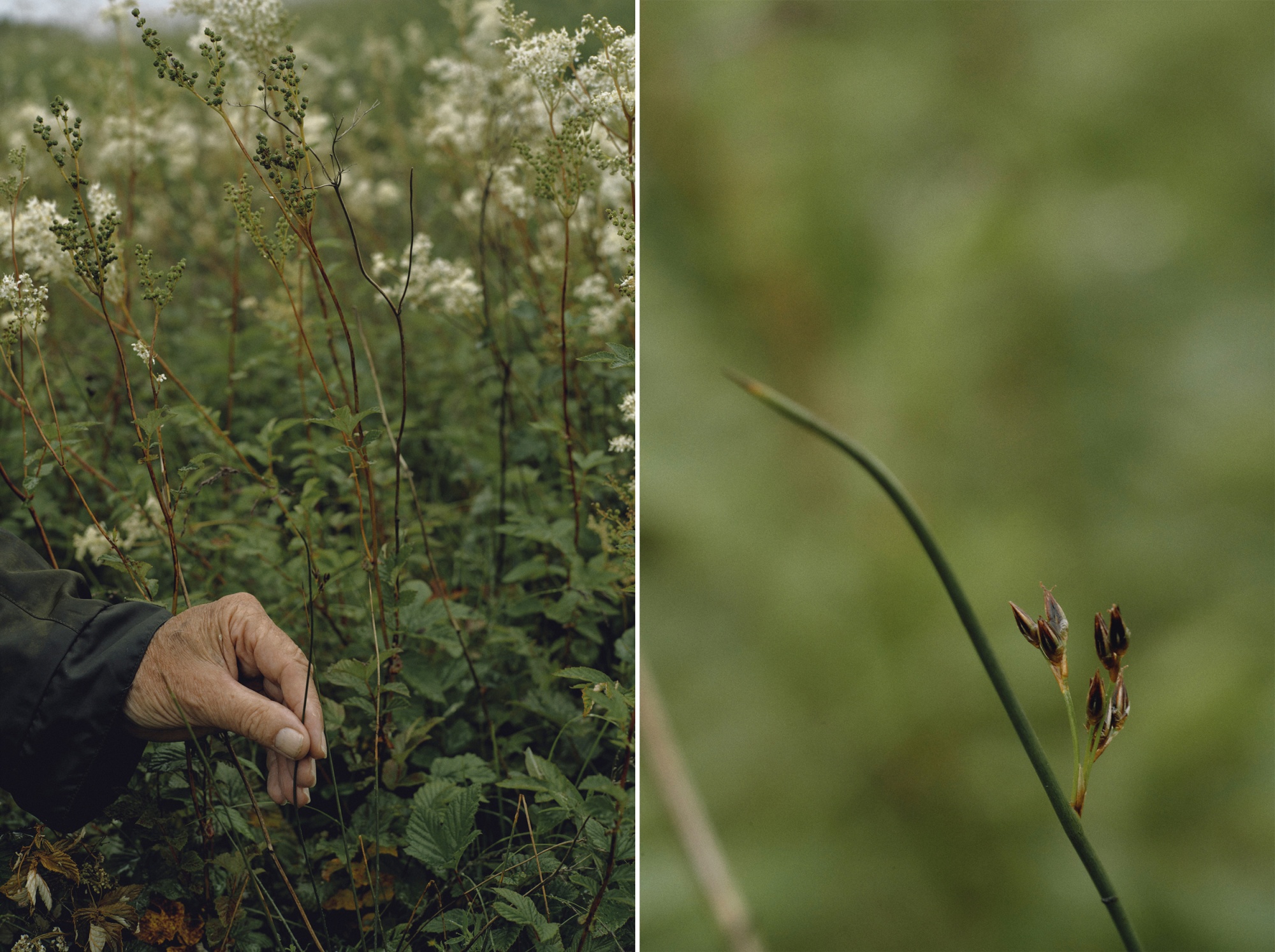
A stem of Baltic rush in Coul Links, the plant at the heart of the opposition to the course.
Photographer: Michael Vince Kim/Bloomberg
The timeline has accelerated in recent weeks, with a decision possible as soon as this month. Following a government request for more information about how the proposal ties in with regulations on protected wetlands, C4C filed an update noting that invasive species pose an existential threat to the entire dune complex if the status quo continues. Plants such as meadowsweet and creeping thistle have almost doubled their spread in the past five years, hampering the wind’s ability to sculpt and mold the dunes, the report says.
Keep reading
UK golf market$3 billion The size of the golf tourism market in the UK, according to an estimate by Fortune Business Insights. Facing opposition“I see the same drive for economic profit and complete ignorance for the ecosystem” Maggie Chapman A Scottish Green Party lawmaker and Member of the Scottish Parliament for North East Scotland Chapman, who has opposed other golf developments, comments on plans for Coul Links. Enough room for golfers?Until Mark Wahlberg emerged as its unlikely champion, few people outside Sydney had heard of Moore Park Golf Course. In 2024 the actor filmed an impassioned plea from its 10th hole, urging authorities to save the century-old public course from redevelopment. But after years of debate, the New South Wales state government is pressing ahead with plans to shrink the 18-hole course by about a third as it seeks to ease a housing affordability crisis. 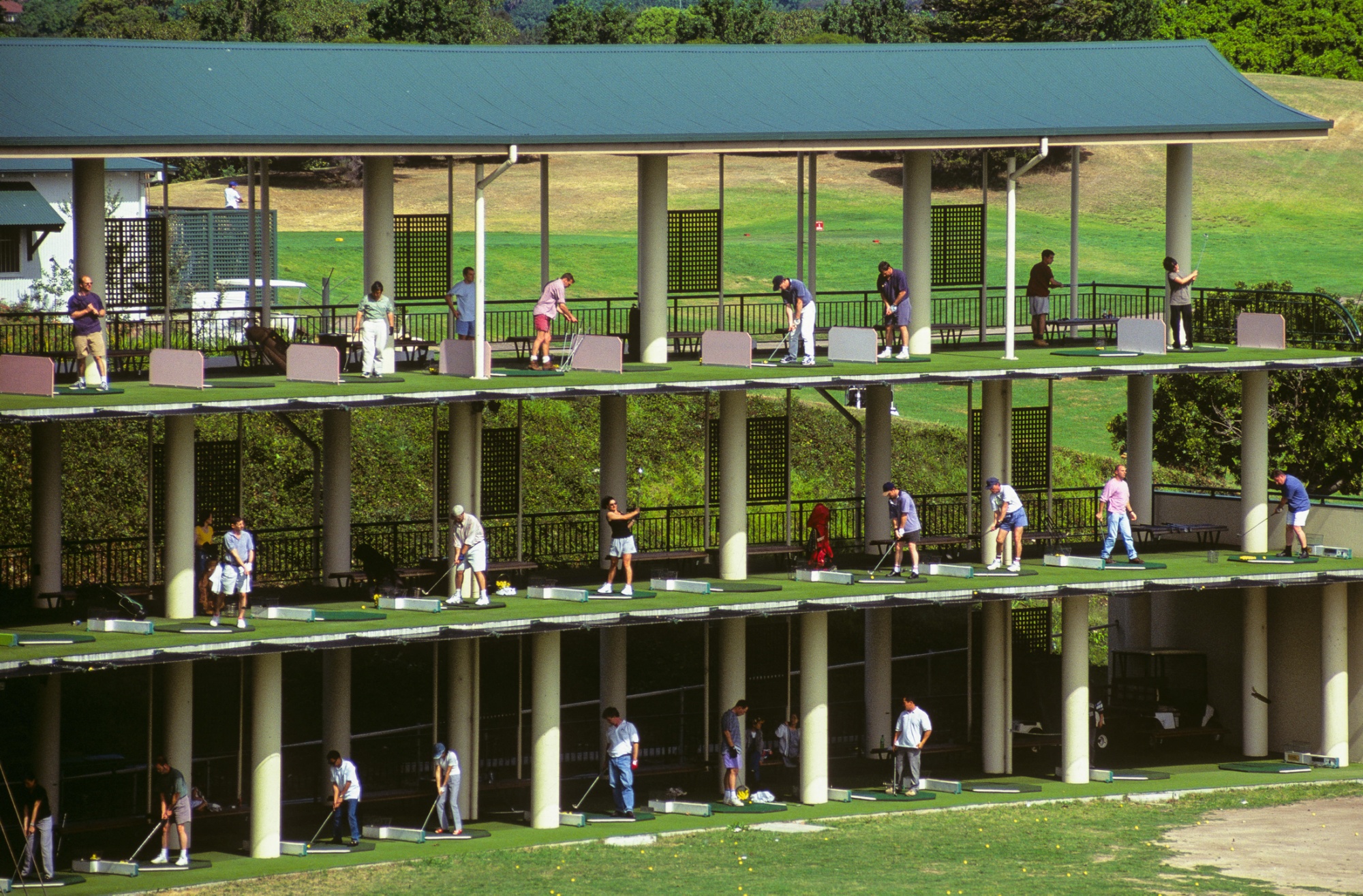
Golfers on the multi-level driving range at Moore Park Golf Course.
Photographer: Robert Wallace/Alamy
The land won’t be used for new homes, though. Instead, 20 hectares (about 28 soccer pitches) is being turned into public parkland, with walking and running tracks and open green space for tens of thousands of nearby residents. The decision reflects a challenge confronting Sydney and cities around the world: finding room for both more homes and open space as populations grow, housing becomes less affordable and climate change makes urban greenery increasingly essential to keeping neighborhoods cool. “Taking over something like a golf course, which doesn’t really serve very many people’s needs, and turning part of it into a more public facility” is a “very progressive thing to do,” says Ian Woodcock, senior lecturer in urbanism at the University of Sydney. Ideally, public open space should be “accessible to and useful for as many different people as possible.”
Read more
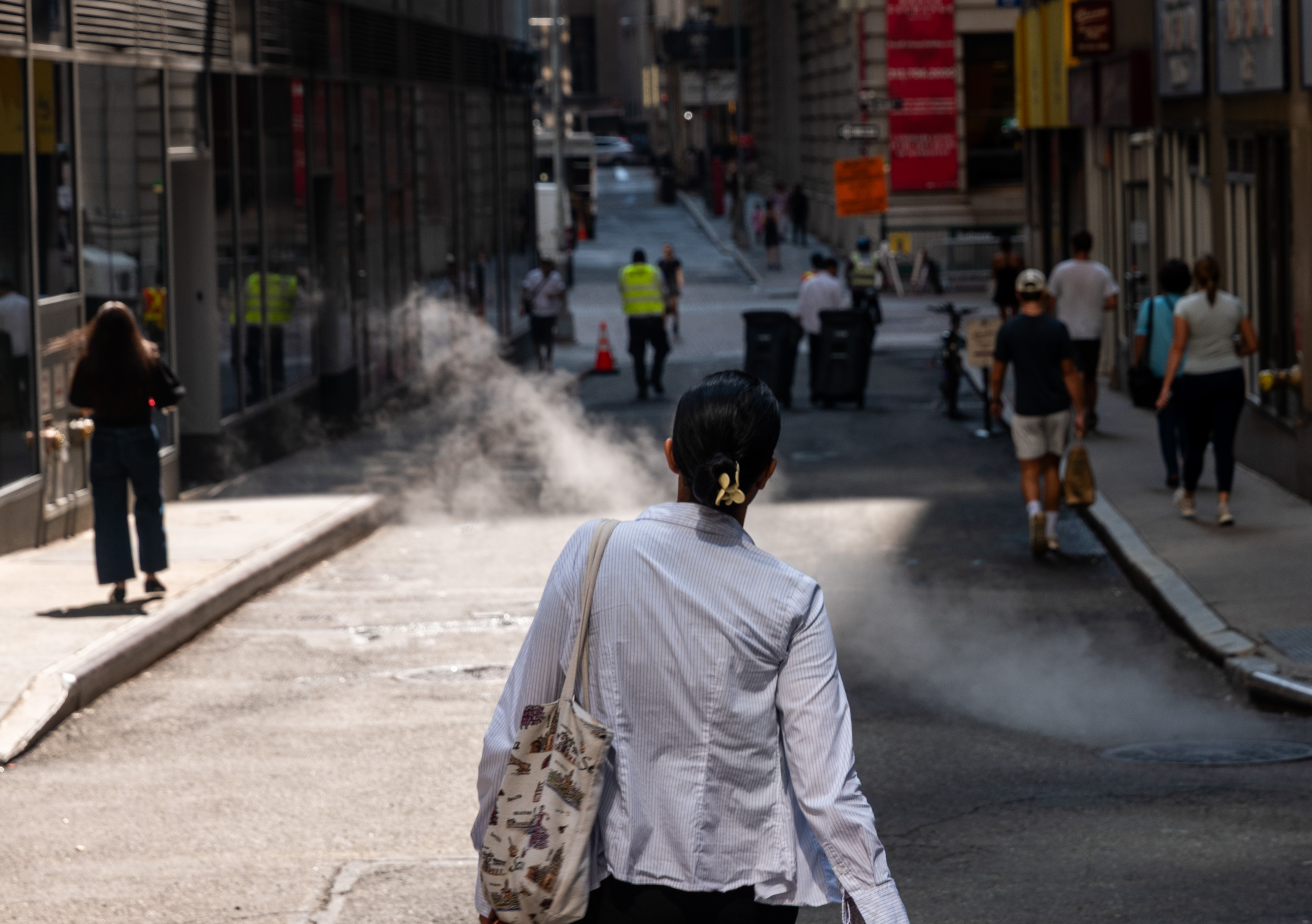
Europe’s heat tollBy Eamon Farhat Extreme heat has killed more than 25,000 people across Europe this year, according to the latest available data compiled by Bloomberg. Germany recorded the highest toll, with an estimated 11,900 excess deaths linked to heat since April, according to the Robert Koch Institute. Data from government agencies and research institutions in Spain, France, the UK, Switzerland and the Netherlands put the region’s heat-related death toll at over 25,000. 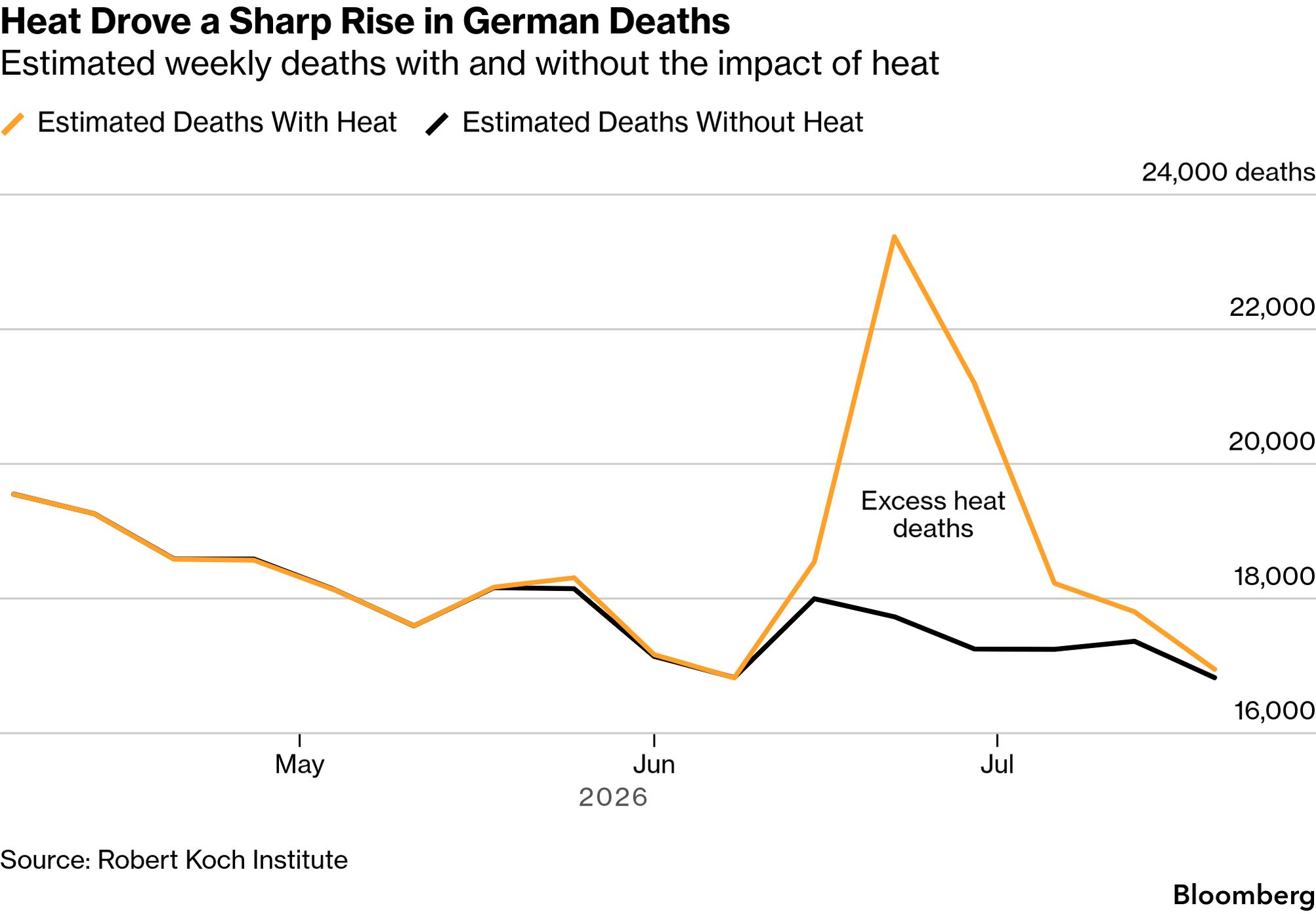
Climate change is increasing the frequency and intensity of heat waves on the world’s fastest-warming continent, prompting national health agencies to issue repeated warnings. Western Europe has been seared by four heat waves this summer, shattering temperature records and denting economic output. The heat is set to build again next week, with London forecast to reach 34C by Wednesday and Paris as high as 38C.
Read more
🎥 Attention all filmmakers!Working on a short documentary about climate change? Don’t miss your chance to submit it to the Bloomberg Green Docs film competition. Grand prize: $25,000. Submissions accepted through August 14, 2026. See official rules at bloomberg.com/greendocs. Your Zero listenThe Middle East conflict is now in its fifth month, deepening the oil and gas supply shock. Early in the war, analysts worried that the oil price would rise to $200 a barrel, causing a global recession and widespread panic, but that didn’t happen. This week on Zero, Akshat Rathi is joined by Bloomberg Opinion columnist Javier Blas to discuss why oil prices stayed around $100 per barrel and why the war is the start of a new paradigm in energy politics. Listen now, and subscribe on Apple, Spotify or YouTube to get new episodes of Zero every Thursday. More from GreenMore from Bloomberg
Explore all Bloomberg newsletters. We’re improving your newsletter experience and we’d love your feedback. If something looks off, help us fine-tune your experience by reporting it here. Follow Us
You received this message because you are subscribed to Bloomberg’s Green Daily newsletter. If a friend forwarded you this message, sign up here to get it in your inbox.
|
Friday, August 7, 2026
Golf versus nature






Subscribe to:
Post Comments (Atom)
Elon Musk Says AI Will Overtake Rockets at SpaceX… This Month
SpaceX generated $2.6 billion from its AI segment last quarter – and Musk says the business is about to become larger than everything else...
-
Revolutionary Stem Cell & PRP —Start Your Journey Today ...
-
You’ve shown interest in Regenerative Medicine ...


No comments:
Post a Comment