
Welcome to Bw Reads, our weekend newsletter featuring one great magazine story from Bloomberg Businessweek. Today Sohee Kim and Felix Gillette write about Japan’s famed Studio Ghibli. Although Hayao Miyazaki and his animators have had a legendary run of classic films like My Neighbor Totoro and Spirited Away, they’re not in a big rush to make another. You can find the whole story online (free) here. (Or you can listen to the story.) If you like what you see, tell your friends! Sign up here. Subscribe to Bloomberg.com for unlimited access to all our coverage. On a Friday morning in April, at Studio Ghibli’s headquarters on the outskirts of Tokyo, Goro Miyazaki faces an excruciating test. After roughly a year of toil, it’s time to screen his animated short for his famously demanding father, Hayao Miyazaki — one of the most celebrated directors on the planet — and then listen to his unvarnished feedback. The Miyazakis have often clashed over the years. “Constant arguing, constant fighting,” Goro recalls of one of their early collaborations. But perhaps this project will be different — the passage of time occasionally being a mellowing influence. Hayao is 85; Goro, 59. For a long time, the creative dynamic inside Ghibli has largely revolved around the older filmmaker’s eye. Over the previous four decades, the studio has forged a distinctive style of richly layered, hand-drawn animation in more than 20 feature-length films. The movies, which appeal to both children and adults, often star young heroes saving war-torn environments from nefarious forces amid phantasmagoric phenomena. Collectively, the films have generated over $2 billion in ticket sales, won two Academy Awards and helped trigger a global boom in anime — a market now worth in excess of $25 billion annually, according to the Association of Japanese Animations. It’s been, by many accounts, the greatest run in animation since the heyday of Walt Disney. Now, with Hayao in his professional twilight, things are inevitably changing — although into what exactly is still unclear. After starting his career as a landscape architect, Goro joined Ghibli in the late 1990s and went on to direct three major films. When Ghibliologists speculate about potential creative heirs, his name is inevitably front and center. But so far Goro has brushed aside such chatter, and his dad has offered nothing close to an endorsement — at least, not yet. In a private screening room at headquarters, Goro presents A Night in the Valley of the Witches. It’s a short, playful film, 15 minutes long, that Goro directed alongside animator Akihiko Yamashita. Unlike Ghibli’s most acclaimed films, such as My Neighbor Totoro or Spirited Away, this featurette won’t have a wide release in cinemas. Instead, it made its debut in July at a single theater inside Ghibli Park — a kind of anti-Disneyland the studio operates in Nagakute, a couple hundred miles southwest of Tokyo. A short while after the screening, Goro strolls into a nearby conference room for an interview with Bloomberg Businessweek. Naturally, everyone is curious: How’d your father like the movie? “He went insane,” Goro says, before clarifying: insane in a good way. His dad, he says, was happy with what he saw. The film is something children will enjoy. And the feeling of children being happy — that is, other people’s children, in the abstract sense — has always been important to his father. (We would have to take his word for it. With reporters in the vicinity, the elder Miyazaki had maneuvered out of prodding range. “He saw it, and then he was exhausted,” Goro says. “He went back home.“) Studio Ghibli’s headquarters are on a serene, suburban block dotted with single-family homes. The outside of the main building is covered in dense, creeping vines, creating a green exoskeleton that gives the place a puckish, larval aura, like a shaggy caterpillar on the cusp of molting. Goro is joined in the conference room by Kenichi Yoda, an up-and-coming executive. Three years ago, Ghibli announced it was selling a 42.3% stake in the business for an undisclosed sum to Nippon Television Holdings Inc., a major Japanese media conglomerate that had long invested in the studio’s films. Yoda, then a producer at Nippon TV, joined Ghibli’s board of directors and has since served as the primary liaison between the two camps. Whatever happens next, Yoda, 51, will be a driving force. (In May the companies announced that he’d been promoted to become Ghibli’s president and chief executive officer, starting on June 22.) 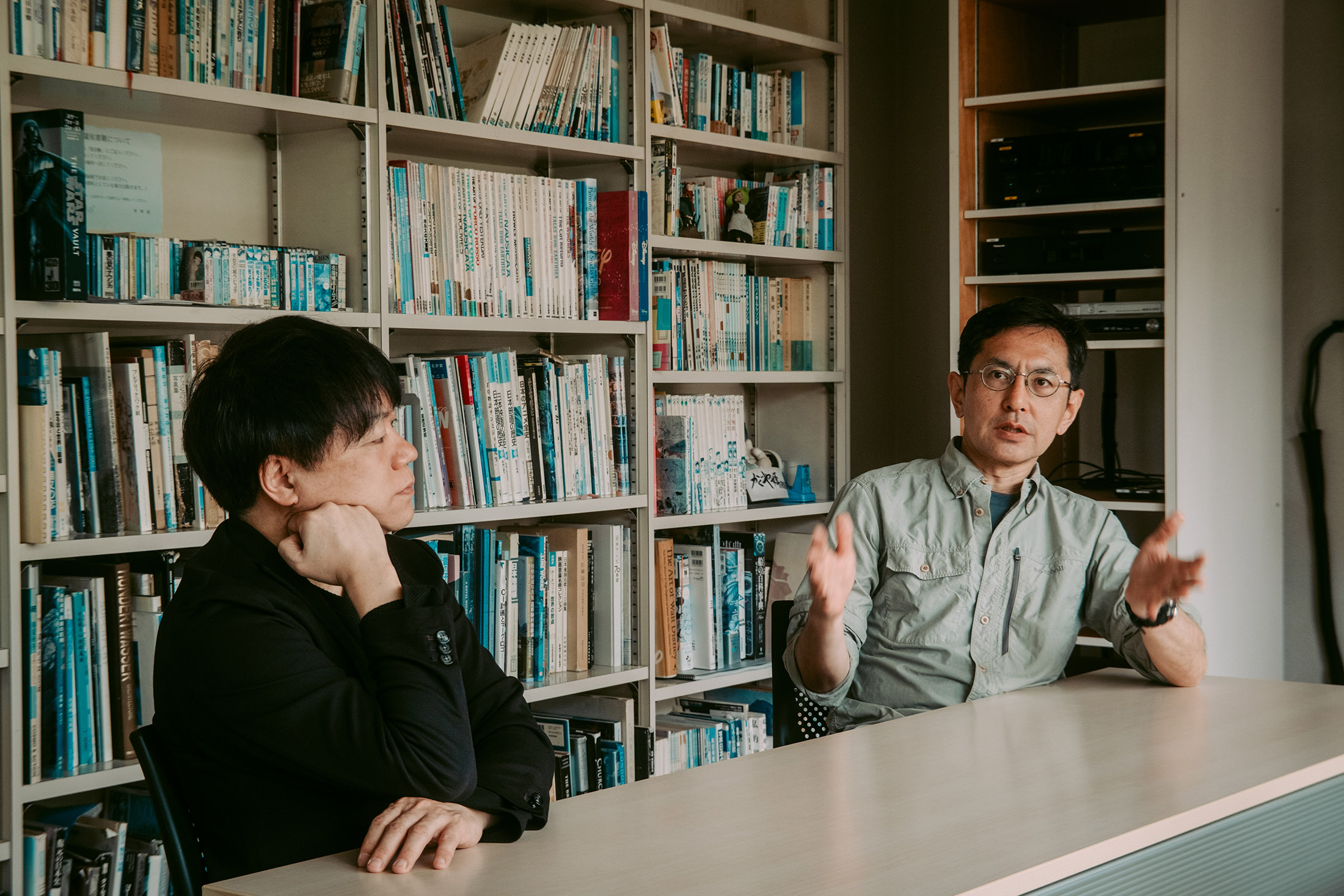
Kenichi Yoda and Goro Miyazaki at the studio offices on the outskirts of Tokyo.
Photographer: Kentaro Takahashi for Bloomberg Businessweek
For the next two hours, the younger Miyazaki and Yoda hold forth on Ghibli’s future, from their inchoate plans for the next feature film, to their stance on artificial intelligence, to the importance of extending the brand beyond the screen. Yoda declines to say anything about Ghibli’s financial situation, or Nippon TV’s assessment of it. According to public records, as of March 31, 2025, Ghibli had ¥44 billion ($279 million) in assets and brought in ¥6 billion in net profit over the past year. “Ghibli is not a company focused primarily on profit,” Yoda says. At a time of great flux in the entertainment industry, many incoming CEOs like to position themselves as agents of change, guiding anxious flocks into a brave new world of technologically optimized content creation. Not Yoda. If anything, he describes himself as Ghibli’s protector of the old ways. “Ghibli is not a place that works hard to maintain a company — I think it is a place to make art,” Yoda says. “When I’m often asked about this outside, I say what matters is that nothing changes.”
Keep reading
On the PodcastThis week on Everybody’s Business from Bloomberg Businessweek, hosts Max Chafkin and Stacey Vanek Smith look at the ways artificial intelligence is intruding more on everyday life. First up, inflation. Max takes us on a journey into his latest (rather upsetting) personal computer purchase, which was more expensive than he expected. The reason? Robots. More specifically, the shortage of memory chips. Bloomberg News technology editor Joshua Brustein joins the show to discuss the reasons behind it. Then Bloomberg reporter Ashley Carman talks about the rise of AI music, including accusations that one of the biggest hits of the summer, “Rubberz” by rapper Fenix Flexin, was written by robots. Listen and subscribe on Apple, Spotify, iHeart and the Bloomberg Terminal. More Weekend Reads
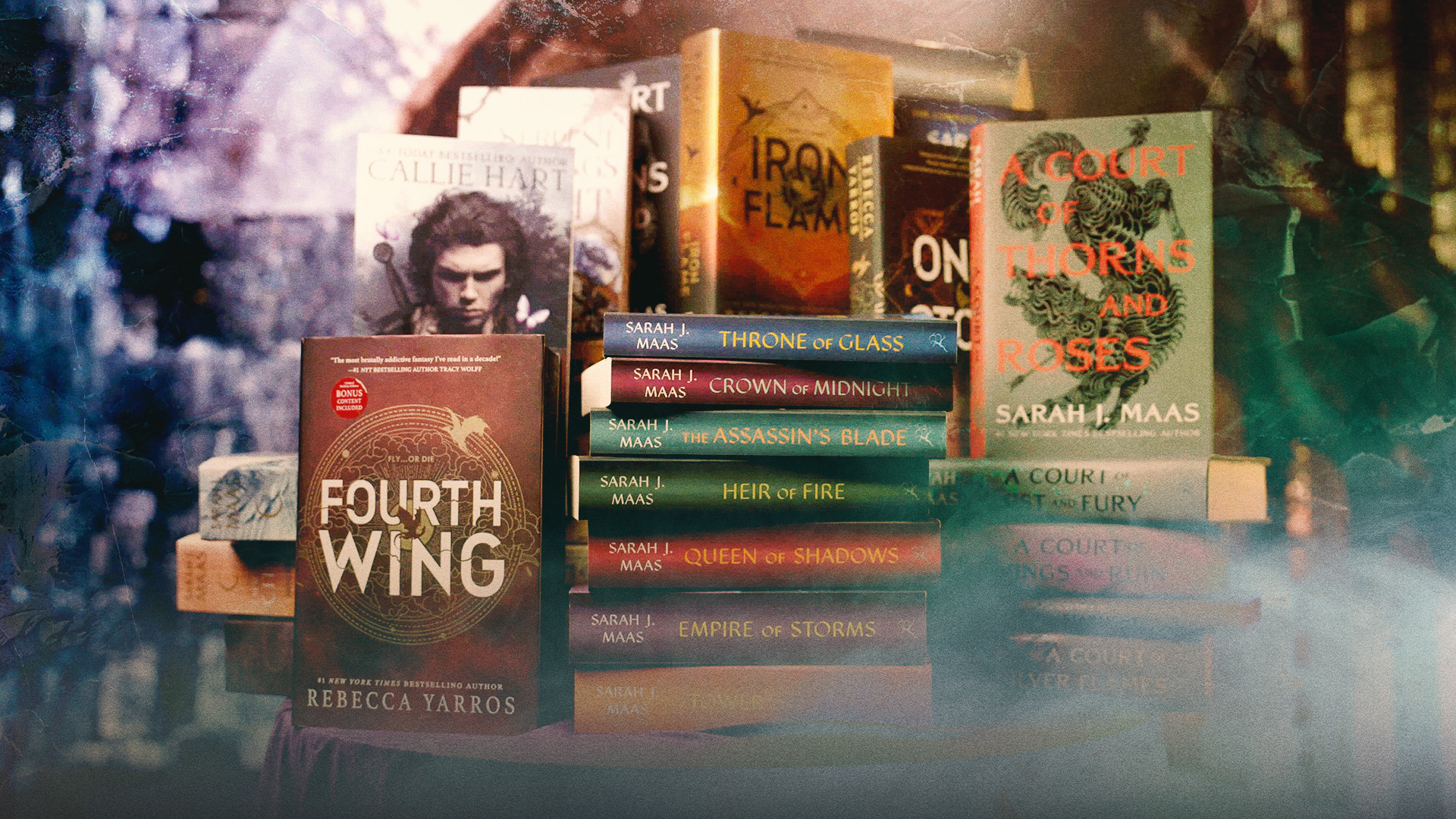 
Video: Why Romantasy May Soon Be a Billion-Dollar Business
Play Alphadots!Our daily word puzzle with a plot twist. 
Today’s clue: Coordinator of play dates? More From BloombergLike Businessweek Daily? Check out these newsletters:
Explore all Bloomberg newsletters. We’re improving your newsletter experience and we’d love your feedback. If something looks off, help us fine-tune your experience by reporting it here. Follow Us
You received this message because you are subscribed to Bloomberg’s Businessweek Daily newsletter. If a friend forwarded you this message, sign up here to get it in your inbox.
|
Sunday, August 16, 2026
Bw Reads: Studio Ghibli’s biggest secret





Subscribe to:
Post Comments (Atom)
The Best Time to Buy Is When a 'Credit Crisis' Hits
In today's Masters Series, Mike DiBiase explains why he thinks the next credit crisis might be just around the corner and why it's...

-
Revolutionary Stem Cell & PRP —Start Your Journey Today ...


No comments:
Post a Comment