| Read in browser | ||||||||||||||

Heat extremes in the UK are affecting some of the capital’s most exclusive districts. Today’s edition explains how rigid planning rules and rising temperatures are a challenge for luxury London homes. Also, scientists confirmed a new record temperature for the world’s oceans as planetary warming combines with a powerful El Niño. And in California, we examine the companies developing autonomous firefighting machines. Subscribe to Bloomberg.com for unlimited access to all our coverage. Luxury London’s heat challengeGrosvenor Group Holdings Ltd. says the combination of rising temperatures and antiquated planning regulations threatens to dent the appeal of its vast portfolio of properties across Mayfair and Belgravia. The group, which is owned by billionaire Hugh Grosvenor, the 7th Duke of Westminster and Britain’s richest aristocrat, is trying to persuade the government to relax what the firm views as unnecessarily rigid planning requirements for listed properties. That’s as homeowners in some of Britain’s most coveted postcodes struggle to get approvals to add basic cooling features such as awnings and shutters. 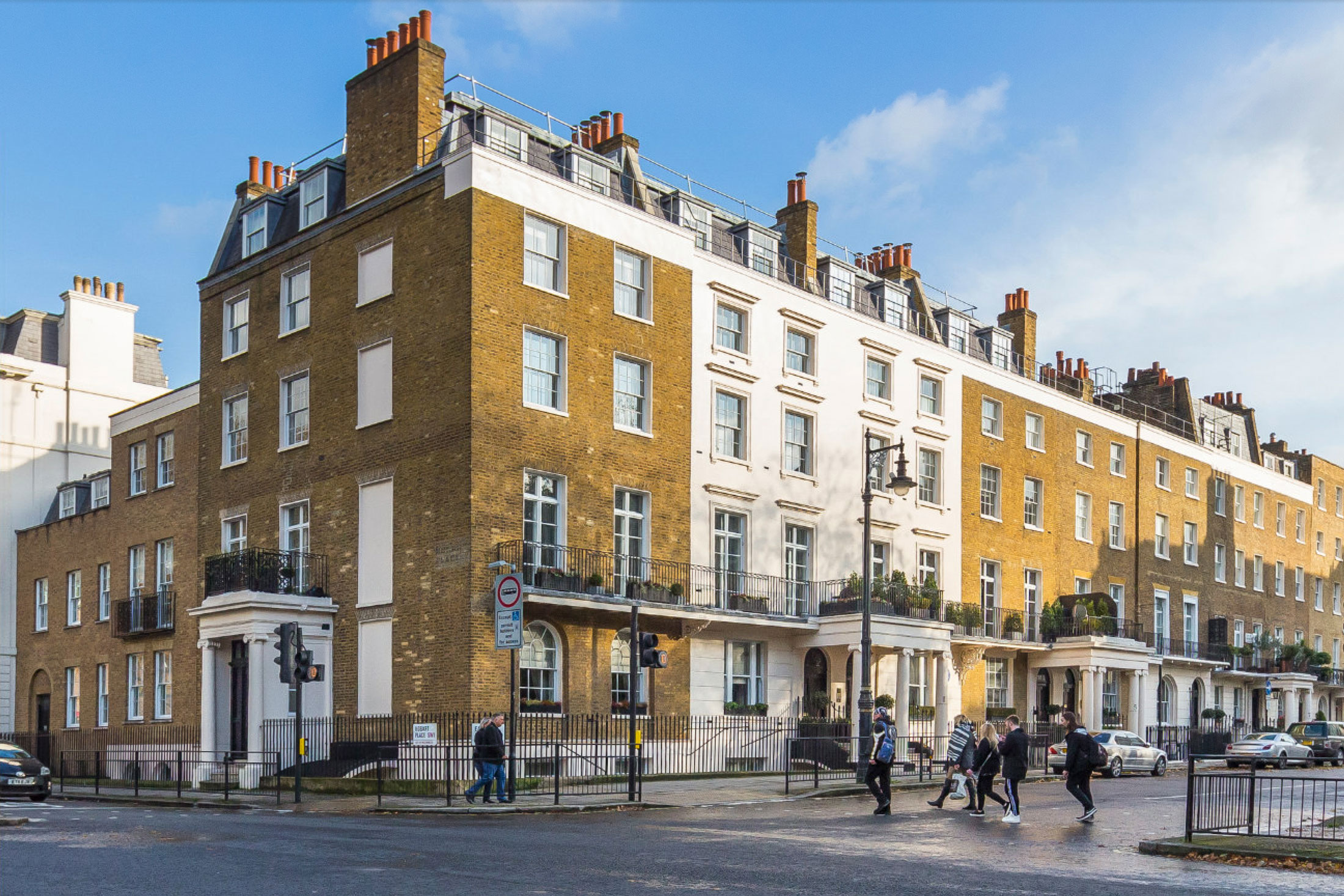
Eaton Square, part of the Grosvenor property portfolio.
Source: Thomas Graham
“If we don’t adapt our buildings and the planning system doesn’t adapt, then people aren’t going to want to live and spend time in these buildings,” said Tor Burrows, Grosvenor’s chief sustainability officer. A desire to protect the look of Britain’s listed buildings risks colliding with the need to make those same properties fit for a hotter climate. The UK’s Met Office said in July that the country faces more frequent and intense heat waves, with temperatures as high as 40C (104F) now a much stronger possibility. It’s a prognosis that carries profound implications for a housing stock designed for a cooler climate. In Kensington and Chelsea, for example, adding a new awning if there’s no awning box on the outside of a building, or adding shutters, can only be done with the council’s permission. “Applying for planning permission ensures that what is installed is appropriate for the building and does not harm the character or appearance of conservation areas,” the council said in a statement. Grosvenor won some concessions for its Eaton Square properties earlier this year, after the Westminster City Council agreed to create a more streamlined process for homeowners looking to install cooling features. The details of that change are still being worked out and it will likely be implemented later this year. But the group says this doesn’t go nearly far enough. 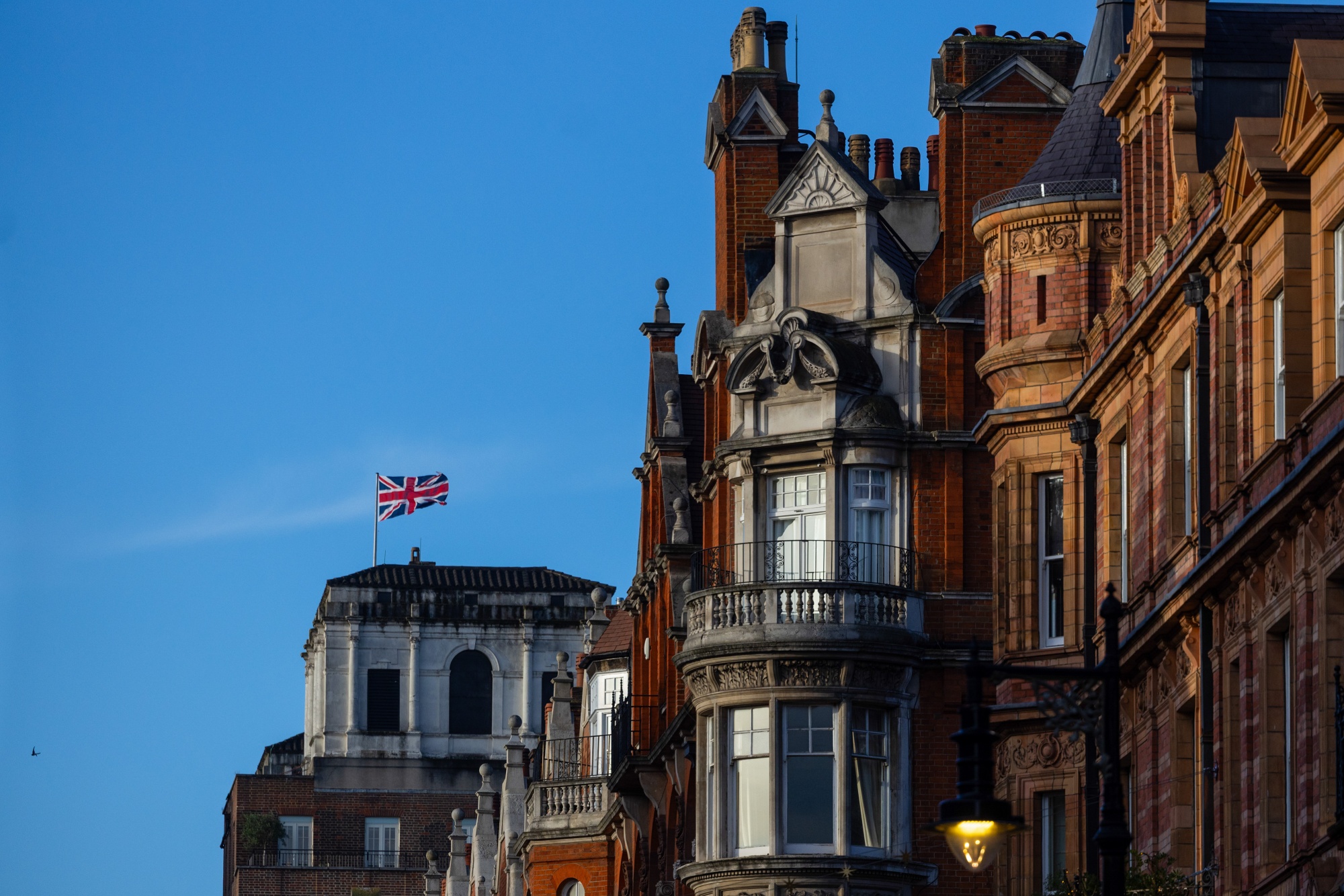
Terraced residential properties in the Mayfair district in London.
Photographer: Chris Ratcliffe/Bloomberg
Burrows points to research from 2022 showing that 87% of historic building owners “see the planning system as a major barrier” to adding features that would help them cope with rising temperatures or reduce carbon emissions. The result is that many now assume there’s no point in trying, she said. “People have maybe dipped their toe in or tried to experience it and then found it so complicated that then they sort of give up trying to adapt the building,” Burrows said. Grosvenor is now seeking planning concessions from the national government for its listed properties. The changes would apply to Mayfair and Belgravia, where many residents have lived through recent heat waves without access to built-in air conditioning or awnings to shield them from the sun, as well as to listed buildings across England. A spokesperson for the UK’s ministry for housing, communities and local government said that “appropriate shading measures in listed buildings can be supported providing they do not disproportionately harm the building.”
Keep reading
UK’s climate future40C (104F) UK faces a much stronger possibility of temperatures at this level and needs to anticipate more frequent heat waves, according to the UK Met Office. Deadly consequences“People have died in these heat waves and some of those deaths could have been avoided if they’d have had passive cooling modifications made to their homes.” Rebecca Montacute Research director at the Social Market Foundation, a think tank. Extreme impacts🔥 Reno wildfire injures seven and chars dozens of homes 💡Blackout in Chicago suburbs impacts thousands of residents ☀️ Los Angeles faces days of 100F heat and high fire risk 💵 Drought and an energy crisis burden Hungary’s budget deficit Tune in Wednesday
Photographer: Laura McDermott/Bloomberg
Join the conversation: The AI boom has spurred trillions of dollars in rapid investments to fund critical data center and energy infrastructure, but many of the projects have met fierce local opposition. What questions do you have about America’s battle over AI data centers? Join Bloomberg journalists for an interactive Live Q&A on Wednesday, Aug. 26 at 1 p.m. EDT. Set a reminder and stream the conversation here. Send in your questions early to liveqa@bloomberg.net The new ways to fight fireBy Matthew Hart Max Brodie was 12 years old when a lightning strike near his hometown of Kelowna, British Columbia, ignited a wildfire that a thousand firefighters and a fleet of waterbombers couldn’t stop. As hot ash filled the sky, the boy scrambled up a ladder to help his father anchor soaker hoses to the roof to keep it wet. The house survived, but 33,000 residents, including Brodie, were evacuated during that 2003 firestorm. Fifteen years later, he was living in San Francisco and wondering what to do after selling his second software startup when, 180 miles to the north, another monster burst from the forest. That blaze killed 85 people, reduced Paradise, California, to ashes, and awakened his boyhood trauma. “I thought, ‘Oh, my gosh, nothing’s changed,’” he says. Now he knew what to do. 
Brodie, center, during a demonstration. Source: TJ Romero, Courtesy Rain
The next year, Brodie and two partners formed Rain Industries Inc. to develop the software an autonomous aircraft would need to find a fire and put it out before it spread. Four years of research and development and a couple of funding rounds later, Rain teamed up with the Sikorsky unit of Lockheed Martin Corp., the world’s largest defense contractor, to help turn a Black Hawk helicopter into an autonomous firefighting machine, using artificial intelligence to deliver the quick response that is firefighting’s Holy Grail.
Keep reading
🎥 Attention all filmmakers!Working on a short documentary about climate change? Don’t miss your chance to submit it to the Bloomberg Green Docs film competition. Grand prize: $25,000. Submissions will be accepted through October 2, 2026. See official rules at bloomberg.com/greendocs. More from GreenPhoto finish
A bleached reef in Thailand. Photographer: Sirachai Arunrugstichai/Getty Images
Scientists have recorded the highest temperature ever measured in the world’s oceans, as climate change combines with a powerful El Niño in the tropical Pacific. The global average sea-surface temperature hit a record 21.1C (70F) on Aug. 22, according to Europe’s Earth observation agency Copernicus, which has been tracking the metric daily since 1979. More from Bloomberg
Explore all Bloomberg newsletters. We’re improving your newsletter experience and we’d love your feedback. If something looks off, help us fine-tune your experience by reporting it here. Follow Us
You received this message because you are subscribed to Bloomberg’s Green Daily newsletter. If a friend forwarded you this message, sign up here to get it in your inbox.
|
Tuesday, August 25, 2026
Billionaire aristocrat has a heat battle







Subscribe to:
Post Comments (Atom)
The market just flashed red
The AI boom isn't over — it's shifting. See who actually profits from Phase 2. ͏ ͏ ͏ ͏ ͏ ͏ ͏ ͏ ͏ ͏ ͏ ͏ ͏ ͏ ͏ ͏ ͏ ...

-
Revolutionary Stem Cell & PRP —Start Your Journey Today ...


No comments:
Post a Comment