| Read in browser | ||||||||||||||

New research shows Angola’s peatlands are at least four times bigger than initially thought. The ecosystem is key to regulating water flow in southern Africa’s rivers and stores carbon. In today’s newsletter, the study’s lead researcher explains how it raises hopes that more of the vital stores of carbon could be discovered across Africa. If you prefer listening, don’t miss our latest Zero episode, in which Lord Nicholas Stern talks about why he’s optimistic about our ability to tackle climate change. Subscribe to Bloomberg.com for unlimited access to all our coverage. Africa’s overlooked landscapeAngola’s peatlands, which regulate water flow in southern Africa’s biggest river systems and store climate-warming carbon, are at least four times larger than initially thought, a new study showed. They cover as much as 11,100 square kilometers (4,286 square miles), researchers said in the paper published Wednesday. Their work was supported by the Nature Conservancy and diamond company De Beers. The ecosystems — which are water-logged, oxygen-poor and stall the rotting of dead plant material — help maintain water flow to rivers including the Zambezi as well as to the Okavango Delta in Botswana, which sits at the heart of an area supporting the world’s biggest population of elephants. 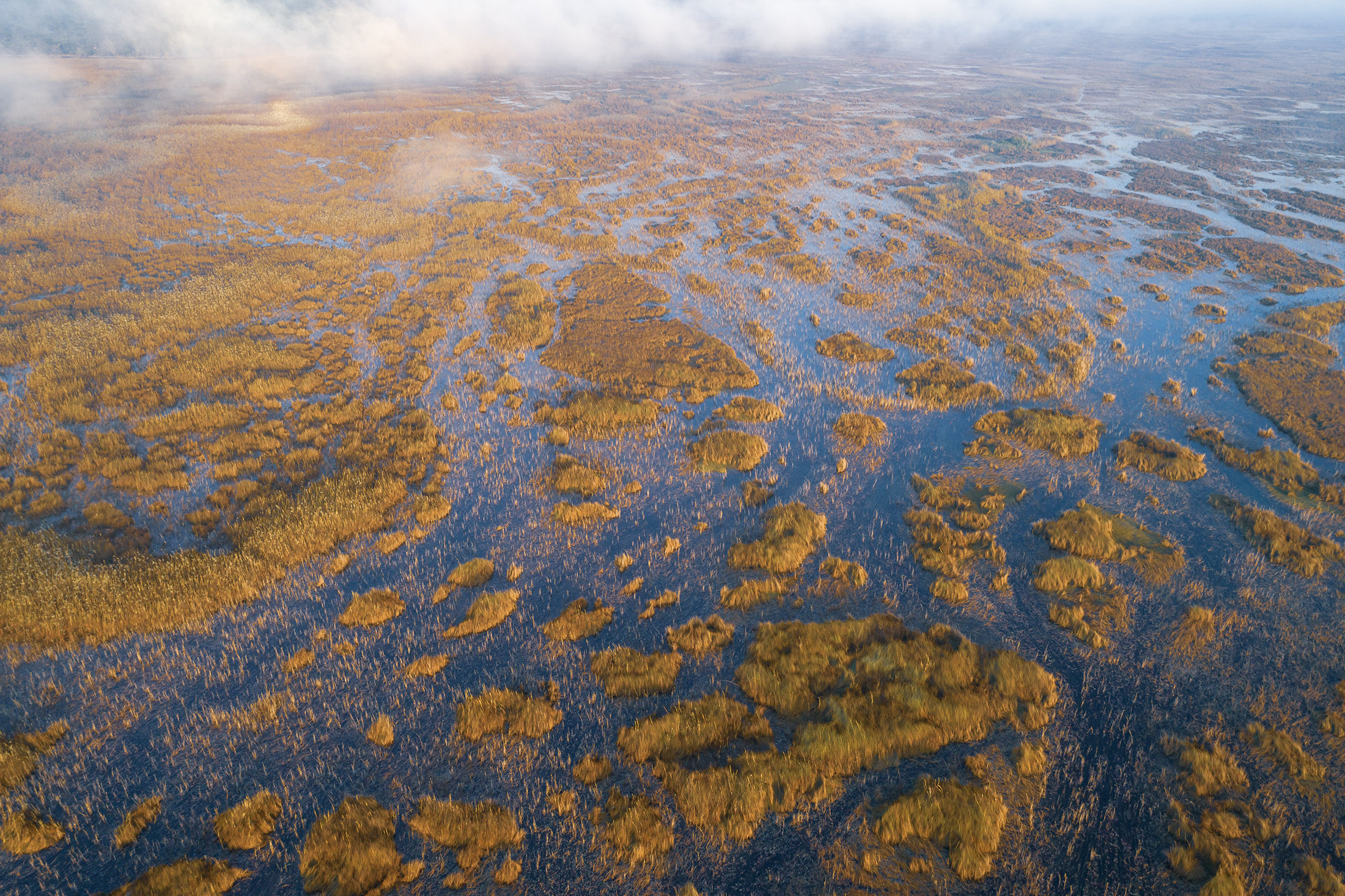
The Cuando River in Angola.
Photographer: Kostadin Luchansky/National Geographic Society
While Angola’s peatlands are a fraction of the size of those found further north in the Congo Basin, which hosts the world’s biggest such tropical marshes, the findings demonstrate that more of the vital stores of carbon could be discovered across Africa. Scientists have increasingly stressed the importance of the areas in slowing climate change because of their ability to store carbon rather than release it into the atmosphere. “We are only starting to understand and realize how much tropical peatland there actually is in Africa,” Mauro Lourenço, the lead author of the paper and a geospatial ecologist, said in an interview. While the study places Angola’s peatlands as the continent’s fifth-biggest, more could be found there as well as in Zambia, Lesotho, South Africa and in vast swamps in South Sudan, he said. In 2022, a study showed that the Congo Basin peatlands — which stretch across the Democratic Republic of Congo and the Congo Republic — were 15% bigger than found in previous analyses at almost 167,000 square kilometers. “The point of the exercise was to prove we had peatlands” in Angola, said Lourenço, who works for the Wild Bird Trust and the National Geographic Okavango Wilderness Project. “The next step is to provide a full carbon inventory for the peatlands.” 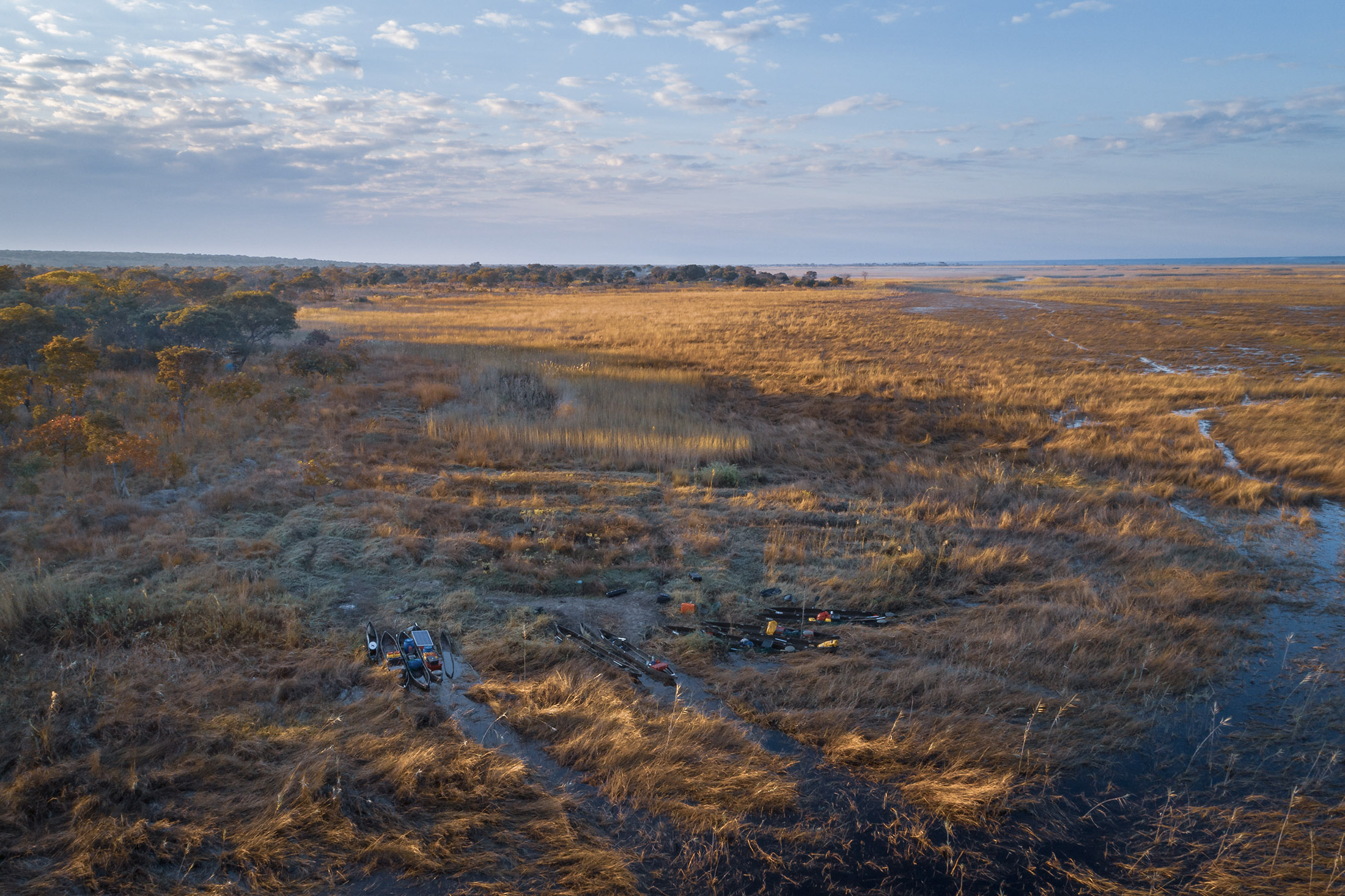
Mokoros on the shore of the Cuando River.
Photographer: Kostadin Luchansky/National Geographic Society via Photographer: ©Kostadin Luchansky/National Ge/National Geographic Society
The swamps store groundwater during the wet season and release it gradually throughout the year. They form part of the so-called Angola Highlands Water Tower and cover an area the size of Qatar. Locally, the area is known as Lisima Lya Mwono, which means “source of life” in the Luchazi language. The water flows into one of the world’s most important biodiversity regions — the Kavango Zambezi Transfrontier Conservation Area known as Kaza. That zone stretches across five countries and provides a home for 228,000 wild elephants, about 40% of the world total. Lisima Lya Mwono has also been designated as Angola’s first Ramsar site, a recognition by an international convention on wetlands. The Zambezi River feeds power plants key to electricity provision in Zambia, Zimbabwe and Mozambique. “There is no Okavango Delta or Kaza without Angola’s peat,” the researchers said in a statement accompanying the paper published in Philosophical Transactions of the Royal Society B, a scientific journal.
Read more
Deep sink29 billion Number of tons of carbon contained in the Congo Basin peatlands. That’s equivalent to about three years of global carbon dioxide emissions. Trapped in time“Peatlands near the riverbanks have been storing carbon for over 1,100 years, while higher-altitude peatlands have been accumulating carbon for more than 7,000 years.” National Geographic Society On the findings of the new Angola peatlands study Your latest Zero listenIt’s 20 years since the Stern Review declared that the costs of inaction on climate change are much higher than the costs of action. So why are emissions continuing to rise? Lord Nicholas Stern tells Bloomberg’s Akshat Rathi why he is optimistic about our ability to tackle climate change and what makes those actions the growth story of the 21st century. Listen now, and subscribe on Apple, Spotify or YouTube to get new episodes of Zero every Thursday. Rare tornado touches down on Long IslandBy Lindsey Rupp The National Weather Service confirmed that a tornado touched down at Long Island’s Atlantic Beach on Thursday evening amid powerful storms in the New York City area. No serious injuries were reported, but the tornado forced the temporary closing of the Silver Point and Sun & Surf Beach Clubs after damage to cabanas. It was the first confirmed tornado in Nassau County since 2021. 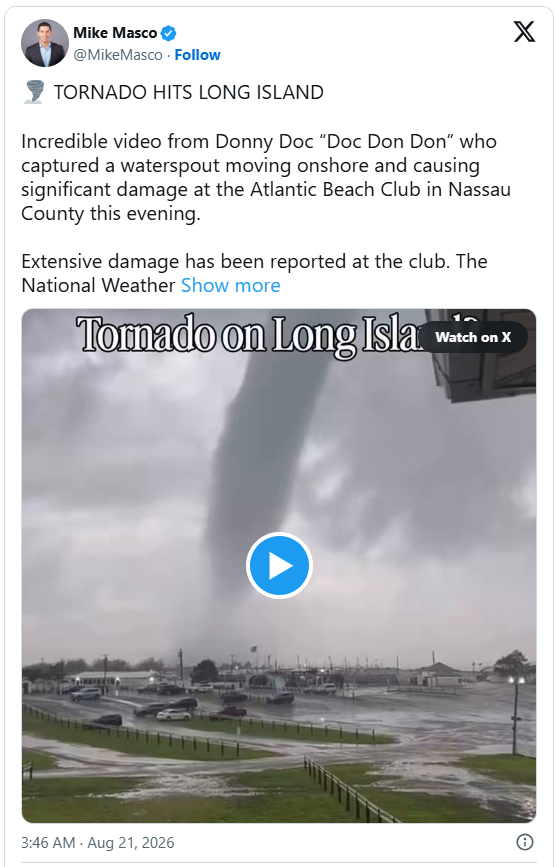
“Radar data, video of the waterspout coming onshore, and damage reports in the vicinity of the Sun and Surf Beach club in Atlantic Beach allow for confirmation of a tornadic touchdown in this area,” the weather service said in a statement. Heavy rain and thunderstorms slammed into New York City on Thursday, prompting ground stops and lengthy delays at major airports. Nassau County Executive Bruce Blakeman declared a state of emergency and activated the county’s Emergency Operations Center.
Keep reading
More from Bloomberg
Explore all Bloomberg newsletters. We’re improving your newsletter experience and we’d love your feedback. If something looks off, help us fine-tune your experience by reporting it here. Follow Us
You received this message because you are subscribed to Bloomberg’s Green Daily newsletter. If a friend forwarded you this message, sign up here to get it in your inbox.
|
Saturday, August 22, 2026
Africa’s hidden carbon sink





Subscribe to:
Post Comments (Atom)
-
Revolutionary Stem Cell & PRP —Start Your Journey Today ...


No comments:
Post a Comment