I’m Lara Williams and this is Bloomberg Opinion Today, a crumbling campground of Bloomberg Opinion’s opinions. On Sundays, we look at the major themes of the week past and how they will define the week ahead. Sign up for the daily newsletter here.
Tornadoes, Salads and Bears, Oh My! |
Do you ever get the sense that we used to live in proper countries? I’m not just nostalgic for the days when Burger King had an internet cafe, or when the UK had the same prime minister for longer than five minutes, or even when hazy, orange apocalypse skies weren’t an annual event. I also mean that governments used to invest in services, and those services were good.
For example, the Centers for Disease Control and Prevention had a program tracking infections caused by eight pathogens, including our new friend cyclospora, the parasite behind the outbreak of explosive diarrhea sweeping the US. But the agency has been subject to brutal cuts under Health Secretary Robert F. Kennedy, and as of about a year ago, participating states are now only required to monitor salmonella and Shiga toxin-producing E. coli. TL;DR: the CDC stopped monitoring the diarrhea parasite which is now causing mass diarrhea.
Experts told Lisa Jarvis that the cuts may not have directly impacted the detection of the danger lettuce, but it does make it harder to learn from the outbreak. The source of the parasite-contaminated fresh produce is particularly hard to track down, as it takes more than a week for the symptoms to kick in. Could you remember everything you ate last week while condemned to the bathroom? In Michigan, investigators had to pull records from grocery store shopping cards and conduct more than 1,000 interviews. Although public health officials have now linked the outbreak to shredded iceberg lettuce served at Taco Bell in multiple states, public health authorities still have to figure out how it got there. The bottom line, as Lisa writes, is that “the work is gargantuan, and can only happen with sufficient federal support.” Food safety is a worthy investment. Think about it, imagine getting cyclosporiasis. You’re in pain, the diarrhea is relentless and you’re almost out of toilet paper. How much would you pay to be well enough again to, say, enjoy a hike in the majestic American mountains? Sadly, even if you were well enough to take a trip to a national park, chances are you’re going to have an irritating time. Bathrooms are closed (so everyone pray the Taco Bell they ate a week ago was cyclospora-free!), the visitor centers are running reduced hours and the roads, trails and campgrounds are crumbling. All this while visitor numbers are soaring, leading to traffic jams and overcrowded natural landscapes. Erika D. Smith writes that President Donald Trump has redirected money intended for urgent projects across America’s parks and public lands “to pay for his pet infrastructure projects in Washington.” That means that Crater Lake National Park in Oregon is waiting to replace an aging fire truck and ambulance, but $60 million – taken from national park visitor fees – has been spent on fixing ornamental fountains. Cool. It’s not even just that the money is gone. Trump has made several policy decisions that are turning the great American wilderness into a dangerous and poorly run theme park: the reservation system has been scrapped, reduced staff has raised the risk of wildfires and now employees now can’t tell you if someone was mauled by a bear. Double cool! At least we’ll know what the weather is doing, right? Except, well, Trump’s budget and staffing cuts also mean that the National Weather Service can’t launch weather balloons as often as it once did. Some have blamed a lack of balloon launches for the NWS’s failure to predict the tornadoes that hit Kansas in April. This has been denied by the National Oceanic and Atmospheric Administration, but as Mark Gongloff writes, “Balloon observations are particularly important for spotting turns in severe weather … the fewer we have, the greater the risk a severe storm takes people by surprise, causing unnecessary death and damage.”
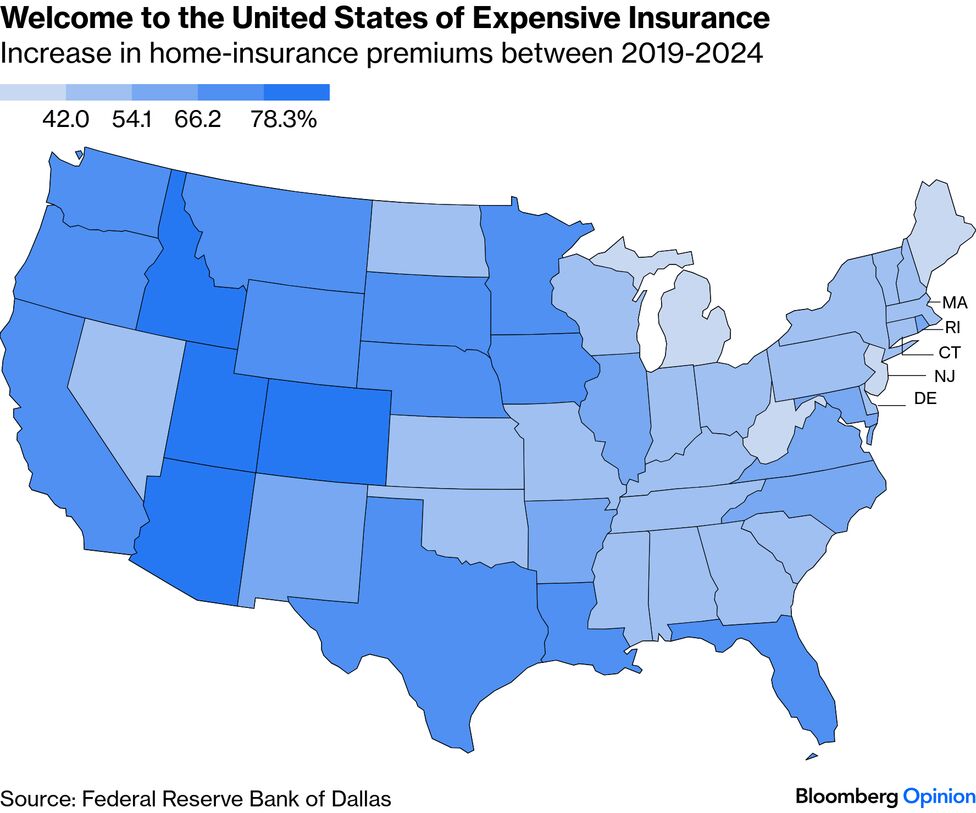
The three types of weather especially sensitive are rapidly intensifying hurricanes, tornado outbreaks and localized flash flooding. Say goodbye to prompt disaster responses and hello to higher home insurance and repair costs, all while it gets harder for meteorologists to advance weather science in the face of increasingly extreme climate conditions. Ultimately, while Trump’s government saves some petty cash, the people of America pay a steep price – with their bowels, their homes and their weekends. Bonus Declines and Deficits Reading:
What’s the World Got in Store?
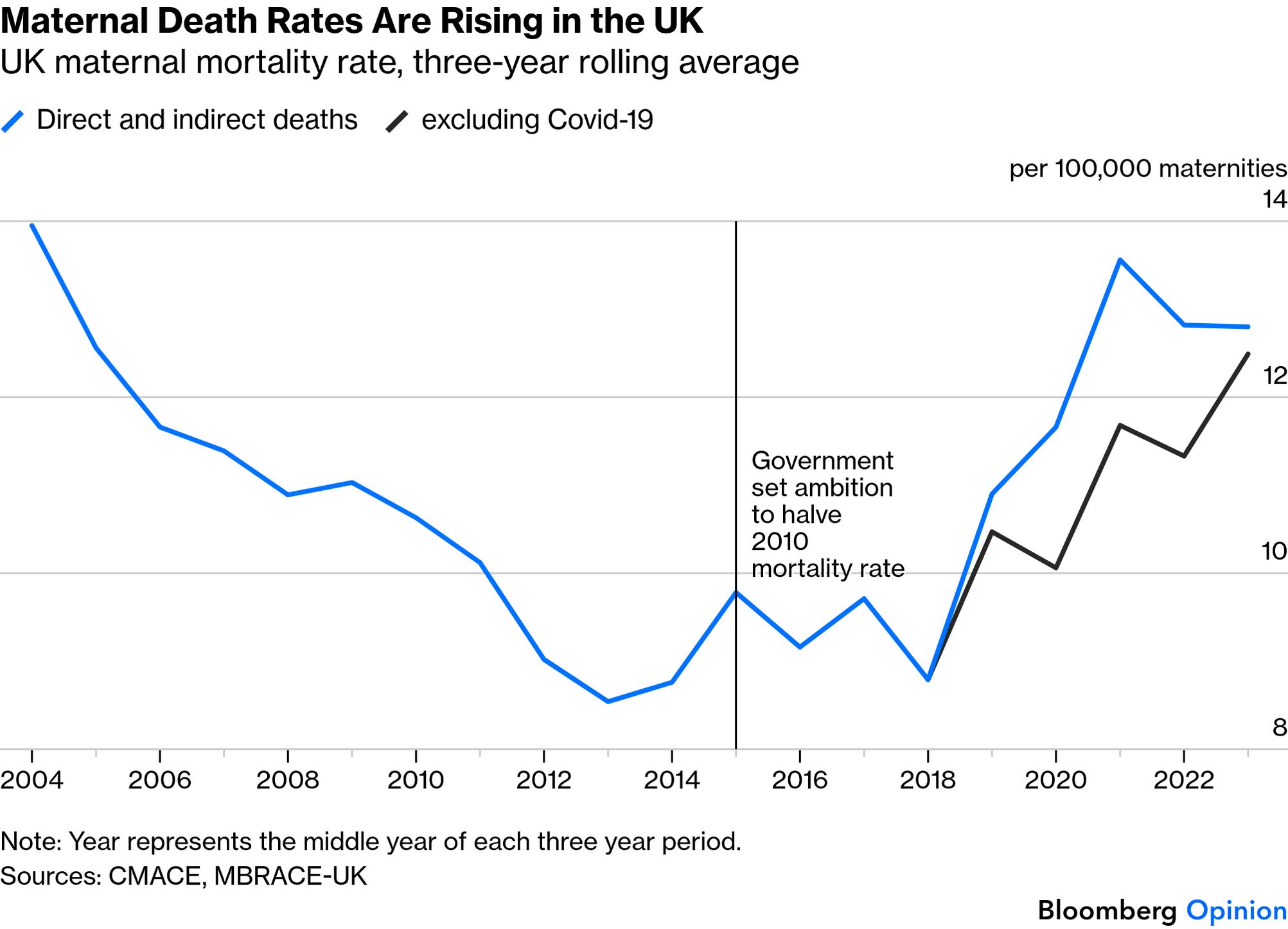
I don’t want to rub it in, but at the time of writing, I enjoyed a lovely salad in London for lunch. But I don’t want our American readers to think I don’t get it! Consider this chart:
You’d think that with all the advances in medical science and research, bringing new life into the world would be safer than ever. That’s not the case in the UK. Even though the government set some targets to halve maternal death rates by 2025, we’ve ended up with the highest rates since the early noughties. Sure, women are giving birth at a slightly older age, but our wealthy European neighbors aren’t seeing the same increases. We’ve had multiple investigations into why this is happening, but none of them have really led to meaningful change. Compare the UK to Japan, which has managed to cut birth injuries via a no-fault compensation program, and recently expanded a postnatal care scheme. As I wrote in my piece: “Not only does the initiative provide support for new mothers, it also sends a message that maternal and neonatal care is important and worth spending money on. It would be nice to hear that from the UK, too.” That point extends to the rest of the NHS, where some hospitals can’t even turn the radiators off in a heatwave. We’re now set to get our seventh prime minister of the decade. Can Andy Burnham turn the nation around? Rosa Prince believes an early decision shows promise. He’s reportedly giving the job of Chancellor of the Exchequer to Shabana Mahmood instead of the widely speculated Ed Miliband. Rosa writes: “By overlooking his old pal in favor of a woman he barely knows, Burnham would be demonstrating a pragmatism and ruthlessness that will serve him well as prime minister.” Let’s see. As the Editors note, Burnham brings a warmth and reputation for delivering on public services. But he’ll have his work cut out for him. Note: Please send uncontaminated vegetables and feedback to Lara Williams at lwilliams218@bloomberg.net. |










No comments:
Post a Comment