| Read in browser | ||||||||||||||

Welcome to Balance of Power, bringing you the latest in global politics. If you haven’t yet, sign up here. Just a few weeks ago, Pakistan helped broker a fragile truce between the US and Iran, easing fears of a wider Middle East war. Now, on Pakistan’s western border, the conflict with Afghanistan has flared up again. Last week, Pakistan carried out air strikes and a ground operation in three border provinces, killing 29, in response to earlier attacks by its neighbor. The military exchanges are a reminder that the region’s security risks extend well beyond the Gulf. Islamabad’s strikes on what it says are militant hideouts and training camps inside Afghanistan, followed by retaliatory action from the Taliban government, have reignited one of South Asia’s most volatile disputes just as governments were hoping regional tensions would cool. For Pakistan, the conflict complicates matters when it’s already in the middle of several overlapping crises, including friction with eastern neighbor India and the lingering fallout from the US-Israel confrontation with Iran, which abuts its southwestern flank. 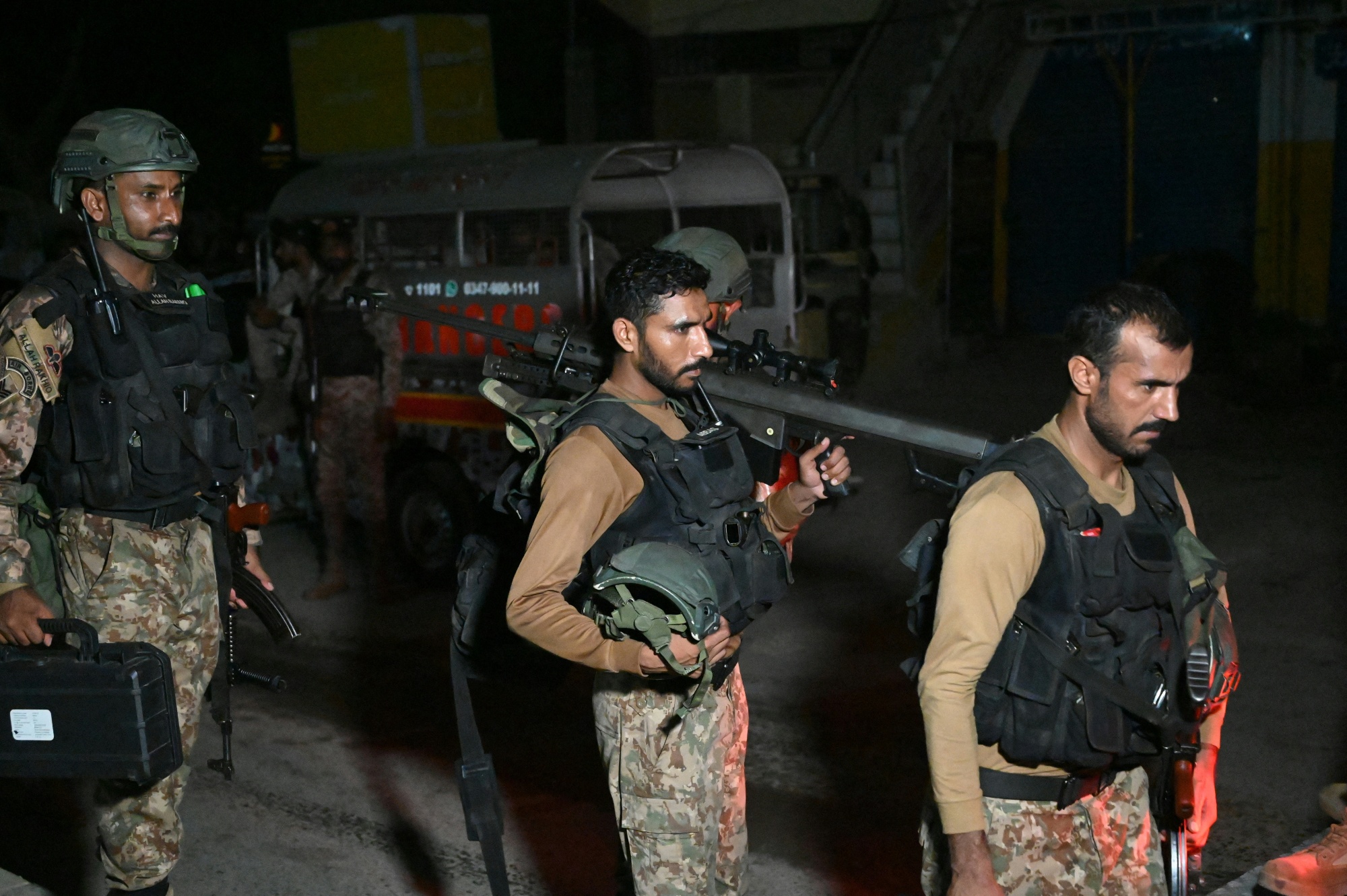
Pakistani soldiers after completing an operation in Karachi on Sunday.
Photographer: Rizwan Tabassum/AFP/Getty Images
Rather than isolated episodes, these conflicts increasingly reinforce one another, raising the risk that a localized security incident could evolve into a wider regional challenge. In its federal budget for the new fiscal year, Pakistan raised defense spending to boost security along its borders. Violence on the Pakistan-Afghanistan frontier intensified in the last month following a brief ceasefire in March. The two sides have clashed repeatedly despite global calls for a ceasefire and mediation attempts by Qatar, Turkey, Saudi Arabia and China. Relations have deteriorated steadily since the Taliban returned to power in 2021. At the dispute’s center is Pakistan’s accusation that Afghanistan is sheltering militant groups that launch attacks against its security forces, a charge the Taliban denies. The Pakistani military’s press wing recently talked of “retribution operations.” While Islamabad is still basking in its diplomatic win, any hopes of an enduring regional peace have long since faded. — Tooba Khan Global Must ReadsChinese leader Xi Jinping used a speech in Beijing to make the case that the ruling Communist Party is a force for global progress and prosperity — a role that would be backed by a strong military. In comments marking the founding of the party 105 years ago, Xi said the organization was “creating a new form of human advancement,” paving the way for developing nations to modernize. 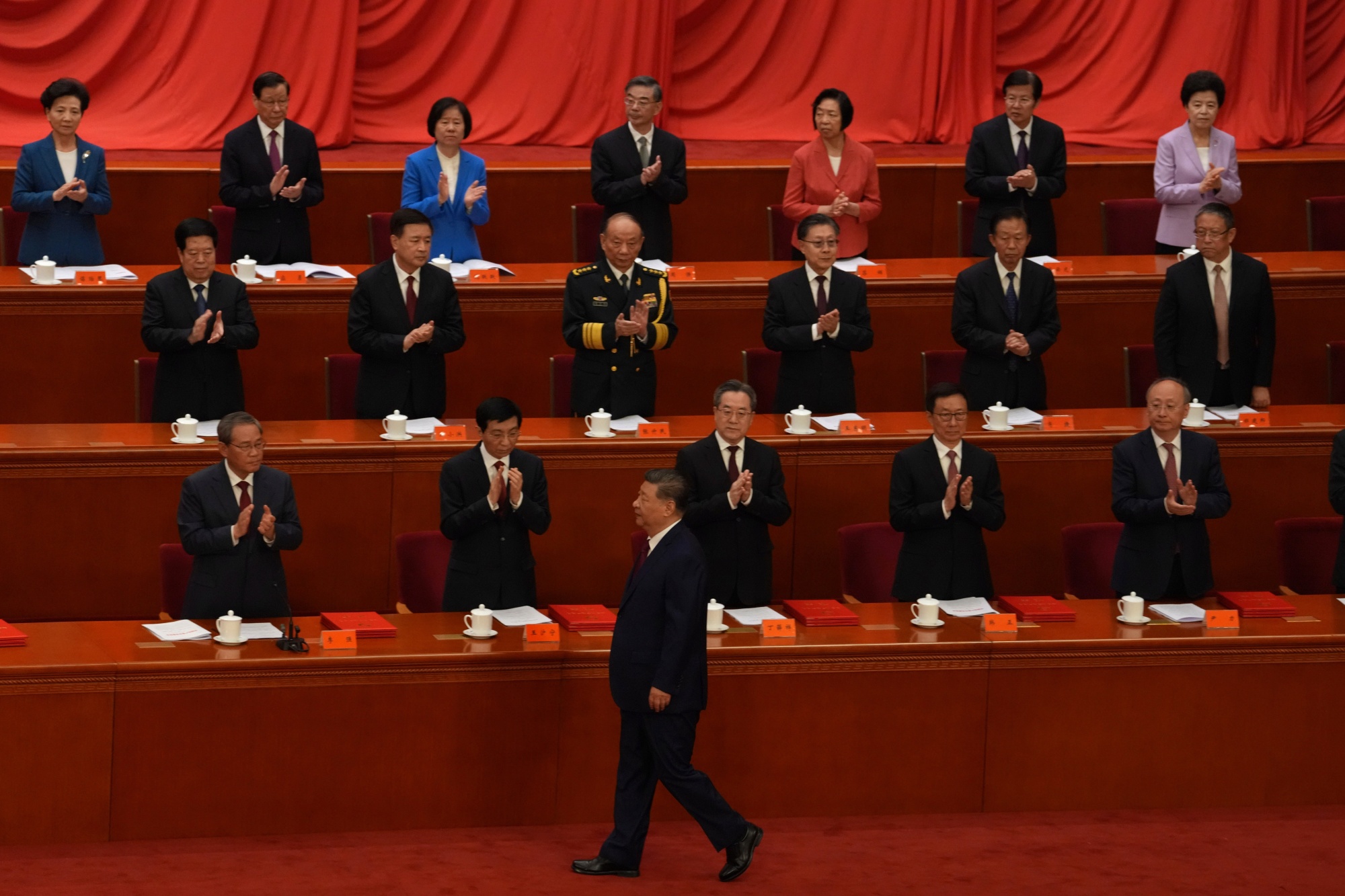
Xi at the Great Hall of the People in Beijing today.
Photographer: Ng Han Guan/AP Photo
US negotiators Jared Kushner and Steve Witkoff had positive discussions with regional leaders in Qatar and technical talks with Iran are moving ahead, sources said, as the countries seek to ease tensions after attacks that imperiled a fragile ceasefire. Israel and Lebanon’s latest peace deal faces an uncertain future after Hezbollah, Tehran’s most powerful proxy militant group, this week vowed to derail its implementation. Thousands of people joined anti-migrant protests in South Africa that were watched over by a massive police contingent deployed to prevent intimidation and a repeat of past violence. Africa’s biggest economy has long been a magnet for people in neighboring countries such as Zimbabwe and Malawi, stoking anger among some locals who see foreigners as competitors for economic opportunities and state services. 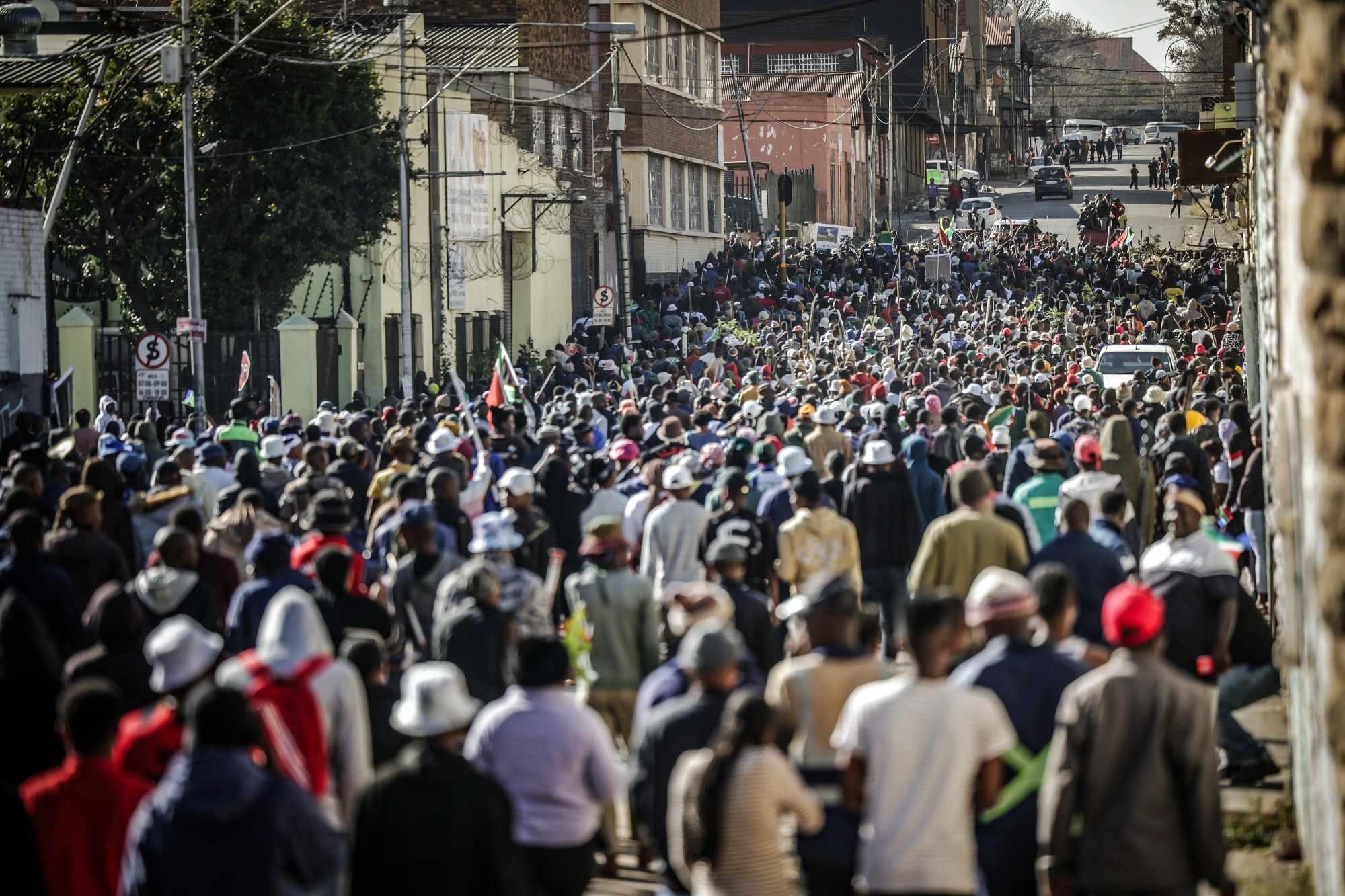
Protesters in Johannesburg yesterday.
Photographer: Emmanuel Croset/AFP/Getty Images
Venezuelan opposition leader María Corina Machado remains in Panama following unsuccessful attempts to reenter the country she left in 2025 amid a wave of repression. She has vowed to return as quickly as possible after twin earthquakes last week killed nearly 2,000 Venezuelans. President Donald Trump reported earning at least $1.4 billion in 2025 from crypto and memecoin-related businesses, according to his latest annual financial disclosure. The 927-page filing provides a view into his sprawling empire, including income from hotels, golf resorts and cryptocurrency ventures as well as purchases and sales of equities, and reignites concerns over Trump profiting from his presidency. Japanese Prime Minister Sanae Takaichi heads to India for a three-day trip to bolster economic ties and align on security cooperation with counterpart Narendra Modi as the Asian powers seek to become less dependent on China. Australia proposed sweeping changes to the consulting sector including new powers to police the industry, following scandals such as staff at EY allegedly accessing Prime Minister Anthony Albanese’s bank details. 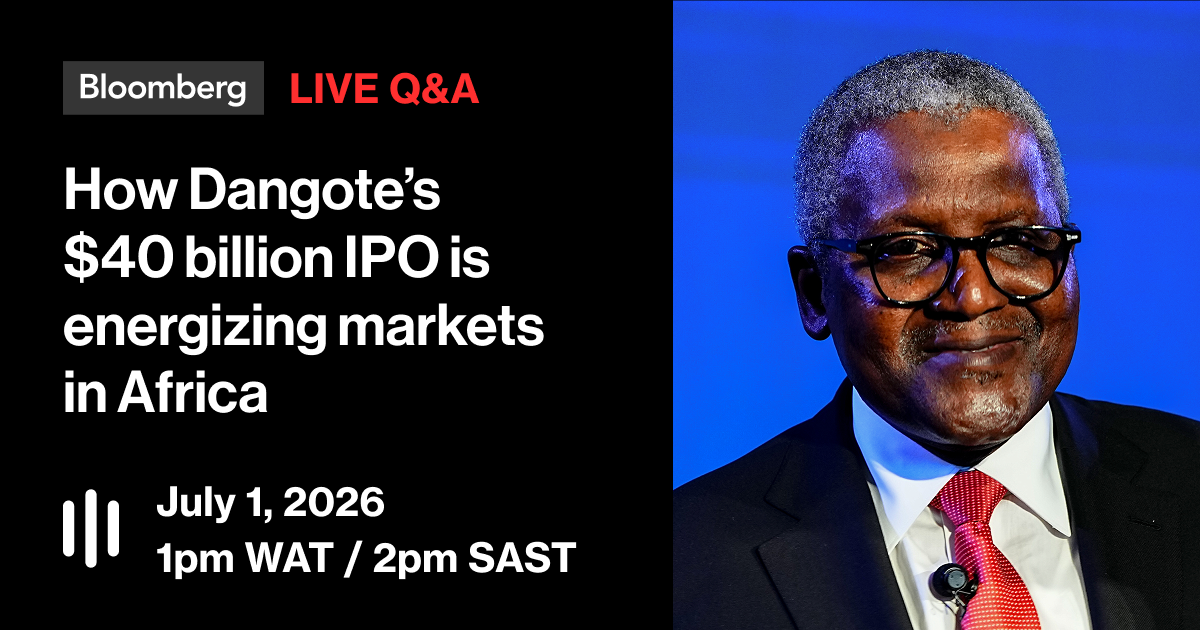
From tycoons to students, Nigerians are scrambling to be part of billionaire Aliko Dangote’s $40 billion IPO of his refinery business. Can the once-in-a-generation listing transform African markets? Click here to tune in to our Live Q&A at 1pm BST or to play it back later.
The UK’s long-awaited Defense Investment Plan leaves several hard choices for Andy Burnham if he becomes prime minister, including how to close an almost £5 billion ($6.6 billion) hole in his first budget. An influential Philippine religious group continued its protest for a second day in support of a senator allied with Vice President Sara Duterte, again slowing traffic on Manila’s main highway. Sign up for the Washington Edition newsletter for news from the US capital and watch Balance of Power at 1 and 5 p.m. ET weekdays on Bloomberg Television. Chart of the Day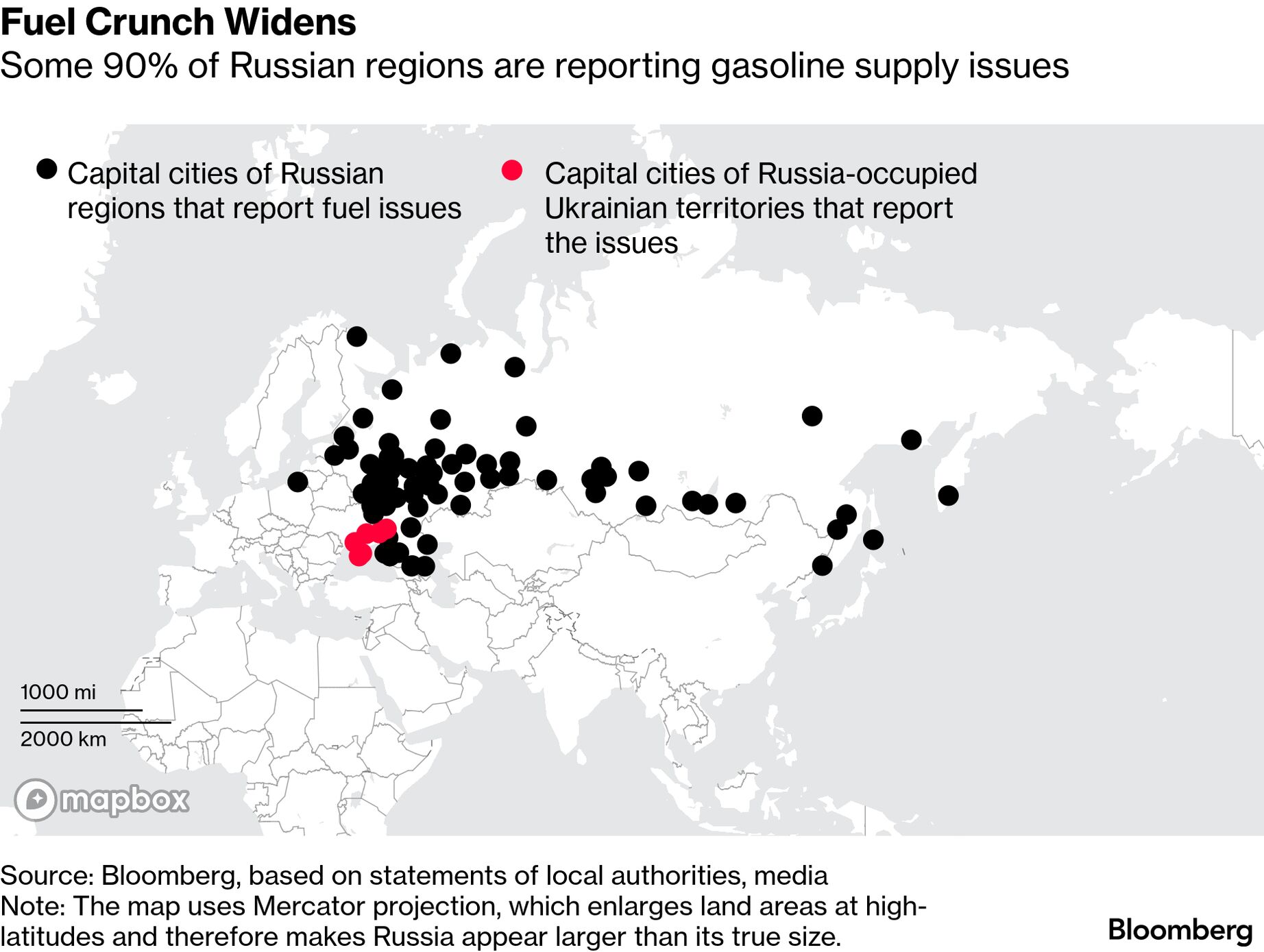
Ukraine’s campaign of attacks on Russian oil refineries is increasingly complicating the lives of drivers across the country as they are forced to embark on more difficult quests to refuel their cars. Russians are now waking up before dawn to be the first in line at the nearest filling station, downloading apps that crowd-source information on where to buy the right grade of gasoline or resorting to the black market. And FinallyOn the southwest coast of County Cork, where the lush green landscape gives way to the paler green of the Atlantic Ocean, Ireland’s economic strengths — and defensive weaknesses — are about to be laid bare. A transatlantic cable designed to handle artificial intelligence loads is due to make landfall here, symbolizing both Ireland’s burgeoning technology industry and the vulnerabilities surrounding the strategic infrastructure that’s growing up alongside it. As this long read explains, it’s a dilemma that’s placing the government in Dublin under pressure from its European partners. 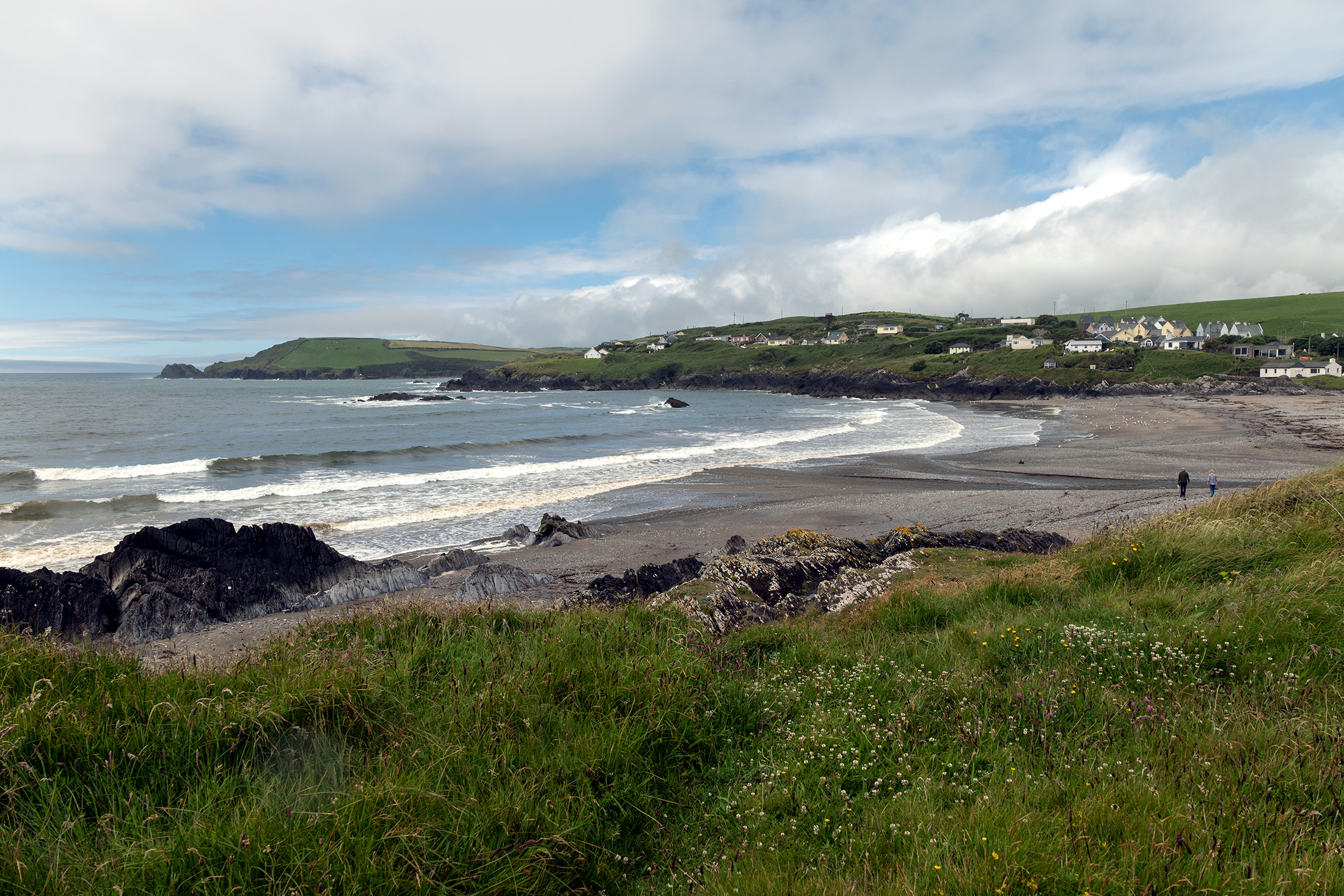
Owenahincha Beach in County Cork.
Photographer: Paulo Nunes dos Santos/Bloomberg
More from Bloomberg
We’re improving your newsletter experience and we’d love your feedback. If something looks off, help us by reporting it here. Follow Us
You received this message because you are subscribed to Bloomberg’s Balance of Power newsletter. If a friend forwarded you this message, sign up here to get it in your inbox.
|
Wednesday, July 1, 2026
Tinder box





Subscribe to:
Post Comments (Atom)
[AI Profit Predictor] Get urgent trade alerts
Want to get the next AI trade alert? Here’s what you must do right now. ...
-
Revolutionary Stem Cell & PRP —Start Your Journey Today ...
-
You’ve shown interest in Regenerative Medicine ...


No comments:
Post a Comment