
Welcome to Bw Reads, our weekend newsletter featuring one great magazine story from Bloomberg Businessweek. Today Ethan Bronner writes about the friendship between Israeli tech titan Eyal Waldman and Palestinian tycoon Bashar Masri — and how the Hamas attack on Oct. 7, 2023, and Israel’s response made them bitter enemies. You can find the whole story online (free) here. If you like what you see, tell your friends! Sign up here. Eyal Waldman had spent the morning watching spotted dolphins off Moyo Island east of Bali, where he and a half-dozen friends were midway through a weeklong getaway. In the afternoon the Israeli tech luminary had planned a jungle hike to the Mata Jitu waterfall, which locals remember for Princess Diana’s visit three decades ago. As the group started out, one of his companions got word of trouble back home — rockets coming into southern Israel from Gaza. Waldman was sure it was no big deal. Missiles from Gaza were pretty common. But on the way back, everyone’s phones began to light up with deeply alarming messages. The day was Oct. 7, 2023, and soon Waldman was scrolling through countless images of terror, tragedy and trauma. Hamas was firing missiles and rockets, and thousands of militants were shooting their way through border communities and military bases, killing and abducting hundreds. For Waldman, then 63, the news would soon turn personal — and devastating. His 24-year-old daughter, Danielle, had gone to the Nova Music Festival, an all-night rave in the desert about 3 miles from the heavily fortified border with Gaza. As news of the attack spread, Waldman’s son, Guy, had texted the family WhatsApp group chat asking if everyone was safe. Danielle, an interior design student who was due to leave for Venice, Italy, the next day on a trip she’d won for excelling at school, said not to worry. She and her boyfriend, Noam, were fine. Hours later, Guy fired off another note saying Danielle wasn’t answering messages. Waldman, who has a fortune in the hundreds of millions of dollars after selling his chipmaking company to Nvidia Corp. in 2020, chartered a helicopter to Bali at dawn the next day — the earliest he could get. From there he and his friends hired a jet to take them to Cyprus, where an Israeli friend was waiting with his plane. On Sunday evening, 36 hours after the attack began, they landed at an almost empty Ben Gurion Airport, which had been closed to most commercial traffic. As news of the music festival massacre spread, friends sent Waldman notes of concern about Danielle. One was an unusual confidant, Bashar Masri, a Palestinian American tycoon with whom Waldman had formed a rare partnership in the West Bank and Gaza. The two had long nurtured a cross-cultural bromance, and in 2019 they appeared together on 60 Minutes, where they laid out a vision of peace through prosperity, punctuating the notion with an on-camera embrace. 
Masri and Waldman on 60 Minutes in 2019.
Source: 60 Minutes
A Muslim from one of the most prominent Palestinian families and with wealth roughly equivalent to his friend’s, Masri knew all three of Waldman’s kids and felt especially close to Danielle. He had texted Waldman, “How can I help?” and offered his plane. Waldman said he was on his way but added, “I hope they haven’t been taken to Gaza. Can you check?” Masri replied that with Israeli fighter jets bombing the coastal enclave of 2 million, “I can’t reach anyone.” Early Monday, Waldman grabbed his handgun and drove 90 minutes south from his home in Tel Aviv in search of Danielle. The former elite infantryman joined up with a friend, retired General Israel Ziv, who was being hailed in the news media as a hero for plunging into battle, at age 66, armed at first with only a 9mm pistol. Making their way through what was still a war zone, with invaders’ bodies lying at the roadside, they followed Danielle’s phone-tracker coordinates. Eventually, they found the car where she and Noam had last been seen. “It was upside down, blood and bullets everywhere,” Ziv says. “You could see on Eyal’s face that his world was destroyed.” Waldman and Ziv spent the next two days scouring the valleys and hills around the abandoned car, hoping the young couple might be hiding, perhaps wounded. Masri kept sending Waldman notes: “We pray for their safety.” “Our heart is with you.” On Oct. 11, four days after the attacks began, army officers arrived at the home of Waldman’s ex-wife, Ella, Danielle’s mother, with the devastating news that the young couple had been found at a military camp where victims’ bodies were being brought for identification. When word reached Masri, he texted his friend: “May God give you strength.” Over the next couple of days, the correspondence continued, but the tone shifted. Masri, while writing to Waldman with deep sympathy, had made public statements that could be seen as at odds with those messages. As Waldman was desperately searching for Danielle, Masri had taken to his Facebook page not to condemn Hamas but to assail Israel’s counterattack: “Where are those who sing of humanity? What we are witnessing in Gaza,” he wrote, “is a criminal act.” 
Mourning Danielle and Noam.
Photographer: Ariel Schalit/AP Photo
Waldman’s notes to Masri became aggressive. He complained that despite their public pledges of cooperation, neither Masri nor any other Palestinian had agreed to work closely with him to build a binational political movement, as he’d been advocating. That failure, he said, allowed radicals to impose their agenda. Danielle was dead because of the cowardice of Palestinian leaders. Masri grew defensive. Publicly joining hands with an Israeli in a political movement and speaking out against the Palestinian Authority or Hamas was a huge risk for a Palestinian living in Gaza or the West Bank. “Now that you have witnessed Hamas’s brutality, you understand why I am always calculating,” one of his WhatsApp notes read. “There are extreme groups among us. You are lucky to live in a democracy. We don’t. I will continue to struggle in my own peaceful way.” Waldman found this frustrating and craven. He had helped organize demonstrations against Prime Minister Benjamin Netanyahu and his far-right religious ministers and policies. The government had promoted populist laws weakening the authority of the courts, increasing executive power and dismissing Palestinian statehood — and Waldman had stood up to challenge them. Masri says he feared arrest by the Palestinian Authority of President Mahmoud Abbas, who’d been entrenched in the West Bank for almost two decades while Hamas took over Gaza in 2007 after a brief civil war. Masri disliked both groups and strongly favored creating jobs and prosperity to produce a new political leadership class. That’s why he invested in Gaza — a pair of luxury hotels and an industrial park — and he’d hired computer programmers in the enclave for Waldman’s company. But while he had great affection for his friend, he had long viewed Waldman as tin-eared to Palestinian sensibilities. The gap between their styles reflects a rift that plagues the two groups’ interactions: Israelis often display a bluntness that Arabs, with their hierarchy and ceremony, find unsettling. Waldman replied by forwarding gruesome photos and videos of dead Israelis and the shattered car where Danielle and Noam had been murdered. He wrote that Palestinians would quickly learn that Israelis are better at killing than they are and that they would do so in Gaza as long as necessary to win this war. He told mutual friends to inform Masri that he wouldn’t be welcome at Danielle’s funeral. And Waldman began to focus on Masri’s activities in Gaza, finding what he considered evidence of far too much comfort in dealing with the group that had just killed his daughter. Over months of reporting, both men shared text messages and other communications between themselves and others. They spoke openly and often, and neither has challenged the basic outlines of this story. They do, though, view the situation from vastly different standpoints and disagree on some details and many motivations. Apart from a chance encounter in Qatar in 2025, Waldman and Masri, who’d spent a decade as master-of-the-universe buddies — skiing, yachting, dining, sharing intimate concerns over their love lives, business and politics — haven’t communicated since mid-October 2023. More than that, Waldman helped organize a US lawsuit against Masri by families of victims of the Oct. 7 attacks, accusing him of having “knowingly and deliberately integrated into Hamas’s terrorist infrastructure.” Masri denies he ever cooperated with any Hamas militants and insists he couldn’t possibly have known anything was afoot. If he had, he says, he would have done everything in his power to stop it. His attorneys have filed a motion to dismiss the lawsuit, arguing that it equates doing any kind of business in Gaza with terrorism. The plaintiffs responded with what they said was more evidence of his collusion. The Hamas attack effectively reset the historical clock so that in Israel today, all political and security discussions start on Oct. 7. This shift is reflected in the relationship between Waldman and Masri, whose friendship — like so many others across the two societies — was torn asunder by that reset.
Keep reading
On the PodcastYou’re not imagining it: Things are a lot worse than they used to be. From movie theaters to bowling alleys, there’s a drop in quality places to have a good time. On this week’s episode of the Everybody’s Business podcast from Bloomberg Businessweek, hosts Max Chafkin and Stacey Vanek Smith chat with Bloomberg News wealth reporter Ben Steverman to figure out why fun is now a luxury good. Plus, with rising heat and demands on the electric grid by data centers, what does the future look like for energy consumption? Bloomberg News power reporter Naureen Malik has the answer. Listen and subscribe on Apple, Spotify, iHeart and the Bloomberg Terminal. More Weekend Reads
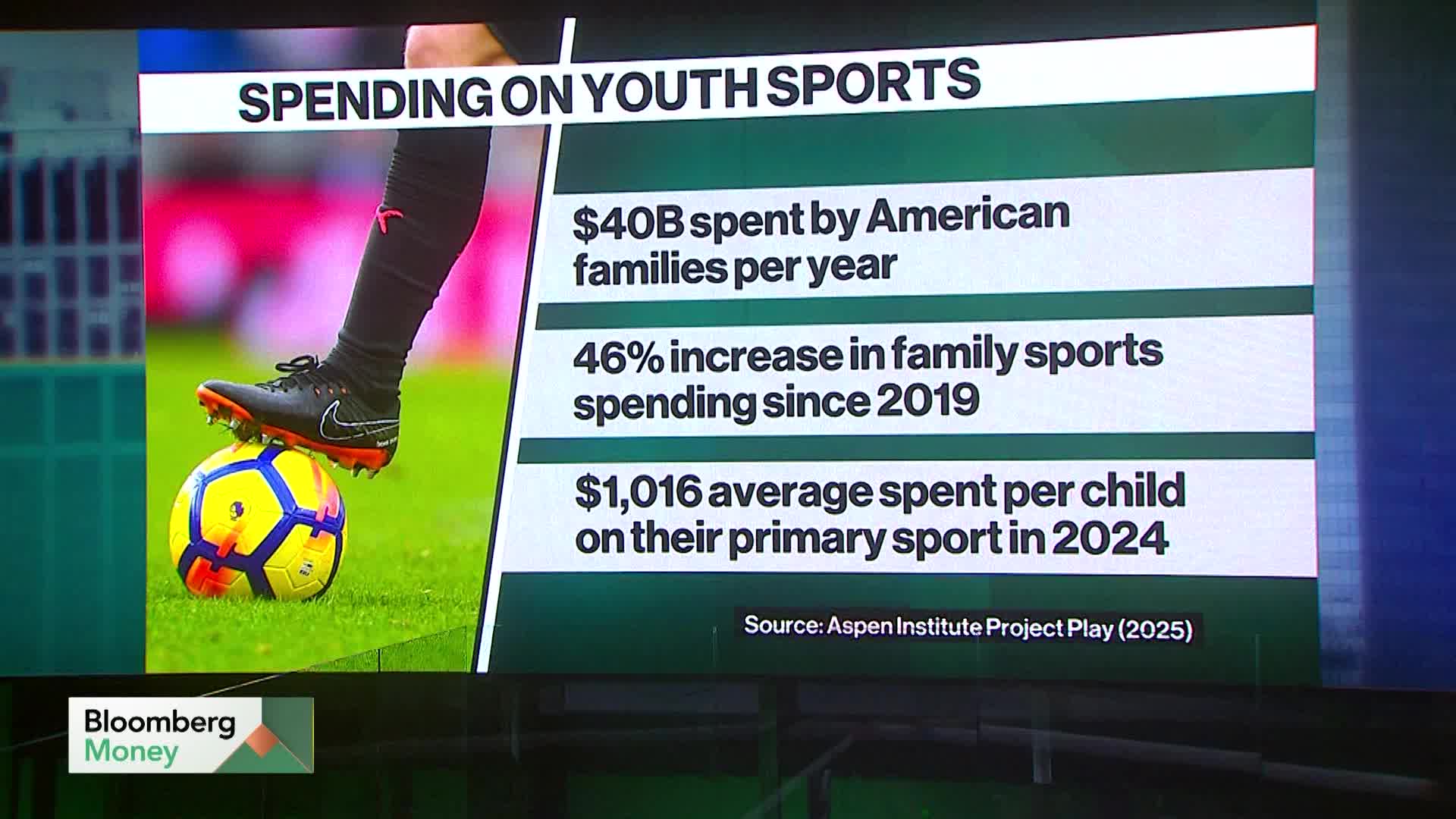 
Video: Youth Sports Cost Debate Rekindled After US Soccer Exit

Video: Why Young Investors Are Taking So Much Risk
Play Alphadots!Our daily word puzzle with a plot twist. 
Today’s clue: A little bit country? More From BloombergLike Businessweek Daily? Check out these newsletters:
Explore all Bloomberg newsletters. We’re improving your newsletter experience and we’d love your feedback. If something looks off, help us fine-tune your experience by reporting it here. Follow Us
You received this message because you are subscribed to Bloomberg’s Businessweek Daily newsletter. If a friend forwarded you this message, sign up here to get it in your inbox.
|
Sunday, July 12, 2026
Bw Reads: A friendship shattered by war






Subscribe to:
Post Comments (Atom)
Never traded futures before? Tuesday is built for you.
Complete beginners welcome. Plus a free AI report when you register. ͏ ͏ ͏ ͏ ͏ ͏ ͏ ͏ ͏ ͏ ͏ ͏ ͏ ͏ ͏ ͏ ͏ ͏ ͏ ͏ ͏ ͏ ͏ ...

-
PLUS: Dogecoin scores first official ETP ...
-
Swaps, memes, homes, tokens. View in browser Unicorn bucket We have talked a fe...


No comments:
Post a Comment