| Read in browser | ||||||||||||||

The Iran war is remaking the global energy system. Cut off from crucial supplies of oil and gas, countries in Asia and Europe are doubling down on cheap, homegrown renewable energy. Today’s newsletter is a data-driven deep dive into how policymakers are making strategic decisions that will likely result in long-term changes to the way large parts of the world generate power. Plus, the AI data center boom threatens to break up the biggest US grid operator. Subscribe to Bloomberg to get unlimited access to all our stories. Clean energy joltBy Akshat Rathi, Hayley Warren, Neil Jerome Morales and Stephen Stapczynski About two hours from Manila there’s a solar power plant capable of powering 60,000 homes. Surrounded by fields growing okra and eggplant, it had been sitting idle since August, waiting for a connection to the grid — stuck in a queue just like many other renewable energy facilities around the world as power networks struggle to catch up with rising electricity demand. Then the Iran war cut off the Philippines’ supply of imported liquefied natural gas. Immediately, the government cut fuel taxes and offered free bus rides to the public. Then a few weeks later, as the Strait of Hormuz remained blocked, officials began deploying policies toward a deeper, more structural plan to reduce the country’s dependence on fossil fuels. 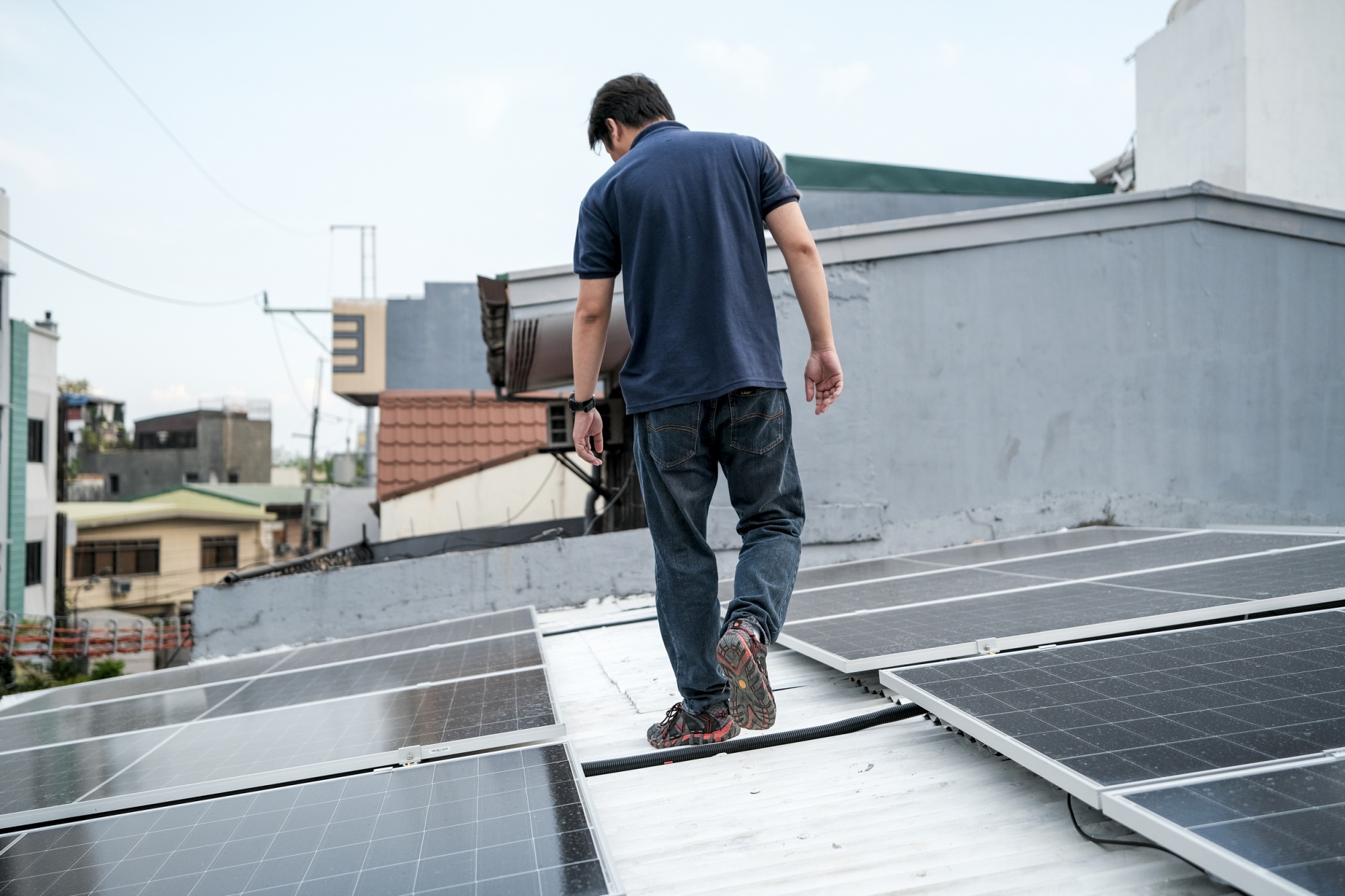
Walter Serrano, a 39-year old nurse, does a routine check of his solar installation in Manila, Philippines, May 12, 2026.
Photographer: Veejay Villafranca/Bloomberg
One strategy was to fast track more than 30 renewable plants by the end of April. One of those was that 125-megawatt solar plant, built by Citicore Renewable Energy Corp, which is now supplying clean energy to the grid. It is “good timing,” said Joselito Ernst Cañete, operations manager at Citicore, just as electricity demand increases to power air conditioners during the peak summer months. What happened in the Philppines isn’t an isolated example. With their energy supplies threatened, countries across Asia and Europe have chosen to speed up deployment of renewables and electrification. “It’s a wake up call,” said Sam Geall, an associate fellow at Chatham House. “It’s the Ukraine moment for Asia,” he said, echoing how Europe accelerated its energy transition when Russia’s attack led to a spike in natural gas prices. History shows that successive severe shocks tend to drive profound changes in the global energy mix. The 1970s oil shocks, which are the closest comparison to the scale of disruption wrought by the Iran War, led to a rapid plunge in oil’s share of energy consumption. Governments around the world pivoted to nuclear plants and brought back coal. 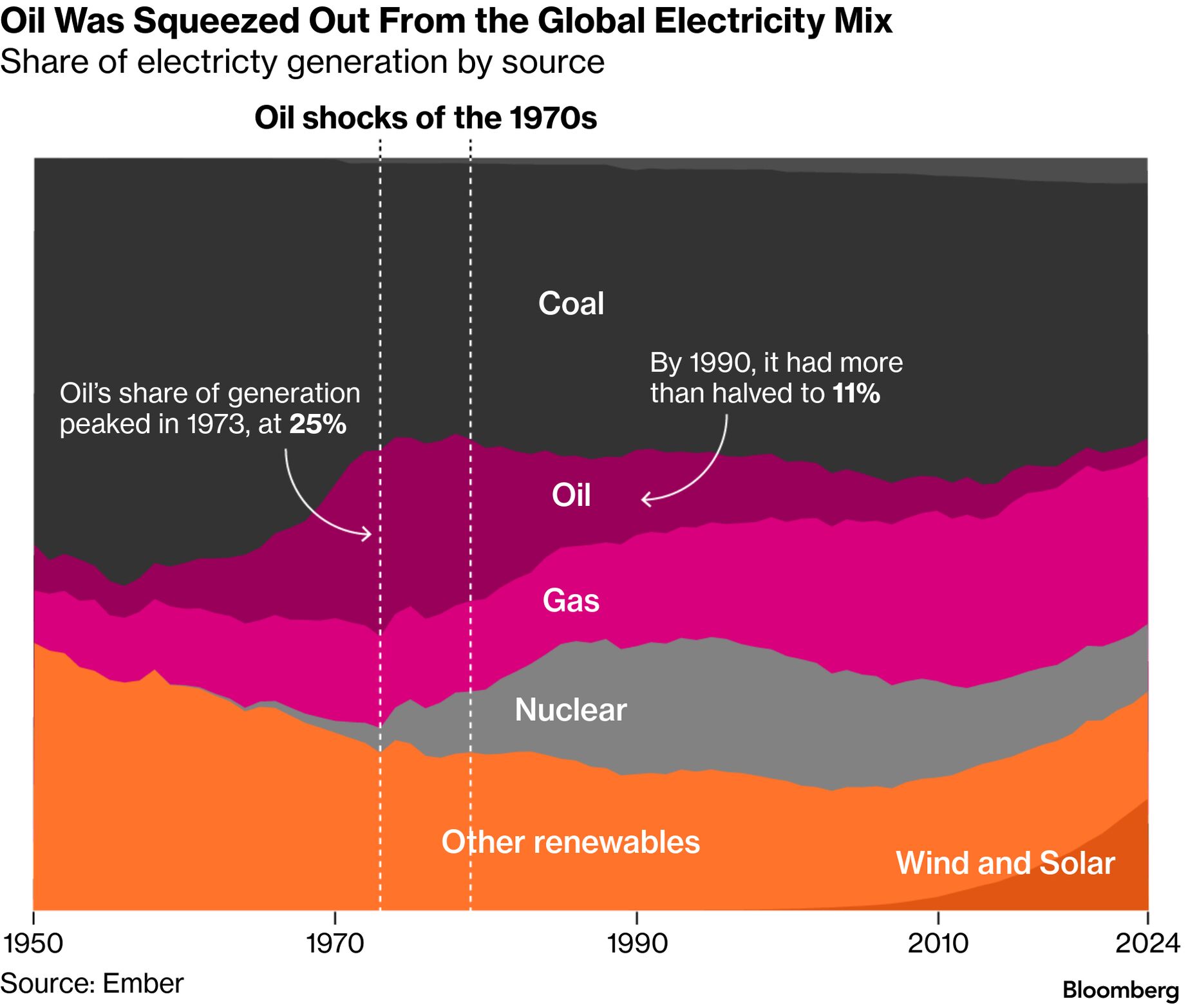
The policy responses to the energy shocks of the 2020s are different because green technologies have blossomed. China now offers the entire electric stack — from solar panels to electric cars — at affordable prices. Exports of electrotech from China in the months of March and April have been higher than in any month before. 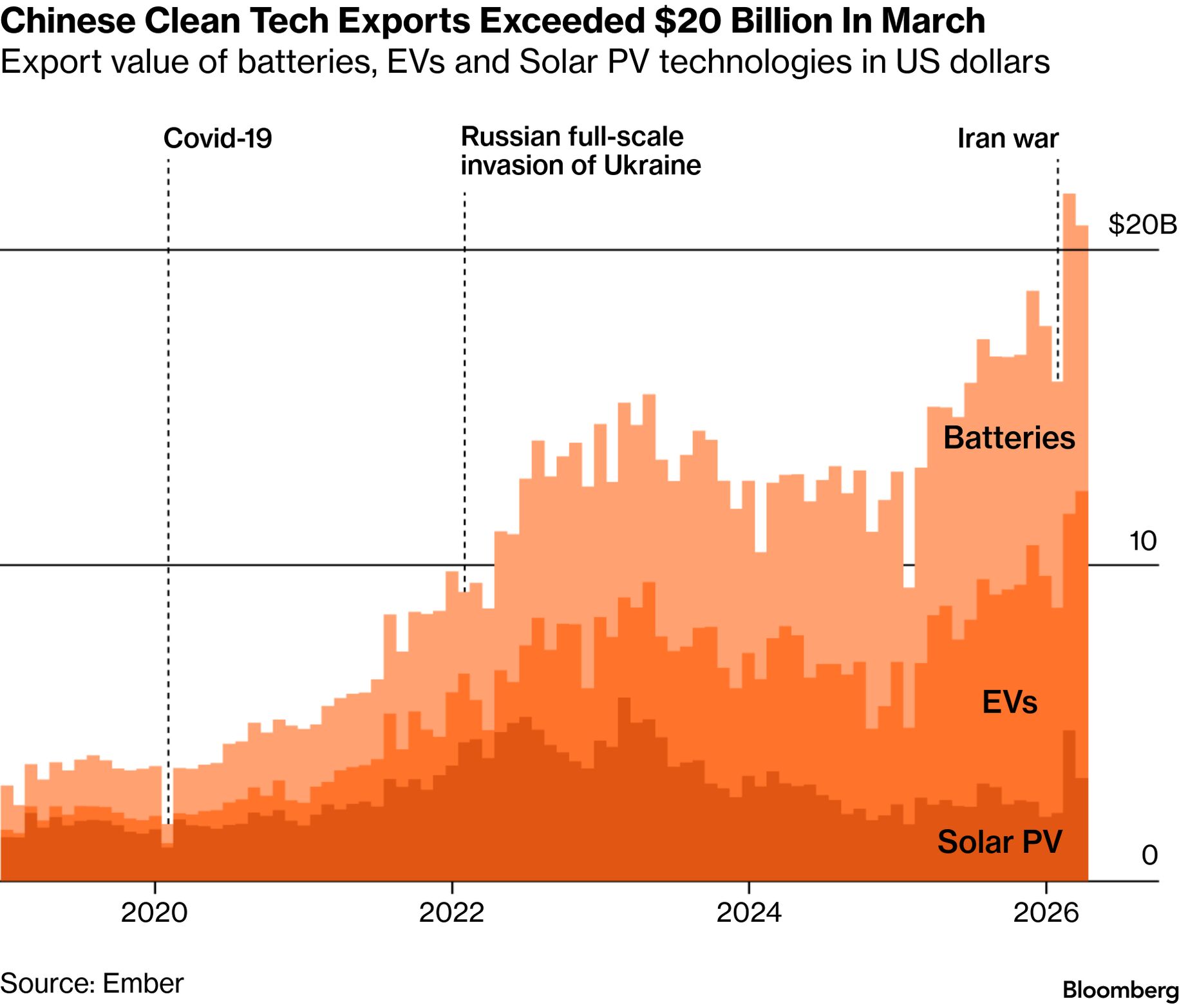
While some countries are burning more coal in the short term, including China, India and Japan, more than 20 nations have made structural changes to speed up the green energy transition, according to the International Energy Agency. Those decisions are likely to lead to irreversible changes to their energy mixes, as they did in Europe in the wake of the Ukraine war. 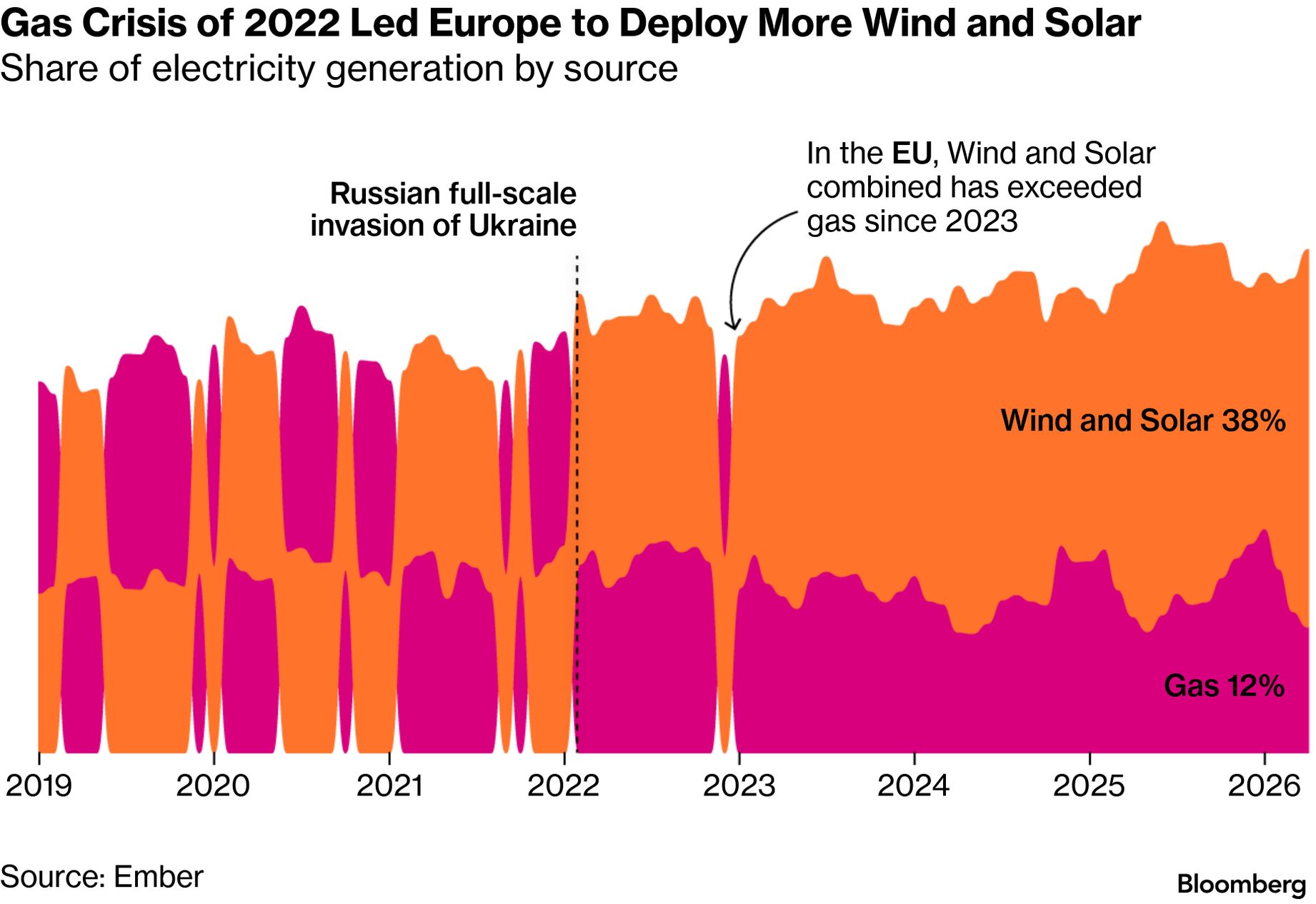
Read more
This story is part of China’s New Power, a series examining the country’s dominance in powering the world’s electrified future. Check out the other stories here. Cut off80% How much power from imported natural gas dropped in Pakistan in April compared to last year. Future systemsData center falloutBy John Ainger and Jennifer A Dlouhy Soaring US power bills are threatening to claim their biggest victim yet — the nation’s largest electric grid operator. Federal officials have suggested breaking up PJM Interconnection LLC, which runs the grid from the Illinois prairie to the Jersey Shore. New data centers are straining electricity supplies across the 13 states PJM serves, pushing up prices and fueling a political backlash. Regulators, state officials and utility executives complain the organization takes too long approving new power plants to stay ahead of growing demand. Even PJM’s chief executive officer has called the current situation “not tenable,” saying his organization can’t ensure ample future electricity supplies while shielding residential consumers from rising bills. 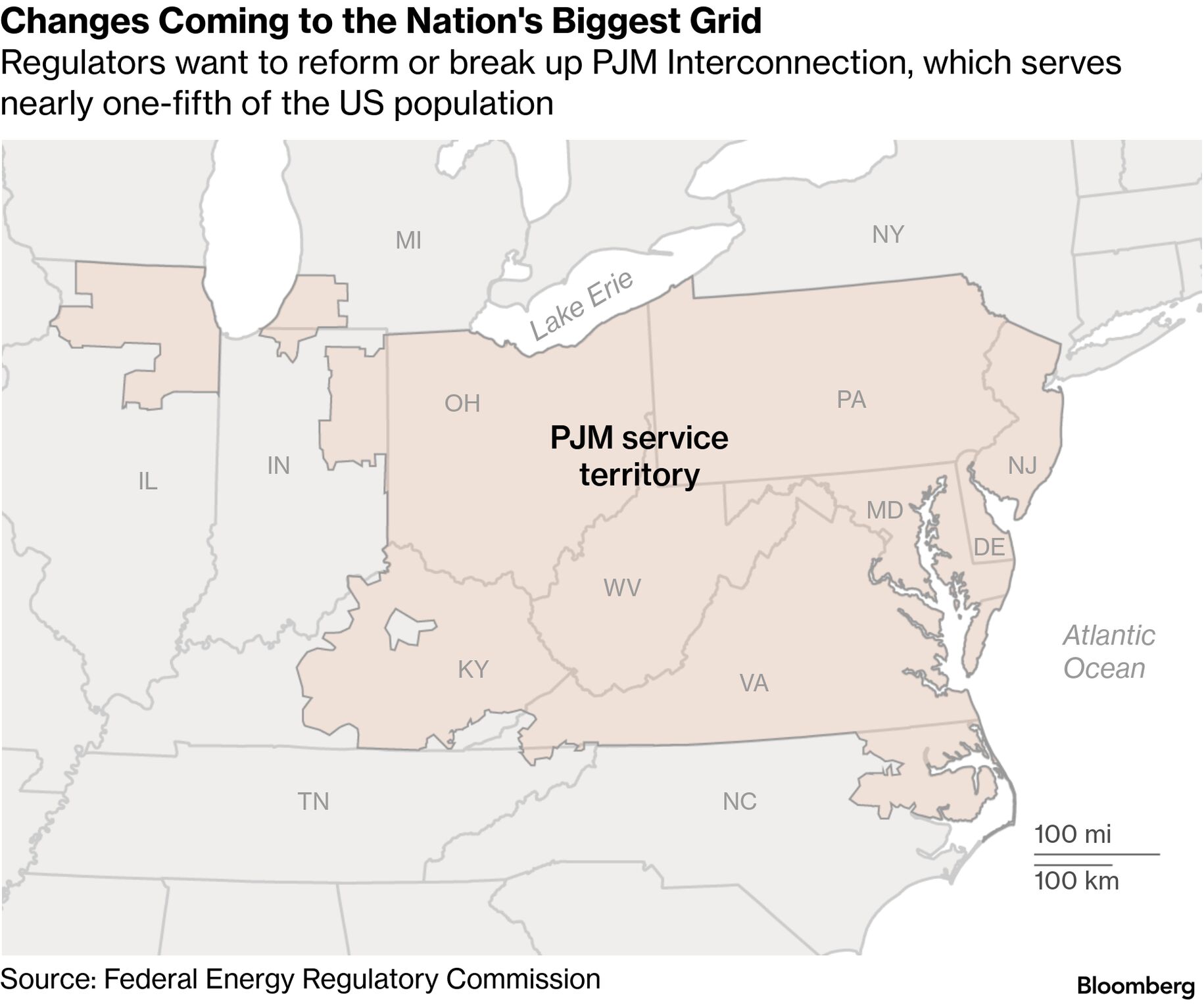
One of the largest electric utilities in its territory — American Electric Power Co. — has threatened to leave, potentially merging that company’s transmission wires into another, nearby grid. The Federal Energy Regulatory Commission has called a July 23 meeting to discuss potential reforms, including changes to PJM’s governance. And FERC’s head warned last month that PJM may need to be split into smaller, more manageable pieces if reform seems unlikely to work. A senior White House official, speaking on condition of anonymity, also said a breakup should be considered if necessary. The organization’s inability to move faster, said FERC Chairman Laura Swett, places America’s artificial intelligence leadership at risk.
Read more
Listen to ZeroIt’s been more than three months since the US attacked Iran, leading to the closure of the Strait of Hormuz that carries 20% of the world’s oil and gas. The shock to energy markets has been so intense that some countries are taking longer-term measures to cope. This week on Zero, Akshat Rathi and Peter Guest explore the history of policy responses to energy shocks and what’s different in the 2020s. Listen now, and subscribe on Apple, Spotify or YouTube to get new episodes of Zero every Thursday. More from GreenMore from Bloomberg
Explore all Bloomberg newsletters. We’re improving your newsletter experience and we’d love your feedback. If something looks off, help us fine-tune your experience by reporting it here. Follow Us
You received this message because you are subscribed to Bloomberg’s Green Daily newsletter. If a friend forwarded you this message, sign up here to get it in your inbox.
|
Thursday, June 4, 2026
War ushers in clean energy era






Subscribe to:
Post Comments (Atom)
5 Reasons to Keep an Eye on THIS Small-Cap
As the global artificial intelligence boom runs into severe electrical grid bottlenecks, this small-cap infrastructure platform is ...
-
Revolutionary Stem Cell & PRP —Start Your Journey Today ...


No comments:
Post a Comment