| Read in browser | ||||||||||||||


Welcome back to Pursuits Weekly, our look at the world’s biggest culture stories, as well as ideas and recommendations around travel, dining and art. Sign up here to get this newsletter every Saturday in your inbox. Broadway’s doldrums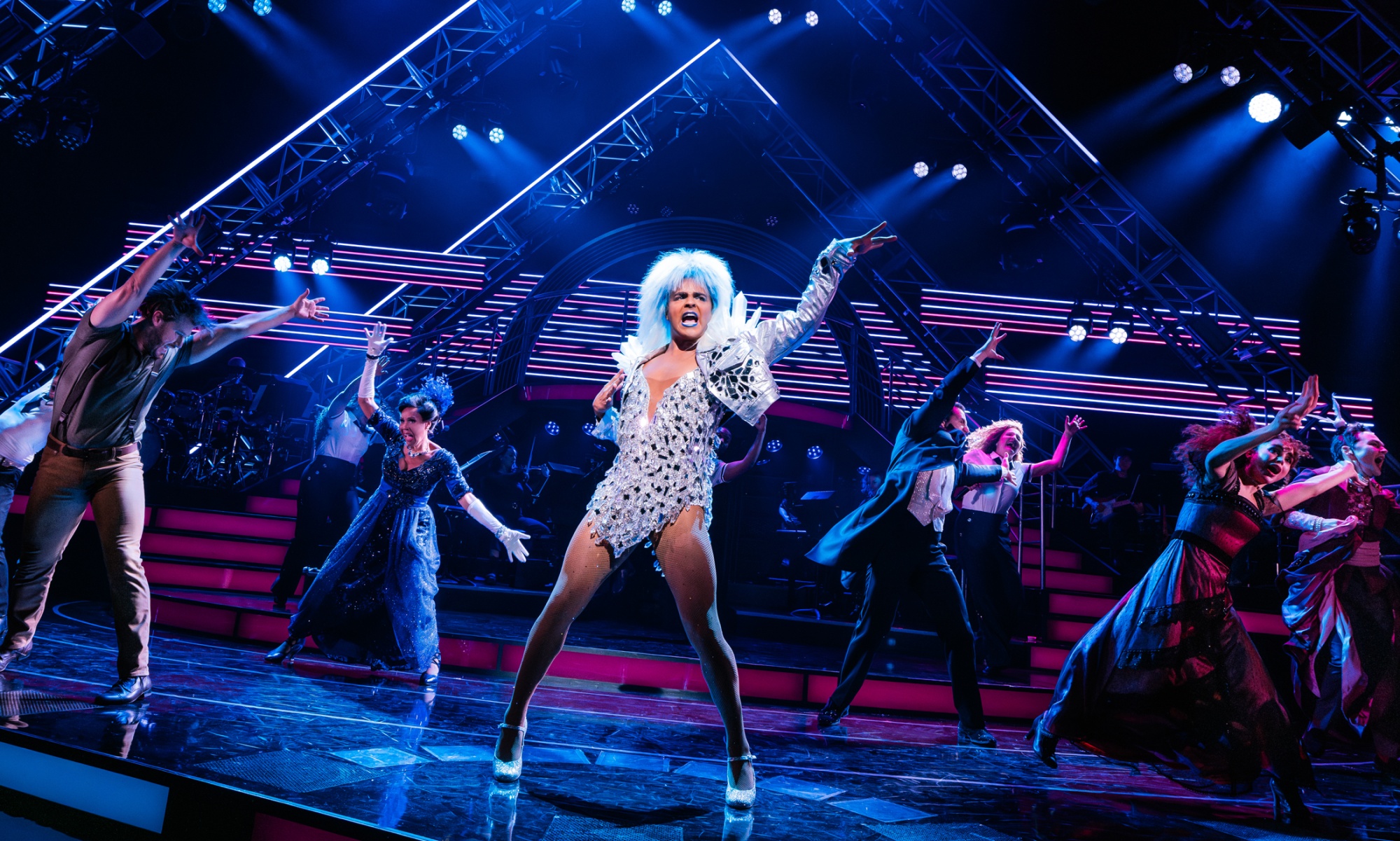
Layton Williams received a Tony nomination — and an Olivier award — for his performance as The Iceberg in Titaníque.
Photographer: Evan Zimmerman for MurphyMade
Broadway looks on the surface to be doing extraordinarily well. It set a new record with a total annual gross of $1.91 billion in the 2025-26 season, with the average ticket price also hitting a new high. The capitalist rule of thumb is that price is an indicator of quality — that if 14.6 million people were willing to pay an average of $131 apiece to see a show, then New York’s Theater District must be firing on all cylinders. In reality it doesn’t really seem to work that way. Post-pandemic Broadway has felt creatively underwhelming as soaring costs are increasingly incentivizing producers to bank on celebrities and existing IP. It seems very much as though producers are gravitating toward the kind of safe choices that make theatergoers more comfortable spending hundreds of dollars on a ticket: Audiences are much more likely to take a risk on something new and different when the financial downside of disappointment is more manageable. For a good example of what Broadway has lost while being flooded by cash, it’s worth looking back 35 years to the 1990-91 season. There were only half as many theatergoers then, and the total gross was a mere $267 million, or $645 million in today’s inflation-adjusted dollars; the average ticket price of $36.50 would be equivalent to the bargain price of $88 today. The only number bigger in 1991 was the number of households that tuned in to the Tonys — about 9.1% of all homes with TVs, per Nielsen. Contemporary ratings don’t come close. Creatively, however, that season was one for the ages. The Tony Awards were hosted by Julie Andrews and Jeremy Irons, and the winners included Jonathan Pryce and Kevin Spacey for their roles in Miss Saigon and Lost in Yonkers,. Topol and Stockard Channing received nominations — but didn’t win — for their performances in Fiddler on the Roof and Six Degrees of Separation. 
Liberation’s Betsy Aidem (far left) and Susannah Flood (far right) both received Tony nominations.
Source: Little Fang
This year’s Tony awards, taking place on Sunday and hosted by Pink, a musician who sells out stadiums but has never appeared on Broadway, feels significantly less momentous; most notably there were only six shows that were even eligible for the best new musical award, an all-time low if you ignore the pandemic years of 2020 and 2021. As Chris Rovzar has reported, only one new musical since 2022 has managed to recoup its original investment. Stars and producers taking in a fixed share of the gross are sitting pretty, but the everyday investors who actually fund most of the shows often lose all their money. The betting-market favorites for best musical and best play are Schmigadoon! (based on a TV show) and Liberation, Bess Wohl’s Pulitzer-winning play about 1970s feminism. Another nominee —if not a favorite — is Layton Williams in Titaníque, for his Olivier Award-winning performance as an iceberg. The Lost Boys, a $25 million musical based on a camp 1987 vampire flick, received 12 nominations; the original movie’s Alex Winter, however, was passed over for his performance in Waiting for Godot, as was his Bill and Ted co-star Keanu Reeves. Other big-name actors deemed unworthy of even being nominated include Lea Michele, Kristin Chenoweth, Bobby Cannavale, Neil Patrick Harris and Adrien Brody, in The Fear of 13, for which he too won an Olivier. For on-stage star power, this year’s most-watched race is the award for best actor in a play, which will almost certainly go either to John Lithgow, in Mark Rosenblatt’s Giant, or to Broadway stalwart Nathan Lane, in the running for a fourth Tony for his Willy Loman in Arthur Miller’s Death of a Salesman. As for the Pursuits team, we’ll be watching the award for costume design, where Qween Jean is nominated for her work on Cats: The Jellicle Ball. It’s a raucous viewing experience, James Tarmy writes, where “outfit changes come fast and furiously.” Her main competitor, Jeff Mahshie for Noel Coward’s Fallen Angels, starring Rose Byrne, is much more sartorially sedate, if art deco delicious. By the numbers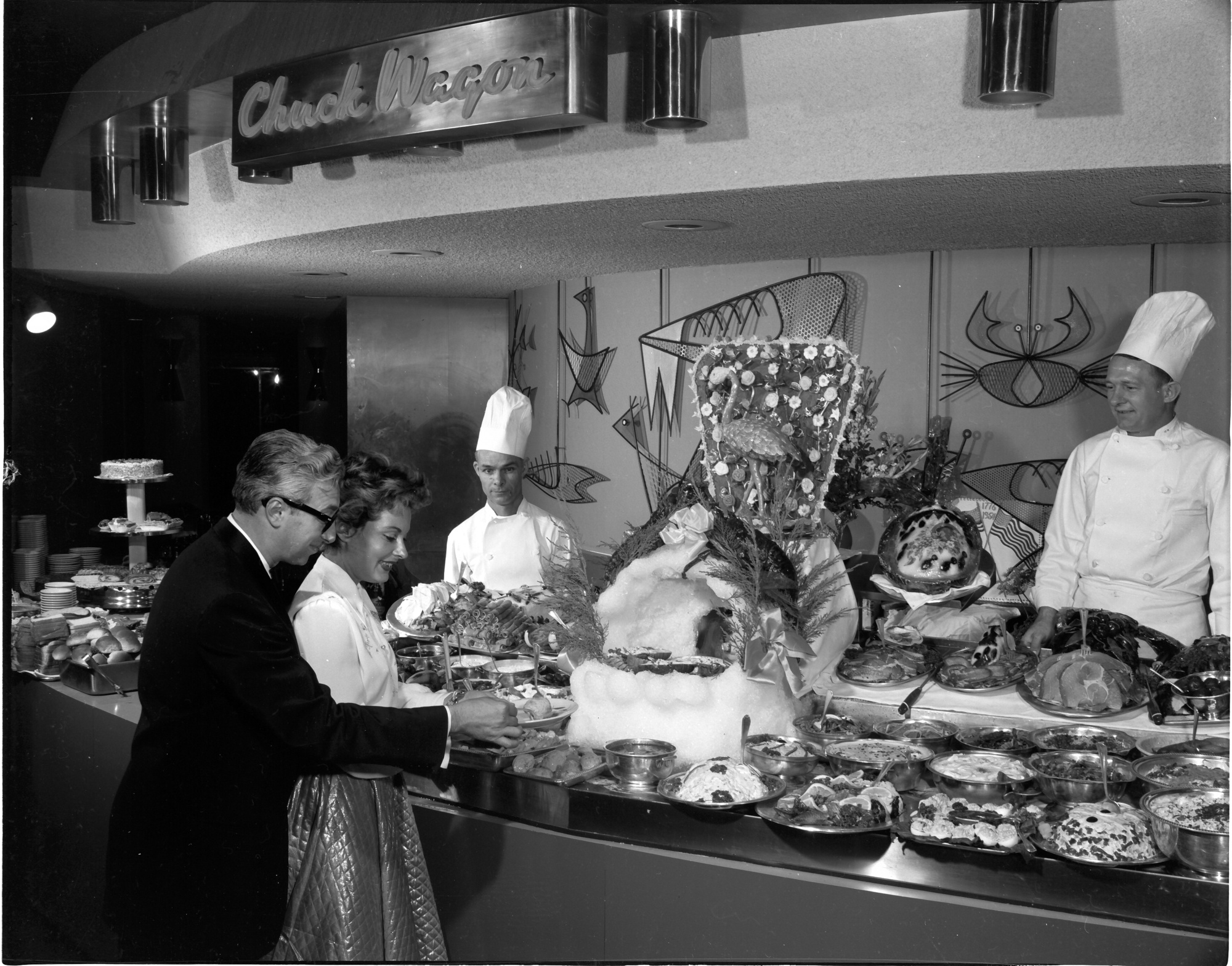
The Flamingo’s buffet in 1954.
Photograph: Las Vegas News Bureau
$44 The price of the all-you-can-eat buffet at the MGM Grand, which closed on May 31 in what Gabriel Baumgaertner and Kate Krader call “the swan song of a Las Vegas tradition.” $78.53 The opening price of VSXY on June 2, the date Victoria’s Secret & Co. changed its ticker symbol from VSCO. Per CEO Hillary Super, the change is part of the way in which the company is “celebrating sexy in all its forms.” HK$90 The price of the kazy (horse meat) supplement at Yurt in Hong Kong, where the seven-course tasting menu is priced at HK$588 ($75) per person. Adding the kazy — which tastes “exactly like pastrami,” per Kristine Servando — brings that up to about $86. 40,000 The number of bottles of wine in a Georgian collection that at one point belonged to Josef Stalin and is now headed to auction. The “trove includes wine from Bordeaux’s most famous estates that were once owned by Russia’s Tsar Alexander III,” per Reuters — although Stalin, also a wine lover, added to the collection after he seized it. A very expensive sushi education
At Shota Omakase in Brooklyn, chef Cheng Lin pays top dollar to import the highest-quality fish.
Source: Shota Omakase
“Very few people have the knowledge it takes to understand the diminutive differences that make sushi go from great to exceptional,” writes Brandon Presser, in his how-to guide to Tokyo sushi. Kat Odell, however, is one of those people: Over the course of several hundred omakase meals, I started to perceive the subtle distinctions most diners understandably miss. How the angle of multiple knife cuts changes the texture of ika (squid) from rubber to silk. How precise aging techniques — from temperature control to kobujime, the practice of curing fish with kombu — can coax extraordinary texture and flavor from a piece of otoro to make it almost as juicy as a summer peach. How those hundreds of tiny decisions can manifest as an extraordinary bite. Odell is an omakase connoisseur — someone who not only tastes but also fully appreciates the difference between a $300 meal and a $1,000 meal. Her defense of pricey sushi rests on the Japanese principle of kodawari, the obsessive pursuit of perfection. “Even after decades of repetition,” she writes, “there’s always a slightly better cut, cure, temperature or ratio of fish to rice to pursue. As a diner, you begin learning alongside them.” Bryce Elder, by contrast, is not a veteran of several hundred, or even several dozen, omakase meals. Visiting the extremely expensive Sushi Kanesaka in London for the Financial Times, he noted the “clinical brightness” of the lighting, the “clammy seriousness” of the atmosphere and “the sticker shock” of the drinks list. As for the food, he wrote, it’s “made for responding to cerebrally, not viscerally.” His experience is a prime example of what the New York Times’ Ligaya Mishan characterized as the “elaborate pampering of the well-heeled diner.” It’s certain that Odell would experience Sushi Kanesaka very differently from Elder. The question, ultimately, of whether it’s one of the “plethora of places where what you get isn’t good value” is not about the food, but rather whether you, the diner, are even qualified to judge. If you don’t think you possess that level of connoisseurship, then you should probably either bring your budget down a notch or else embrace the fact that a large part of the price tag is, effectively, a tuition fee. Go to a hundred more of these, and you’ll start to be able to judge for yourself. Branded thrifting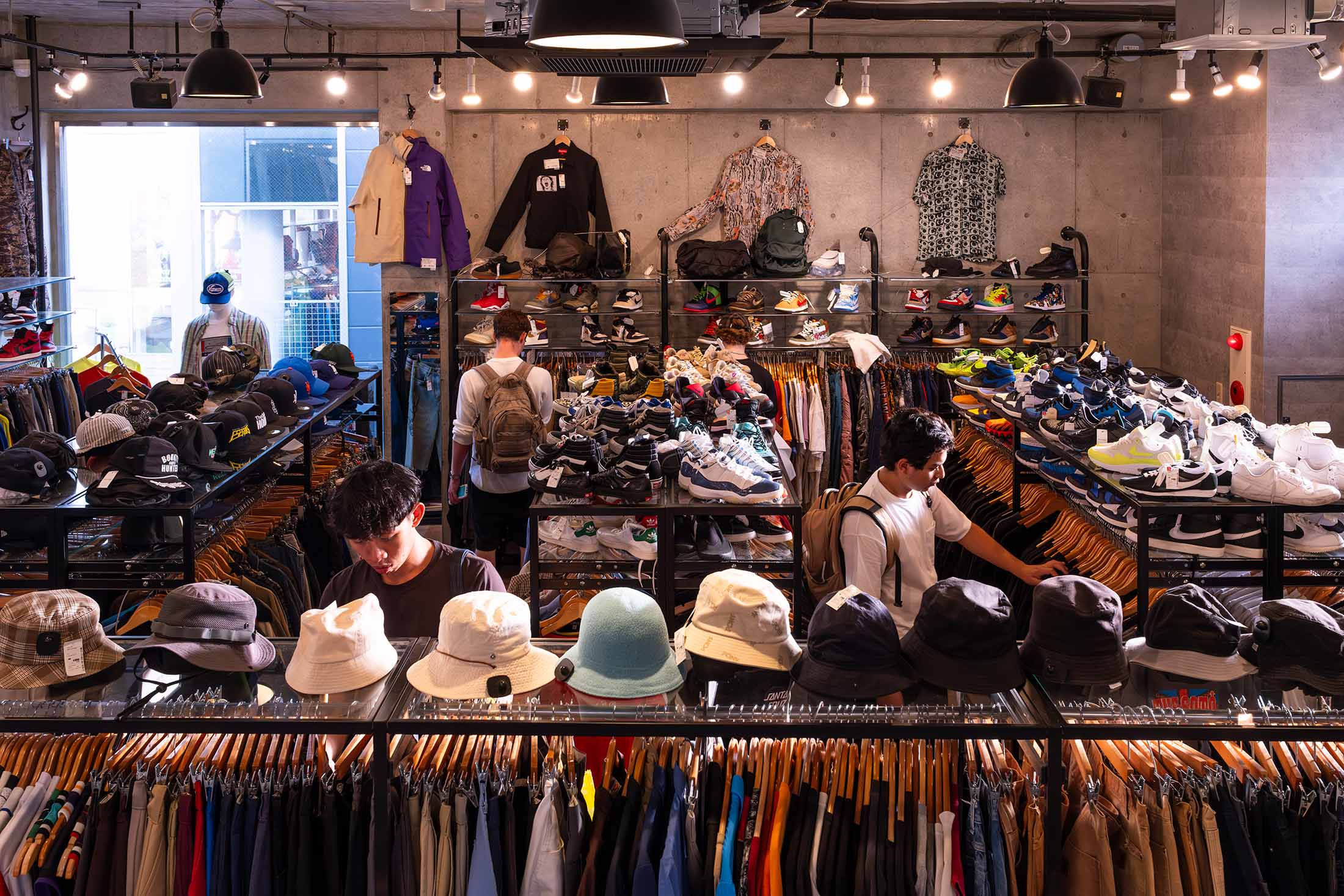
2nd Street’s stores are packed with bargains.
Photographer: Andrew Faulk for Bloomberg Businessweek
“Buy, sell, buy, sell,” says Masanori Takai, a senior executive at Japanese retail phenomenon 2nd Street. “Again and again.” That’s one of the secrets behind the retailer’s astonishing rise: Customers often treat the store more like a lending library, keeping their closets at home tightly curated. As Kanoko Matsuyama and Aaron Clark report, 2nd Street, which deals only in second-hand clothes, has now overtaken Uniqlo as the face of Japan’s apparel industry, with 931 Japanese locations to the casual-wear giant’s 794. (Much the same is true in New York City, where 2nd Street now boasts 12 locations to Uniqlo’s nine.) Given that the global secondhand market will grow up to three times faster than firsthand fashion through 2027, per McKinsey & Co., expect that lead to continue to grow. “2nd Street stores are a far cry from the stereotype of a musty and often chaotic thrift store,” Matsuyama and Clark write. One frequent customer, Yu Yanagida, 31, tells them that “thrifting at places like 2nd Street feels new and exciting for younger people, and even kind of cool.” Quote of the weekIt’s a far cry from the 19th-century heyday of the business novel, when Dickens wrote Dombey and Son about succession problems in a shipping firm, Balzac’s Lost Illusions dramatized shenanigans in the paper industry, and even George Eliot’s masterpiece Middlemarch related the difficulties in finding product-market fit for new medical treatments. Alexander Starritt, whose Drayton and Mackenzie was the first novel in 15 years to be long-listed for the Financial Times’s Business Book of the Year Award, says that “to explain the lives of people living in this moment, to look at the historical forces that are shaping all of us, you have to look at business and technology” — and that not nearly enough novelists are doing so. No wonder it also topped our list of the Best Books of 2025. One Very Specific Recommendation: The eStarli Longtail L20 e-Cargobike
There’s more than enough space on the back for a couple of kids. From £3,305 ($4,400).
Source: Estarli
As in most great cities, owning a car in London only really makes sense if you need it for work or for regular getaways outside of the city; most parents I know only use theirs once a week. Instead, bikes have become the mode du jour, with cycling in the capital at record levels, driven by investments in bike lanes and routes, employee bike schemes, and the rise of hire e-bikes. Cargo bikes allow children to tag along for the ride. Our eStarli Longtail L20 is perfect for the school drop-off, a quick run to the library, a dash to inconveniently located swimming classes and the 5-mile commute to work. While there are a number of other cargo bikes on the market — the more expensive Tern being extremely popular, at least based on our North London neighborhood — the eStarli offers great value. We rent it, accessories and all, for £160 per month through Blike. That’s about $215. My 2- and 6-year-old sons absolutely love the bright red color and the boost we get when we shift from Eco to Turbo mode. I love that my memory of this time will be a joint “whee” as we zip down the hills around our home. Beats being stuck in traffic. —Jackie Bischof New: Get the Bloomberg Money newsletter — insights, ideas and tools for doing more with your money. New for subscribers: Free article gifting. Bloomberg.com subscribers can now gift up to five free articles a month to anyone you want. Just look for the “Gift this article” button on stories. (Not a subscriber? Unlock unlimited access and sign up here.) We’re improving your newsletter experience and we’d love your feedback. If something looks off, help us fine-tune your experience by reporting it here. Follow Us
You received this message because you are subscribed to Bloomberg’s Bloomberg Pursuits newsletter. If a friend forwarded you this message, sign up here to get it in your inbox.
|
Saturday, June 6, 2026
Broadway’s biggest change





Subscribe to:
Post Comments (Atom)
-
Bloomberg Evening Briefing Americas View in browser Who's paying for Donald Trum...
-
PLUS: Dogecoin scores first official ETP ...


No comments:
Post a Comment