| Read in browser | ||||||||||||||


Welcome back to Pursuits Weekly, our look at the world’s biggest culture stories, as well as ideas and recommendations around travel, dining and art. Sign up here to get this newsletter every Saturday in your inbox. Airport glow-ups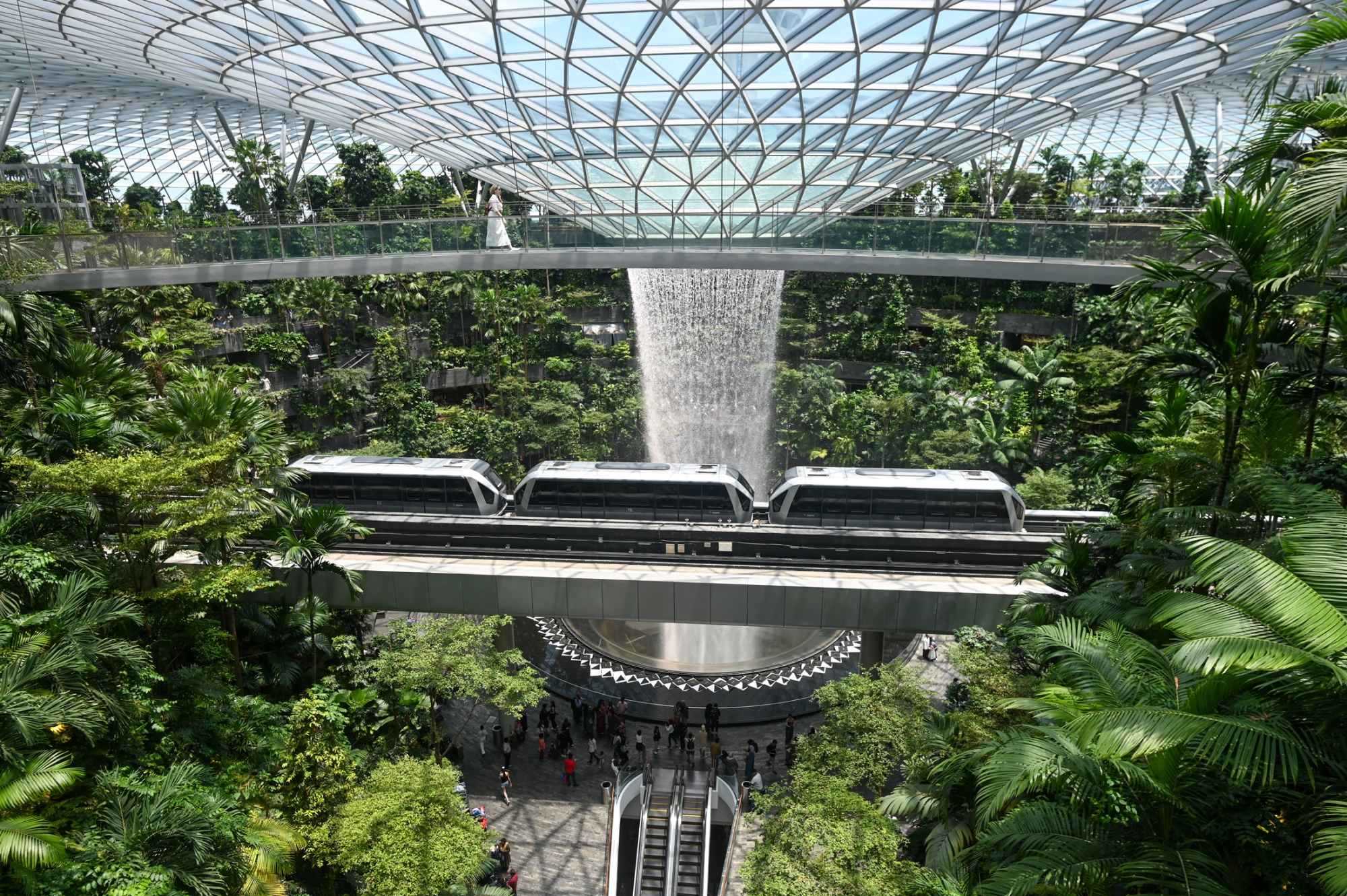
Changi Airport in Singapore boasts the world’s tallest indoor waterfall.
Photographer: Roslan Rahman via AFP
Have you been to Greenland recently? Nuuk’s new international airport has made that a much less far-fetched question. It opened at the end of 2024 and recorded almost 100,000 departing international passengers in 2025, up from 11,000 in 2024. But in early 2026, local media reported that Danish soldiers flew into Nuuk carrying explosives that could be used to destroy the runway in the event of a US invasion. “We just finished building it,” Jens Lauridsen, chief executive officer of Greenland Airports, tells Morgan Meaker. “So I think that would be a shame.” Airports’ inarguable power — their ability to transform entire economies — has generally been offset by the way in which they fill travelers with dread. English humorist Douglas Adams once wrote that no language on Earth has ever produced the expression “As pretty as an airport.” But he wrote that in 1988, and things have changed a lot. Geopolitics aside, modern airports are increasingly lovely places to spend time. Danish architect Bjarke Ingels has designed a new terminal for Zurich airport that he describes as “a cathedral of timber” that will greet disembarking passengers with the scent of an Alpine forest. More specifically, Baltimore-Washington International Thurgood Marshall Airport spent $55 million on refurbishing six restrooms. (Yes, that’s over $9 million per restroom.) As David Dudley and Andrew Zaleski report, airport designers and architects have been surprisingly successful at using a broad range of strategies to keep passengers calm and collected. Kempegowda International Airport, for instance, in Bengaluru, India, showcases 255,000 square feet of jungle and vegetation — including a garden nearly 300 feet long — where natural rainwater is transformed into waterfalls that cool the terminal. 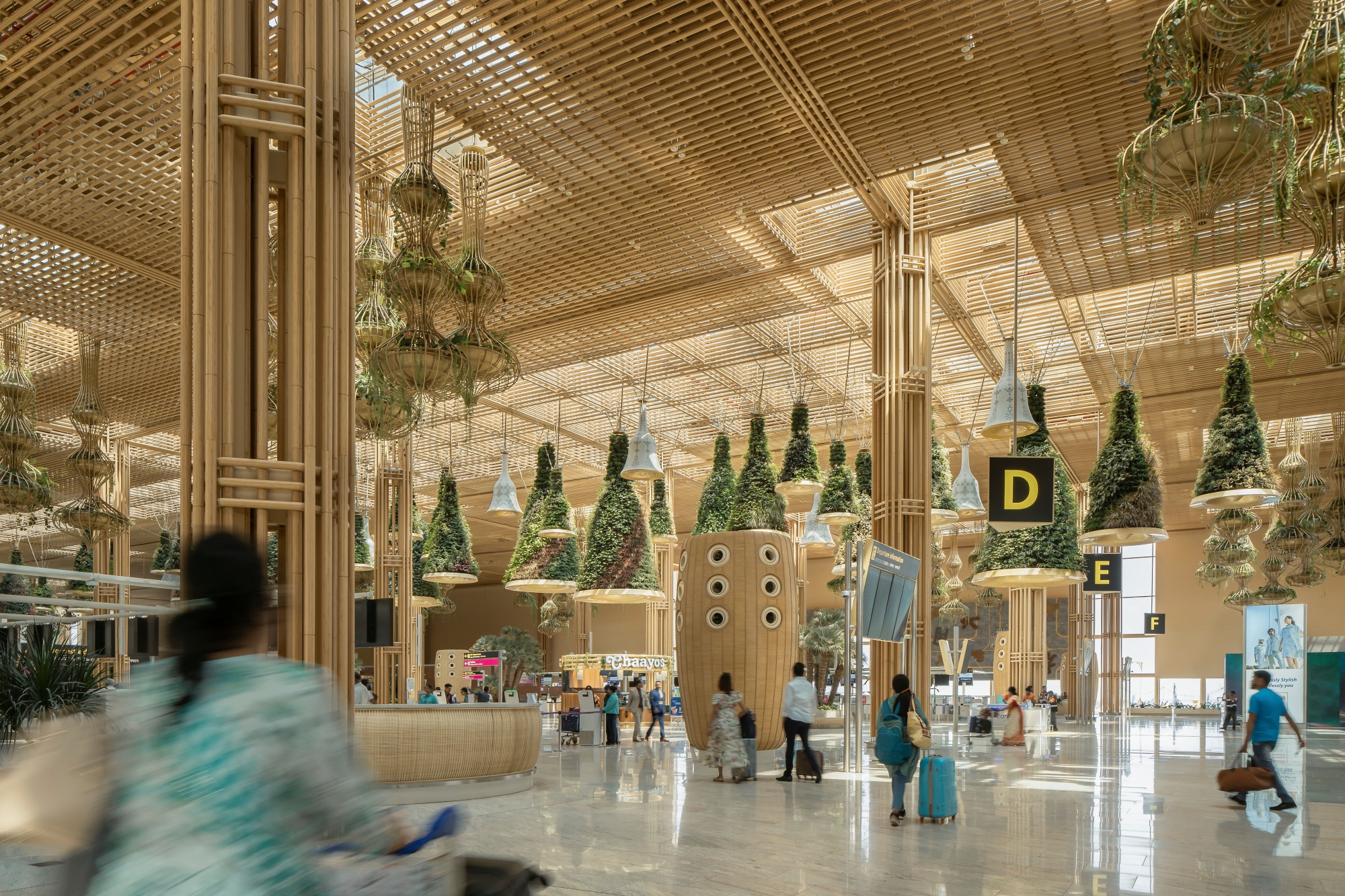
Kempegowda Airport’s architecture is so relaxing you’ll want to go shopping there.
Photograph: Ekansh Goel/Studio Recall
If you’re spending time at an airport, there’s a good chance you’re spending money too. Airport retail is big business — duty free revenues in Dubai, Emirates’ main hub, were more than $2.4 billion last year — and airports are increasingly in the business of maximizing the amount of shopping we do while we’re passing through them. At New York’s JFK, the new Terminal 4 is designed to feel “more like Fifth Avenue than a mall,” report Chris Rovzar and Sri Taylor. Because luxury goods from international houses are fungible objects — a bottle of perfume or whisky is the same wherever you buy it — a lot of duty-free shopping comes down to bargain-hunting and finding the best price for any given product. There are also rare finds, however: the Hermès store at Charles de Gaulle sold influencer Mayank Bhattar a Farandole necklace, for which there’s normally a two-year waiting list. Airports don’t just sell global luxury brands. They also sell regionally specific specialties. The shops in Helsinki offer a panoply of design-forward delights, including fabrics from Marimekko and glassware from Iittala. Istanbul has reasonably-priced, tasteful handmade leather goods, and I once found some utterly delightful rubber placemats from a local designer at Keflavik Airport in Reykjavik. My personal top tip? Never leave Auckland without stocking up on Kaitaia Fire hot sauce. Once you’re past security, you don’t need to worry about the liquid in your carry-on getting confiscated. 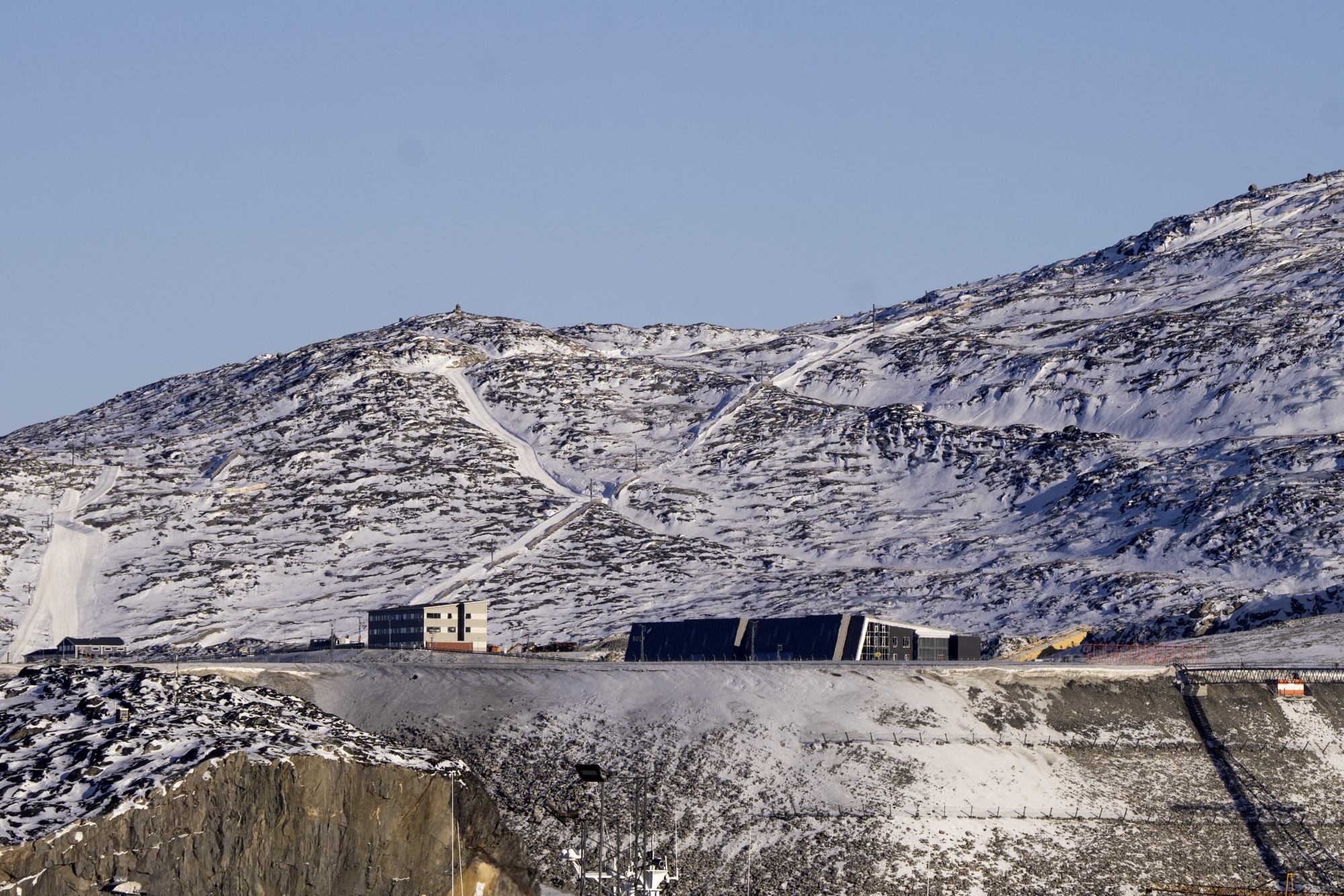
Building Nuuk Airport and its 2.2km runway involved blasting through more than 7 million cubic meters of rock.
Photographer: Bo Amstrup / AFP / Getty Images
Nuuk is no exception to the local-shopping trend. The airport upgrade, which cost $305 million, includes fridges of muskox sausage in the duty-free shop. When a stay at one of Nomad Greenland’s tented camp in the Kiattua Valley, a 90-minute boat ride from Nuuk, costs well over $2,000 per night, spending a few extra bucks on edible souvenirs is barely a rounding error. Next time you’re in an airport, then, it’s worth staying alert to its patterns and idiosyncracies. Read our full airport package — a collaboration between Pursuits, CityLab and Bloomberg Weekend — rolling out over the next three weeks, to learn much more. By the numbers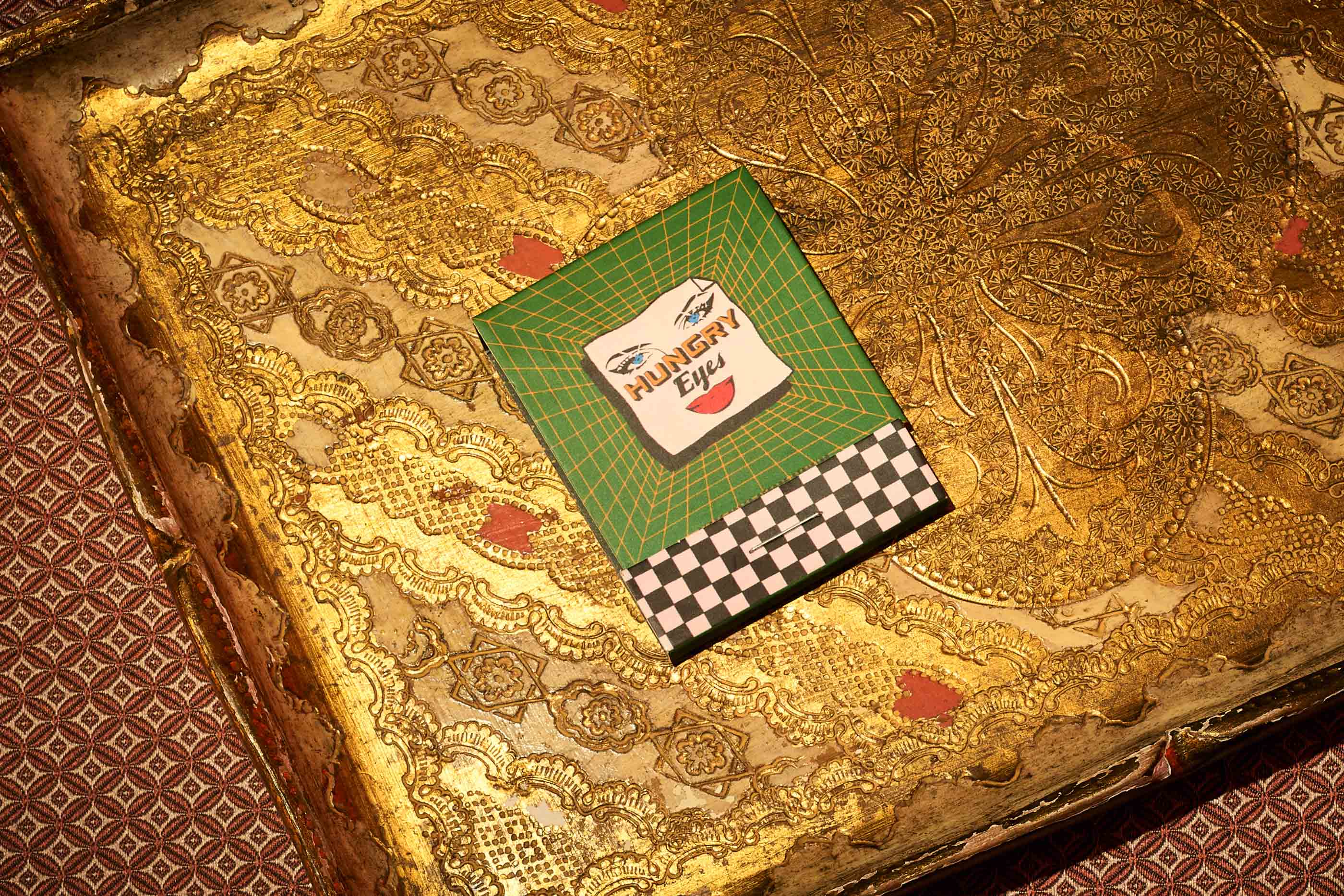
You need to go to New Orleans if you want to pick this up for free.
Photographer: Takamasa Ota for Bloomberg Pursuits
$5 The cost of a “Hungry Eyes” matchbook from Turkey & The Wolf in New Orleans, if you buy it from the online merch shop. According to Matthew Kronsberg, who found many of the best, restaurant matchbooks are experiencing a smoking hot comeback. 22 The number of hours a Qantas A350-1000ULR jet can fly with 238 passengers on board. The Australian airline will fly Sydney-London nonstop as of October 2027, a journey that will take at least 19. $35 The price of the famed mustard green lasagna at Walrus Rodeo, in Miami’s Little Haiti, one of our Five Top Tables in the city. 500 The population of Mullen, Nebraska, home to Sand Hills golf club, regularly ranked among the Top 10 US Golf Venues. Given that it’s a five-hour drive from Denver or Omaha, most guests fly private. Michael Croley explains what makes it so great; a big hint is right there in its name. The discrete charm of the bourgeoisie
Given that Henry Moore’s Large Four Piece Reclining Figure was on show in Gagosian’s public booth, we can only imagine what treasures might have been displayed in private.
Photographer: Prudence Cuming, courtesy Gagosian
Selling extraordinarily expensive art isn’t easy. There are precious few individuals with both the means and the desire to acquire such objects, and they tend to be very busy and surrounded by gatekeepers. Thus was the art fair born: Put a huge amount of great art up for sale in the same place at the same time, and the buyers will come, and socialize and buy. A successful fair creates a different problem, however, which is that the sellers of very expensive art often don’t want to see works they’ve loved and lived with for years hanging on the wall of a small interchangeable booth in a Swiss conference center. Art Basel has found a way for galleries to “guarantee absolute anonymity for consignors,” reports James Tarmy — while still retaining access to the deep pool of buyers the fair represents. The trick is to create a tiny cluster of about a dozen private viewing rooms on the third floor of the Messe, away from the crowds. Art in the private viewing room of multinational gallery Thaddaeus Ropac can cost upwards of $10 million, and provides a space for sellers who “don’t want to go to an auction, but they also don’t want to have it at an art fair with people commenting about it,” the dealer tells Tarmy. “Certain works just need a certain discretion.” Pep in their step
Hassan Sleiman carries around his doctor’s business cards, proselytizing peptides just as he does with his religion.
Photographer: Sylvia Jarrus for Bloomberg Businessweek
Hassan Sleiman, a 45-year-old roofing contractor in Michigan, takes seven different peptides, all prescribed for him by Dr. Laura Reis: tirzepatide, MOTS-c, glutathione, TB-500, KPV, GHK-Cu and BPC-157. He credits the drugs, none of which have been approved by the FDA, with a range of benefits, including reducing pain from old injuries and improving the quality of his skin. Reis can seem a little cavalier when it comes to black-market drugs like BPC-157, which is meant to help musculoskeletal healing. “I’ve used that for patients,” she says. “Is the data there to support it? Absolutely not.” Demand for such peptides is through the roof: Investors within the industry say the black market is anywhere from $1 billion to $3 billion. Now the FDA, under instruction from self-professed peptide fan Robert F. Kennedy Jr., is expected to legalize seven drugs, including BPC-157, in an event that Amanda Mull, Madison Muller and Ashleigh Furlong refer to as Peptide Liberation Day. What happens after that is anyone’s guess — but it’s a safe bet that US peptide consumption will only rise further. One Very Specific Recommendation: The Männkitchen Pepper Cannon
Not cheap, but worth it.
Photographer: Kerri Brewer for Bloomberg Businessweek
It’s not too late to buy a gift for Father’s Day! One of our recommendations this year is an object we first featured in 2023 and still heartily believe in: the fully manual $200 Männkitchen pepper cannon. It’s “ferociously efficient,” writes Matthew Kronsberg, and is milled from a solid chunk of aircraft-grade aluminum that’s anodized to a matte jet-black finish. Grind size is highly adjustable, from coarsely cracked to ultrafine, and a quick-release button (available in black, red or silver) allows you to pop the top for easy refilling. For recipe prep, an aluminum cup screws onto the bottom. Perfect for all dads who like to cook. More from Bloomberg Ideas & Culture
New for subscribers: Free article gifting. Bloomberg.com subscribers can now gift up to five free articles a month to anyone you want. Just look for the “Gift this article” button on stories. (Not a subscriber? Unlock unlimited access and sign up here.) We’re improving your newsletter experience and we’d love your feedback. If something looks off, help us fine-tune your experience by reporting it here. Follow Us
You received this message because you are subscribed to Bloomberg’s Bloomberg Pursuits newsletter. If a friend forwarded you this message, sign up here to get it in your inbox.
|
Saturday, June 20, 2026
Airport therapy





Subscribe to:
Post Comments (Atom)
The man who saved Elon just BAILED on Tesla...
In 2008, Elon Musk nearly went broke. SpaceX rockets were crashing. And the company was days from being shut down for good. ...
-
Bloomberg Evening Briefing Americas View in browser Who's paying for Donald Trum...
-
PLUS: Dogecoin scores first official ETP ...


No comments:
Post a Comment