| Read in browser | ||||||||||||||

After facing blazes in the worst wildfire season on record last year, European firefighters issued a warning: they’re ill-prepared to face devastating fires expected to burn large swaths of the continent this summer. Today’s newsletter looks at working conditions for firefighters in Portugal, Spain, France and Greece. Plus, the Trump administration backtracks on removing ocean sensors. Subscribe to Bloomberg Green for unlimited access to all our stories. Early warning from firefightersBy Laura Millan Europe is facing another summer of intense wildfires, but firefighters who will be on the frontline warn that they’re entering the season under-funded, under-equipped and under-staffed. The continent experienced its worst season for wildfires on record last year, with blazes burning through over one million hectares across, an area equivalent to the whole of the island of Cyprus. The wettest winter in years in parts of the Mediterranean has led to vegetation overgrowing in many forests, and firefighters fear extreme heat could turn bushes and grass into fuel for fires. 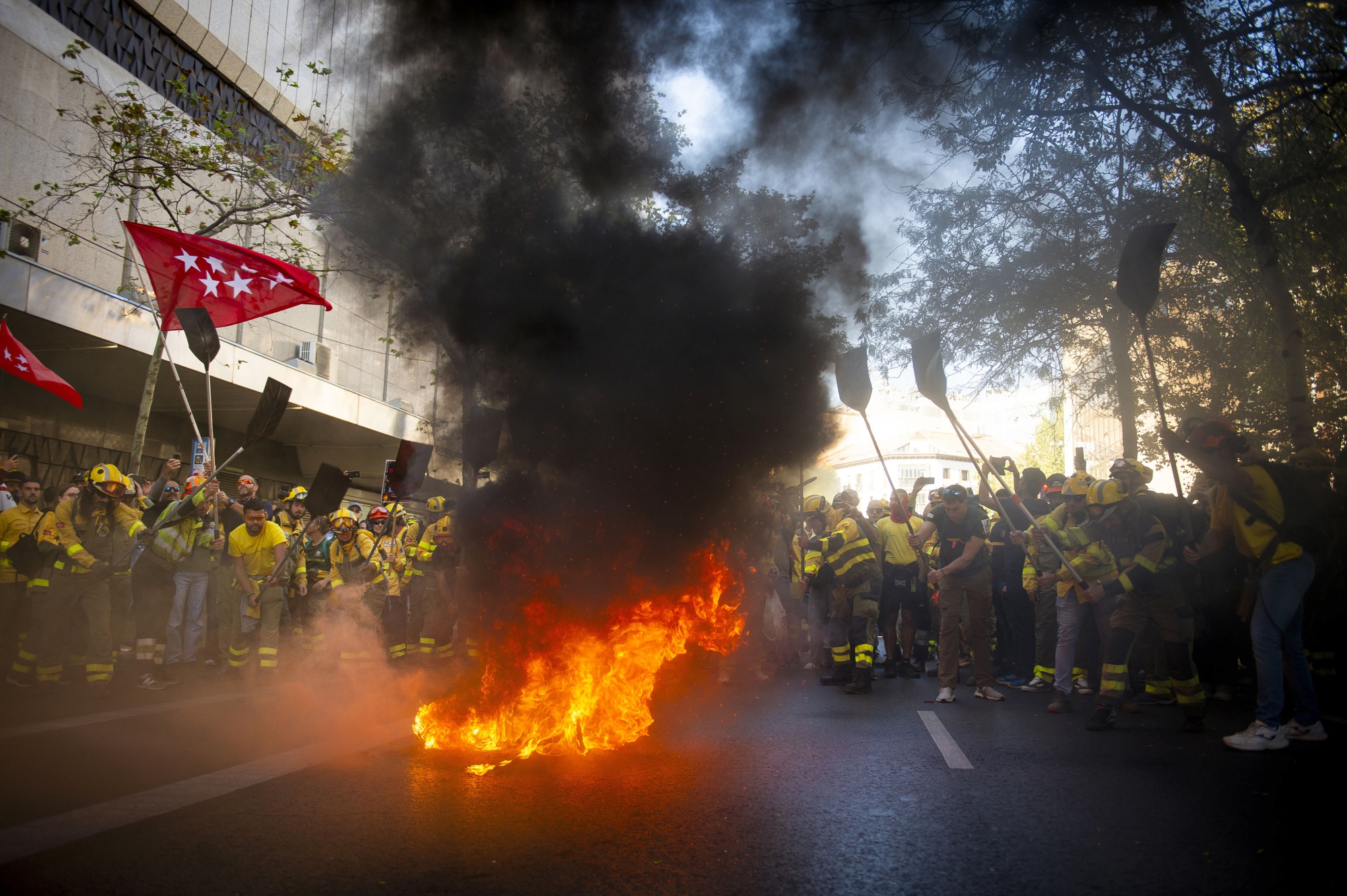
Forest firefighters during a union demonstration in Madrid, on Oct. 18.
Photographer: Juan Barbosa/Europa Press/Getty Images
The European Union is gearing up for the season, stationing a record 777 firefighters from 14 EU countries in high-risk areas across the Mediterranean to assist local teams when large fires break out. But firefighters and their unions told Bloomberg that they feel ill-prepared for what’s to come. “Our people are really angry,” said Simón Alonso, a spokesman for the Atifcyl association of forest fire workers in the Spanish region of Castilla y León. “Some people have been trained but not hired, others have been hired but have nothing to do because orders are not coming from above — everything is completely disjointed.” Last autumn, after the 2025 wildfires were extinguished, firefighters in Portugal, Spain, Greece and France took to the streets calling for higher wages, year-round contracts, better equipment and more resources. 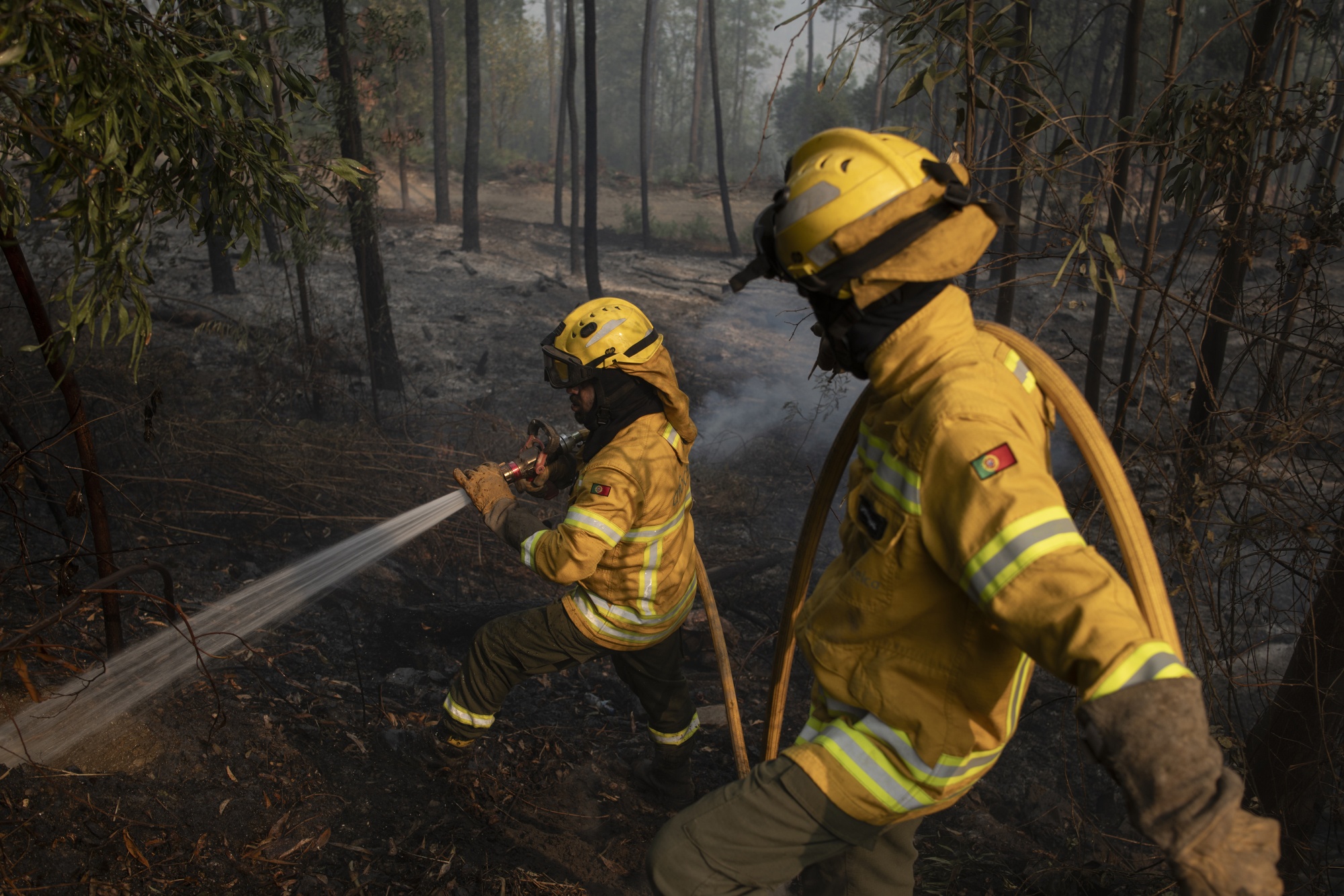
In Portugal, firefighters are asking for a permanent funding mechanism.
Photographer: Brais Lorenzo/Bloomberg
Some of those demands remain unresolved. On May 27, nine French firefighting unions met for the first time ever with advisors of Prime Minister Sebastien Lecornu in Paris and told them “the system is at a breaking point,” said Alain Laratta, secretary general at the Avenir Secours union. About 80% of French firefighters are volunteers, with budgets depending on over 100 different regional and local governments. Firefighters called for a unified funding system. In Portugal, firefighters are asking for a permanent funding mechanism to insulate them from the vagaries of economic cycles and budgetary constraints. The League of Portuguese Firefighters, a federation of fire brigades and associations, plans to submit a bill to parliament that will propose tapping oil levies, as well as car and fire insurance taxes, to finance the scheme. In Greece, preparations for the season have been more comprehensive, according to Antonios Koukouzas, president of the EPAYPS Greek firefighters’ union and a fire major in the eastern Attica region. More personnel have been hired and there are more helicopters and aircraft available than in previous years. 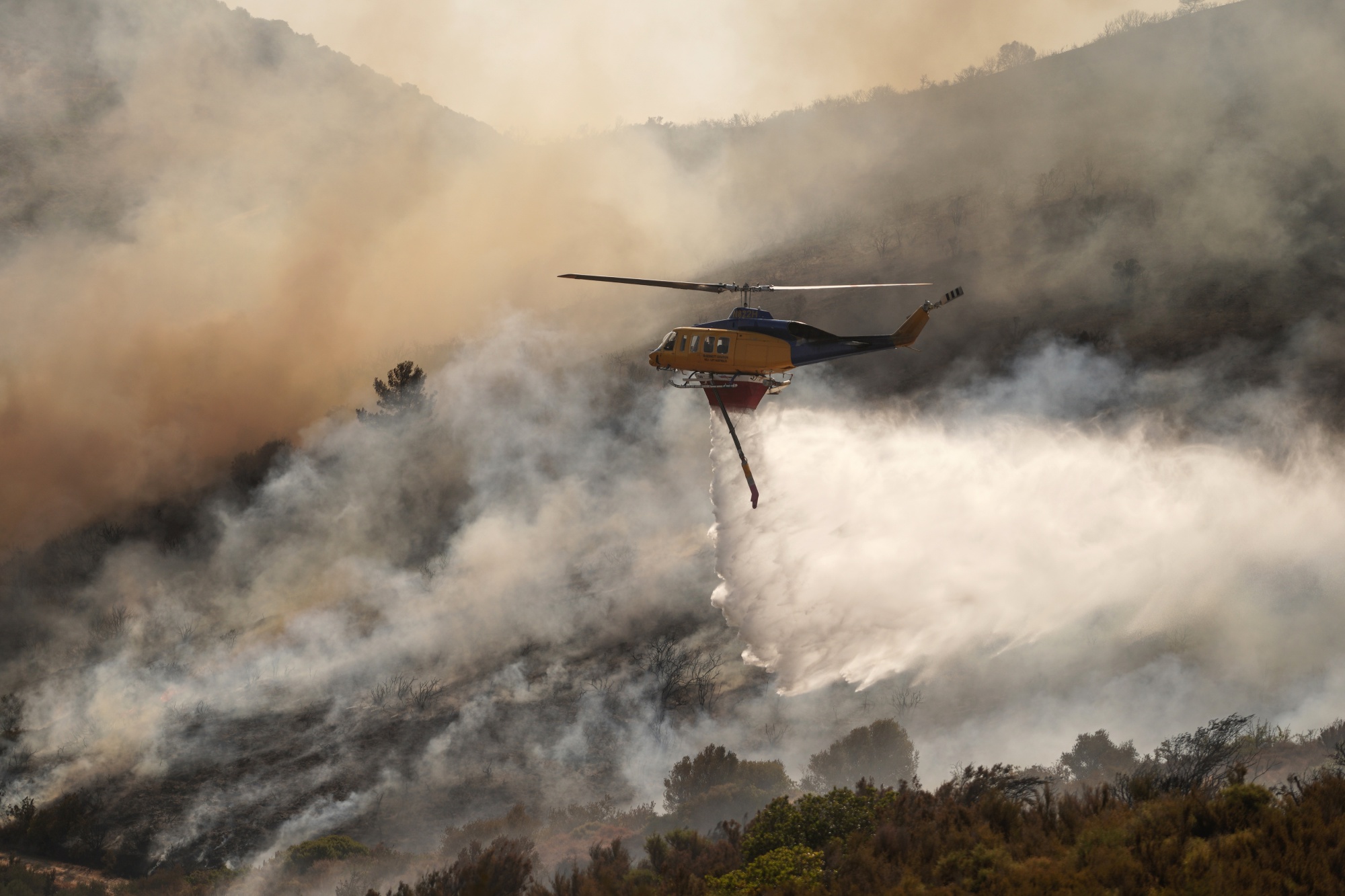
In Greece there are more helicopters and aircraft available than in previous seasons.
Photographer: Nick Paleologos/Bloomberg
In Spain, efforts to strengthen fire response have been unequal across regions and parts of the administration, and at times chaotic, according to accounts by several firefighters, who spoke on condition of anonymity for fear of repercussions from their employers. Fire response in the country mainly depends on regional authorities, some of which rely entirely on public servants, while others also resort to private contractors. Alonso — who works in a helicopter brigade operated by the central government’s Minister for the Environmental Transition — and two other firefighters said contractors for local and regional governments have incentives to cut costs. That means they can put in more competitive bids by paying lower salaries, providing older and lower quality equipment and hiring fewer people than their contracts require, the firefighters said. “Fires are becoming more violent and the only way to stop them is with permanent systems that can help prevent them,” Alonso said. “If our structure remains temporary, disjointed, inefficient and privatized, this will happen again and it will be worse.” Governments have failed to do fire prevention work for years, and for the past decades they focused on preserving forests that thrived under a climate that no longer exists, said Marc Castellnou, head of forests for firefighters in the Spanish northeastern region of Catalonia. “Managing the land requires decades, it’s not just a matter of one winter,” Castellnou said.
Get more
Record blazes1 million hectares Burnt by wildfires in Europe during the summer of 2025 Overwhelmed“We were not ready for this. There was a lack of coordination, but what coordination could there be when it was so violent, so big and fast and happening everywhere at the same time?” Patricia Lamela Mayor of Larouco, a Spanish town hit by wildfires in 2025 Ocean observation u-turnThe Trump administration is dropping near-term plans to dismantle a $386 million federal ocean-observing system after encountering resistance from scientists and Congress. The National Science Foundation said Thursday it will pause efforts to decommission most of the Ocean Observatories Initiative, a network of sensors in the Atlantic and Pacific oceans that track climate change, marine ecosystems and coastal flooding. The agency will conduct a review of the system’s future with stakeholders, it said in a statement. 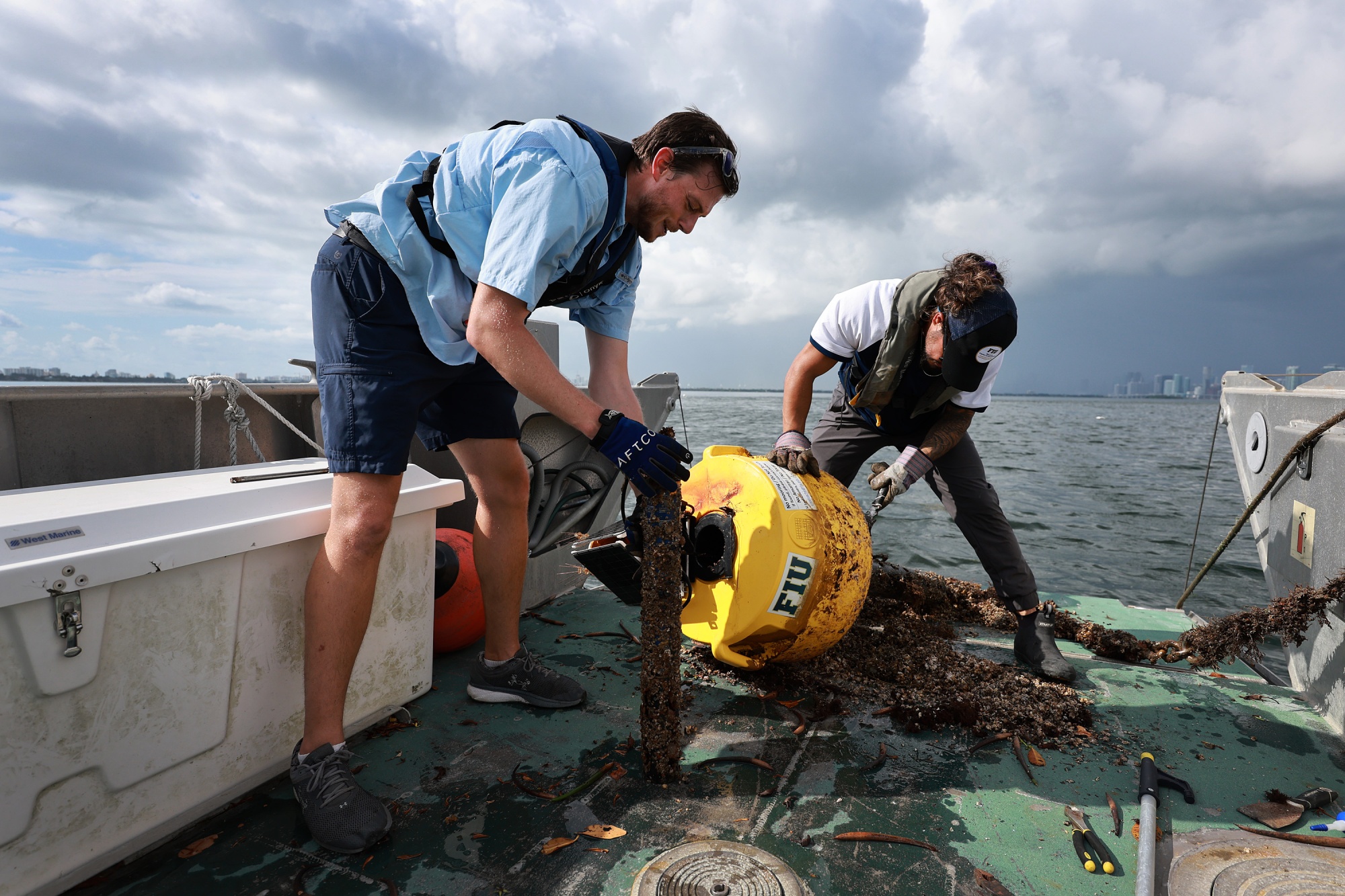
Researchers conduct routine maintenance on a research buoy in Biscayne Bay in Miami.
Photographer: Joe Raedle/Getty Images via Getty Images North America
The change comes a day after the US Senate passed a bipartisan measure to halt what lawmakers called the “reckless” dismantling of the network. That effort was led by Senators Jeff Merkley of Oregon, a Democrat, and Lisa Murkowski, an Alaska Republican. Merkley described the planned dismantling of the system as “supreme stupidity.” Known as OOI, the Ocean Observatories Initiative entered into full operation in 2016 and was designed to provide continuous observations for at least 25 years. Last month, the NSF announced that it would remove almost all in-water infrastructure belonging to the system. The agency said at the time that it sought to align research infrastructure spending with evolving scientific priorities and emerging technologies. The NSF said in its Thursday statement that one of the seven OOI arrays, the Endurance Array off the coast of Oregon, has already been removed. The agency plans to “redeploy” that equipment “after servicing,” it said.
Read more
This week’s Zero listenThe key to tackling climate change is moving away from burning fossil fuels to using renewable energy. But in his book More and More and More, French historian Jean-Baptiste Fressoz argues that the world has never actually managed a successful energy transition before and current plans are unrealistic. Many have taken his writing to mean that stopping global warming is impossible, however, he tells Akshat Rathi this week on Zero, his view is actually quite different. Listen now, and subscribe on Apple, Spotify or YouTube to get new episodes of Zero every Thursday. Photo finishMore from Bloomberg
Explore all Bloomberg newsletters. We’re improving your newsletter experience and we’d love your feedback. If something looks off, help us fine-tune your experience by reporting it here. Follow Us
You received this message because you are subscribed to Bloomberg’s Green Daily newsletter. If a friend forwarded you this message, sign up here to get it in your inbox.
|
Friday, June 19, 2026
A warning from European firefighters








Subscribe to:
Post Comments (Atom)
From 9:30 to 4 Wall Street has you exactly where it wants you.
Brandon Chapman here. From 9:30 to 4:00, most traders are fighting the loudest, most manipulated, most chaotic hours of th...

-
Bloomberg Evening Briefing Americas View in browser Who's paying for Donald Trum...
-
PLUS: Dogecoin scores first official ETP ...


No comments:
Post a Comment