| Read in browser | ||||||||||||||

Welcome to Balance of Power, bringing you the latest in global politics. If you haven’t yet, sign up here. Another election, another deeply polarized electorate. In Colombia’s tightest-ever presidential contest, half of voters registered a desire for change after four years of the country’s ambitious leftist experiment under President Gustavo Petro. Yesterday’s preliminary count showing victory for Abelardo de la Espriella, a MAGA-supporting lawyer with dual US citizenship who has never held elected office, is another leap into the unknown for Colombia. More clearly, the result represents a win for President Donald Trump and his efforts to impose US control over the Western hemisphere. Colombia now looks set to join the wave of Latin American nations allied with the US administration, enabling Trump to advance what he calls the “Donroe Doctrine.” De la Espriella earned Trump’s endorsement with a platform heavy on patriotic symbolism — including co-opting the national flag and soccer jersey, as Jair Bolsonaro did in Brazil — as well as reopening Colombia to oil exploration and a zero-tolerance approach to drug cartels. 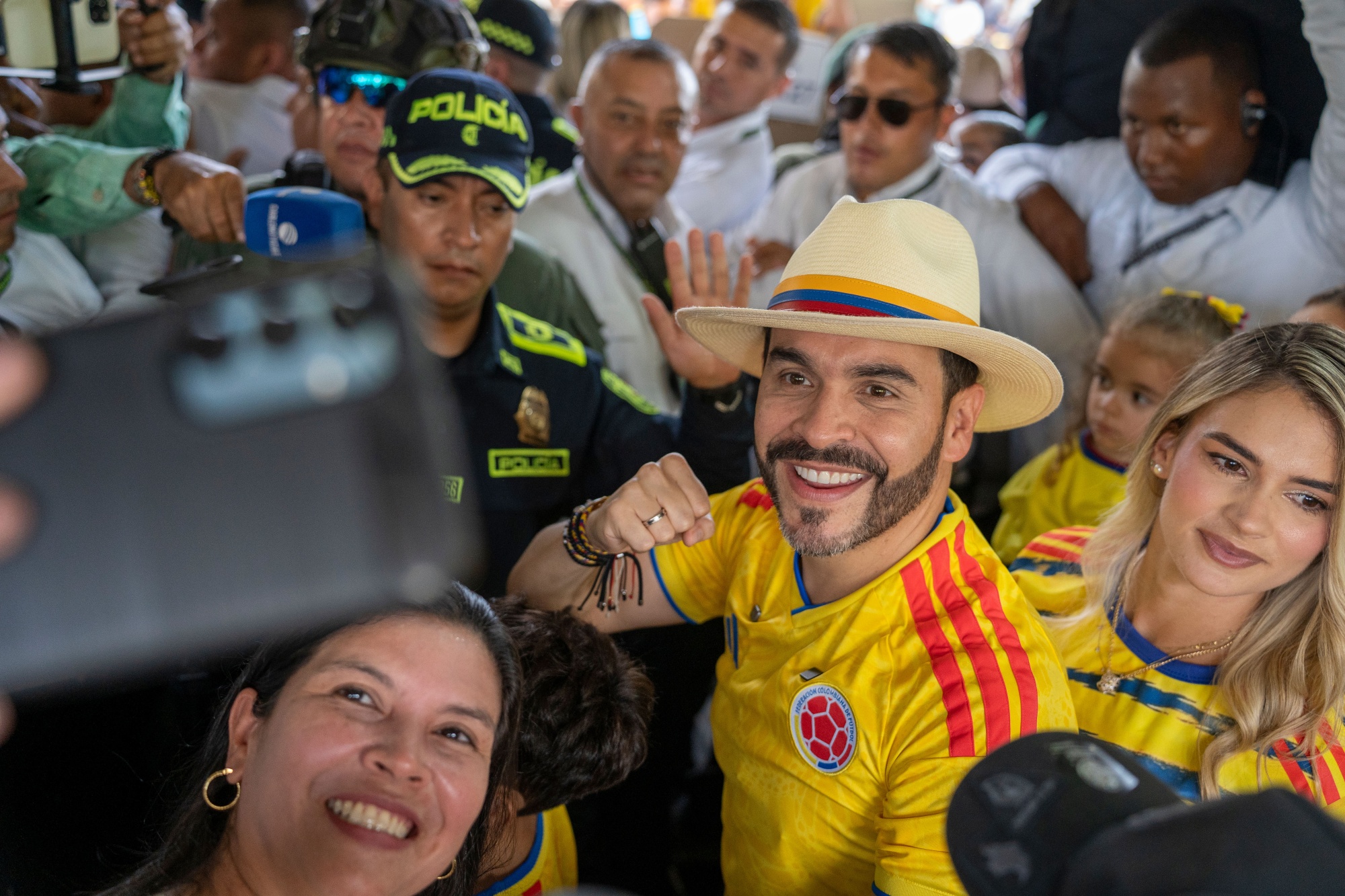
De la Espriella at a polling station in Barranquilla yesterday.
Photographer: Carlos Parra Rios/Bloomberg
Congratulations quickly arrived from fellow Trump fan Javier Milei of Argentina. US Secretary of State Marco Rubio followed soon after. Yet de la Espriella’s open contempt for opposition forces raises questions about his ability to push through his program to Make Colombia Great Again. Petro ally Iván Cepeda disputed the result, pinning his hopes on the official final tally to overturn his loss by less than one percentage point. Adding to the uncertainty, there are signs that the regional swing to the right may be slowing after emphatic wins by Milei and José Antonio Kast in Chile. Keiko Fujimori is leading Peru’s interminable presidential count, but also by the narrowest of margins. That reality may embolden Brazil’s Luiz Inácio Lula da Silva, who has his own presidential election to fight in October, against Bolsonaro’s son, Flávio. Pending Colombia’s final result, Lula might just determine whether any bulwarks to Trump’s hemispheric hegemony remain. — Alan Crawford 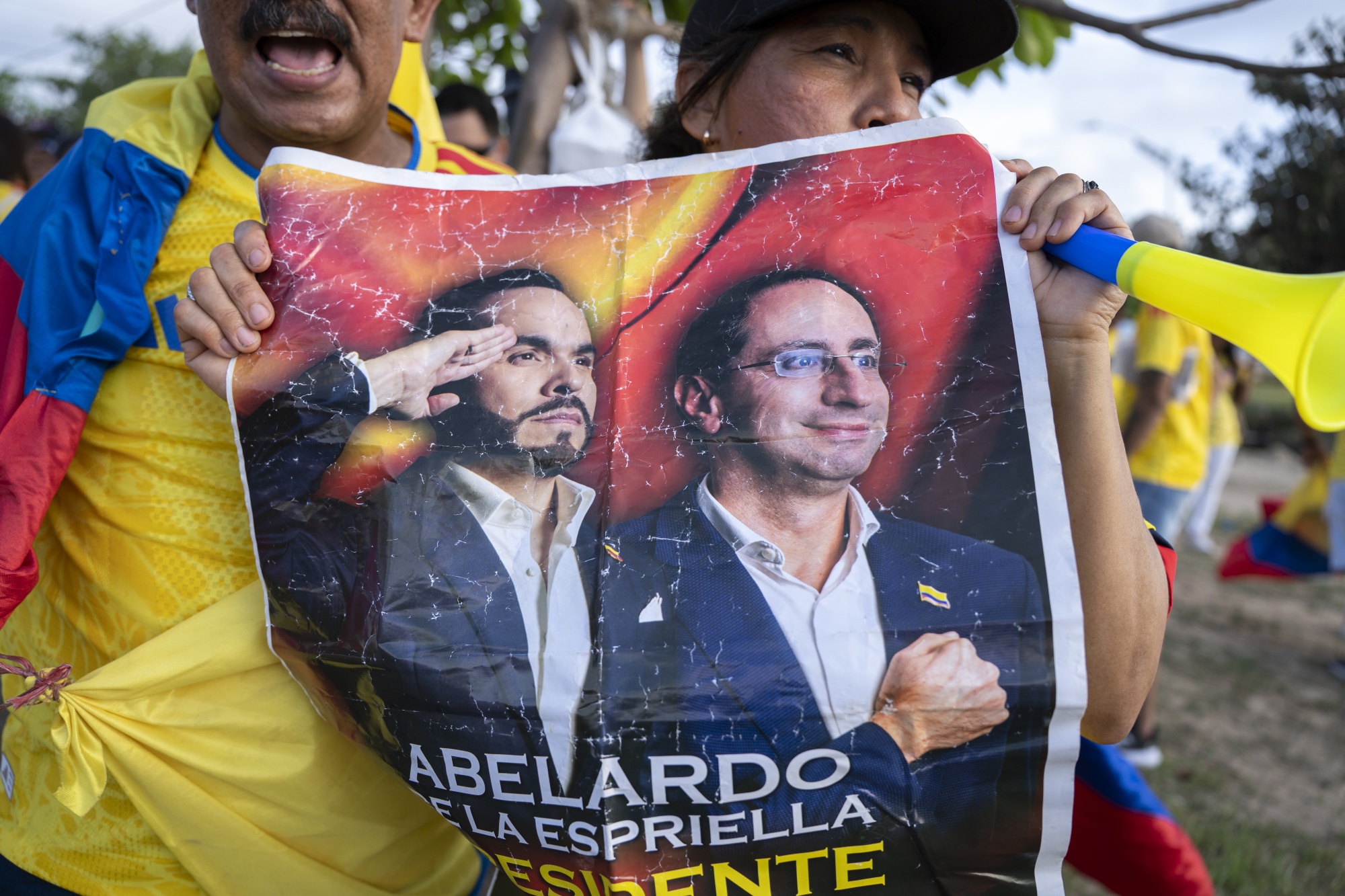
De la Espriella supporters in Barranquilla.
Photographer: Carlos Parra Rios/Bloomberg
Global Must ReadsKeir Starmer said he would step down as Britain’s prime minister, marking a precipitous fall from favor two years after leading the Labour Party back to power with a landslide majority. His departure paves the way for Andy Burnham to attempt to take over as successor, after the long-time mayor of Manchester won a parliamentary seat last week in order to mount a challenge. 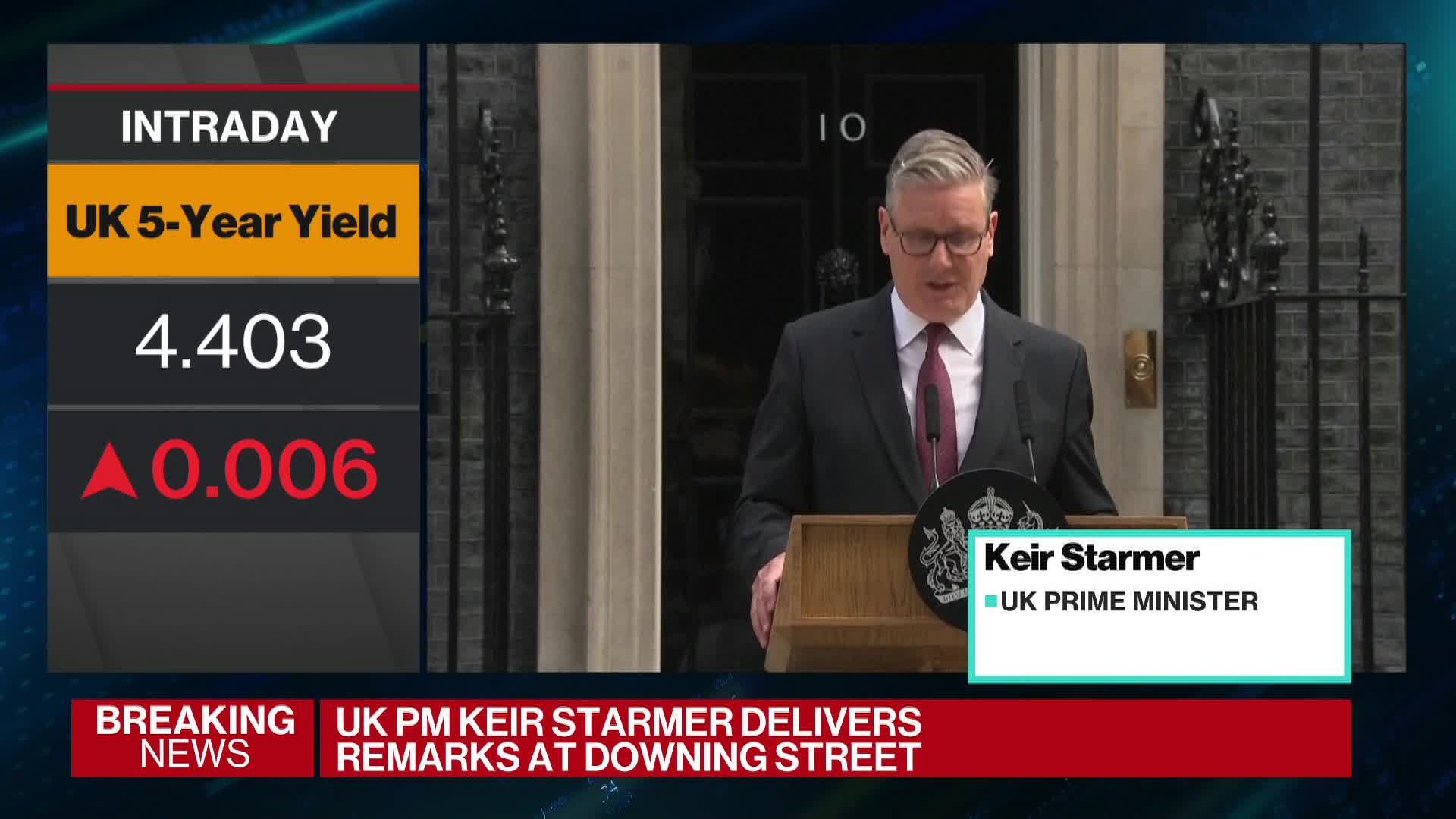 
Starmer speaks about his future outside Downing Street.
The US and Iran made “major progress” in all-night discussions, Tehran said, as the warring sides try to reach a peace deal within two months. The countries began technical talks in the Swiss resort of Bürgenstock even as Trump again threatened strikes if Hezbollah keeps attacking Israel. Qatar is rushing to bring home more empty liquefied natural gas tankers as it prepares to restart shipments accounting for about a fifth of global supply. As Trump rolls out new tools to enforce his protectionist agenda, his administration is resorting to probes focused on accusations of trade unfairness – something a few nations will be able to avoid to their advantage. Also, a top Chinese official warned in a speech that supply chains may become disconnected as key trading partners mull new ways to address growing imbalances. The person who Trump once praised for taking “Europe by storm” did something none of her Group of Seven peers have dared in their sparring with the US leader: She escalated. Italian Prime Minister Giorgia Meloni told Trump he lies and panders to enemies while turning on his friends, and also poked him by telling him to look at his polling as the November midterms approach, no doubt aware that his popularity has hit new lows. 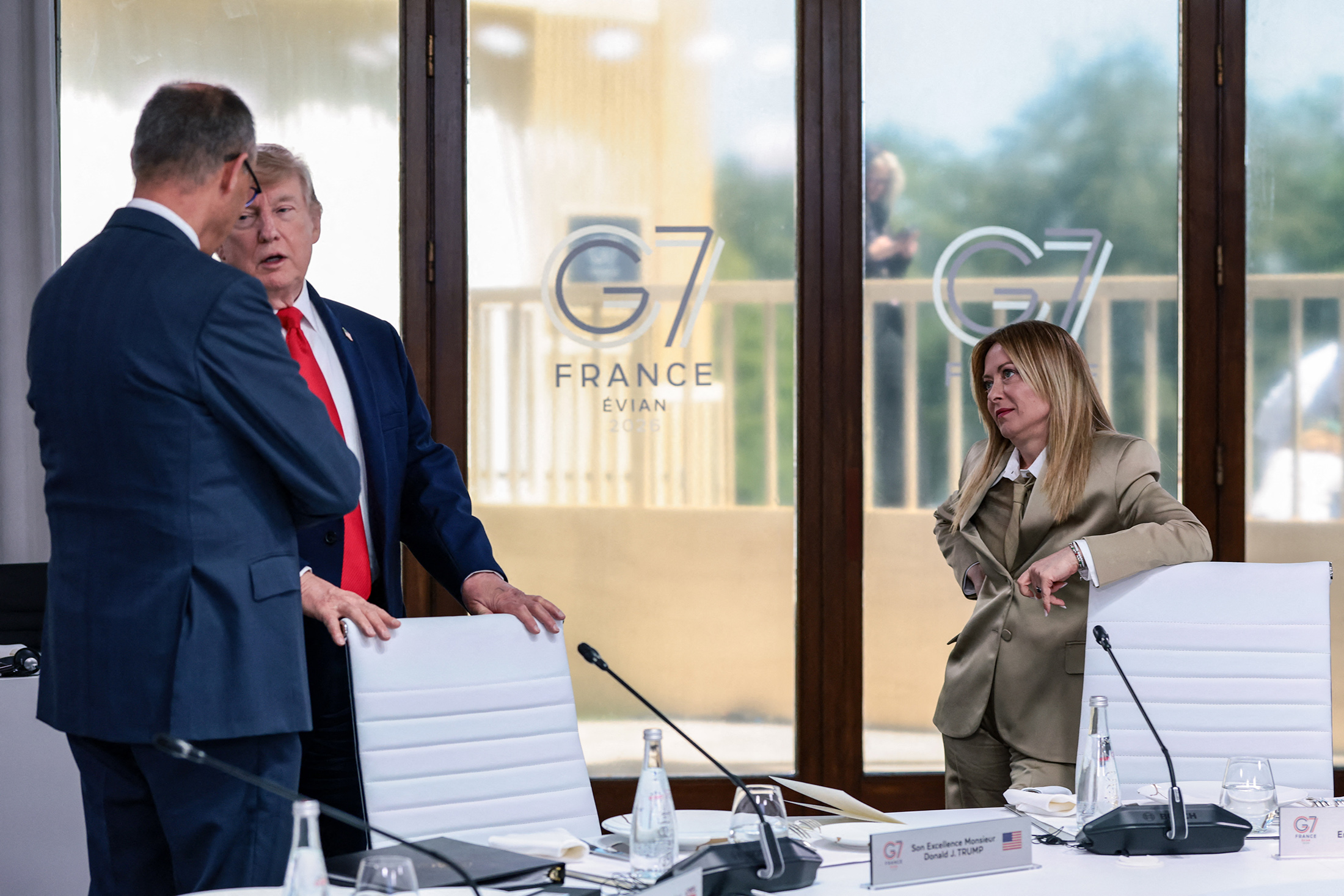
German Chancellor Friedrich Merz, Trump and Meloni at the G7 summit in Evian on June 16.
Photographer: Evelyn Hockstein/AFP/Getty Images
Peru’s leftist presidential candidate Roberto Sánchez plans to ask electoral authorities to void all overseas votes in the election, as conservative rival Fujimori edges closer to victory in the final stretch of the count. Sánchez, who ran as the political heir of jailed former president Pedro Castillo, maintains a slight lead in the domestic vote with 50.1%, while Keiko Fujimori is winning comfortably among Peruvians abroad. Polish Prime Minister Donald Tusk warned that Poland and Ukraine were committing a “strategic mistake” as a political conflict over the commemoration of controversial World War II fighters continued to escalate. Ebola cases have surpassed 1,000 in the Democratic Republic of the Congo, where health workers are becoming infected before anyone realizes they’re treating the deadly virus, exposing a dangerous weakness in efforts to contain one of the world’s fastest-growing outbreaks. China has imposed export controls against two US rare earth producers that are part of Washington’s effort to reduce its dependence on Beijing by establishing an alternative supply chain for the critical minerals. Romanian Prime Minister-designate Adrian Veștea is set to face a vote of confidence in his cabinet today, and it remains unclear whether he can secure a clear majority in a deeply divided parliament. Sign up for the Washington Edition newsletter for news from the US capital and watch Balance of Power at 1 and 5 p.m. ET weekdays on Bloomberg Television. Chart of the Day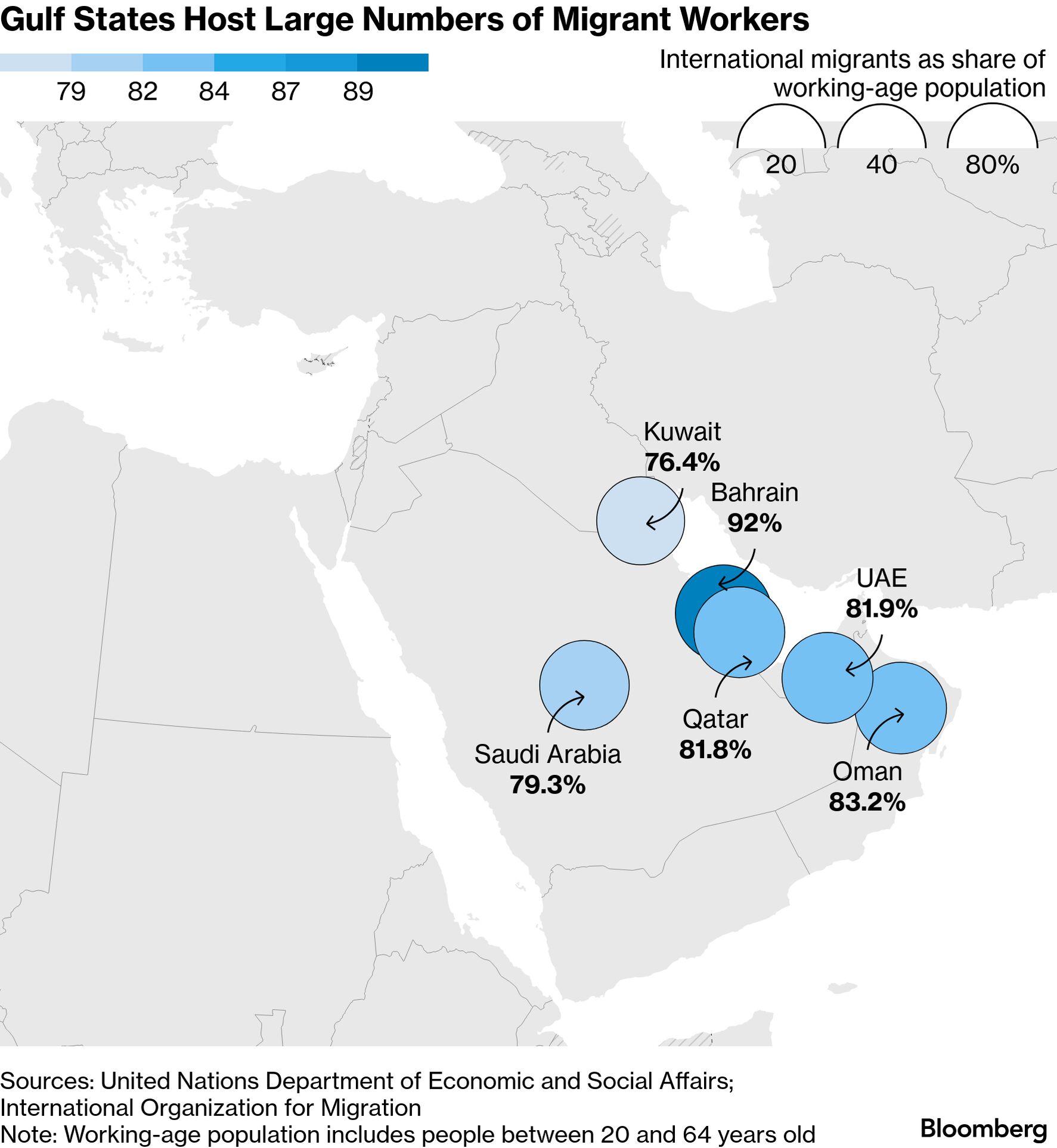
The war in the Gulf has cast a spotlight on one of the largest global migration corridors, putting billions of dollars in remittances at risk and testing an economic model that relies on foreign workers to keep Gulf economies running. There are clear signs of financial strain, with some workers drawing on savings to maintain remittance levels, which could lead to a sharp collapse in total volume if the conflict persists. And FinallyThousands of Malawian migrants seeking refuge in a muddy open field outside a mosque in Durban has become one of the clearest manifestations yet of mounting anti-foreigner sentiment in South Africa. A new vigilante group that started out staging protests at schools and hospitals on the false grounds that foreign nationals were being given preferential treatment over locals, is now holding daily anti-migrant demonstrations and has threatened violence unless undocumented immigrants, like many of the Malawians, leave the country by June 30. 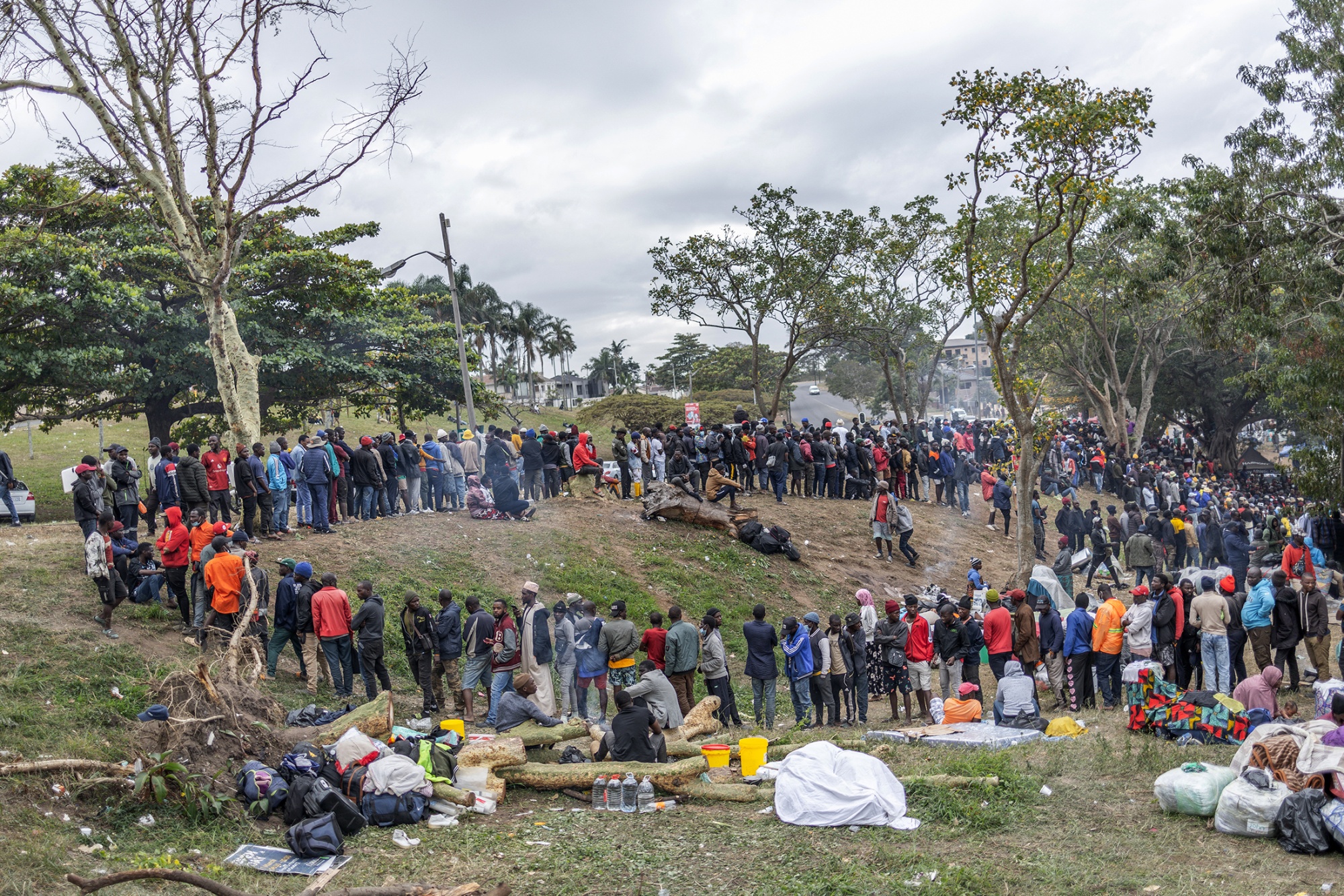
Foreign nationals queue for food at the camp in Durban on June 16.
Photographer: Rajesh Jantilal/AFP/Getty Images
Thanks to everyone who answered Friday’s quiz question, and congratulations to Bill Peterson, who was first to name Kenya as the country that Taiwan accused of caving in to Chinese pressure by blocking it from participating in an oceans conference last week. More from Bloomberg
We’re improving your newsletter experience and we’d love your feedback. If something looks off, help us by reporting it here. Follow Us
You received this message because you are subscribed to Bloomberg’s Balance of Power newsletter. If a friend forwarded you this message, sign up here to get it in your inbox.
|
Monday, June 22, 2026
A Trump wave





Subscribe to:
Post Comments (Atom)
-
Bloomberg Evening Briefing Americas View in browser Who's paying for Donald Trum...
-
PLUS: Dogecoin scores first official ETP ...


No comments:
Post a Comment