| Read in browser | ||||||||||||||

Welcome to Balance of Power, bringing you the latest in global politics. If you haven’t yet, sign up here. A nascent thaw in China-Canada relations is receiving a fresh boost today with the first visit by Beijing’s top diplomat in a decade. It’s another indication of the global realignment under way spurred on by the Trump administration. Chinese Foreign Minister Wang Yi will set foot in Ottawa after years of tension and estrangement pushed bilateral visits into a deep freeze. 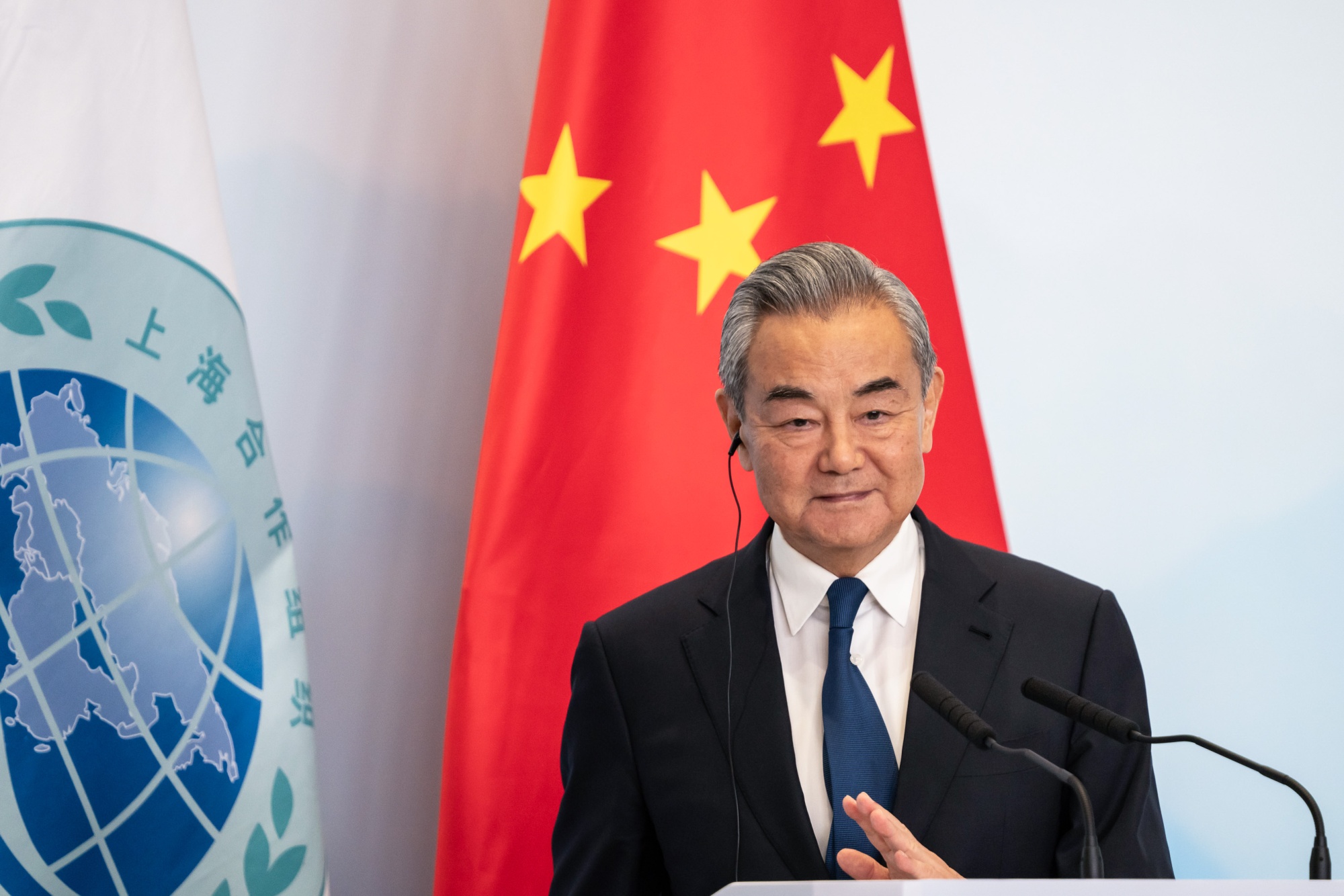
Wang Yi at the Shanghai Cooperation Organization summit in Tianjin, China, on Sept. 1.
Photographer: Qilai Shen/Bloomberg
That began to change in January, when Canada’s Mark Carney made a fence-mending trip to Beijing, announcing a new “strategic partnership.” The premier also struck a deal with President Xi Jinping to cut tariffs on Chinese electric vehicles in exchange for lower levies on Canadian farm products. As part of that arrangement, hundreds of Shanghai-made Teslas have arrived in Canada in recent days — an early sign that warmer rhetoric is beginning to translate into concrete gains. The detente serves pragmatic needs on both sides. Frustrated by Donald Trump’s bruising tariffs and erratic foreign policy, Canada is looking to diversify its economic ties and carve out greater strategic autonomy. For Beijing, the optics alone amount to a diplomatic win: China is mending ties with what is traditionally one of America’s closest allies just as strains deepen between Washington and Ottawa. It’s notable that back in 2018, Canada’s compliance with a US request to arrest a Huawei executive cratered its relations with Beijing. By contrast, today’s easing of tariffs on Chinese EVs marks a break with US policy — and opens a new market for China’s carmakers battling competition at home. 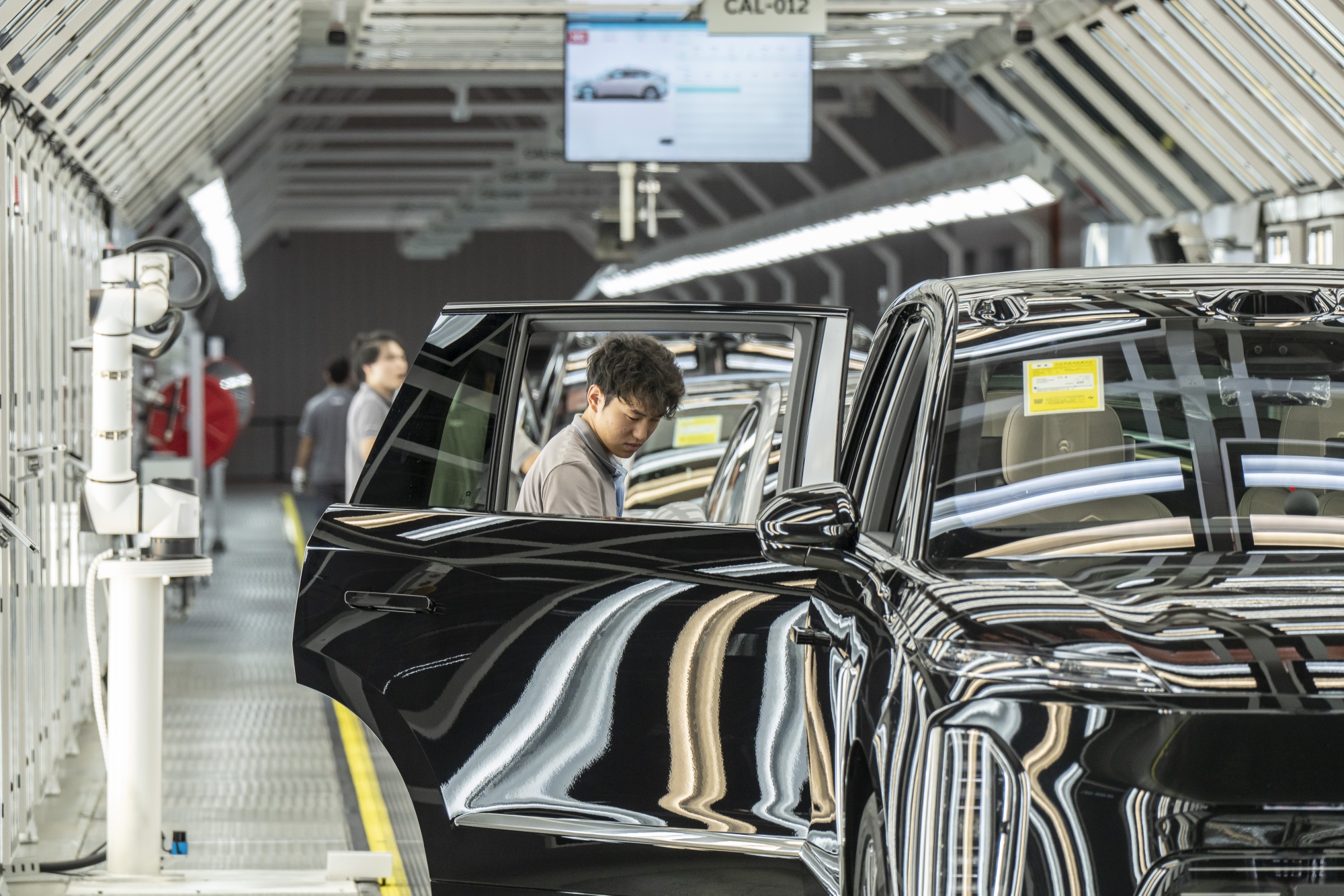
Electric vehicles on the production line at Nio’s factory in Hefei, China, on May 19.
Photographer: Qilai Shen/Bloomberg
Beijing and Ottawa remain clear-eyed about the limits of rapprochement. Canada still counts the US as its closest economic and security partner, while China remains only one part of Ottawa’s broader diversification strategy. But coming as the US flexes its muscles while renegotiating its trade pact with Canada and Mexico, Wang’s timing couldn’t be better. — Nectar Gan Global Must ReadsRomania accused Russia of a “serious and irresponsible escalation” after a drone entered its airspace early today and crashed into an apartment building, injuring two people. It was the most serious such incident for the eastern flank NATO member since Moscow invaded neighboring Ukraine more than four years ago. 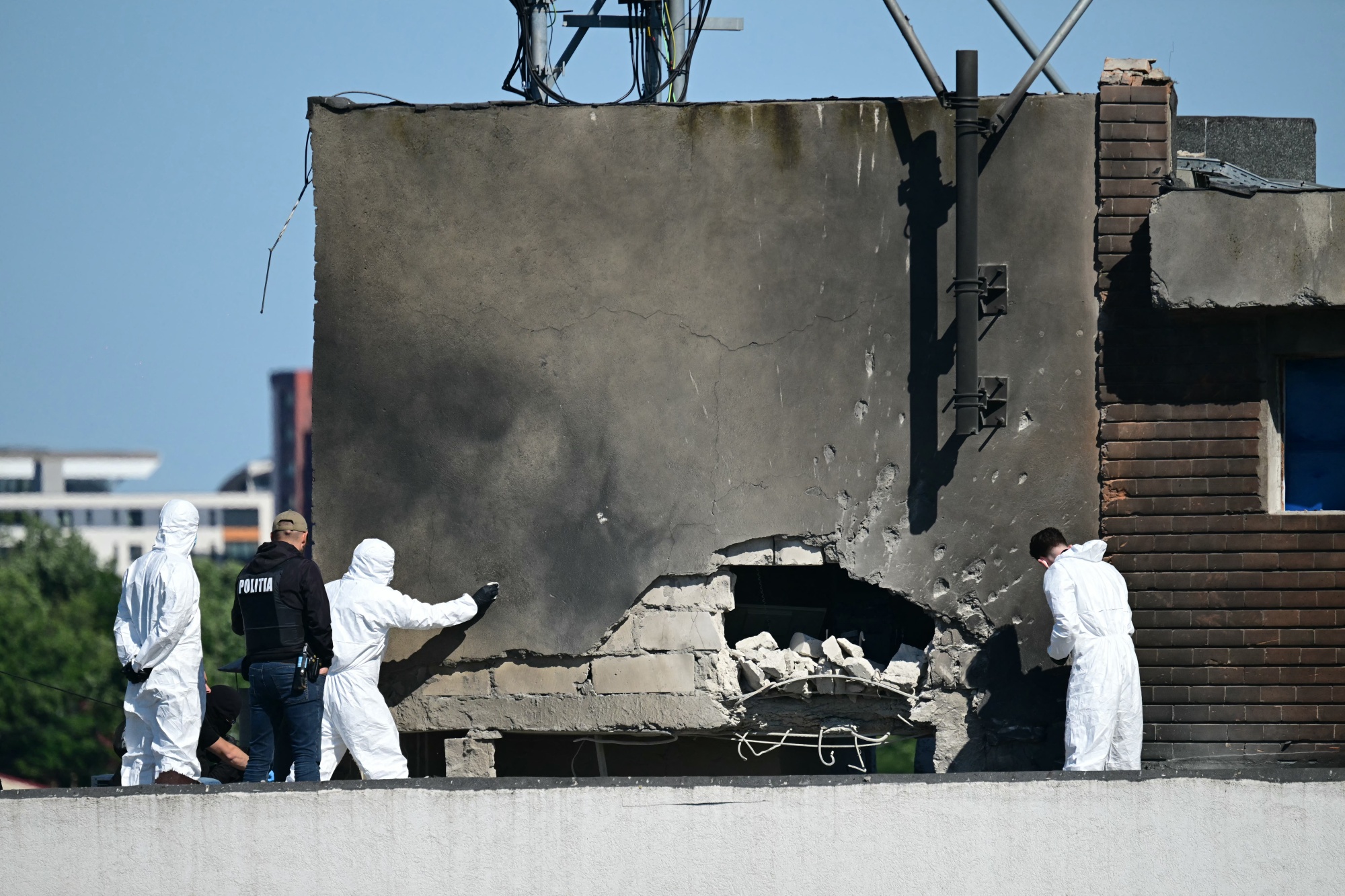
Police and forensic investigators examine the location of impact after a Russian drone struck an apartment building in Galati, Romania, today.
Photographer: Daniel Mihailescu/AFP/Getty Images
The US and Iran have reached a tentative deal to extend a ceasefire by 60 days and launch further talks on Tehran’s nuclear program, a source says, raising hopes the three-month conflict could be nearing a resolution. Both countries have previously hailed progress, with Trump — who has yet to agree to the terms of the pact — repeatedly indicating the US was close to securing an agreement, only for the standoff to drag on. Russian President Vladimir Putin will join a summit of the Moscow-led Eurasian Economic Union today amid growing tensions with Armenia over a shift toward Europe. The talks will be skipped by Armenian Prime Minister Nikol Pashinyan, whose government has angered the Kremlin by saying it wants to pursue membership in the European Union. European Commission officials were planning to meet with Anthropic to seek more information on its Mythos artificial-intelligence model and request access to the groundbreaking tool, sources say. The EU has been pushing for Mythos to be made available since Anthropic said last month that it was extraordinarily adept at finding network vulnerabilities and could pose a major cybersecurity risk. Norway is putting pressure on the EU to remove a moratorium on new oil and gas drilling in the Arctic where almost two thirds of its petroleum resources lie. Norwegian politicians, civil servants, and environmental and industry lobbyists are seeking to influence EU institutions as the bloc gears up to unveil a new Arctic policy by the end of September. 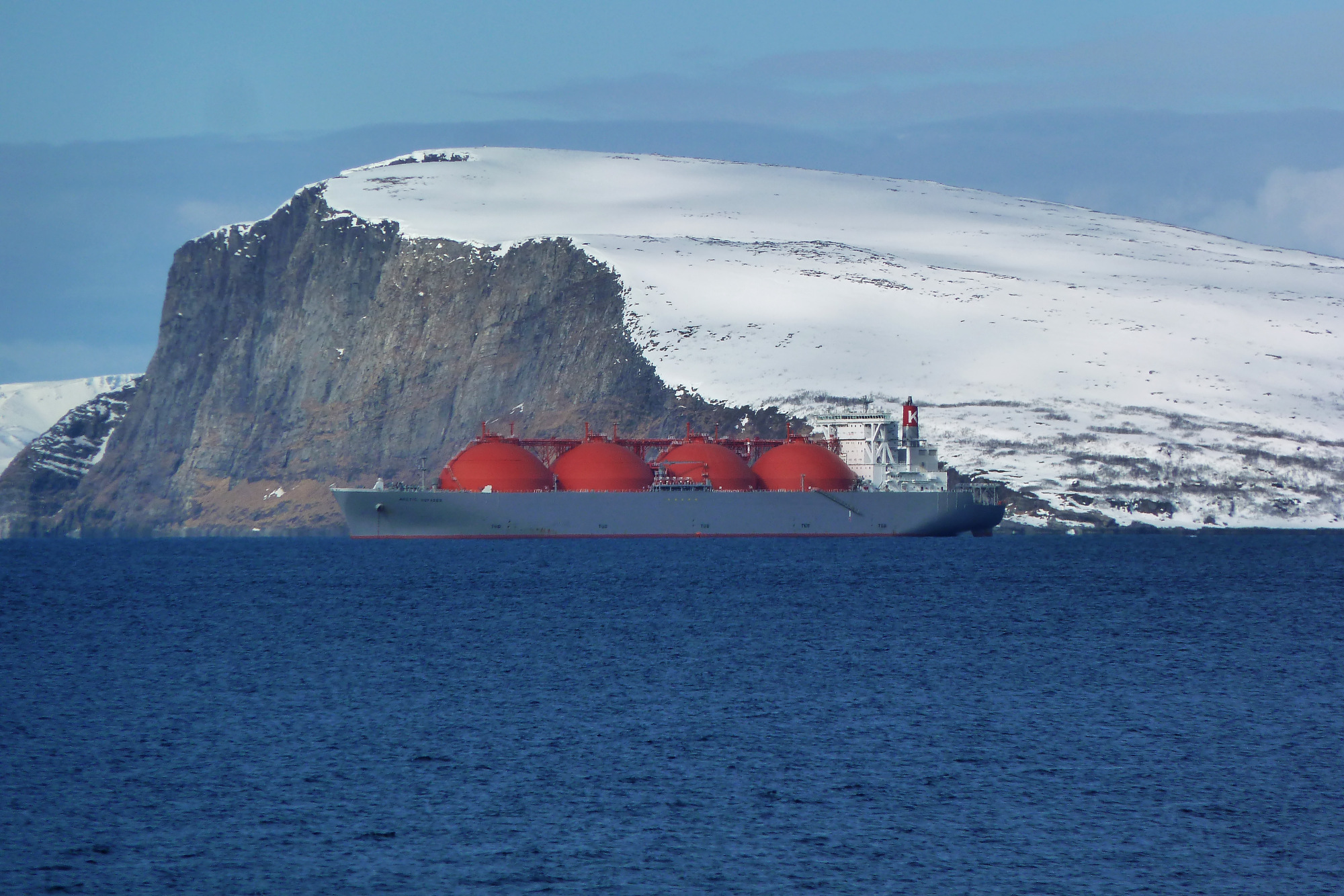
The Arctic Explorer LNG tanker outside Hammerfest, northern Norway.
Photographer: Mikael Holter/Bloomberg
South Africa is poised to delay the retirement of about a fifth of its coal-fired electricity-generation capacity as gas projects earmarked to replace them remain behind schedule. The EU is making a fresh attempt to revive its faltering semiconductor industry via a rebooted Chips Act, an effort expected to require €120 billion ($140 billion) in public-private investment by 2035, according to draft plans seen by Bloomberg News. Venezuela opposition leader María Corina Machado said she is willing to negotiate with the country’s interim government on a path to presidential elections backed by the US. The US will designate Brazil’s two main organized-crime groups as terrorist organizations, a move that will likely reignite tensions between Donald Trump and President Luiz Inácio Lula da Silva. Don’t miss from Bloomberg Weekend: Mishal Husain speaks with Pulitzer Prize-winning historian Ada Ferrer about Cuba, exile and guilt. John Micklethwait and Adrian Wooldridge discuss how Brexit changed everything, while Simon Nixon reports from Kazakhstan. Subscribe to the newsletter here. Sign up for the Washington Edition newsletter for news from the US capital and watch Balance of Power at 1 and 5 p.m. ET weekdays on Bloomberg Television. Chart of the Day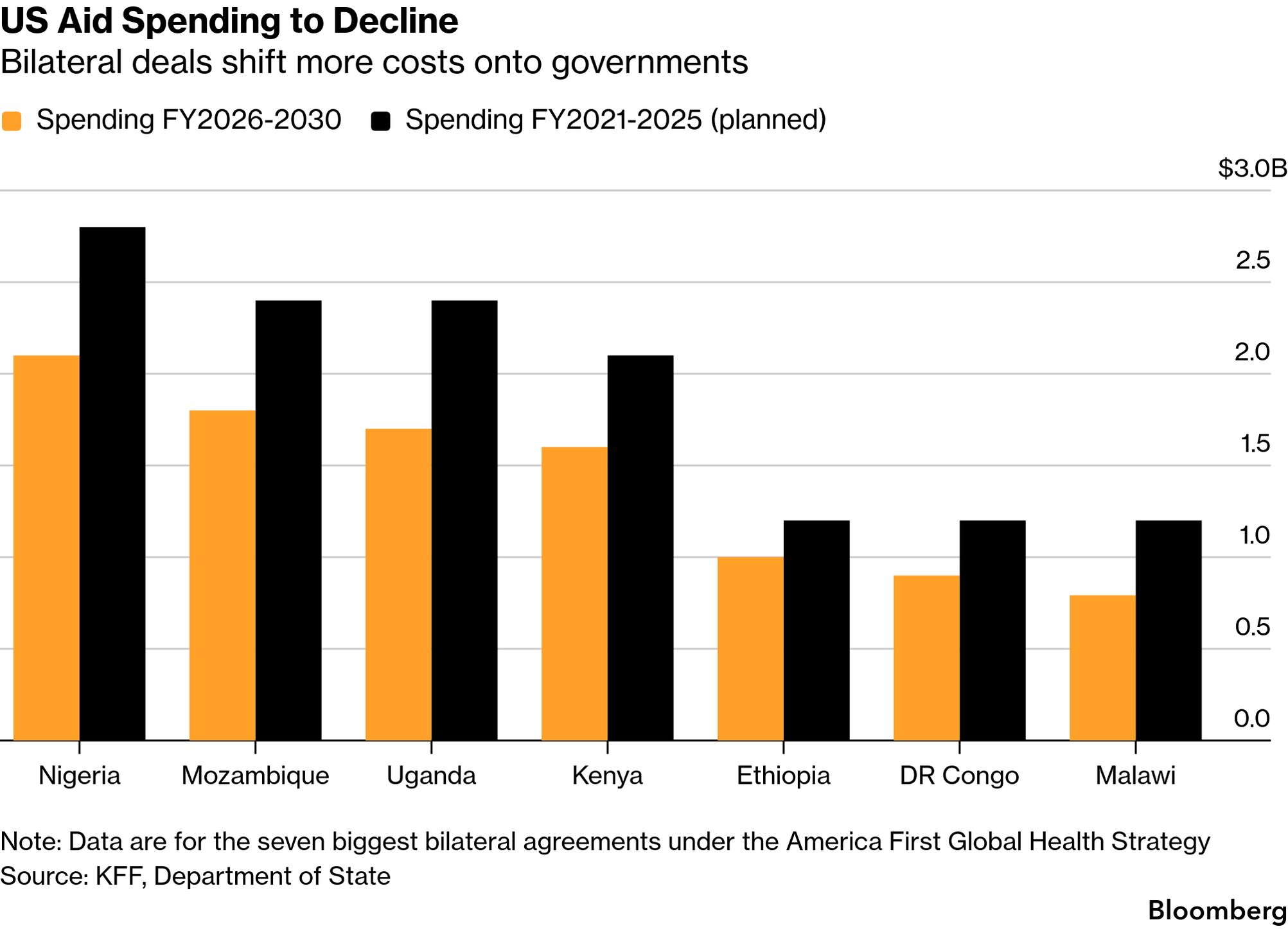
Staff at the Matola II health center near Mozambique’s capital of Maputo are racing to contain outbreaks while catching up on tuberculosis and HIV treatments after months of flood disruption. The clinic, which sees roughly 400 patients a day, is still reeling from last year’s abrupt US aid cuts that forced layoffs of community-health workers and disrupted disease-surveillance programs. The strain reflects a shift underway in global health after the Trump administration dismantled much of the US foreign-aid system that for decades made Washington the world’s largest humanitarian donor. And FinallyOn October 31, 2022, Chinese Coast Guard ship 5205 — one of the largest in Beijing’s fleet — left the southern port of Sanya and began patrolling the highly contested northern Spratly Islands. The ship changed course five months later, moving near a concentration of Vietnamese-occupied features. By the end of 2025, the ship had passed within 10 nautical miles of nearly 30 features in the South China Sea claimed by Malaysia, Philippines, Taiwan, and — increasingly — Vietnam. China’s expansive Coast Guard and maritime militia fleet is operating at an unprecedented tempo to press its sweeping claims, and as this visual deep dive explains, the action is most heated around the Spratly Islands. 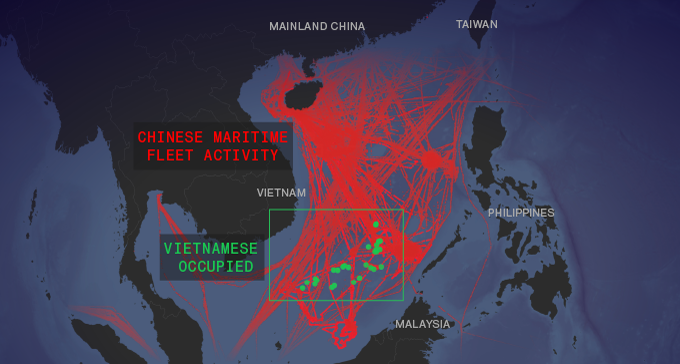
Pop Quiz (no cheating!). Police in which country entered the main opposition party’s headquarters using pepper spray to seize control of the building? Send your answers to balancepower@bloomberg.net More from Bloomberg
We’re improving your newsletter experience and we’d love your feedback. If something looks off, help us by reporting it here. Follow Us
You received this message because you are subscribed to Bloomberg’s Balance of Power newsletter. If a friend forwarded you this message, sign up here to get it in your inbox.
|
Friday, May 29, 2026
Warm embrace





Subscribe to:
Post Comments (Atom)
-
Revolutionary Stem Cell & PRP —Start Your Journey Today ...
-
You’ve shown interest in Regenerative Medicine ...


No comments:
Post a Comment