| Read in browser | ||||||||||||||
 The reviews are in for President Donald Trump's prime-time address to the nation on the Iran war, and Bloomberg Businessweek editor at large Wes Kosova says the effect wasn't reassuring to jittery markets or American consumers. Plus: On this anniversary of Trump's "Liberation Day" announcement, can you get a tariff refund? (Free link!) And a onetime Elon Musk whisperer shares his personal "algorithm" for developing products quickly. Programming note: Businessweek Daily will be off on Friday, April 3. If this newsletter was forwarded to you, click here to sign up. If Donald Trump was hoping to calm market turmoil and voter discontent over his increasingly costly and unpopular war with Iran, his speech to the nation on Wednesday night doesn't appear to have had the desired effect. The White House billed the address as an "important update" on the widening Middle East conflict, raising expectations that the president would announce an end to the hostilities or at least a breakthrough in negotiations. But Trump had no news to report. Instead, he spent 19 minutes repeatedly praising his own bravery and brilliance—"I did what no other president was willing to do. They made mistakes, and I am correcting them"—while offering few details about when or how the war might wind down. 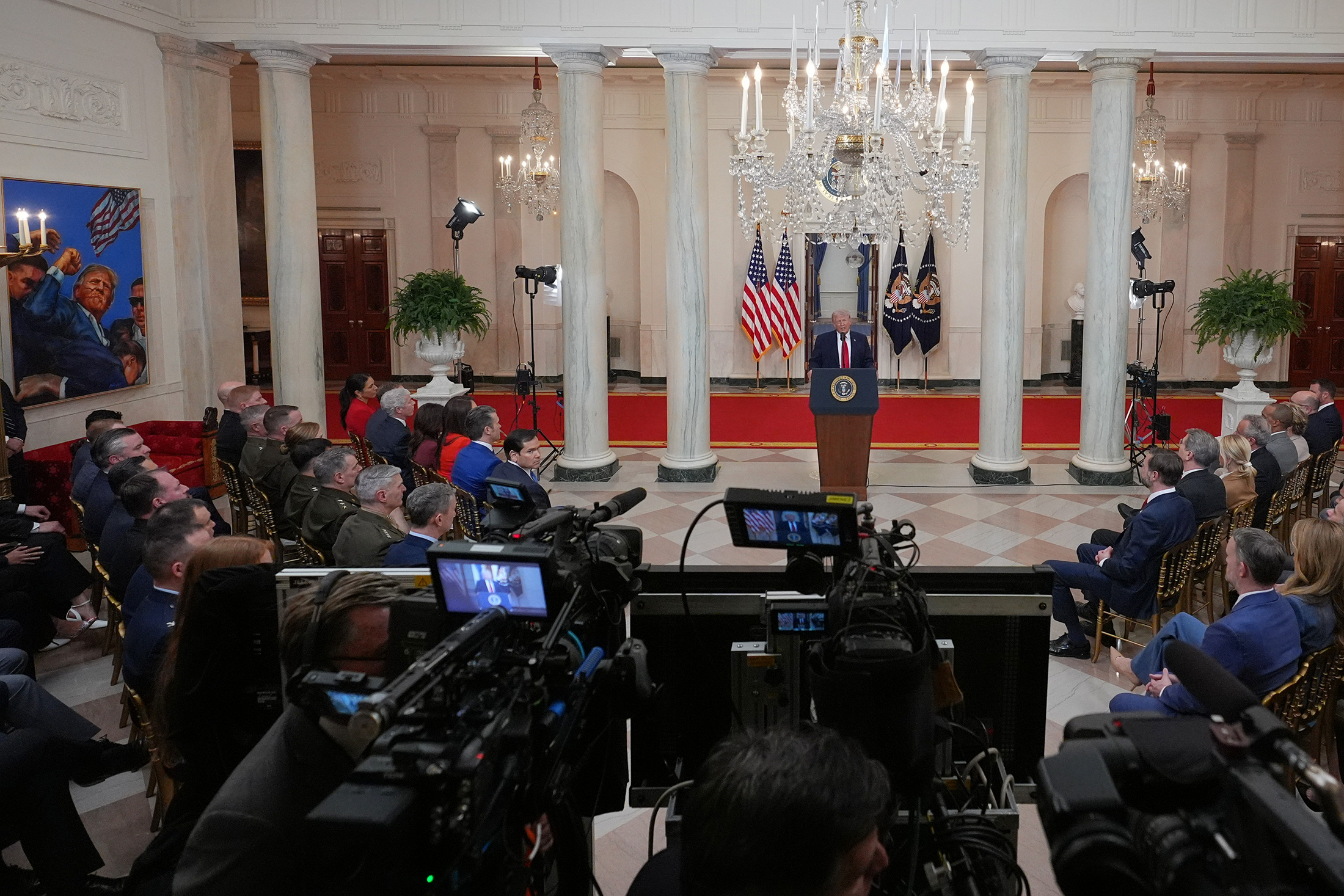 Trump speaks Wednesday evening from the Cross Hall of the White House. Photographer: Alex Brandon/Pool/Getty Images Trump struck a triumphalist tone. "There's never been anything like it militarily," he said of the operation. "Everyone is talking about it." Yet despite his familiar assurances that victory is just around the corner, his speech was sprinkled with caveats signaling the war might drag on:
Notably, the president had little to say about the all-important question of restoring traffic through the Strait of Hormuz, the critical global shipping lane for oil, fertilizer and other goods that Iran has effectively blocked. The result has been market upheaval and a spike in US gasoline prices, adding to the political pressure on him to find a way out of the war. Military options to wrest control of the strait would likely require risking the lives of US troops, something Trump so far hasn't been willing to do. The president has swung between demanding Iran open Hormuz as a condition for a peace deal and saying it's not the US's problem and it'll be up to the rest of the world to figure out. In his speech, Trump implausibly suggested it would be easy for other countries to "just take it." And even that won't be necessary, he said. Once the war is over, the strait will "just open up naturally." Markets apparently didn't find this message reassuring. Stocks and bonds fell, and oil prices rose in the aftermath of the speech, as investors saw no clear timeline or likely path for the war's end. Even before the conflict, voters had grown dissatisfied with stubbornly high prices at the gas pump and supermarket despite Trump's winning campaign promise to lower them. War with Iran has only made things worse, as the price of gasoline hit an average of $4 a gallon. A CNN poll released this week showed Trump's approval rating at 35% and his handling of the economy at 31%. The pressure on him to end the war isn't just coming from markets, businesses and the general public. Trump's decision to attack Iran has also caused a bitter rift among his most loyal supporters. Prominent MAGA voices have come out against the Iran war, calling it a betrayal of Trump's vow not to entangle the US in foreign conflicts. Some have accused him of doing Israel's bidding. The political toll the war is taking on Trump hasn't gone unnoticed in Tehran. In an open letter to the American people on Wednesday, Iran's president addressed Trump's MAGA base directly. "Exactly which of the American people's interests are truly being served by this war?" Masoud Pezeshkian wrote. "Is 'America First' truly among the priorities of the US government today?" The White House dispatched Vice President JD Vance to issue Iran an ultimatum: Make a deal to end the war or face more devastating attacks. Similar threats from Trump himself haven't worked, and Iran has shown no signs of backing down despite weeks of punishing US airstrikes and the targeted killing of Ayatollah Ali Khamenei. Iran's leaders have a lot to lose if the war continues. They know Trump does too. In Brief
Tariff Payments? Get in Line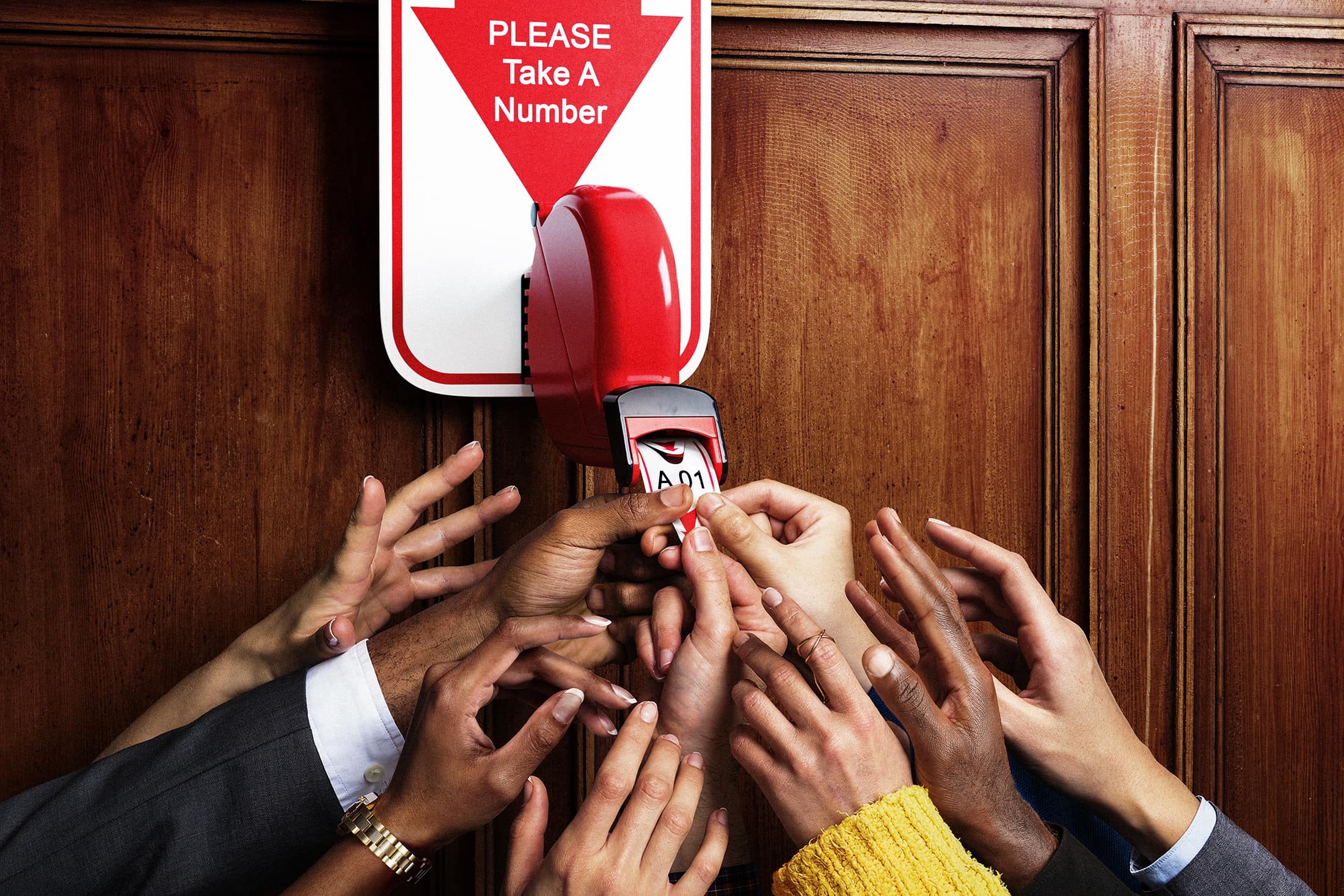 Photo Illustration: Justin Metz for Bloomberg Businessweek; Photos: Shutterstock (11) There is a shipping container full of van parts floating off the coast of South Carolina, and Harley Sitner can't stop thinking about it. "I'm dying to see what the tariff bill is," he says. Sitner runs Peace Vans, a Seattle company that customizes vans for camping, outfitting them with pop-up roofs, storage compartments and fold-out furniture. The container in question holds "rock n' roll beds," van seats that recline into a bed, from Germany. How those seats are classified will determine what he owes. A few years ago, that question barely mattered, but since April 2, 2025—"Liberation Day," when President Donald Trump unveiled his sweeping tariffs—it can mean a difference of tens of thousands of dollars. The beds are coming from the European Union, implying a tariff of about 10%. Yet if they're classified as furniture, the rate could be more than double that, especially if the beds' aluminum rails are singled out and a 50% metal tariff kicks in. So where does the math end up? And will the company get any money back from the $160 billion in court-ordered refunds? Laura Curtis and Stacey Vanek Smith lay out the options for companies in similar positions (🎁). In a Slump358,023 That's how many cars Tesla delivered worldwide in the first quarter of 2026. That number missed analysts' estimates and showed the carmaker's struggles to navigate an increasingly challenged electric-vehicle market. 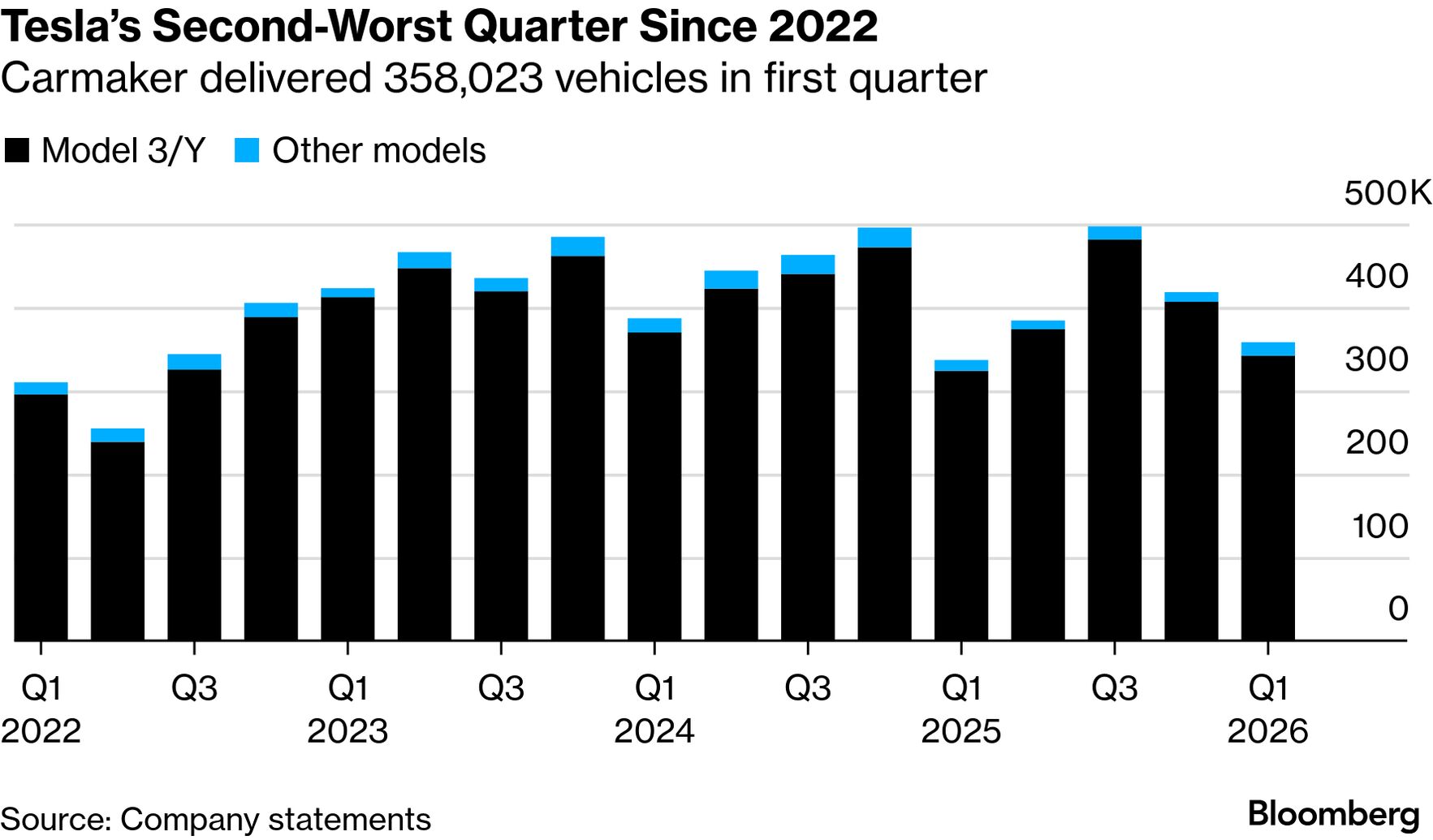 He's a Fix-It Man Jon McNeill in New York. Photographer: Timothy Fadek for Bloomberg Businessweek Jon McNeill is walking through Manhattan's Clement Clarke Moore Park, recalling the exact day when he'd had enough of working for Elon Musk. It was the end of a bruising 2017, in which Tesla Inc. was stumbling over its effort to release the Model 3 and, in particular, failing to get robots to build them. McNeill, who was the company's president, and his deputies stood side by side with Musk on the assembly line figuring out how to reconstruct it. The whole process took eight months, and the car was late, but they eventually got it done. Tesla's revenue soared; the stock price did too. To celebrate and unwind, McNeill took his wife and two kids on vacation to Vermont, expecting a relaxing week of skiing. Instead he walked into an intervention: His family sat him down and told him he'd been a jerk. Dealing with Musk's extreme mood swings, McNeill says, had ground him down. When he wasn't trying to shield managers from the billionaire's tirades, he recalls, he'd be peeling his boss off the floor of a dark conference room in a near-catatonic state. (Musk, who has self-reported symptoms of bipolar disorder, famously slept on the factory floor at times while pushing Tesla through what he called production hell.) "I choked up," McNeill says, unfailingly polite and with the bearing of a college professor. "Mean is the last thing that I ever want to be." So McNeill left, and his journey since has made him somewhat of a Forrest Gump of American business. See why he told David Welch that his career "has had a hell of a lot of luck." Vacations Cut Short"If we see gas prices protracted at current levels or higher, you will see a trading down in hotels or meals, you'll see traveling to distances that are closer, and you'll see drops in terms of number of days away." Adam Sacks President of the consulting firm Tourism Economics American travelers say they're cutting back on international trips, shortening stays and "buckling down" as the Iran war drives up fuel prices. Play Alphadots!Our daily word puzzle with a plot twist.  Today's clue: Exchanged notes? More From BloombergLike Businessweek Daily? Check out these newsletters:
Explore all Bloomberg newsletters. We're improving your newsletter experience and we'd love your feedback. If something looks off, help us fine-tune your experience by reporting it here. Follow us
You received this message because you are subscribed to Bloomberg's Businessweek Daily newsletter. If a friend forwarded you this message, sign up here to get it in your inbox.
|
Thursday, April 2, 2026
No news isn’t good news for Trump





Subscribe to:
Post Comments (Atom)
Maybe Usha Vance could teach kids about the flag
Since when did we get six new states? View in browser This is Bloombe...
-
PLUS: Dogecoin scores first official ETP ...
-
Bloomberg Evening Briefing Americas View in browser Who's paying for Donald Trum...


No comments:
Post a Comment