| Read in browser | ||||||||||||||
 Welcome to Next Africa, a daily newsletter on where the continent stands now — and where it's headed. Sign up here to have it delivered to your email. In today's edition we look at how fragile global trade routes are, whether they be the Gulf straits channeling the world's oil or a small bridge in central Africa that funnels key new-energy minerals.
Swept AwayA critical energy chokepoint got cut off at the weekend, exposing the fragility of global trade routes. And we're not talking about the Suez Canal or Strait of Hormuz that's clogged by the war on Iran. Heavy rains in northern Zambia washed away a bridge on the highway south of its main border crossing with Democratic Republic of Congo, severing what's become one of the world's most important supply routes for copper. The bulk of exports from Congo have historically flowed through the Kasumbalesa border with Zambia, before trucks haul the produce to ports around southern Africa. Congo has raced to become the second-biggest producer of the metal that's critical to powering data centers, electric vehicles, and even defense industries, with Zambia's output expanding rapidly too. 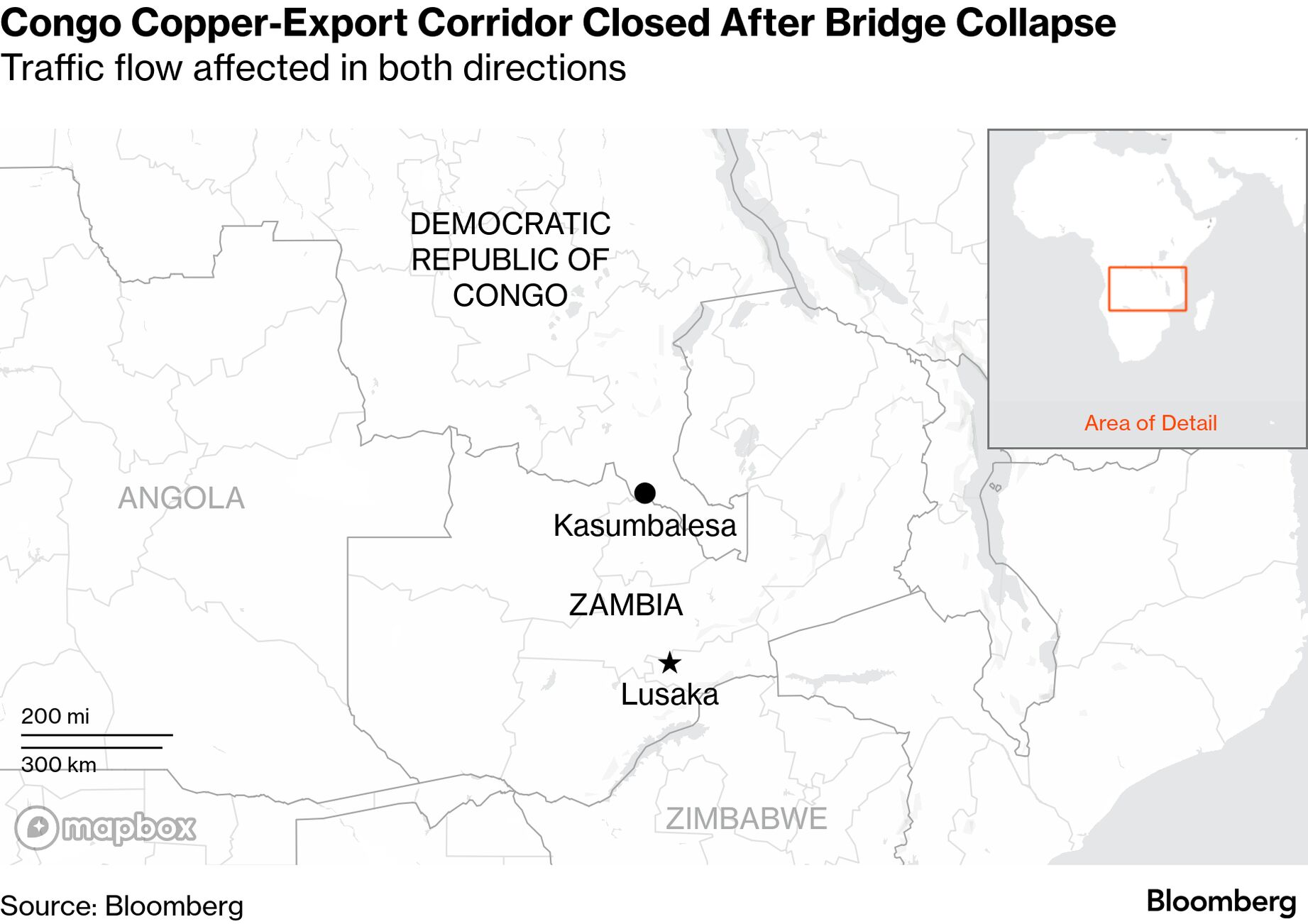 Zambian authorities are now rushing to repair the collapsed Kakosa bridge and reopen the route. Given it's a small stream, the collapse probably won't have an enduring impact on global copper markets, but the incident serves as a stark reminder of just how vulnerable the world economy is to trading chokepoints. The latest Iran conflict has also dimmed hopes of an imminent revival for the Suez Canal, a key pillar of the Egyptian economy. For Zambia and Congo, the blockage highlights the urgent need to build more diversified logistics as they ramp up copper shipments to a global industry that can't get enough of the metal. The US and European Union are already involved in helping to refurbish and expand a century-old railroad connecting the region to an Atlantic port in Angola. Progress on the Lobito corridor has been slow, though. China, too, is investing nearly $1.4 billion to revitalize a rail line that runs the opposite direction to an Indian Ocean port in Tanzania. Zambia's Finance Minister Situmbeko Musokotwane likes to say that copper is the new oil, as the world increasingly relies on green-energy sources. With much of the new global supplies of the metal coming out of Congo and Zambia, this remote central African region is strategically and globally important — even if the Kakosa bridge is tiny in comparison to the Suez Canal. — Matthew Hill 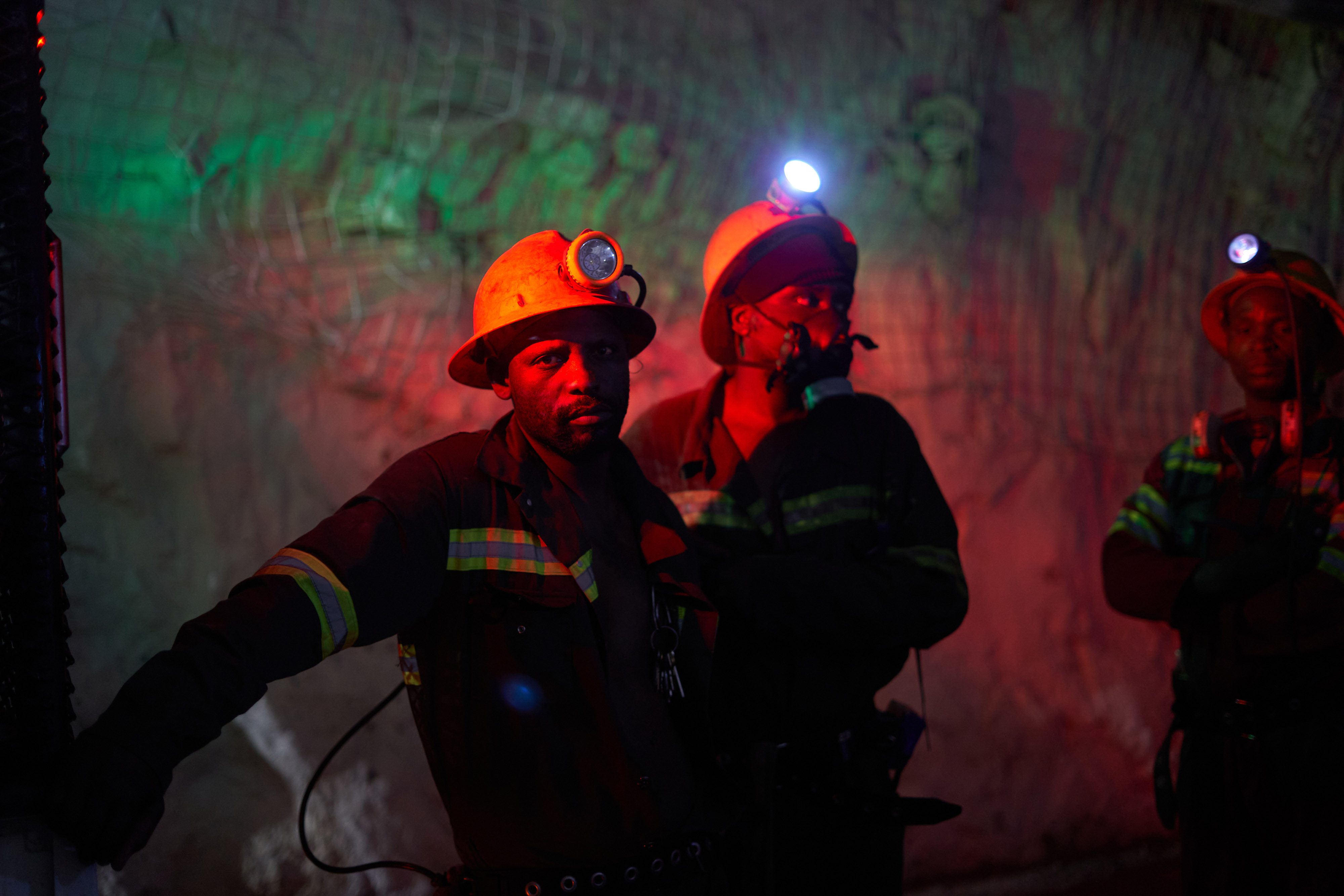 Workers at the Mufulira mine, Zambia, in May 2022. Photographer: Zinyange Auntony/Bloomberg What's Everyone ReadingGold climbed for a fourth day, as war in the Middle East rattled markets and drove investors to safer assets. Oil surged the most in four years as tanker traffic all but halted through the Strait of Hormuz and a big refinery in Saudi Arabia stopped. Read more about the strikes on Iran by the US and Israel and Iran's response in today's Balance of Power newsletter. 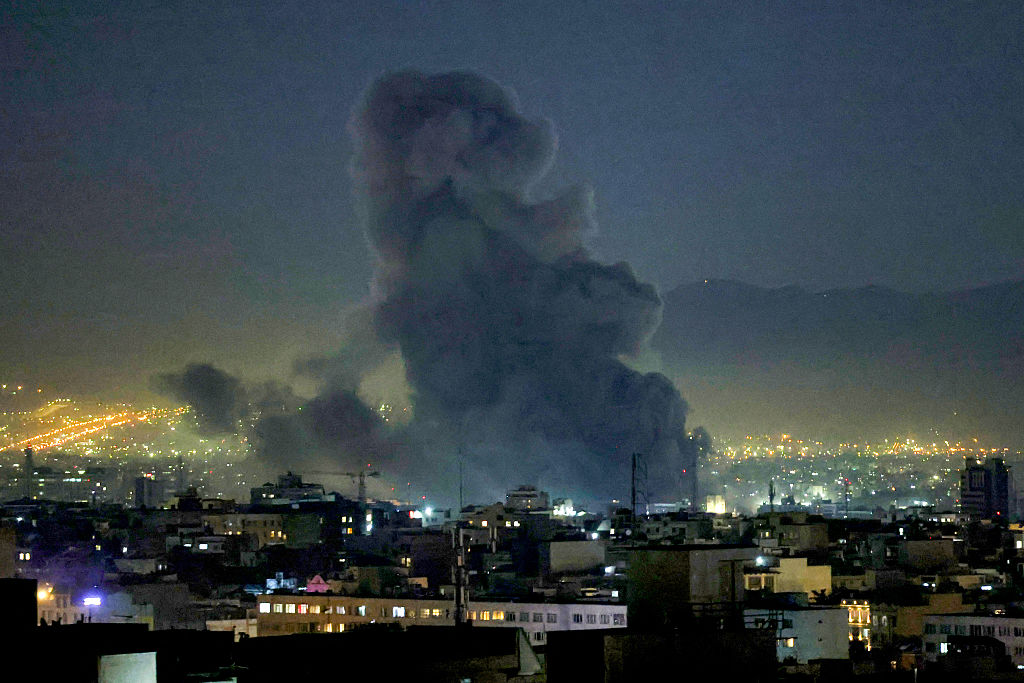 A missile strike in Tehran yesterday. Photographer: Atta Kenare/AFP/Getty Images Ghana is stepping up investments in health care and food security as Western donors retreat, forcing the West African nation to shoulder the cost of services it once relied on development partners to provide. Donor support to Ghana for health has dropped to 2.2% of the total sector budget from 19%, President John Mahama says. Nigeria's economy expanded at its fastest pace in three years in 2025, buoyed by stronger oil production and industrial output, as authorities prepare to roll out tax reforms and cut interest rates further. Lower borrowing costs as inflation cools could further support growth this year. South Africa has offered Glencore's ferrochrome smelting venture and Samancor Chrome's operations cheaper electricity in a bid to save jobs. Only 11 of South Africa's 66 smelters remain operational. Meanwhile, Rio Tinto approved a $473 million mine expansion at its Richards Bay Minerals unit. At least 169 people were killed in South Sudan as insurgents attacked a village in the east African nation teetering on the brink of a civil war. Its political and military leaders are dismantling a 2018 peace agreement, making elections this year increasingly unlikely, according to the UN Commission on Human Rights. Behind the NumbersSouth Africa's manufacturing PMI sales data reinforced concerns that supply constraints continue to hamper the continent's biggest economy, Bloomberg Economics' Yvonne Mhango says. The guage has struggled to rise above 50 over the past three years — a level that indicates expansion — with today's reading slipping to 47.4. 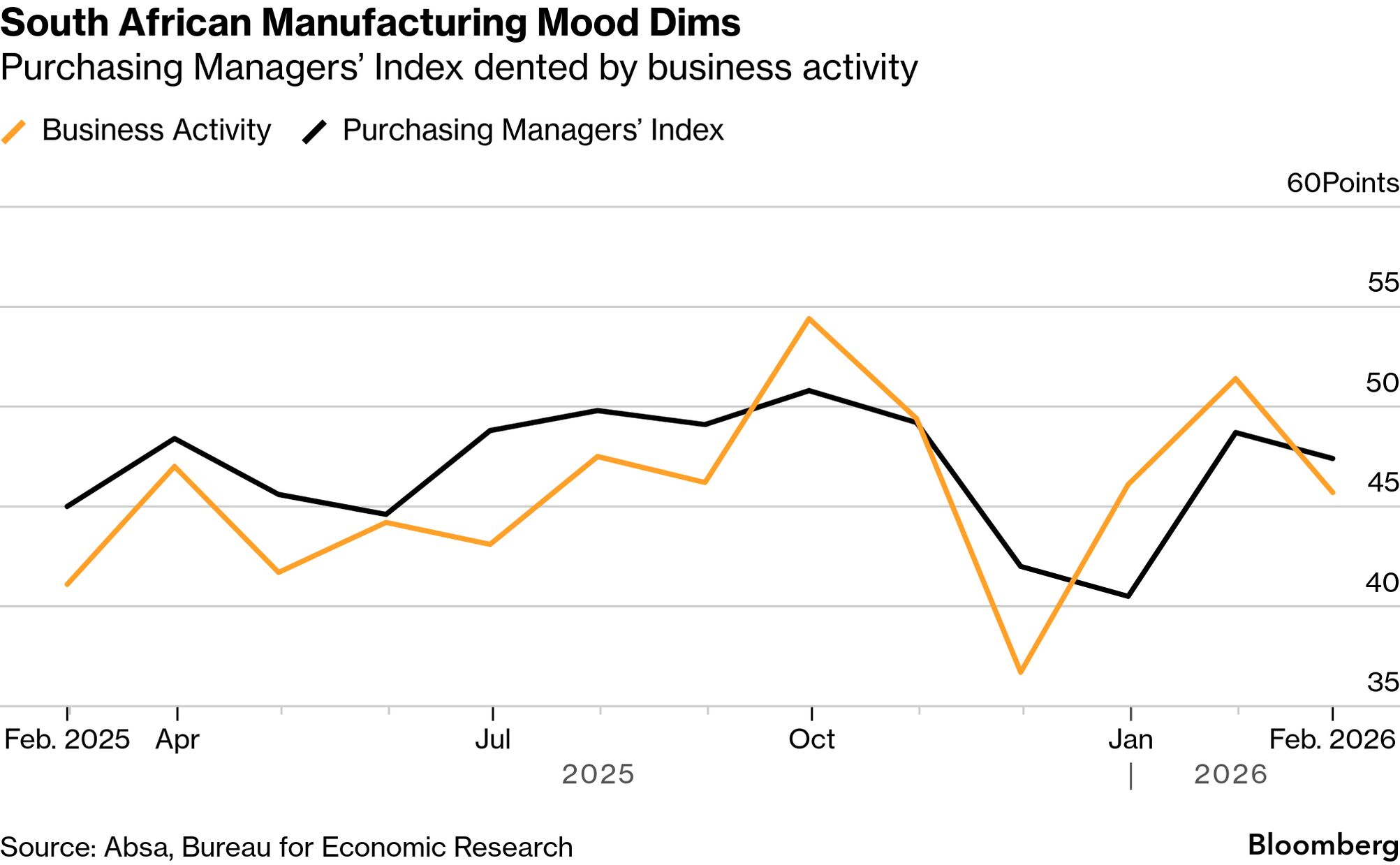 By contrast, vehicle sales are being boosted by lower interest rates, while cheap imports from Asia improve affordability and support demand. In Nigeria, private-sector credit data should show weakness persists. We expect low single-digit growth in January, reflecting the drag from high interest rates. Last WordKamau Thugge insists his job running Kenya's central bank is easy. Investors may be forgiven for doing a double take. Two years ago, the International Monetary Fund warned that the East African nation was at risk of default, businesses were scrambling for hard currency and interest rates were on the rise. Now, economic growth is accelerating, foreign-exchange reserves are at a record and a hunt for deals is in full swing. Moody's Ratings rewarded the country with its first credit-rating upgrade in three years. "Of course there's a lot of uncertainty about what the US is doing, tariffs, but I don't think that is such a big risk," Thugge says, adding that his role at Kenya's Treasury was tougher. Read more from our sit-down with the governor here and here. 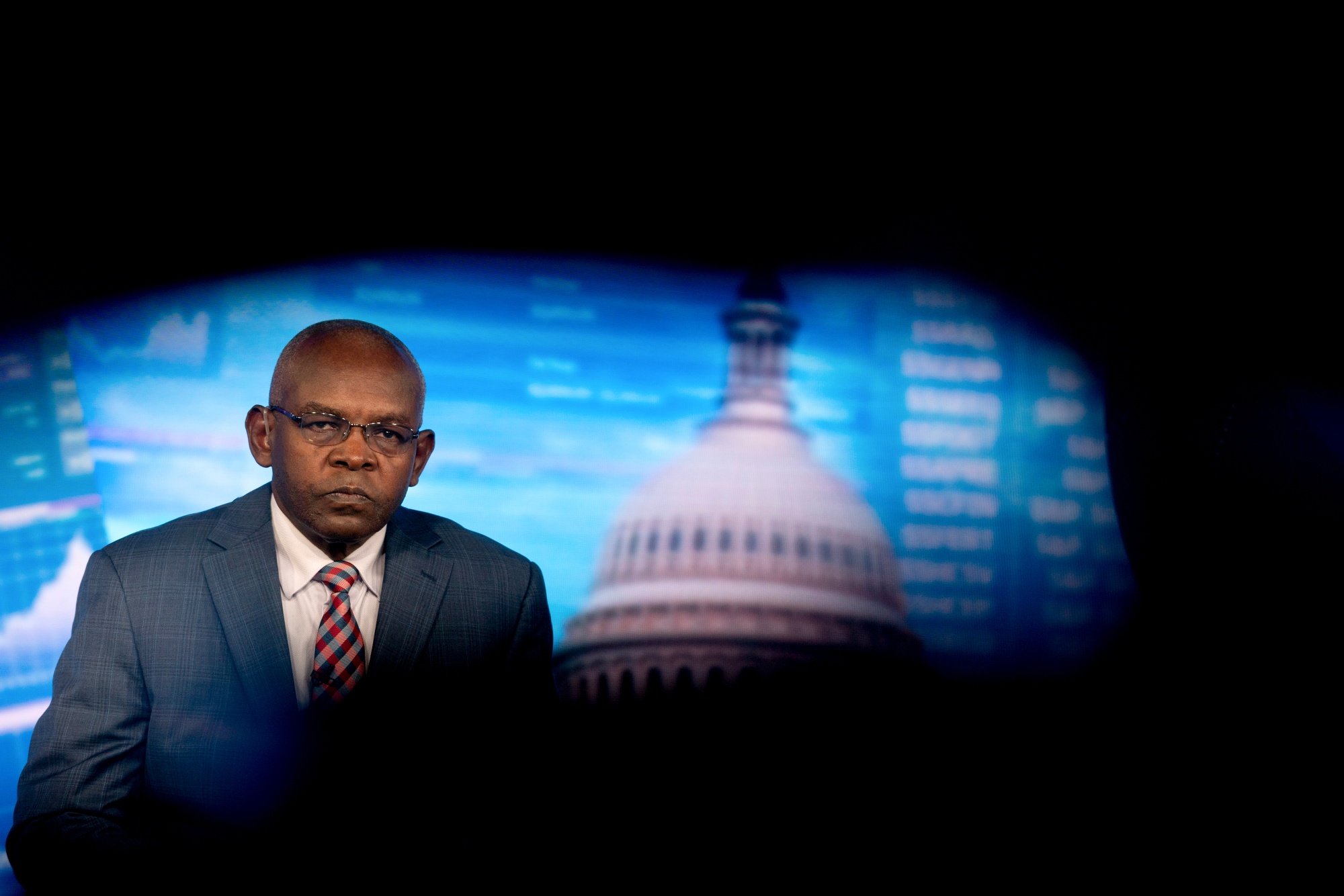 Kamau Thugge during a interview in Washington, in April 2025. Photographer: Stefani Reynolds/Bloomberg More From BloombergEnjoying Next Africa? You might also like:
|
Monday, March 2, 2026
Next Africa: Clogging global trade





Subscribe to:
Post Comments (Atom)
Where to Put $100 Before Trump's New Tech Law Rolls Out
Jeff Brown was consulted by Congress on this - here's what he says comes next ...

-
PLUS: Dogecoin scores first official ETP ...
-
Swaps, memes, homes, tokens. View in browser Unicorn bucket We have talked a fe...


No comments:
Post a Comment