| Read in browser | ||||||||||||||
  Welcome to the Brussels Edition. I'm John Ainger, Bloomberg climate and energy reporter, bringing you the latest from the EU. Make sure you're signed up. After nearly a decade of talks, and weeks of last-ditch wrangling, the EU has struck a comprehensive trade deal with Australia in another show of defiance to Donald Trump's "America First" agenda. The agreement, which still needs to be ratified by both sides, aims to facilitate commerce in everything from chocolate to high-end electric vehicles. Crucially, it includes a framework deepening cooperation on critical raw materials — supplies of which China restricted last year. The EU hopes the deal will boost annual exports to Australia of about €65 billion by one third over the next decade. Talks had been held up by the issue of how much Australian beef would be allowed to enter the bloc under preferential terms, and also what kind of protections specific goods, like Prosecco, would receive. 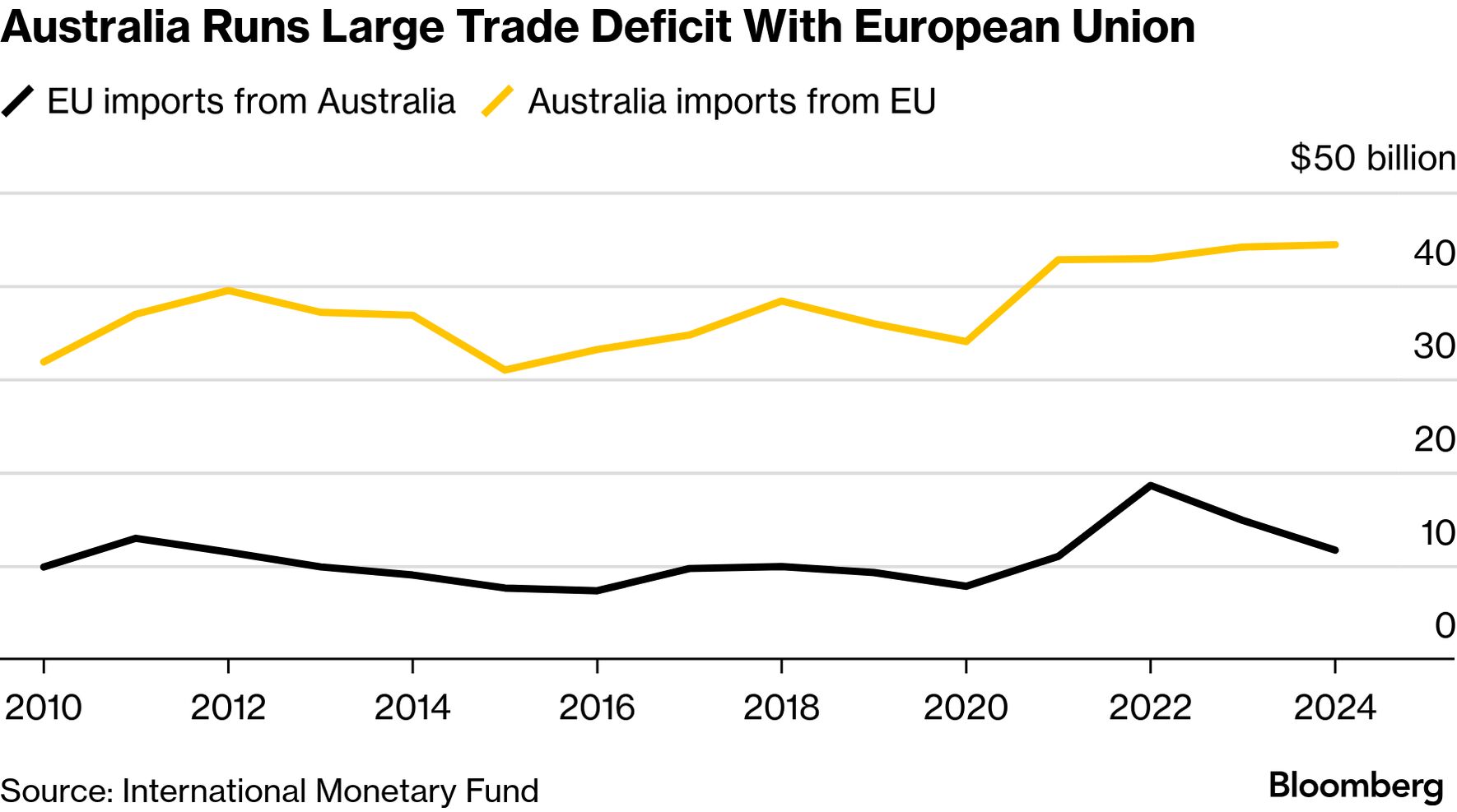 Speaking in Canberra alongside Australian Prime Minister Anthony Albanese, European Commission President Ursula von der Leyen highlighted the deal as the latest in a quick succession of agreements this year, including with Mercosur and India, that cover three continents and added nearly 2 billion people to the EU's free-trade network. She contrasted the approach with Trump's tariff program and transactional approach to trade in an obvious swipe at the US leader. "In our story, open, rules-based trade delivers positive sum outcomes," she said. "Trust matters more than transactions." For all the self congratulation, the accord with Australia — as well as a new Security and Defense Partnership — will do little to mask Europe's short-term economic worries triggered by the war on Iran. Von der Leyen urged the government in Tehran to abandon its threat to block the Strait of Hormuz, and called on all sides to negotiate an end to hostilities. While Europe doesn't directly receive much of the fossil fuels it needs from the Middle East, it still has to compete in an increasingly competitive global market for remaining supplies, while Iran continues to launch missiles. "The situation is critical for energy supplies worldwide," she said. "We all feel the knock-on effects on gas and oil prices." Boris Vujcic, who'll take over as vice president of the European Central Bank in June, warned in an interview with my colleagues Mark Schroers and Jasmina Kuzmanovic that the conflict brings a risk of stagflation on the continent closer. Officials are weighing whether or not they may need to raise interest rates next month to counter rising prices. "In such situations, everything is live," Vujcic said. The Latest
Seen and Heard on Bloomberg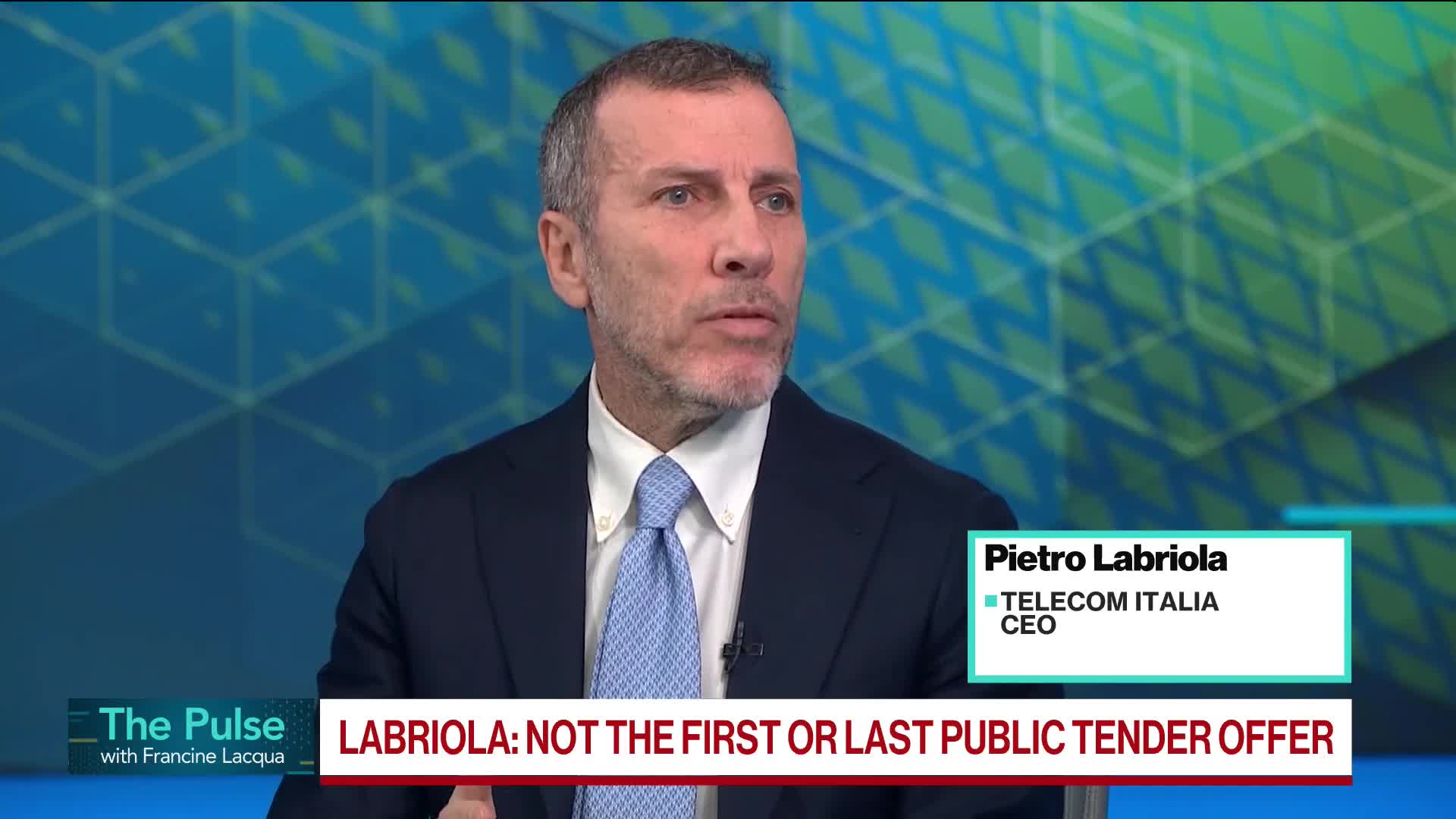  Poste Italiane's €10.8 billion bid for full control of Telecom Italia moves forward much-needed consolidation that will strengthen Europe's telecom sector, according to the phone company's chief executive officer. "The digital business is all about scale," CEO Pietro Labriola told Bloomberg TV's Francine Lacqua. "You need to move fast and have strong financial backing." Chart of the Day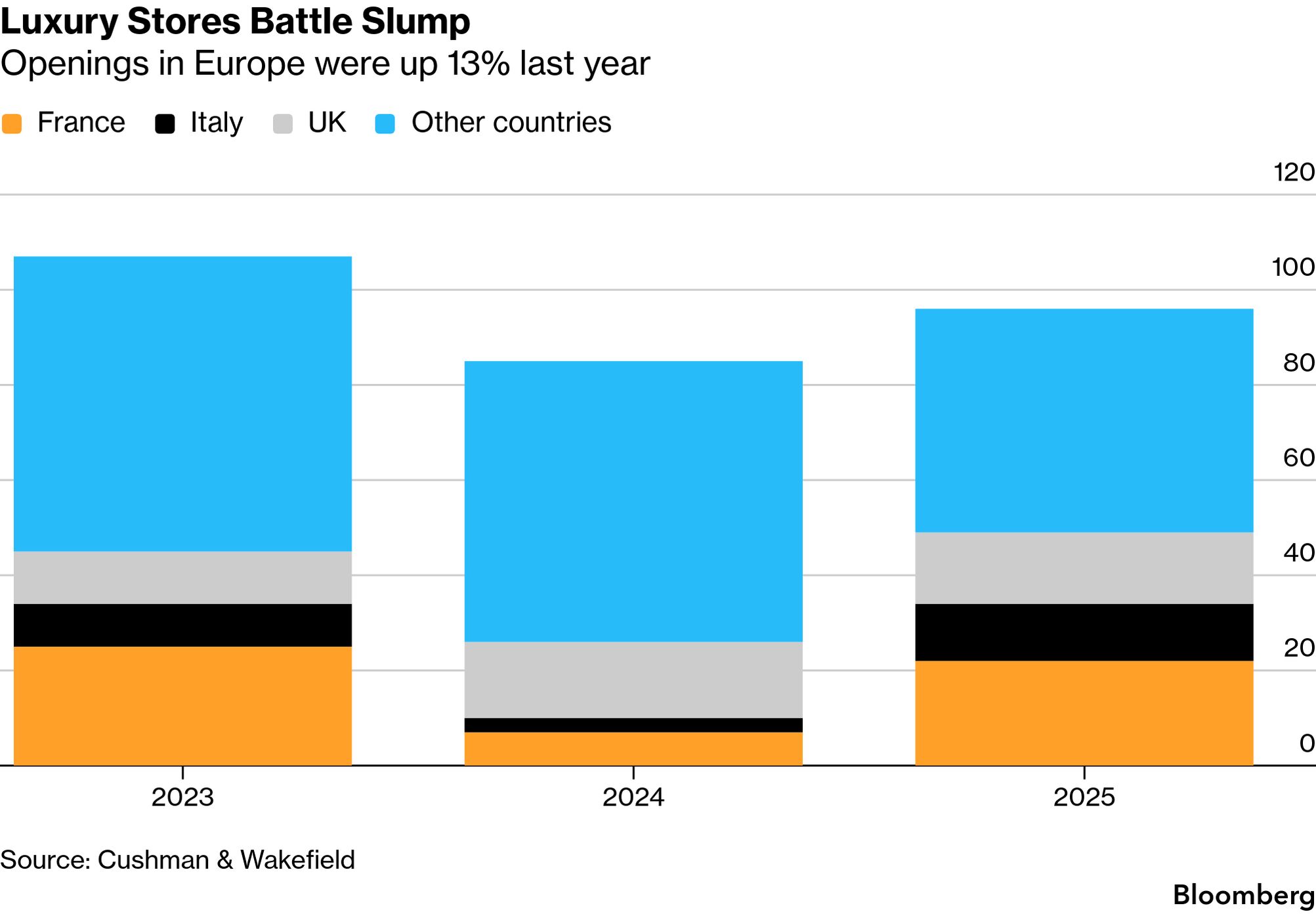 Owners of luxury brands ranging from Gucci to Fendi and Bulgari opened more stores in Europe last year despite a slowdown in the wider sector. The continent's leading luxury retail streets saw a 13% rise in new outlets last year, data compiled by global real estate broker Cushman & Wakefield Ltd. show. Brands owned by LVMH Moët Hennessy Louis Vuitton, Kering and Cie Financiere Richemont made up almost a third of those stores. Coming up
Final Thought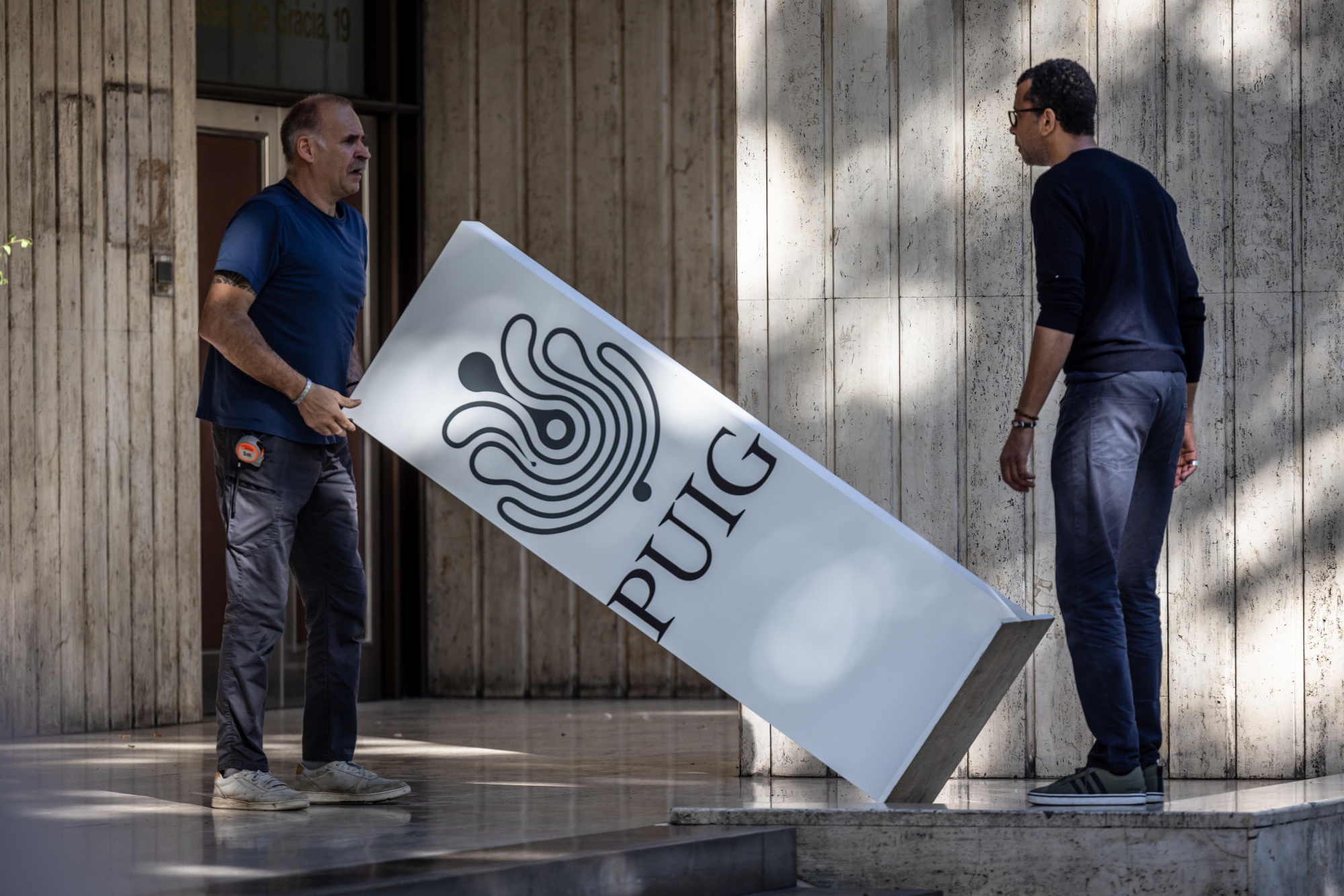 Workers prepare branding for the Puig Brands listing ceremony at the Barcelona Stock Exchange in Barcelona, Spain, on Friday, May 3, 2024. Photographer: Angel Garcia/Bloomberg Estée Lauder said it's in talks to buy Puig Brands in a deal that would create a cosmetics giant with about $20 billion in annual sales. A takeover of the Spanish company would give Estée Lauder such well-known perfume and fashion brands as Rabanne, Jean Paul Gaultier and Carolina Herrera, helping it compete better against the world's largest cosmetics company, L'Oréal. For Puig, which generated about €5 billion in sales last year, the move follows slowing growth and downgrades of earnings estimates that have pulled down its stock since an initial public offering two years ago. Like the Brussels Edition?Don't keep it to yourself. Colleagues and friends can sign up here. We're improving your newsletter experience and we'd love your feedback. If something looks off, help us fine-tune your experience by reporting it here. Follow us
You received this message because you are subscribed to Bloomberg's Brussels Edition newsletter. If a friend forwarded you this message, sign up here to get it in your inbox.
|
Tuesday, March 24, 2026
Brussels Edition: The art of the trade deal





Subscribe to:
Post Comments (Atom)
AT&T, T-Mobile, and Verizon unite to beat SpaceX
The three biggest wireless carriers in America are scared of SpaceX’s Starlink Mobile. That’s why they just announced they’re… ...

-
Bloomberg Evening Briefing Americas View in browser Who's paying for Donald Trum...
-
PLUS: Dogecoin scores first official ETP ...


No comments:
Post a Comment