| Read in browser | ||||||||||||||
  Welcome to the Brussels Edition. I'm Suzanne Lynch, Bloomberg's Brussels bureau chief, bringing you the latest from the EU each weekday. Make sure you're signed up. As the global race for critical raw materials intensifies, the European Union is set this week to unveil its grand plan to secure supplies and dilute an overwhelming dependence on China. The ResourceEU project, flagged by Commission President Ursula von der Leyen in a speech in Berlin in October, will seek to de-risk and diversify Europe's supply chains for key commodities like rare earths. The valuable inputs power everything from cars to defense equipment, with China responsible for about 70% of global output last year. Under a draft of the plan seen by Bloomberg, the EU will spend at least €3 billion next year in a bid to secure critical materials next year, Jorge Valero and Alberto Nardelli report. This will be accompanied by pledges from the European Investment Bank and member states to provide financial backing for four projects, including a mine in Greenland and a lithium extraction venture in the Czech Republic. 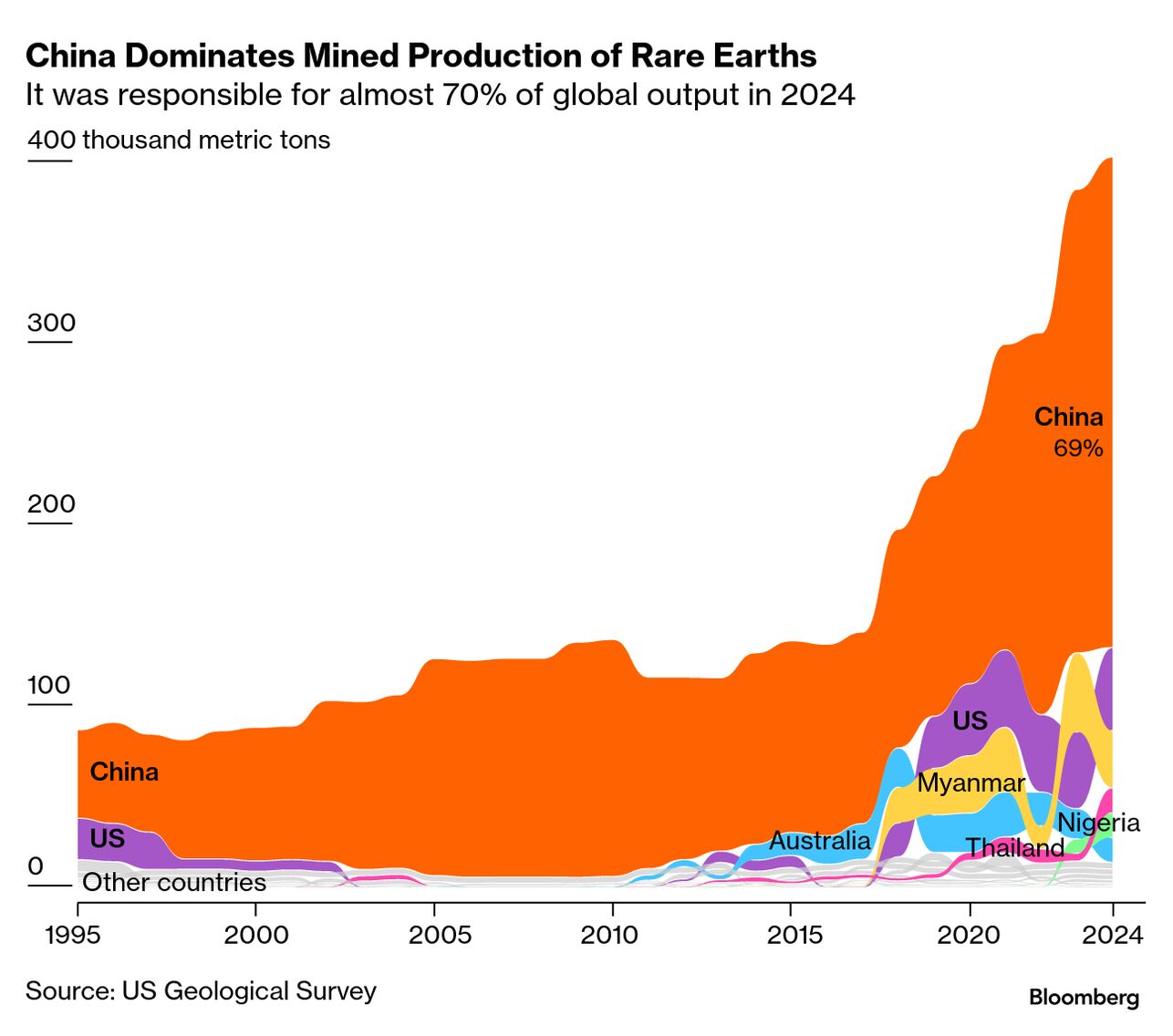 A central plank of the plan is a European Critical Raw Materials Centre to oversee and guide investments, help build stockpiles and coordinate joint purchases. The Commission will also issue new guidance early next year on permitting to speed up environmental compliance. The unveiling of the plan, which builds on last year's Critical Raw Materials Act, is timely. French President Emmanuel Macron leaves Paris today for his fourth state visit to China. He'll be looking to smooth relations between the EU and the government in Beijing, which have been strained in recent months following China's move to restrict exports of rare earths. It also temporarily banned the shipment of semiconductors essential for carmakers that were being manufactured in China by Dutch-based chipmaker Nexperia. European firms are belatedly waking up to the scale of their dependence on China, and making up for that lost time is crucial. Yet as Bloomberg's Laura Alviz and Jenny Leonard report today, US companies are scooping up rare-earth minerals at a faster pace than European counterparts, leveraging their heft and financial power. One issue is that European defense companies are trying to buy rare earths directly, without coordinating with suppliers and with little government support. As the EU tries to tackle its competitiveness issues and boost defense investment, keeping pace in the global race for precious materials is increasingly looking like an existential necessity. The Latest
Seen and Heard on Bloomberg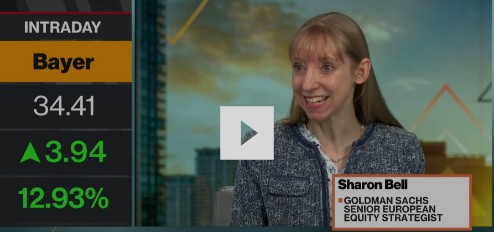 Europe still offers "good value versus the US" even if the gap has narrowed a little, Sharon Bell, senior European equity strategist at Goldman Sachs, told Bloomberg TV. She added that quality stocks on both sides of the Atlantic have generally underperformed this year and will take a further hit should the dollar "continue to come down." Chart of the DayUkraine started a process to exchange securities linked to economic growth into bonds as it seeks to restructure the terms of $3.2 billion in debt following another round of talks with a group of private creditors. The government in Kyiv offered to replace the so-called GDP warrants with bonds and cash and expects to close the deal by the end of the year. 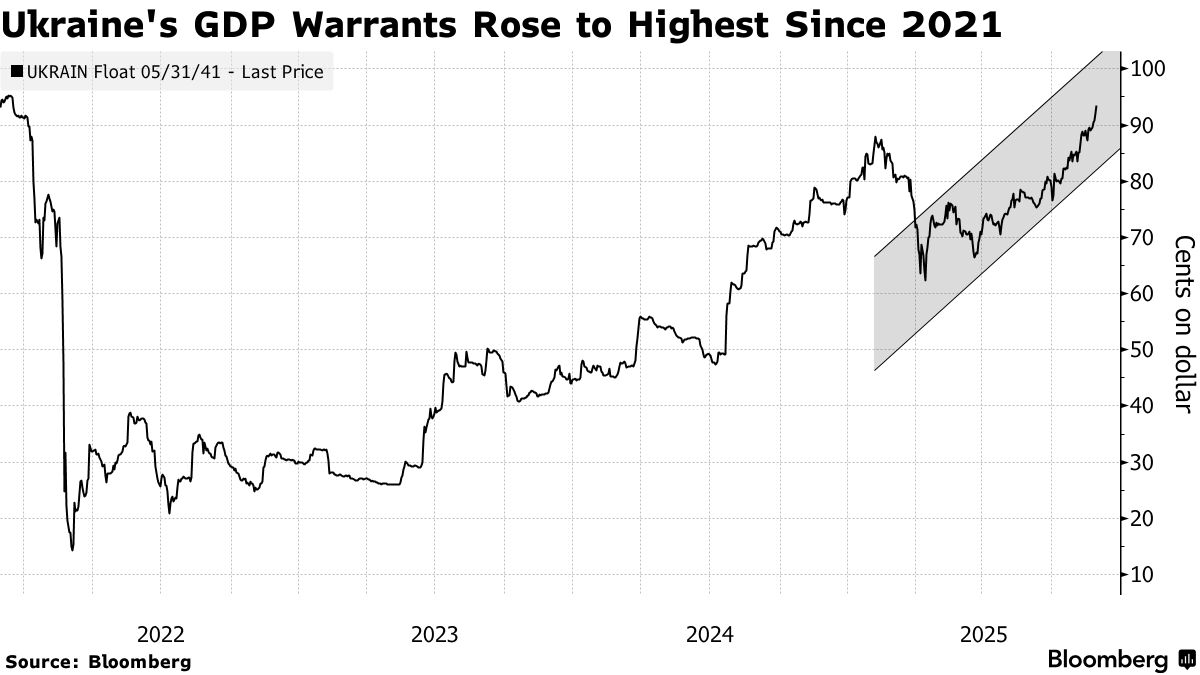 Coming up
Final Thought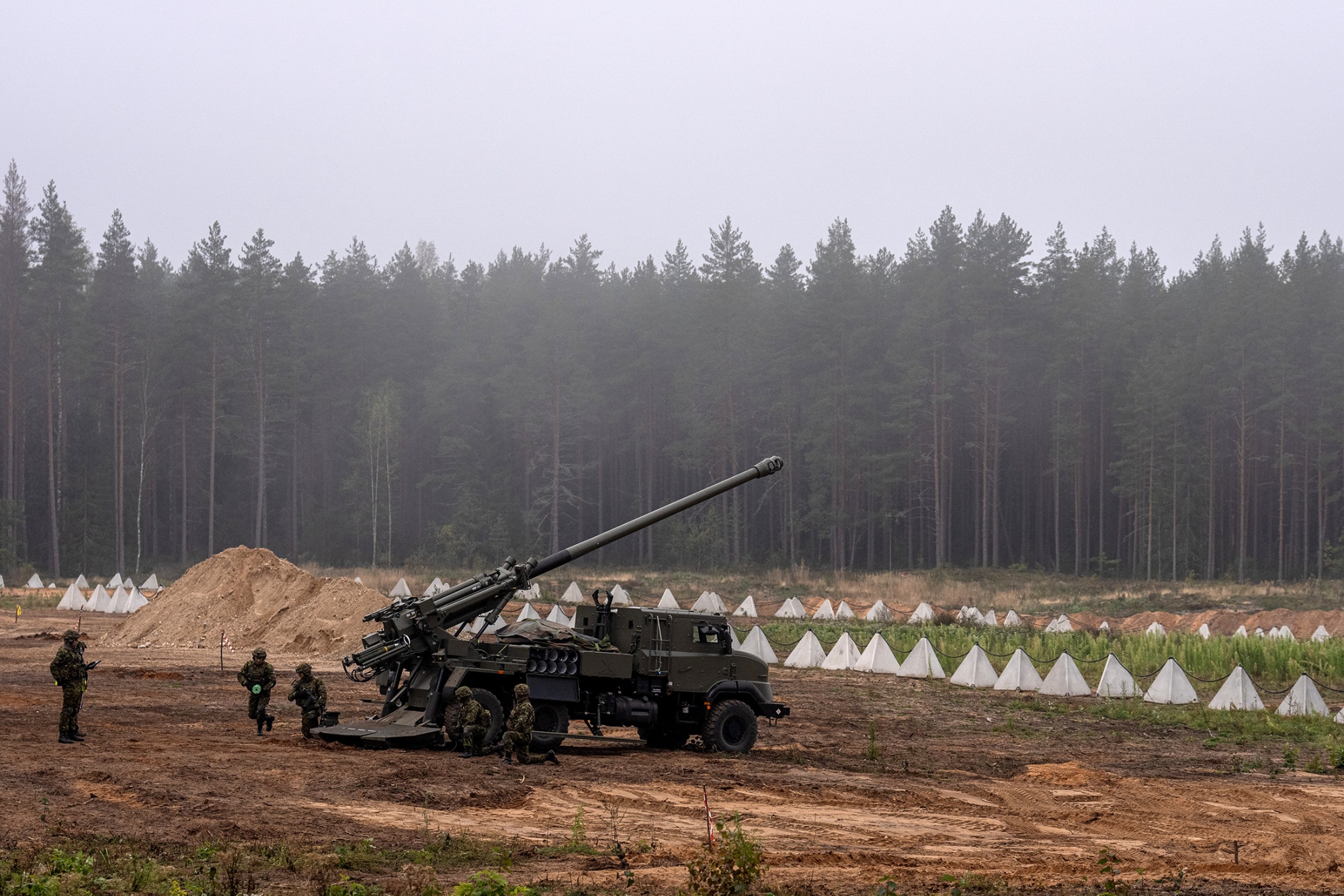 Reservists during an exercise in Voru, Estonia, in October. Photographer: Carl Court/Getty Images Since 2022, the year Russia launched its full-scale invasion of Ukraine, Estonia has hiked taxes, cut public spending and increased borrowing to triple its defense budget from €776 million to €2.4 billion in 2026. Military spending next year will translate to more than 5% of the nation's GDP, the highest in Europe. Though widely seen as necessary, the spending is also a burden. It comes in the wake of a multi-year recession, and as Estonia struggles with the euro area's highest rate of inflation. Like the Brussels Edition?Don't keep it to yourself. Colleagues and friends can sign up here. We're improving your newsletter experience and we'd love your feedback. If something looks off, help us fine-tune your experience by reporting it here. Follow us
You received this message because you are subscribed to Bloomberg's Brussels Edition newsletter. If a friend forwarded you this message, sign up here to get it in your inbox.
|
Tuesday, December 2, 2025
Brussels Edition: Securing critical materials





Subscribe to:
Post Comments (Atom)
Memory chip ETFs shake up South Korean investors
The rush into ETFs tied to Samsung and SK Hynix has boosted market volatility in South Korea ...
-
PLUS: Dogecoin scores first official ETP ...
-
Swaps, memes, homes, tokens. View in browser Unicorn bucket We have talked a fe...


No comments:
Post a Comment