| Read in browser | ||||||||||||||
 Welcome to Balance of Power, bringing you the latest in global politics. If you haven't yet, sign up here. Israeli Prime Minister Benjamin Netanyahu presented his request for a presidential pardon from his graft indictments as a high-minded bid for national healing: The trial has dragged on for years, the country faces existential choices, let's move on. But the language of his request shows why Israeli society is so divided over this case — and why ending it isn't likely to bridge the gap, especially going into an election year. On one side is the prosecution's claims that he accepted gifts inappropriately and sought fawning coverage from media moguls in exchange for regulatory shifts. On the other is the argument that the cases are without merit and emerge from a deep state seeking to remove him when it can't win at the ballot box. It resembles the dynamic in the cases against US President Donald Trump — who's urged that Netanyahu be cleared preemptively. 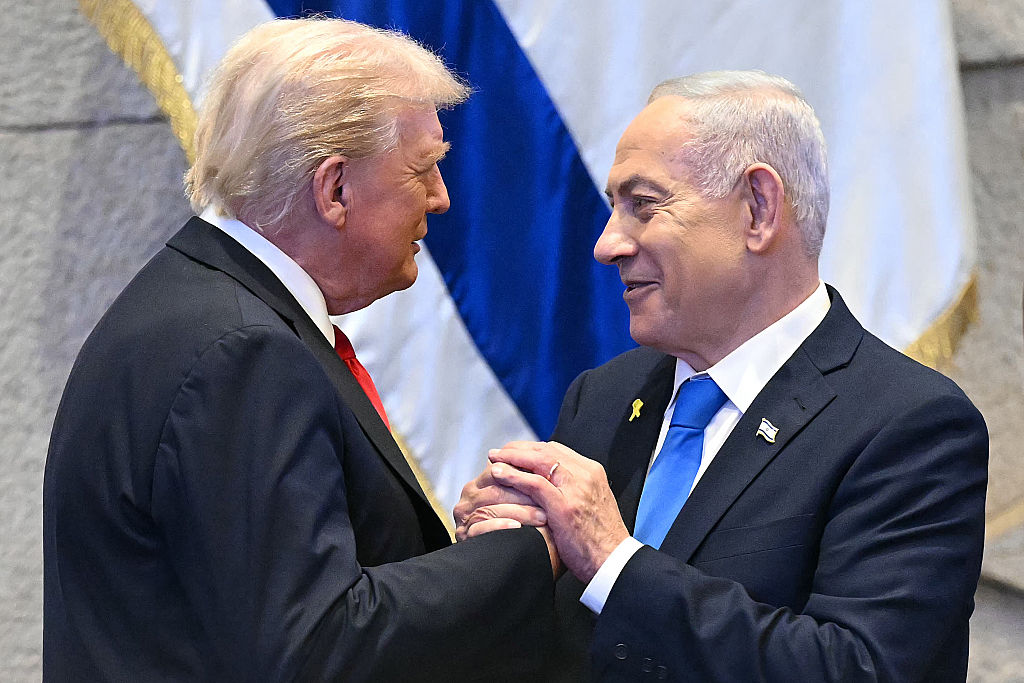 Trump and Netanyahu in Jerusalem on Oct. 13. Photographer: Saul Loeb/AFP/Getty Images The first thing everyone noticed in the prime minister's request, delivered on Sunday to President Isaac Herzog, is that it admits no guilt and seeks no pardon, properly defined. Its goal is the elimination of the charges and ending the trial on the grounds that they're baseless. Opposition leaders warned Herzog against granting a pardon, especially if not conditioned on Netanyahu's leaving public office and admitting wrongdoing. The prime minister's defenders say it's those who pressed the case rather than Netanyahu who need forgiving. "There isn't a confession because there isn't anything to confess," presenter Lital Shemesh wrote on the right-wing Channel 14 website. Herzog has used the largely ceremonial presidency to urge unity, and he'd love to be the bridge builder. Few see that as likely here, where middle ground seems unavailable. Netanyahu, who hopes to be reelected, has no interest in stepping down or admitting guilt. His opponents are focused solely on those two things. It's hard to see this ending amicably. — Ethan Bronner  An anti-Netanyahu protest in Jerusalem on March 19. Photographer: Menahem Kahana/AFP/Getty Images Global Must ReadsUS envoy Steve Witkoff is due to hold talks today with President Vladimir Putin on the latest proposals for ending Russia's war on Ukraine. Putin announced yesterday that Russian troops had taken the key Ukrainian city of Pokrovsk, a loss denied by Ukraine, while Turkish authorities said a Russia-flagged tanker carrying sunflower oil came under attack in the Black Sea, the fourth such incident in a week.  The fire-damaged Kairos tanker in the Black Sea. Source: Turkish Ministry of Transport and Infrastructure Bulgarian protesters clashed with police in the biggest rally in more than a decade, and only a month before the Balkan country is set to join the euro area. Tens of thousands gathered in Sofia yesterday against the government's 2026 budget plans backed by the ruling coalition, after political tensions rose in recent months. Taiwanese Foreign Minister Lin Chia-lung told us that heightened tensions between Beijing and Tokyo stoked by Japanese Prime Minister Sanae Takaichi's recent comments about Taiwan could persist for a year. In an effort to calm the situation, a coalition of Japanese lawmakers promoting friendship with China met with Chinese Ambassador Wu Jianghao in Tokyo, according to local media. The White House denied that Defense Secretary Pete Hegseth had given an order to kill everyone on an alleged drug-running boat off South America in September, rebutting a report that had led to allegations of possible war crimes. There were two strikes on the vessel, but the actions were lawful amid a deadly opioid crisis in the US, according to spokeswoman Karoline Leavitt, who said the order for the second strike came from a US Navy Admiral and not Hegseth. 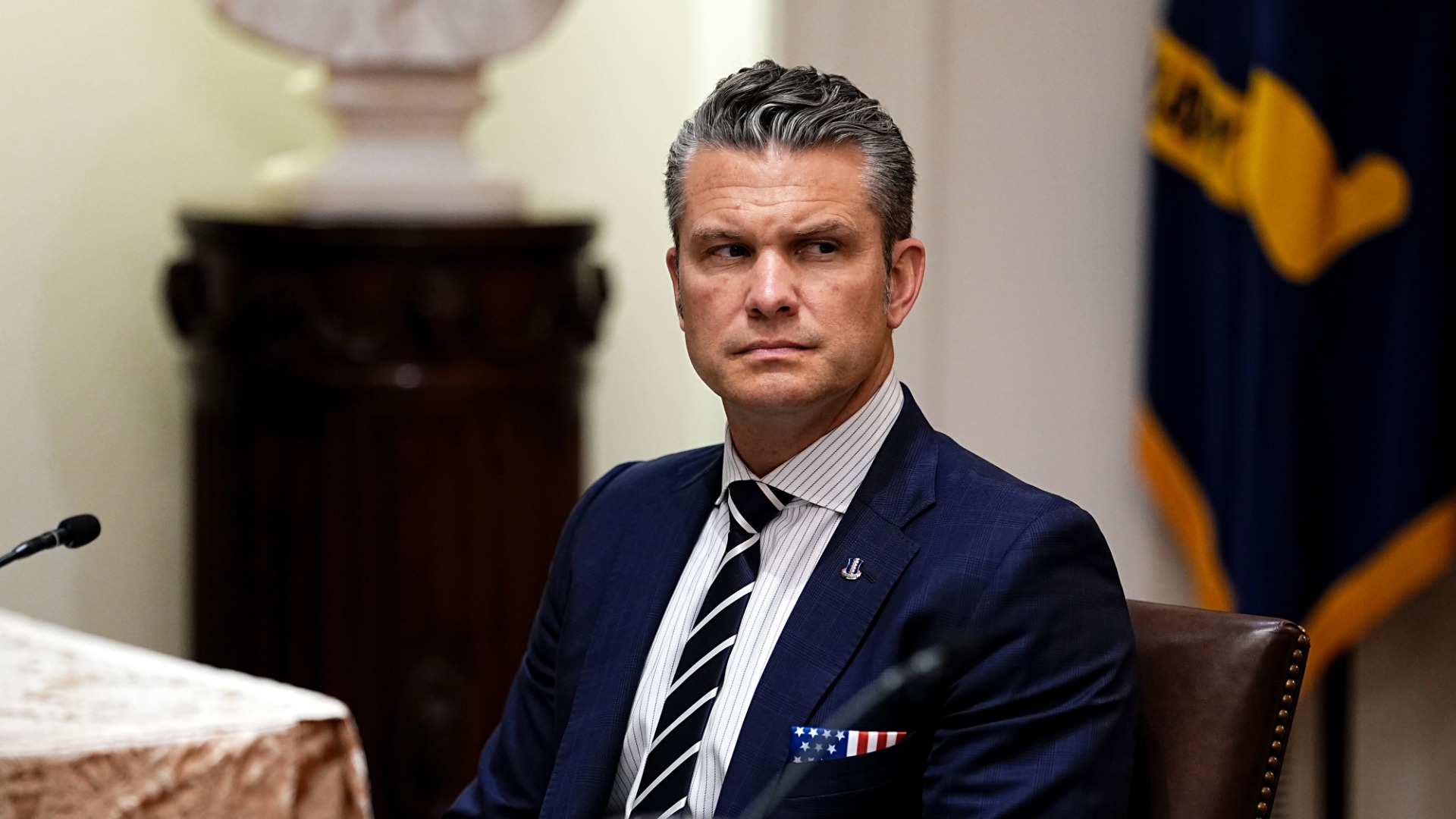 WATCH: The White House defends Hegseth. Honduras authorities are starting a vote-by-vote tally after a candidate backed by Trump and a former sportscaster the US leader attacked as a "borderline communist" tied in Sunday's presidential election. Trump stunned Hondurans with his intervention in favor of Nasry Asfura and his decision to pardon former President Juan Orlando Hernández, who was sentenced to 45 years in prison after being convicted in a US court for cocaine trafficking. Nigeria's defense minister quit as President Bola Tinubu prepares to unveil a plan to deal with a security emergency gripping the West African country. China will impose a value-added tax on contraceptive drugs and devices — including condoms — for the first time in three decades in a new bid to reverse plunging birth rates that threaten to further slow its economy. The UK's Office for Budget Responsibility Chairman Richard Hughes quit after taking responsibility for the premature publication of the contents of Chancellor of the Exchequer Rachel Reeves' annual budget last week. Anecdotal evidence suggests that US defense companies are proving more adept than European rivals in securing access to the rare-earth minerals controlled by China that are vital for high-tech weapons. Sign up for the Washington Edition newsletter for news from the US capital and watch Balance of Power at 1 and 5 p.m. ET weekdays on Bloomberg Television. Chart of the Day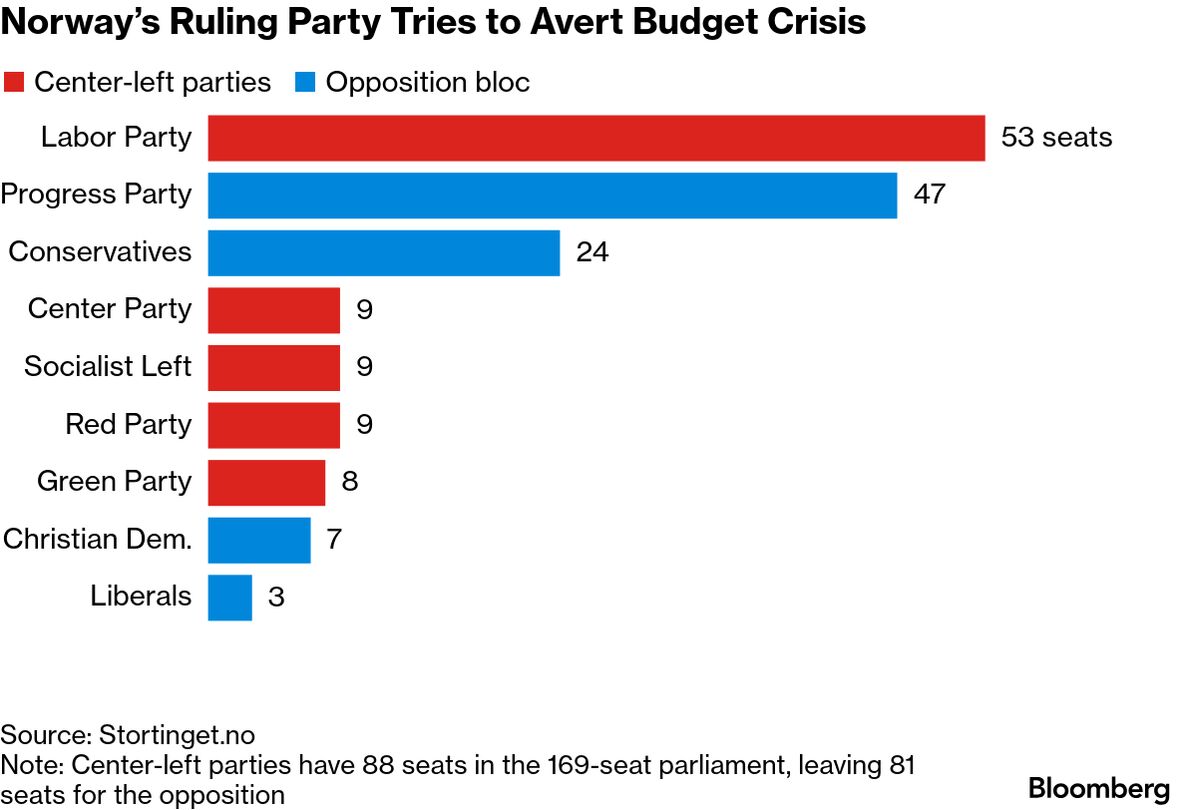 Norway's Labor cabinet is racing to avert a full-blown government crisis after budget talks failed to secure enough backing ahead of a crucial vote due on Friday. Prime Minister Jonas Gahr Støre will need to regain the support of two leftist parties that dropped out of weekend negotiations or he will have to test their faith in his minority government in a confidence ballot that would be the country's first since 2001. And FinallyThe US Army is pitting ideas born in Washington against battlefield realities at drone boot camps, with the outcomes shaping how future wars will be fought. Exercises at the National Training Center in California and the Joint Pacific Multinational Readiness Center in Hawaii sent newly reorganized units of soldiers, artillery and armor onto training ranges equipped with cutting-edge drones and the means to defeat them. The learning curve is steep as the Army transforms itself with new technology, while making even its heaviest units lighter and more mobile. 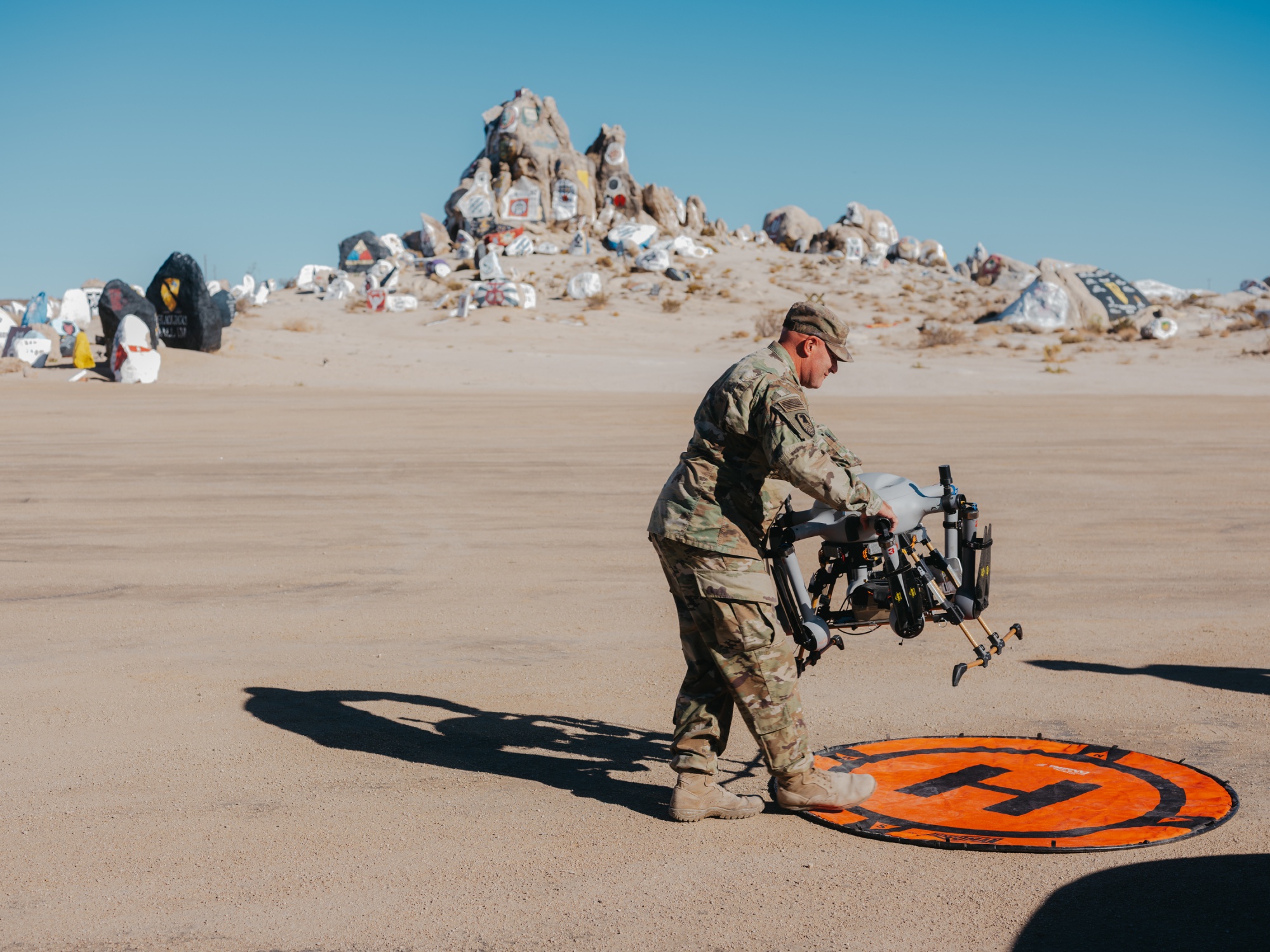 A drone demonstration at the National Training Center in Fort Irwin, California. Photographer: Christopher Lee/Bloomberg More from Bloomberg
We're improving your newsletter experience and we'd love your feedback. If something looks off, help us by reporting it here. Follow us
You received this message because you are subscribed to Bloomberg's Balance of Power newsletter. If a friend forwarded you this message, sign up here to get it in your inbox.
|
Tuesday, December 2, 2025
A divided Israel





Subscribe to:
Post Comments (Atom)
Where to Put $100 Before Trump's New Tech Law Rolls Out
Jeff Brown was consulted by Congress on this - here's what he says comes next ...

-
PLUS: Dogecoin scores first official ETP ...
-
Swaps, memes, homes, tokens. View in browser Unicorn bucket We have talked a fe...


No comments:
Post a Comment