| A logo redesign by Cracker Barrel got plenty of people talking, President Trump included. Bloomberg Businessweek senior reporter Amanda Mull explains why marketing moves are taking up so much air these days. Plus: Tennis gets upstaged at the US Open, Trump aims to restrict Chinese journalists, and consumer sentiment declines in the US. If this email was forwarded to you, click here to sign up. Programing note: Businessweek Daily will be off for Labor Day. See you on Tuesday, Sept. 2. On Tuesday, President Donald Trump weighed in on an issue that had been roiling American conservatives for days. No, not Federal Reserve independence. Not his plans to send soldiers onto the streets of more American cities, either. "Cracker Barrel should go back to the old logo, admit a mistake based on customer response (the ultimate Poll) and manage the company better than ever before," he posted on Truth Social. Specifically, Trump was imploring Cracker Barrel Old Country Store Inc. to put the overalls-wearing man and his barrel back into the restaurant chain's primary logo, which was recently simplified as part of what's known as a brand refresh. Conservative influencers whipped up a controversy with vague accusations that the logo redesign was "woke," and it didn't take long for the president to get involved. Although Cracker Barrel had already promised the image of "Uncle Herschel" would still appear in many places, including on menus and highway signage, its executives had fully capitulated by Tuesday evening, announcing the new logo would be abandoned. In the process, Cracker Barrel became a meme stock, dipping briefly under the pressure of ginned-up outrage and then buoyed by compliance with Trump's wishes. It would be hard to argue that the Tennessee-based chain, which has locations in 43 states but is best known as a pit stop on southern road trips (the location in Valdosta, Georgia, served as a midway point on many of my own childhood visits to Walt Disney World from suburban Atlanta), is actually woke in whatever definition of the term you prefer. Even the conservative provocateur Christopher Rufo publicly dismissed the idea before eventually jumping on the bandwagon as the debate gained traction on social media. But Cracker Barrel and its logo are largely immaterial to this whole mess, as is the fact that mere days prior, many of the same conservative influencers were calling their liberal counterparts crazy for their ire at American Eagle Outfitters' putatively eugenic Sydney Sweeney jeans campaign. (Trump also weighed in on that one.) It's all just chum for the outrage waters, and people who make a living stoking conflict online need as much chum as they can get their hands on. Not all of the outrage bait that influencers try works, of course, but it's telling that marketing ploys and ad campaigns so often prove effective at stirring up their audiences. It's not a coincidence: Consumer businesses have spent decades worming their way into more and more parts of American life, encouraging people to use their products and logos to express almost every aspect of their identity. As more Americans have lost faith in the country's institutions, those expressions of consumer agency have seemingly become even more important to people, thus raising the emotional stakes of how those brands present themselves to the public. It also makes us all more attuned to the idea that marketing is a product in and of itself, which businesses produce for consumption in its own right. 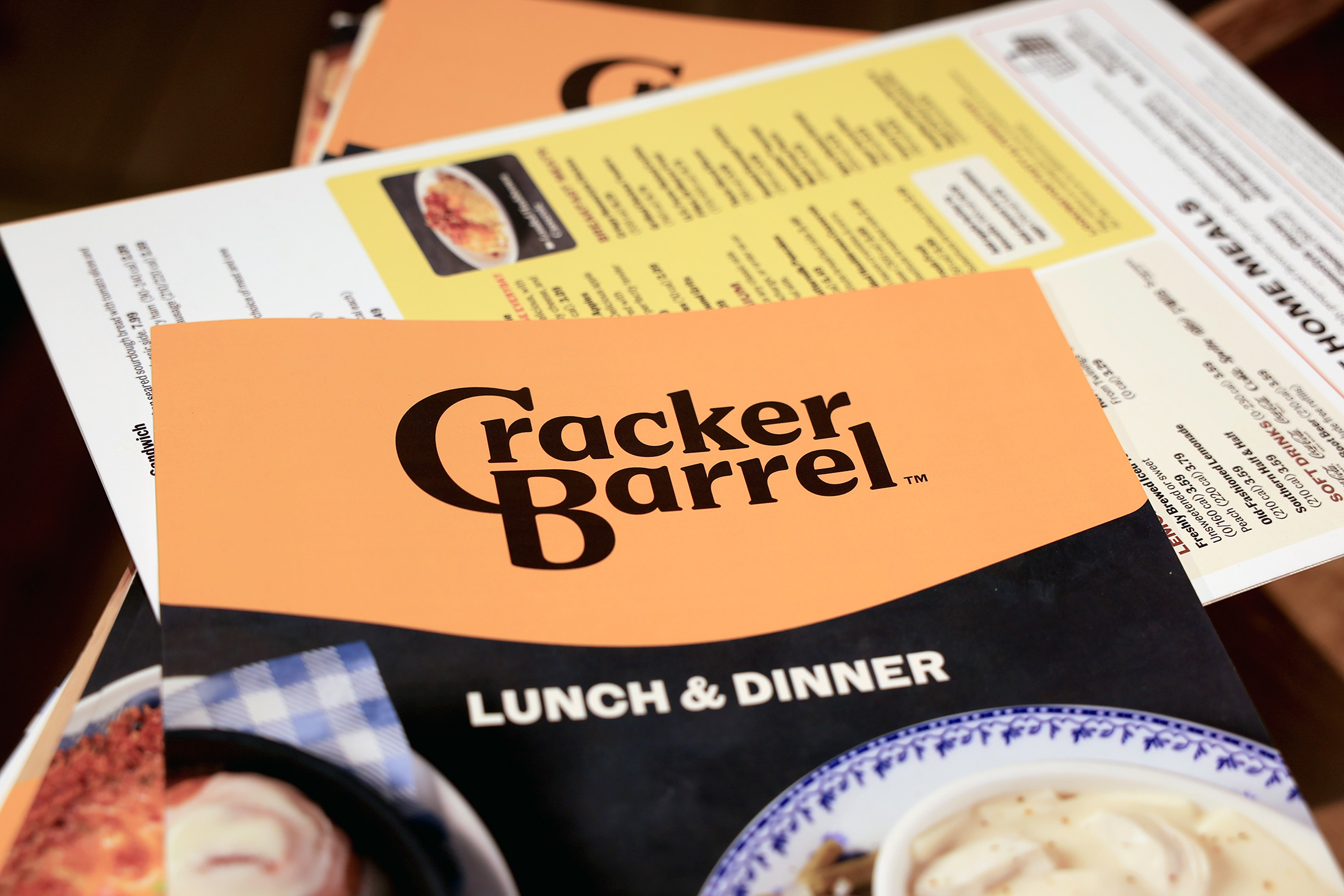 Cracker Barrel quickly abandoned its new, simplified logo. Photographer: Joe Raedle/Getty Images Trying to push your business into an ever-expanding role in American culture is all fun and games until someone starts a culture war. Then you either have to pick sides or try to occupy whatever neutral territory remains. And, as is the case with the Cracker Barrel redesign, it's not always going to be clear what will be taken as political before your studied effort in neutrality is out there bouncing around the internet. Politics don't have to be coherent for their effects to be real. |








No comments:
Post a Comment