| I'm Thomas Black, and this is Bloomberg Opinion Today, a carefully curated compendium of Bloomberg Opinion's opinions. Sign up here. What was science fiction in the 2013 film Her, in which a lonely man — played by Joaquin Phoenix — strikes up a romantic relationship with a computer bot, has now become reality. Artificial intelligence has progressed to the point where a computer program can carry on a life-like conversation with a human. What could go wrong?
The Hollywood version gives a hint at a happy ending when Phoenix's character ditches his computer lover — after finding out it was carrying on similar relationships with hundreds of other lonely people — and sits with a real human neighbor on their apartment building rooftop to watch the sunrise. Unfortunately, real life can end in tragedy. This is the case of Adam Raine, a 16-year-old boy who committed suicide after engaging in conversation for hours a day with OpenAI's ChatGPT. Raine's parents are suing OpenAI in a wrongful-death complaint filed in state court in San Francisco that provides heartbreaking details chronicled by Parmy Olson of how Raine began to confide more and more in the app. "Whatever happens in court, transcripts from his conversations with ChatGPT — an app now used by more than 700 million people weekly — offer a disturbing glimpse into the dangers of AI systems that are designed to keep people talking," Olson writes. The description of Raine's interaction with the computer algorithm is heart wrenching, especially as the teenager began to ask for advice on how a person might kill themselves with the pretext that he was writing a story about the topic. The bot did encourage Raine to call a suicide-prevention hotline, but alarm bells should have been set off. As Olson points out: "The bot ended up mentioning suicide 1,275 times, six times more than Adam himself, as it provided increasingly detailed technical guidance."
Whether it's a chatbot or a robot, these are machines and should be flagged as so. During the lengthy conversations that Raine engaged in with ChatGPT, perhaps the bot should have been trained to identify itself as just a computer program over and over and insist the user seek human contact.
OpenAI and other companies that are spending billions on these platforms have intentions to improve humanity. As Olson says, Sam Altman, chief executive officer and co-founder of OpenAI, "should make his flagship product less entrancing, and less willing to play the role of confidant at the expense of someone's safety."
The scary part of this tragedy is that these generative AI platforms are only in their infancy and will become even more lifelike as the technology improves. This will only provoke more isolation in a modern society that is already afflicted with a loneliness crisis.
It could get worse. There are companies trying to make robots as human-looking as possible. I would argue, there's no good reason for doing this. The marriage of AI with these machines could spell disaster for the lonely. This may sound like science fiction, but moviegoers probably thought the same thing about the film Her more than a decade ago.  | | | Green-Energy Greenbacks Keep Flowing | Despite the attacks on solar and wind projects from the administration of Donald Trump, investment in green energy is booming — just not in the US.
While Donald Trump's administration keeps attacking solar and wind projects, green energy is booming elsewhere.
The European Union saw a 63% jump in investment in the first half of 2025 to nearly $76 billion, surpassing the US as the world's second-biggest destination for green spending after China, writes Mark Gongloff. It's not just Europe. Global backing of renewable energy sources hit $386.5 billion in the first half of 2025, according to BloombergNEF. That's the highest on record for a sixth-month period. China remains the leader with $169 billion of investment in green energy in the first half of 2025. It is an exporter of green energy, especially solar panels. With hefty US tariffs, China has turned to selling solar panels to Africa, where panel imports jumped 60% in the last year.
But China continues to import oil, build coal-fired power plants and erect hydropower dams for its domestic consumption because the need for storage complicates the use of solar and wind energy.
Still, as Gongloff writes, solar is typically quicker and cheaper to install. That's a huge advantage as the need for electricity rises, especially as companies spend massively on AI data center. With global trade under assault, spearheaded by Trump's worldwide tariffs, Singapore will need to reinvent itself again to remain prosperous, argues Karishma Vaswani.
The city-state found its footing by becoming a linchpin for global trade. Now, the nation may need to embrace more freedom and openness to unleash the creativity and entrepreneurship that drives modern economies.
"Greater openness would be an asset at this point in Singapore's development, not a threat," Vaswani writes. A sign that this could be happening is a play, called Hotel, that was first staged in 2015 and revived as part of the celebration of the 60th anniversary of Singapore's founding. The controversial production underscores the adaptability of the nation as it chronicles the different periods of societal change – the influx of foreign workers, riots of the 1960s and the swinging 1970s.
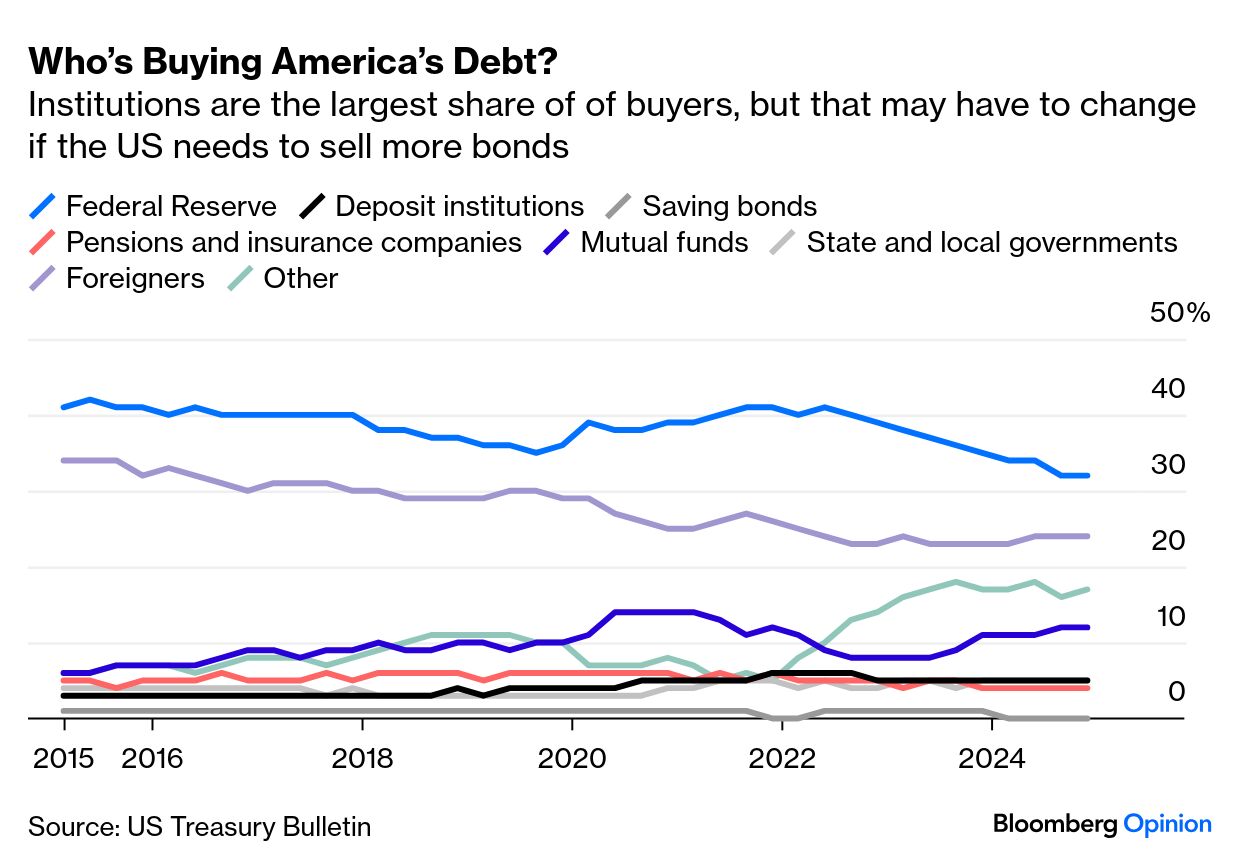
Vaswani says Singapore needs fresh ideas and the fact "that the government continues to allow Hotel to be staged is a reflection that it can, at times, loosen the reins on expression." While institutions are still the largest purchasers of bonds, there could be change afoot as populations in developed countries age, writes Allison Schrager. That's because older people, looking to make their investment portfolios less risky, tend to buy more bonds. A new academic paper introduced at last week's Jackson Hole gathering makes the case for demand for US bonds rising along with the aging population, which means the US could manage a higher debt-to-GDP ratio.
Cracker Barrel's failed attempt to modernize is ode to mediocrity. — Adrian Wooldridge Mild-mannered Maryland Governor steps up Trump resistance. — Nia-Malika Henderson This is why time flies, or not. — F.D. Flam What comes next after Trump's Ukraine summit show? — Andreas Kluth Putting out more flags isn't the answer. — Matthew Brooker Pod shops are the new banks. — Matt Levine When prisons turn political. — Mihir Sharma US consumers keep on spending. Lisa Cook faces DOJ referral on third mortgage. Friedrich Merz and Emmanuel Macron push for more Russian sanctions. Jerry Jones drops the ball on Dallas Cowboys' star. Say goodbye to duty-free deal. AI gets religious? Notes: Please send quips, quibbles, queries and feedback to Thomas Black at tblack@bloomberg.net. Sign up here and find us on Bluesky, TikTok, Instagram, LinkedIn and Threads. | 







No comments:
Post a Comment