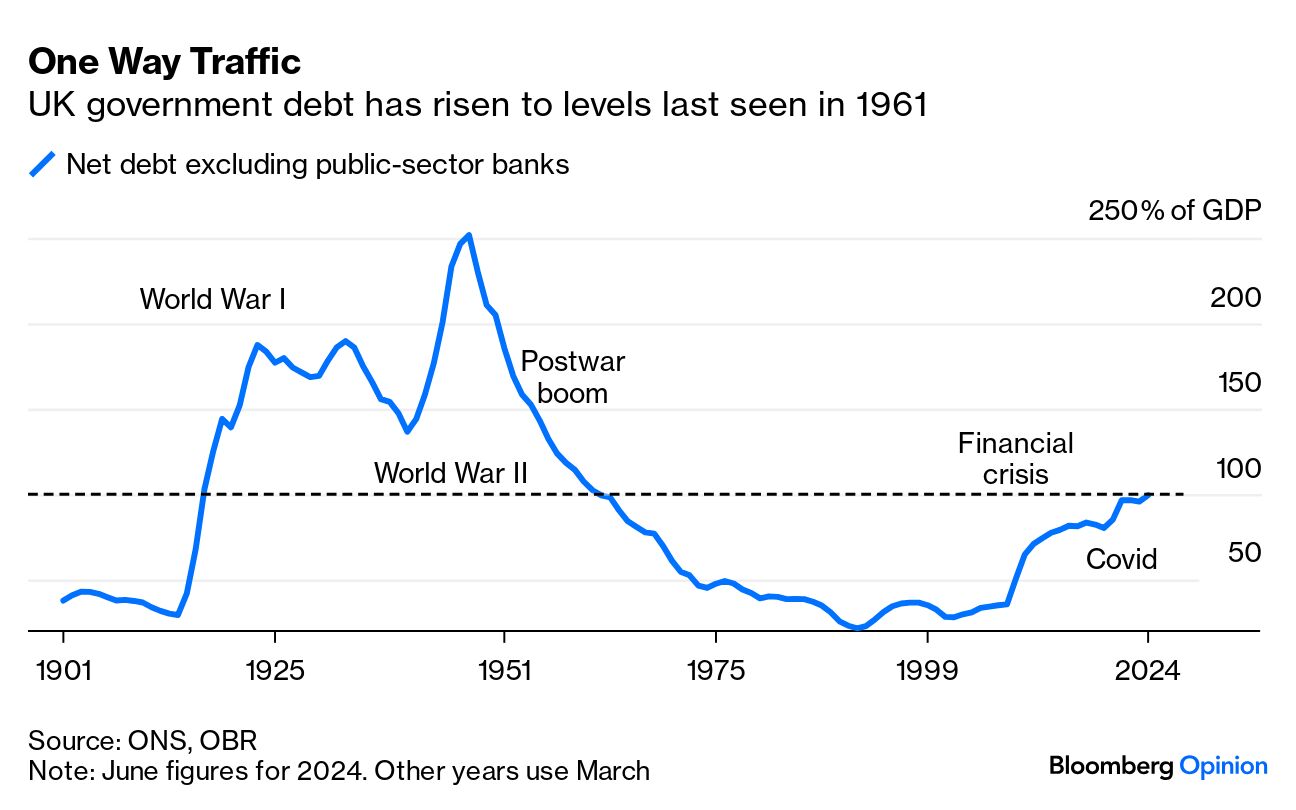
| There's a startling fact in Marcus Ashworth's column today: a "skittish and apprehensive bond market" could undermine the new government's entire agenda. Here's Marcus: "Investors are charging the UK under the Labour government more to borrow than they demand from the US, a relatively rare historical anomaly." That's quite a way to mark this week's two-year anniversary of Liz Truss becoming prime minister, when uncosted spending plans, U-turns, resignations, lettuces and then a bond market smash up put September 2022 in the history books. But far from being behind us, today Marcus makes the case for why we need to start looking at gilts again. "It's evident that gilts are struggling from much wider fears about how much extra issuance is coming from a new Labour administration, which is painting as bleak a picture as possible about the state of public finances," he writes. "Experience suggests it won't just be personal taxes that are raised but increased borrowing from the wholesale market to cover its spending plans." A repeat of the Truss turmoil is "unlikely," he thinks, but we got an inkling that the new government is alive to the gyrations of the markets when Commons Leader Lucy Powell said yesterday the government had had to cut winter fuel payments — its most controversial decision yet — because they feared a "run on the pound." Yet that belief is not universal. Philip Aldrick and Greg Ritchie today write about internal Labour opposition to both the move and the claim, quoting a tweet pointing out the £1.4 billion saved from axing winter fuel payments is from a budget of £1,200 billion – hardly credibility-critical. The government is also getting grumblings from companies over putative changes to employment law and higher taxes. The Readout's Julian Harris writes about an Institute of Directors survey of 715 company bosses, which finds that a July post-election score of +7 (a three-year high), has now fallen to -12 as worries about tax rises loom. It all adds to the view that the pessimistic vibes of Keir Starmer and his team are becoming counterproductive. Starmer's aides are briefing that they know exactly what they are doing: a period of miserableness early in the parliament is needed to get the public's permission to do the difficult things that will eventually yield positive results. This weekend's local election results in Germany – which have given the Olaf Scholz government, still only in its first term, a bloody nose — is a reminder of how little time governments actually have. Want this in your inbox each weekday? You can sign up here. | 








No comments:
Post a Comment