| Thanks for reading Hyperdrive, Bloomberg's newsletter on the future of the auto world. Please note: Our email domain is changing, so you'll now receive Hyperdrive from noreply@news.bloomberg.com. Scroll down for details on ensuring this newsletter keeps reaching your inbox. Japan's carmakers have solidified a combine-and-compete strategy for an automotive age defined by batteries and software, with three manufacturers joining forces to complement a separate Toyota-led coalition. Honda and Nissan agreed this week to build upon a preliminary deal first reached in March, offering more details on how they plan to work together and also adding Mitsubishi Motors to the mix. While the companies haven't yet discussed a capital alliance, forming one is a possibility, Honda CEO Toshihiro Mibe said. The partnership will span joint work on software development, batteries and other electric-vehicle components, as well as EV charging and energy services, the three companies said. Their cozying up to one another follows Toyota acquiring stakes in Subaru, Suzuki and Mazda, and helping them navigate a fraught era for legacy car companies. 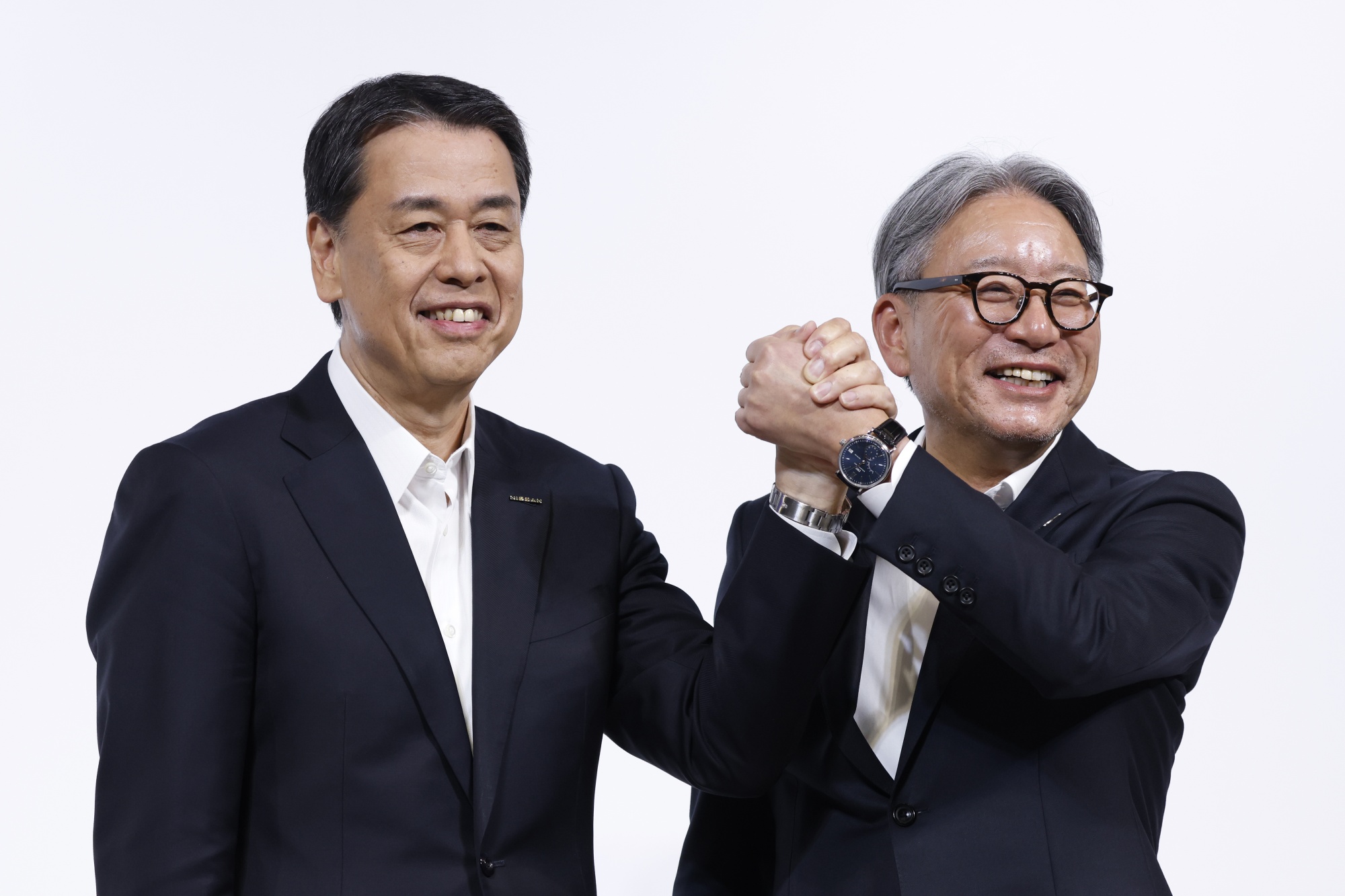 Nissan CEO Makoto Uchida, left, and Honda CEO Toshihiro Mibe at a joint news conference Thursday in Tokyo. Photographer: Kiyoshi Ota/Bloomberg Whereas Toyota has tied up with its domestic peers from a position of strength — it's been the world's best-selling automaker for four years running — Honda, Nissan and Mitsubishi each are much smaller players. Their coming together is seen as a move by Japan's government to fortify its auto industry in the wake of China having emerged as the world's new No. 1 car exporter. "This is coordinated by the government to build a competitive automaking industry," said James Hong, analyst at Macquarie Securities, adding that most automakers in Japan are too small to be able to invest in EVs individually. "It feels like a politically driven alliance." While the US has had the Big Three — General Motors, Ford and Chrysler, now owned by Stellantis — and Germany similarly has a trio in Volkswagen Group, BMW and Mercedes-Benz, Japan has a much bigger crop of carmakers manufacturing vehicles across the globe. Honda, Nissan and Mitsubishi combined sold about 4 million vehicles globally in the first six months of the year, well shy of the 5.2 million that Toyota sold on its own. While the three touted prospects for generating synergies by working together, Nissan CEO Makoto Uchida also acknowledged the potential for clashes. "Although we have different cultures, we share the same challenges," Uchida said at a news conference with Mibe. 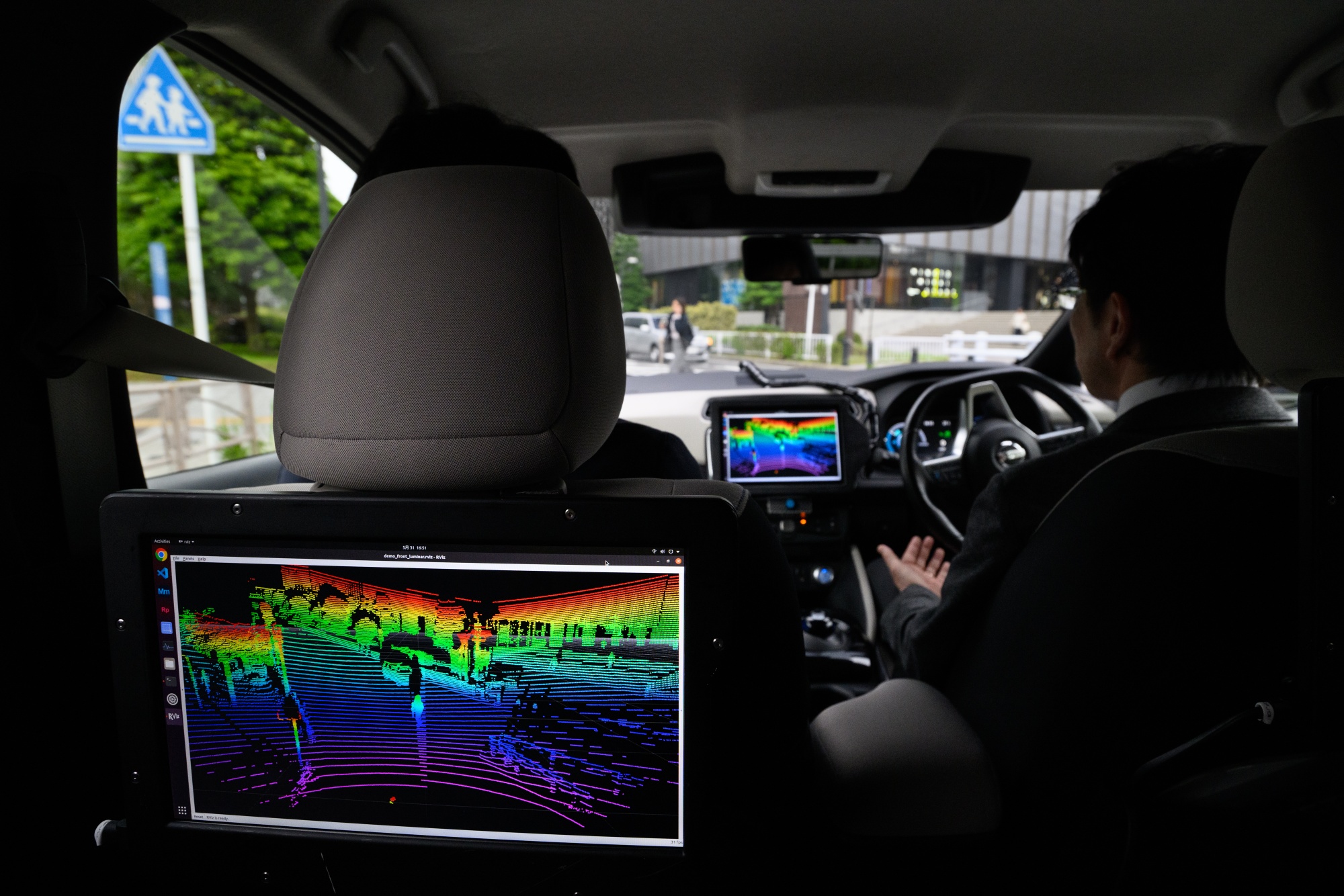 Monitors inside a Nissan Leaf electric vehicle equipped with autonomous-driving technology. Photographer: Akio Kon/Bloomberg Nissan, Honda and Mitsubishi have been behind the curve in moving to what automakers increasingly refer to as software-defined vehicles, where code is as crucial as combustion engines were in the past. The Japanese government set a target last month for its companies to account for 30% of the software-defined vehicle market in 2030. In addition to working together in software fields including automated driving, connectivity and artificial intelligence, the automakers may share battery specifications and supply. Honda and Nissan also are looking at re-badging one other's cars, with both combustion-engine and battery-powered vehicles under consideration. The two didn't offer specifics on which models they might share or outline how they could complement one another across particular regions. Honda has announced plans to invest ¥10 trillion on electrification this decade, while Nissan brings to the table the knowhow of having introduced the first mass-market electric car of the modern age — the Leaf — in 2010. Mitsubishi Motors excels in plug-in hybrid electric vehicles and has a strong position in Southeast Asia. 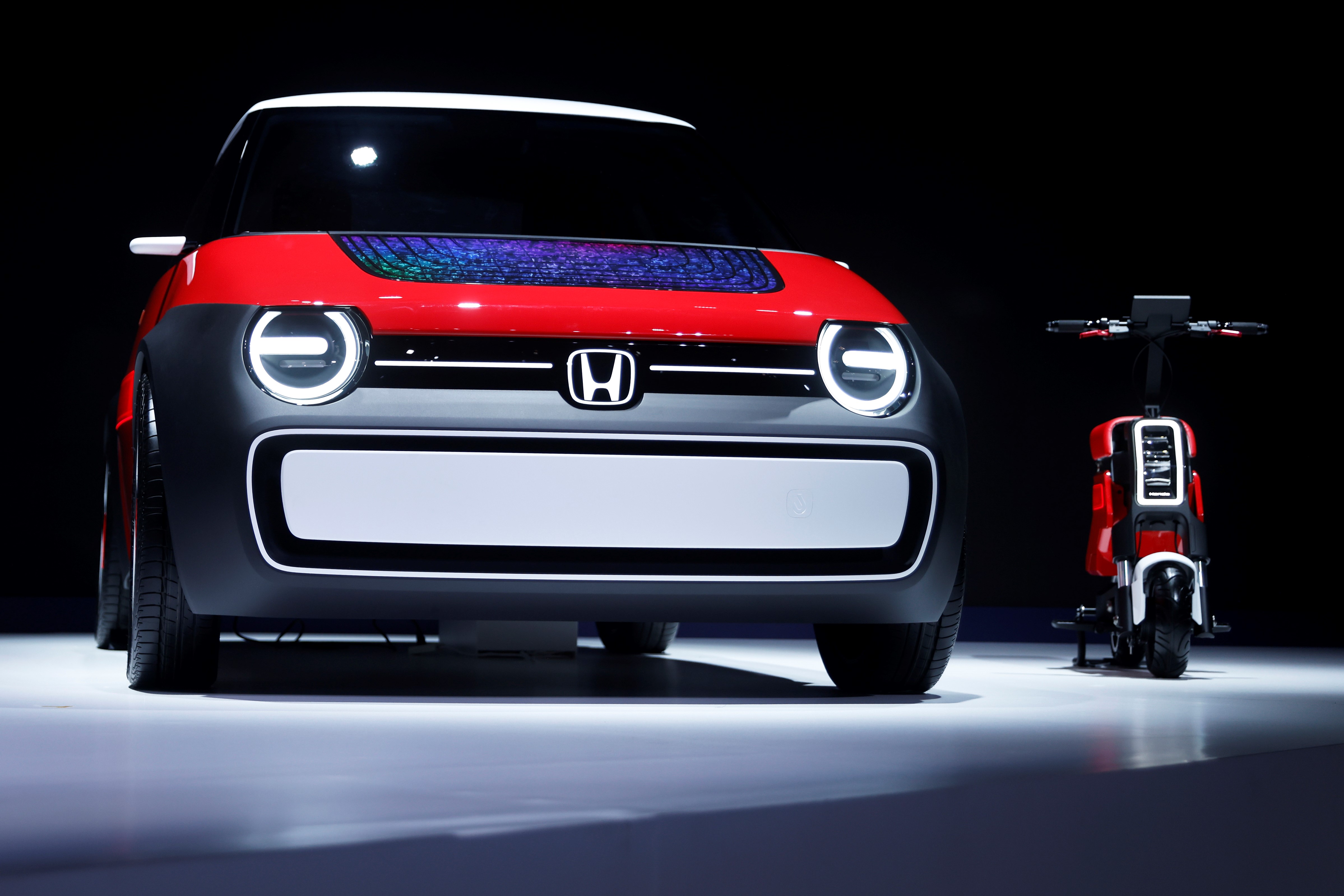 Honda's Sustaina-C and Pocket concepts at the Japan Mobility Show last year in Tokyo. Photographer: Kiyoshi Ota/Bloomberg For Nissan, the deal with Honda marks further distancing from the company's alliance with Renault. While the French manufacturer saved Nissan more than two decades ago with a cash injection and by bringing in former Chairman Carlos Ghosn, they're now in the process of equalizing their cross-shareholdings and unwinding aspects of their decades-long cooperation. Mitsubishi joined the alliance in 2016, when Nissan made an investment in the smaller carmaker. Nissan currently owns about a third of the company. The Honda-Nissan partnership will be on a more equal footing than what Nissan experienced with Renault, according to Seiji Sugiura, analyst at Tokai Tokyo Intelligence Laboratory. "Nissan couldn't resist whatever Renault said," Sugiura said. "They weren't really equal partners." Honda had been working with GM on electric powertrains and software, but called off plans to develop smaller EVs together last year. — By Supriya Singh 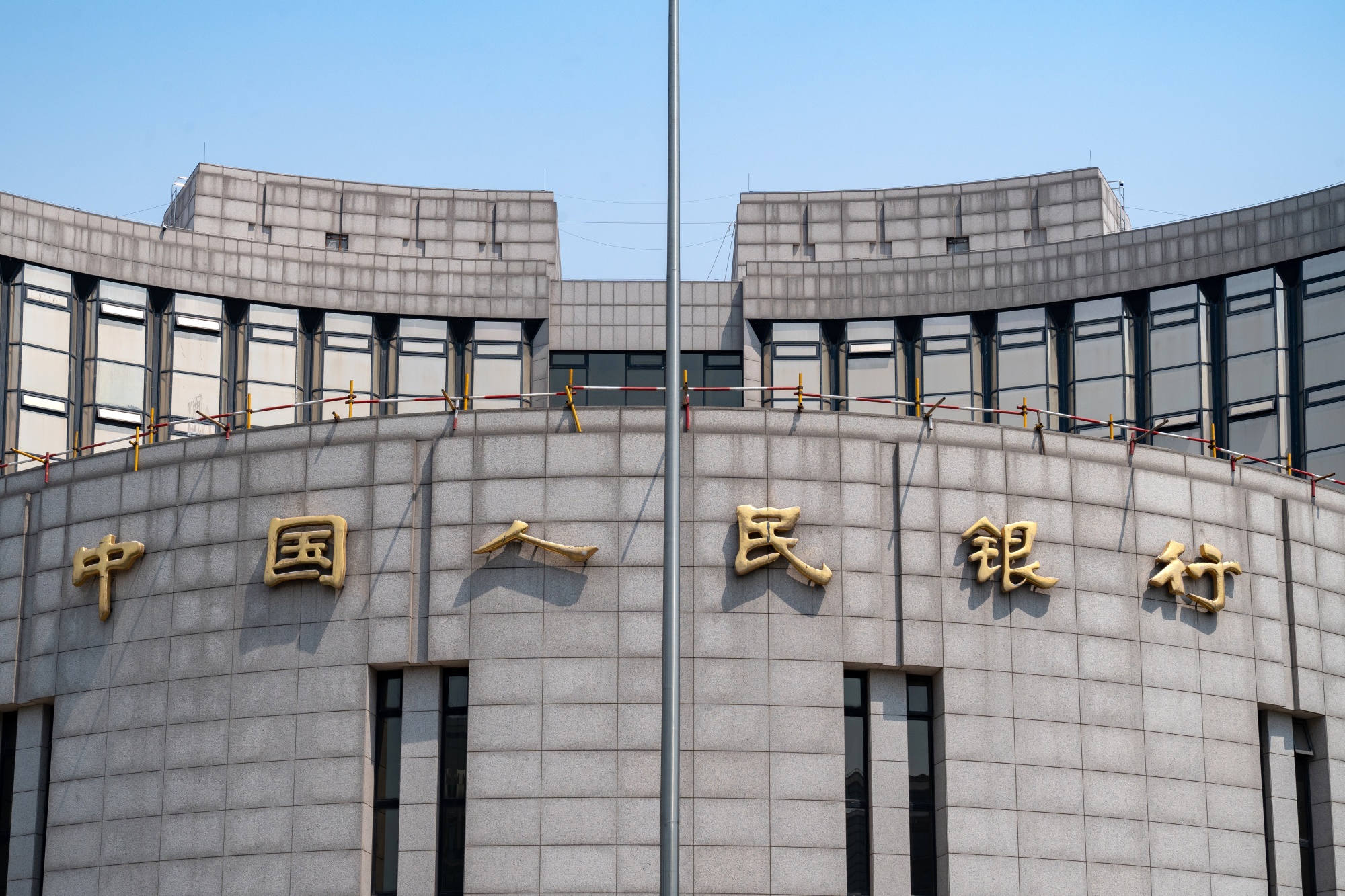 The People's Bank of China building in Beijing. Photographer: Andrea Verdelli/Bloomberg An influential Chinese central bank adviser delivered a rare critique of his nation's economic policy, urging the government to set a compulsory target for inflation and step up spending to address weak consumption. Authorities should change their strategy of "focusing on investment and neglecting consumption," said Huang Yiping, a member of the People's Bank of China's monetary policy committee, according to an article published this week that cited his earlier speech in May. Read More: | 







No comments:
Post a Comment