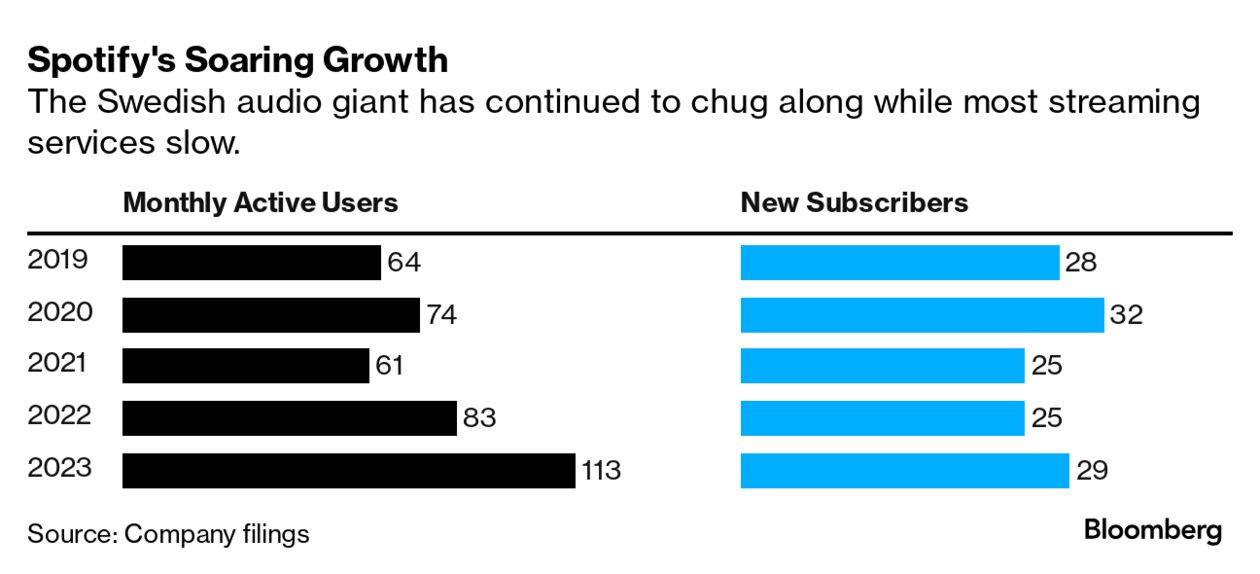
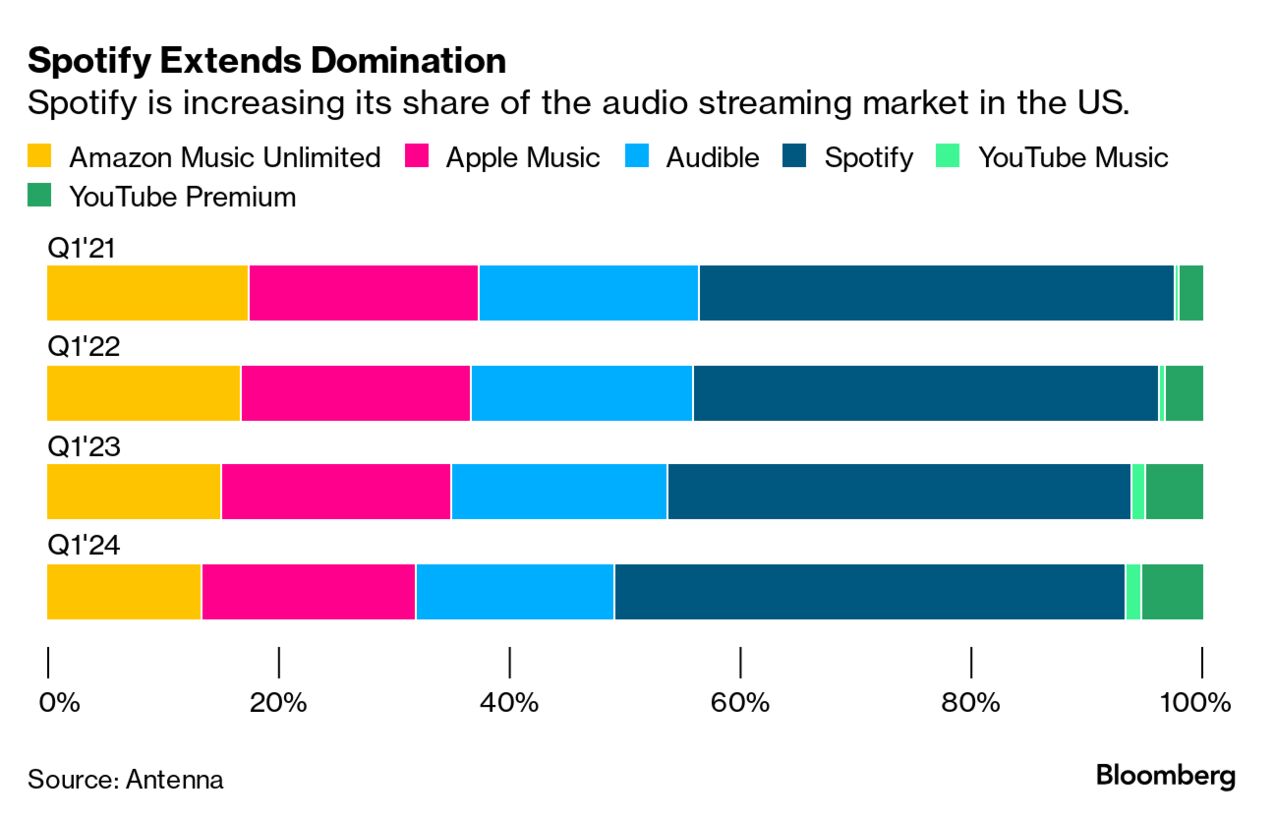
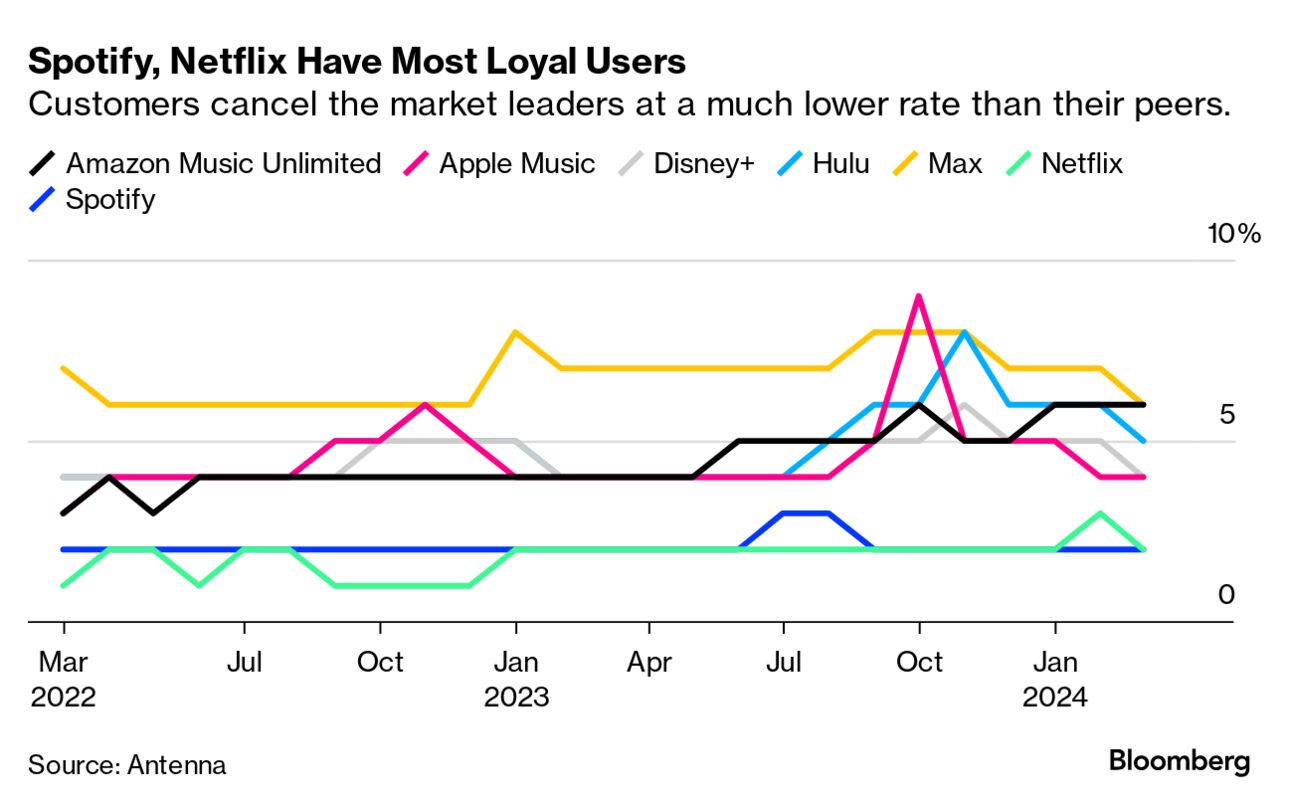
| Netflix is the biggest paid streaming company by just about every metric. Its biggest competitor, as measured by customer loyalty, isn't another video service. It's Spotify. Spotify listeners are the least likely to cancel among the major video or audio streaming services in the US, according to the research firm Antenna. Fewer than 1.5% of Spotify users did so during the month of April, and the company's monthly churn rate has hovered around 2% all year. (Netflix is also about 2%, so the rates are comparable.) There are two key reasons for Spotify's success — the first applies to all audio streaming services. Customers switch between audio services about one-fourth as often as they switch between video services. Spotify takes care of its subscribers in a way that Netflix can't by having just about every song they could ever want. While people will sign up for and cancel a video service based on what is available, most people only use one audio service. 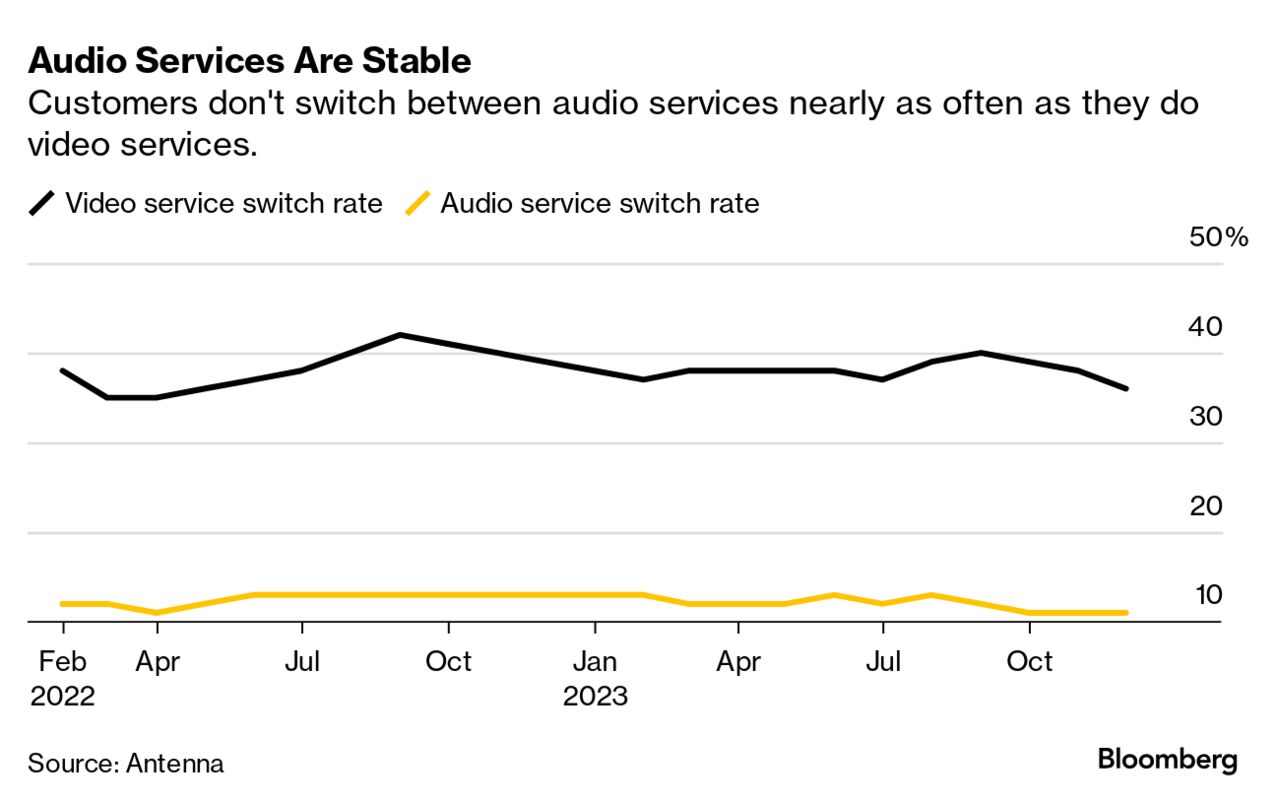 Source: Antenna You could see this as a negative. Audio services are undifferentiated. They all offer millions of songs sorted into albums and playlists. A lot of them also offer podcasts. The lack of differentiation is a big reason they've been so scared to raise prices. There is fear that if Spotify costs more than Apple Music, Amazon or YouTube, people will just switch. But that's not true if the music services all raise prices at more or less the same time – as they did last year. And it might not be true at all. Audio services are stickier than it would appear. Users have dozens or hundreds of playlists within their preferred service, creating very real switching costs. This is good news for the music industry, which wants the companies to raise prices. After a successful price increase last year, Spotify plans to do so again this year. "Services have done a good job creating downsides to switching," says Jonathan Carson, CEO of Antenna. Antenna measures paid accounts, which means its data differs a little from what many companies report. It doesn't include trial users or audio bundles. But not all audio services are created equal. Spotify's growth and cancellation rates are much, much better than its peers. At a time when overall subscriber growth is slowing across all streaming (video and audio), Spotify has defied gravity. The company added 113 million users last year, including 29 million paying subscribers. That was its best year of user growth and second-best year of subscriber growth. While Spotify is adding lots of users to its free tier in markets across Asia and the Middle East, its paid tier is growing at about the same pace it has for the last four years. That's still pretty remarkable when you consider its competition: Spotify is taking share from Apple and Amazon in the US. This gets back to an underappreciated advantage for Spotify. Amazon and Apple are less focused on audio than Spotify. That's not to say they don't care at all. But audio is a tiny contributor to those tech giants, and they just don't invest as much in time or resources. They use audio to reinforce their broader ecosystems. For Apple, that's devices. For Amazon, it's shopping. Audio is Spotify's entire business, and the company continues to increase its advantage with customers. The same logic applies in video, by the way, where Netflix is the clear leader. Spotify and Netflix both had first-mover advantage, and, after a brief moment of concern about competition, they are now extending their leads. (Though, unlike Spotify, Netflix faces competition from other companies purely focused on entertainment.) Consider the chart below, where you can see that Netflix and Spotify are way ahead of everyone else. (We didn't even include the services with the worst churn, like Paramount+ and Starz.) The question for Spotify is whether its growth is sustainable. And, if not, how else it will grow. There are now more than 80 million people paying for a music service of some kind in the US, and more than 100 million paying for an audio service (including Audible). Many of these people are on family plans, which means there is a pretty small sliver of untapped customers in the world's largest media market. Spotify has invested in podcasting and audiobooks that it hopes will enable it to raise prices and sell more advertising. Netflix and Spotify have different business models, but they face a similar challenge going forward. They have attracted large customer bases. Now they must figure out how to make even more money from loyal customers without alienating them. When Amazon releases a documentary about Roger Federer later this month, it will be the first in a series of projects about the tennis superstars who have dominated the sport for the last two decades. Skydance, the media company led by David Ellison, is working on a project about Rafael Nadal. That will capture his final days on tour, including his recent loss in the first round at the French Open. Words & Pictures, the production company owned by Peter Chernin's North Road, is working on a project about Novak Djokovic, the all-time leader in Grand Slam titles. Words & Pictures is led by Connor Schell, who helped create ESPN's 30 for 30 documentary series, the project that precipitated a boom in sports documentaries. The popularity of both Drive to Survive and The Last Dance fed this. Many in the industry have begun to wonder if we now have too many of these projects, and it's possible streaming services will cut back. Documentaries were a low cost-way for streaming services to venture into sports before buying live rights. They aren't as popular, but they also cost far less to produce. But for the time being it's full speed ahead. Tennis' big three aren't the only players getting documentaries. Netflix is making a documentary about Carlos Alcaraz, one of the sport's biggest new stars. The No. 1 album in the world is…Billie Eilish's Hit Me Hard and Soft. Taylor Swift kept the top spot on the Billboard charts in the US for the fifth week in a row thanks to actual sales (as opposed to streaming). She released three digital limited editions featuring bonus tracks on the day that Eilish dropped her new album, and then three more editions on the final day of the week. I guess Swift really didn't want to lose the top spot. (Side note: Don't mess with Taylor if you are a young female pop star!) As for Eilish, who also released a variety of CDs and vinyl, her album is the most popular on Spotify and hit No. 1 in 14 countries. Deals, deals, deals - A court in South Korea sided with a top producer in her dispute with pop giant Hybe.
- T-Mobile is buying some assets from US Cellular for $2.4 billion. It will help the company expand in rural communities
- Nelson Peltz sold all of his stake in Disney after losing a proxy fight.
- Jason Schreier writes about a hit video game that took 13 years to make.
Hacks is my favorite show on TV (at least right now). It's funny. It's smart. It's got a point of view on the world without being preachy. I want new episodes every week for the rest of the year. Also, great soundtrack. | 











No comments:
Post a Comment