| If Chinese electric vehicles are about to flood the world economy — as many US and European officials worry about — then Brazil is a case study worth watching in the months ahead. Last week the Chinese automaker BYD landed in Brazil with more than 5,400 cars aboard a single ship to supply its main foreign market and to anticipate the increase in an import tariff. The Explorer No.1, a vessel that began operating in January and will be part of a fleet of eight from the Shenzhen-based company, has made only two trips since its debut. The first was to Europe and now it has docked at the Suape Port, in the Brazilian state of Pernambuco. Read More: Chinese EV Giants Hammered by Biden Tariff Are Welcome in Brazil The journey took 27 days from China, with a crew of 23 people and a load completely filled with electric and hybrid vehicles of eight different models, two of which have yet to be launched in Brazil — the King sedan and the Song Pro sport utility vehicle. Bloomberg News was invited, with a group of Brazilian journalists, to enter the ship and follow part of the vehicle unloading process. The tour took place on May 28 on a rainy morning in the typically windy state of the Brazilian Northeast. The ship docked at the port the day before and the unloading began shortly afterward. 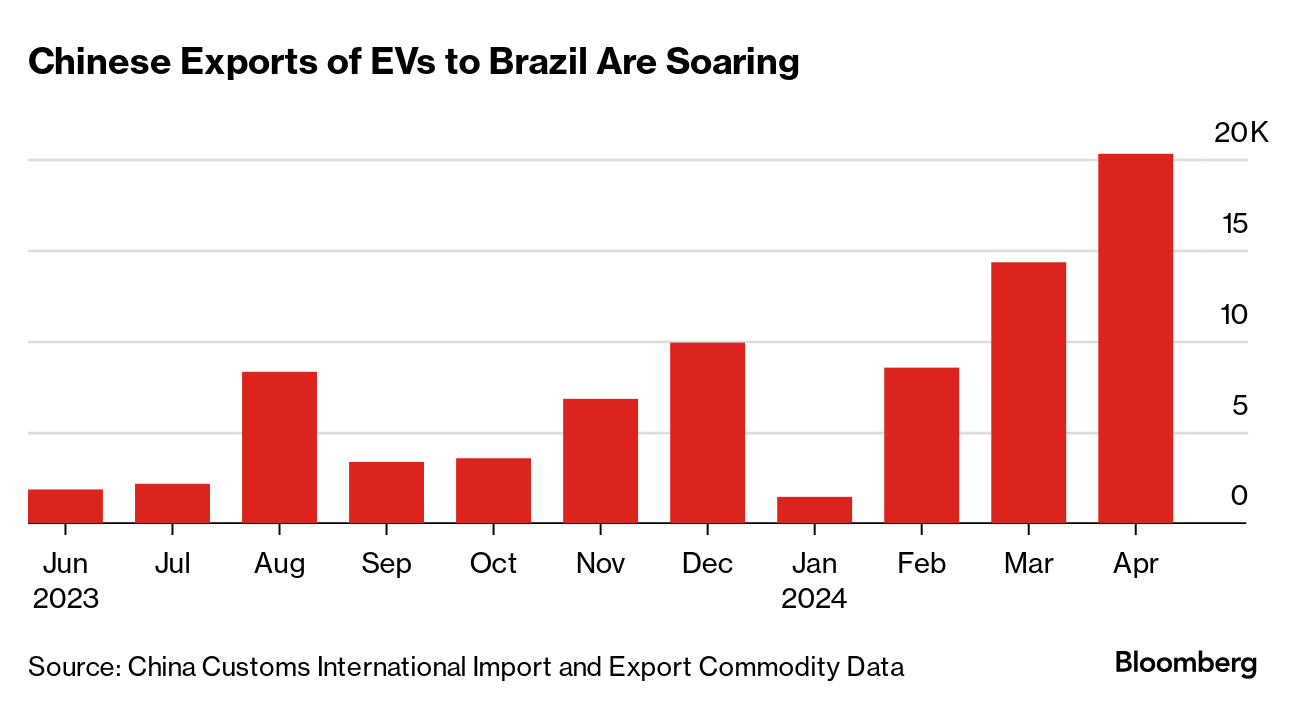 Source: China Customs International Import and Export Commodity Data/Bloomberg Nenko Nenkov, the ship's captain, said that depending on the number of people available to drive cars to the yard, the process could be accelerated. In the case of this disembarkation, the estimate was 2 ½ days to empty Explorer No.1. There are 12 decks for cargo, one for crew accommodation and the bridge at the top. Nenkov, a Bulgarian who has worked in the sector for 26 years, the past 17 as captain of automotive cargo vessels, said this was his first time transporting only EVs. The ship, after removing the cargo, will return to China empty, which is not common in situations like this where the aim is to make use of space and make a round trip profitable. Read More: A New Trade War Offers No Easy Way Back for Old Global Order BYD Brasil's supply chain manager, Leonardo Felippe, said that he participated in the search for cargo on the backhaul, but because of certain specifications such as the different heights of the decks, it was not possible to carry a return load. Felippe attributes the fact that Brazil was the second destination for the new BYD ship to the significant sales volume, which reached 24,000 units in the first months of the year, and also to the upcoming increase in the import tax rate on electric and hybrid vehicles, resumed since January. Brazil is going to be key market if Chinese automakers are going to thrive. The US all but cut itself off to Chinese EVs by imposing 100% tariffs, and the European Union is getting closer to deciding whether to erect its own import barriers. Related Reading: —Leonardo Lara in Sao Paulo Click here for more of Bloomberg.com's most-read stories about trade, supply chains and shipping. | 







No comments:
Post a Comment